November 13 is National Kindness Day although it really is International Kindness Day and part of Kindness Week.
Kindness Week came into being when several humanitarian groups came together on November 13, 1997, and made a Declaration of Kindness. What started as Kindness Day turned into Kindness Week, where everyone is encouraged to make a similar declaration of kindness and charity. The week is celebrated by donating books, food, or clothes to local communities and pledging to empathize with other people. Even the smallest act of kindness can go a long way, and you should never pass up an opportunity to help someone in need. Kindness Week aims to create a society where everyone can live a dignified life. https://nationaltoday.com/kindness-week/
It’s rather sad that we need a week to remind us to be kind; the older I get, the more I think we should declare a Kindness Year or Kindness Decade.
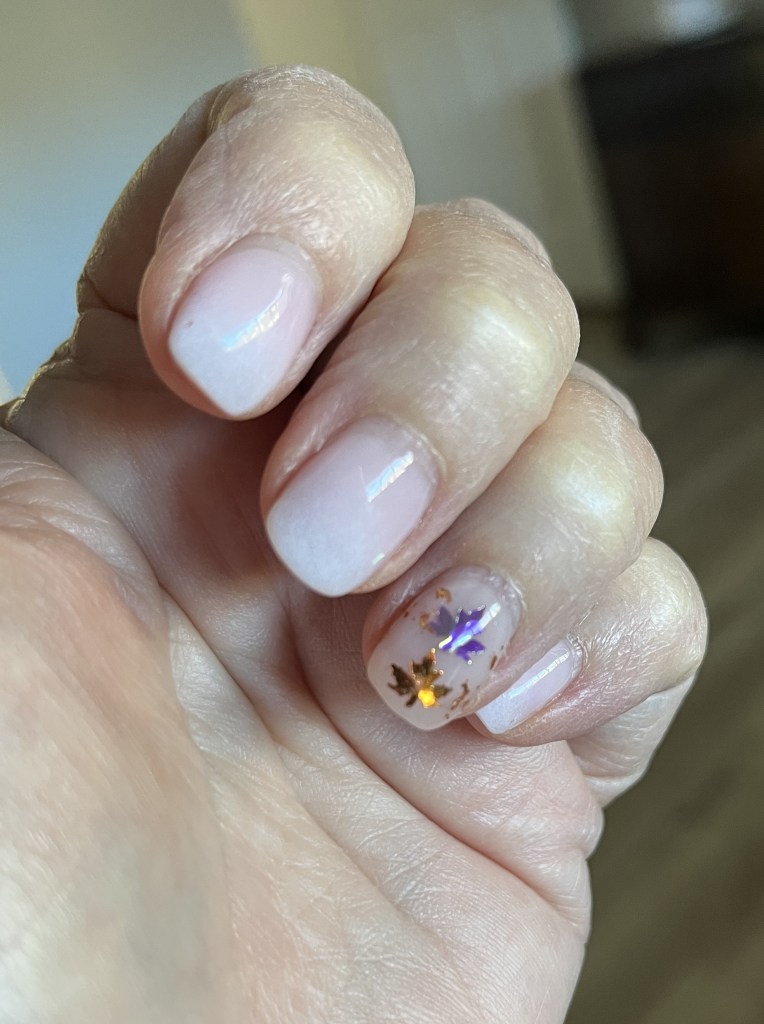
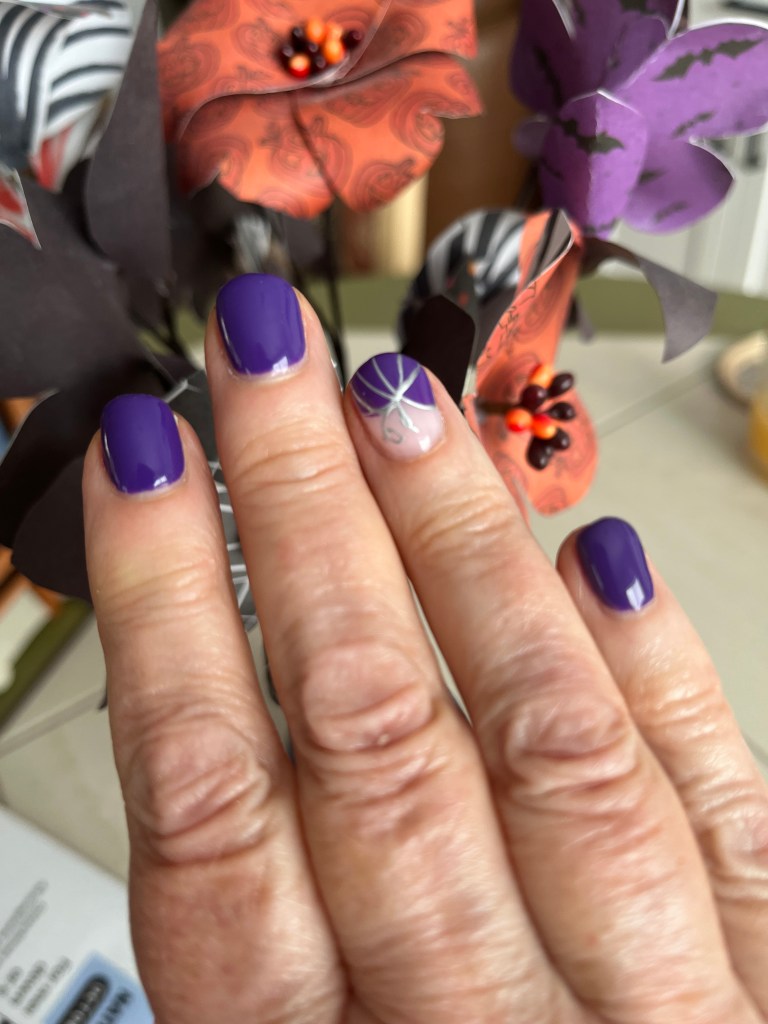
I went with an autumn feel for this month: multicolor maple leaves:
Although it has been over a year since I was first introduced to gel polish and was able to start growing out my nails, I am still astonished that after all this time, I actually have nails! Nails that I even have to trim!
Another thing that has surprised me about having them is that I thought, for instance, it would make things easier to pick up; not so. It’s actually harder to pop open cans, harder to put on earrings, harder to lift things up off the floor, and so on.
One other oddness about having nails is that I feel the rest of me has to live up to them. I can’t go out in baggy shorts or wrinkled tee shirts. My nails demand a certain standard of dress and decorum.
This day started with another trip to the Side Track restaurant, which, fortunately for me, was open for breakfast on Friday (as well as Saturday and Sunday). It did not disappoint, and I headed out for my morning with a nice protein fix.
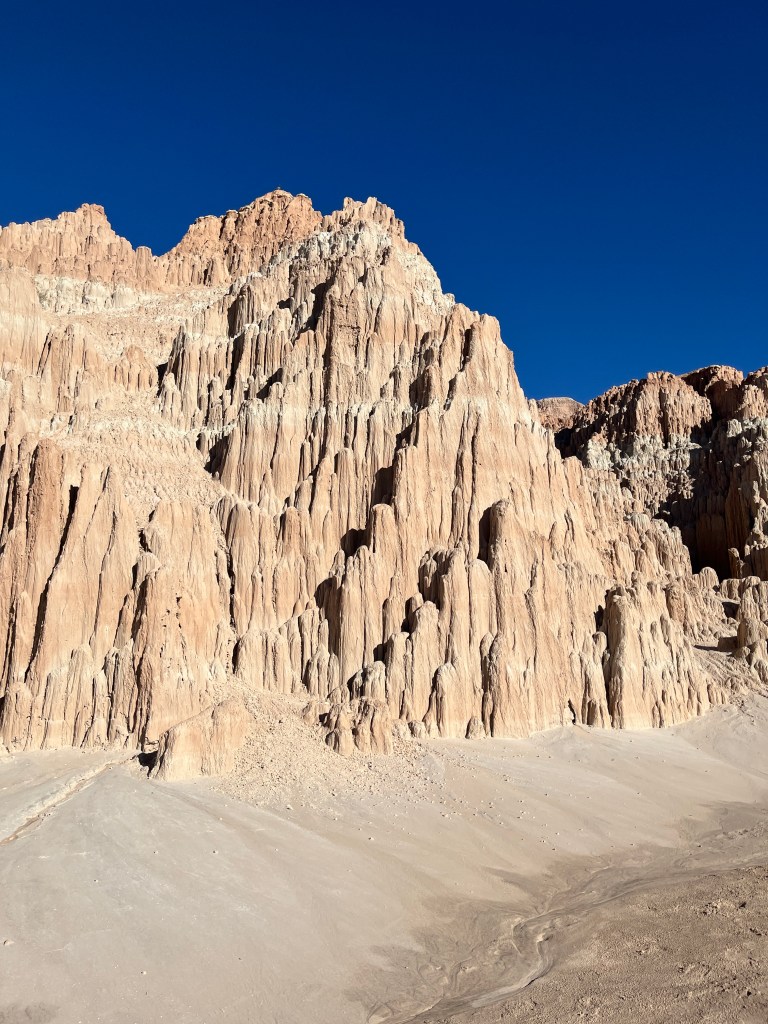
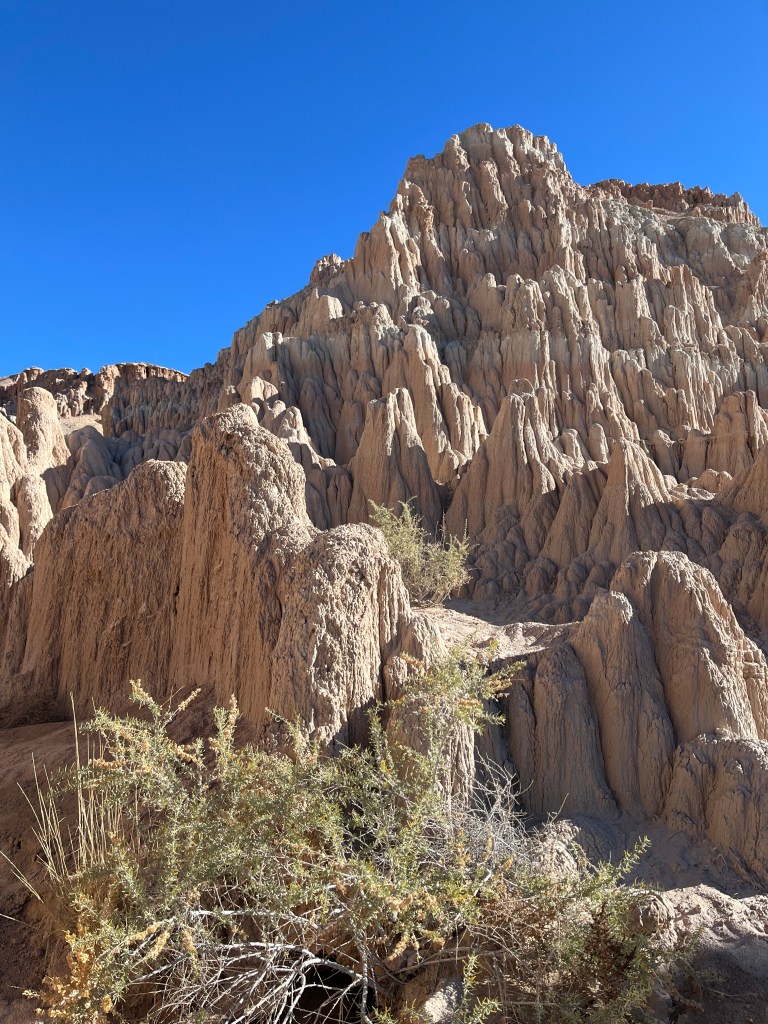
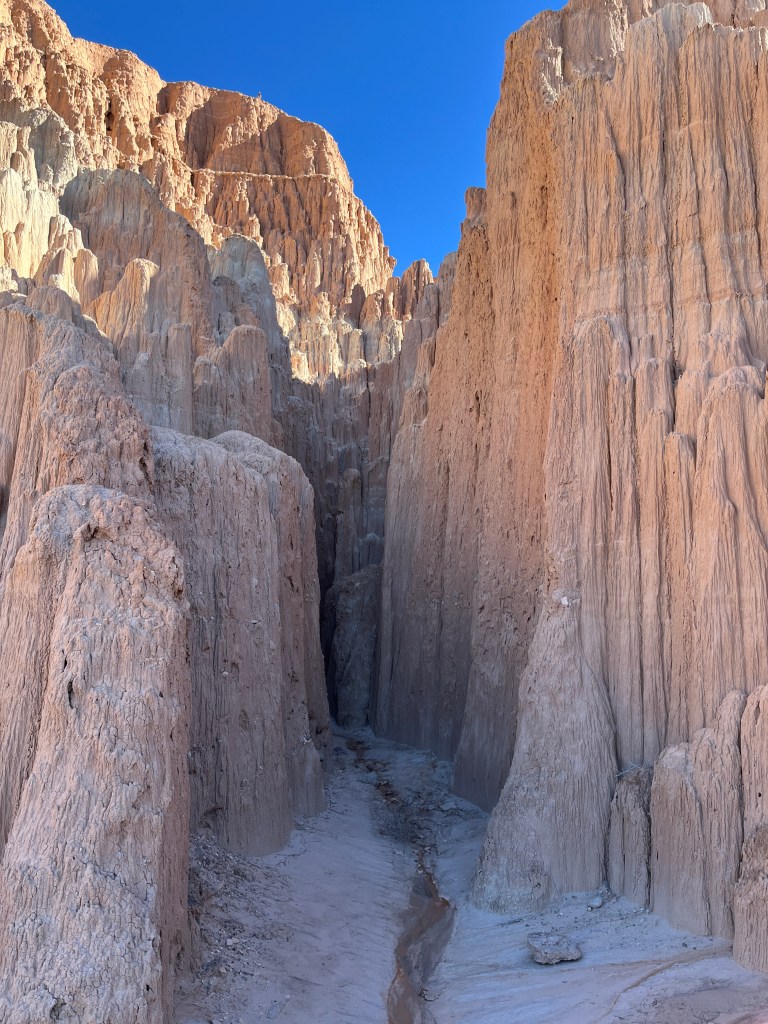
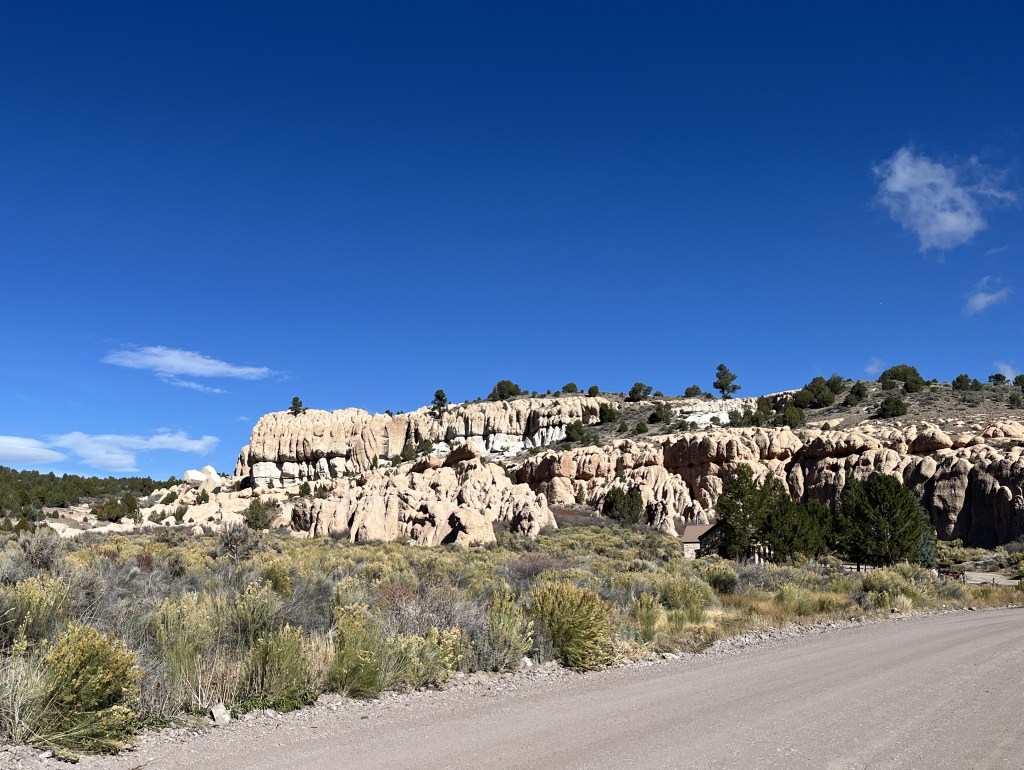
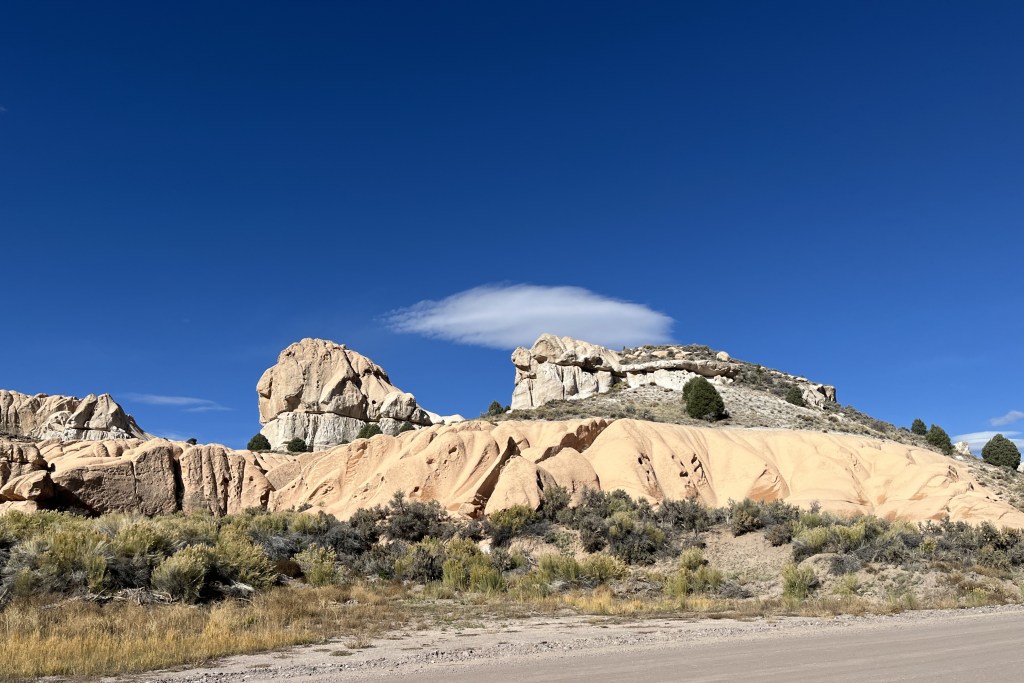
First stop: Cathedral Gorge State Park. There is a nice visitor center here where I was finally able to buy my annual senior pass to Nevada State Parks. Better late than never. Of all the state parks I visited, this was the only one where I saw an actual park employee. The other parks all had fee stations, but you can’t buy annual passes at those. In the parks I was in earlier, I resorted to leaving a note in the windshield giving my phone number and saying I wanted an annual pass. It never came to that, however.
Here’s the blurb from the park’s site:
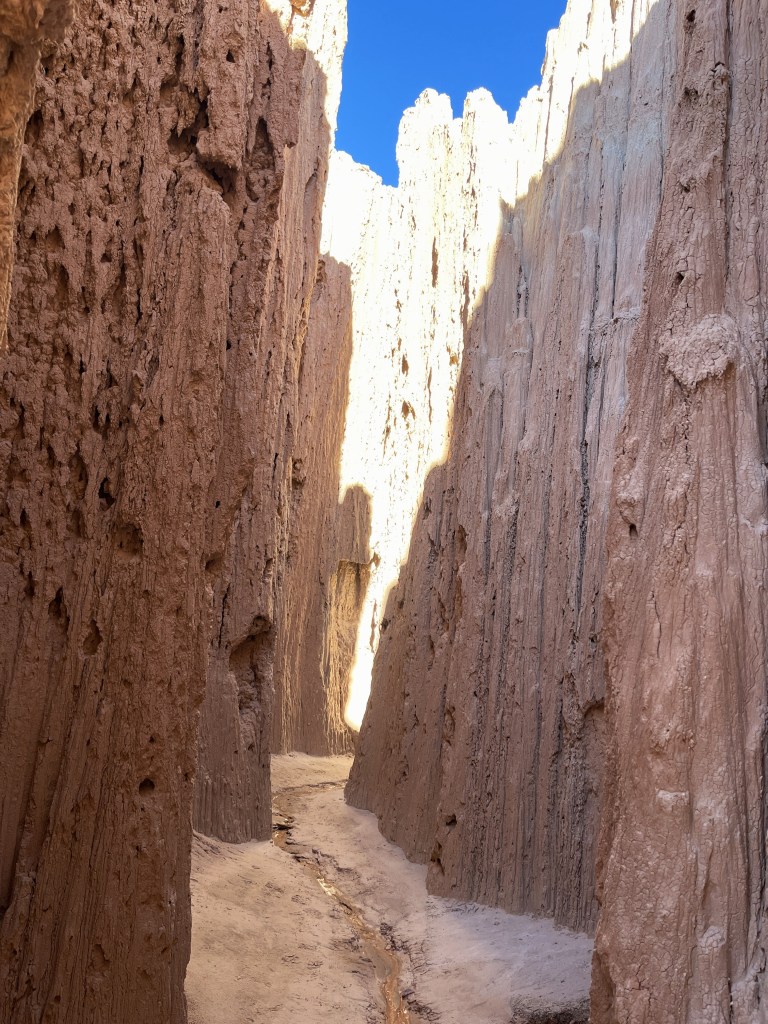
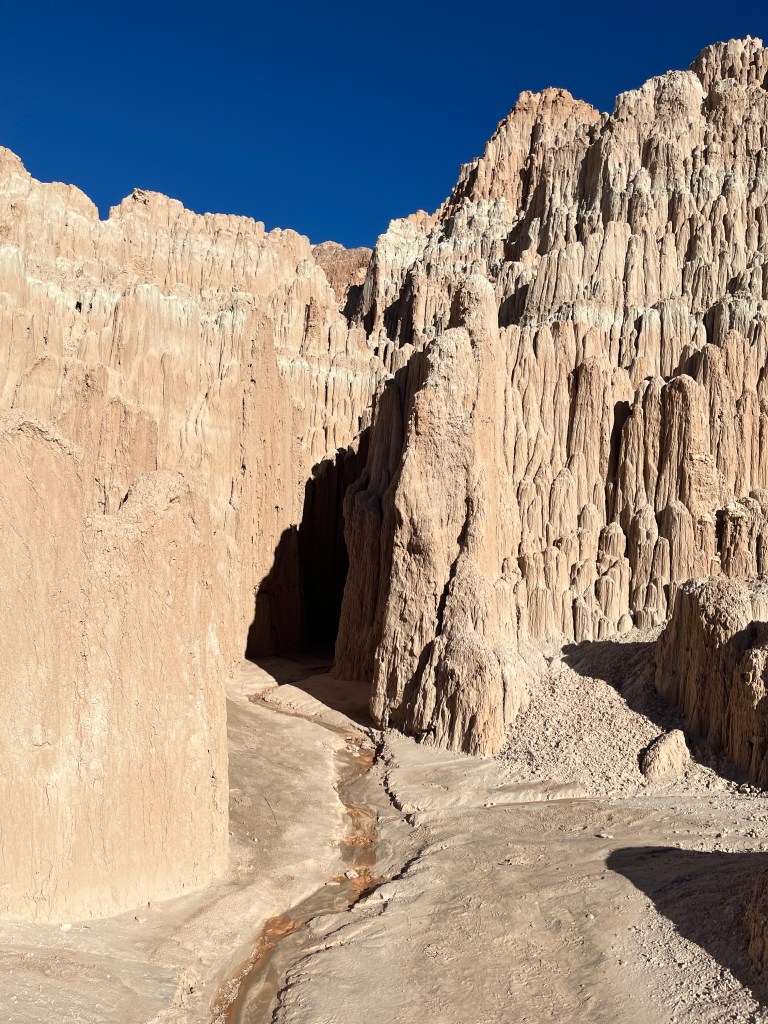
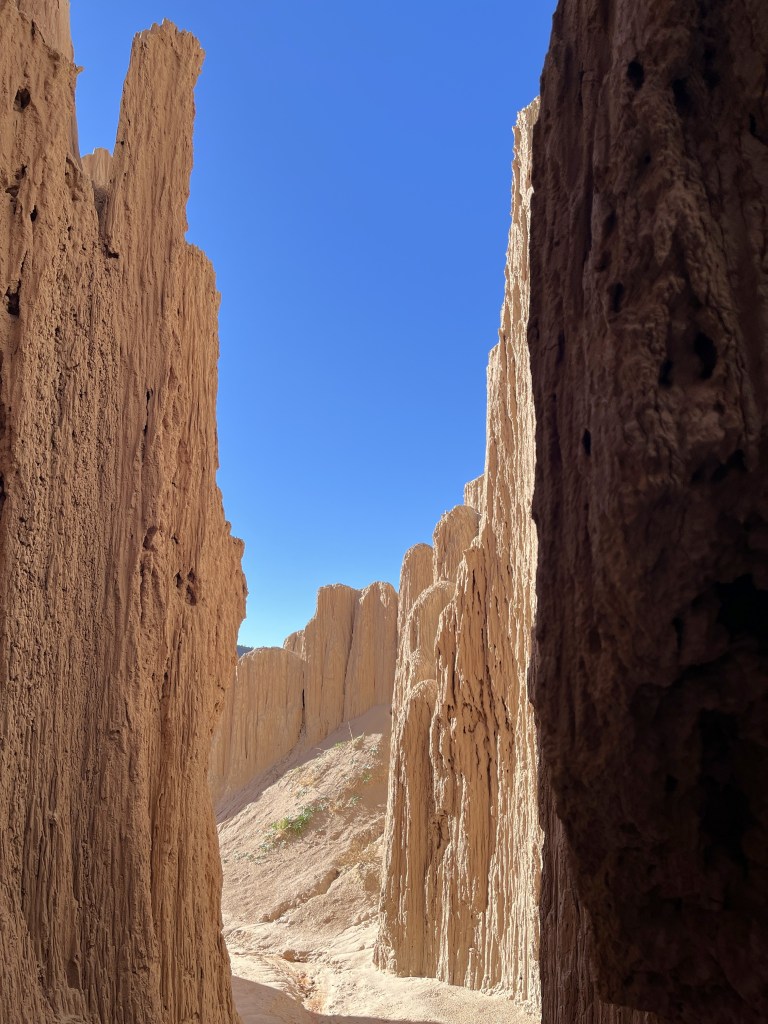
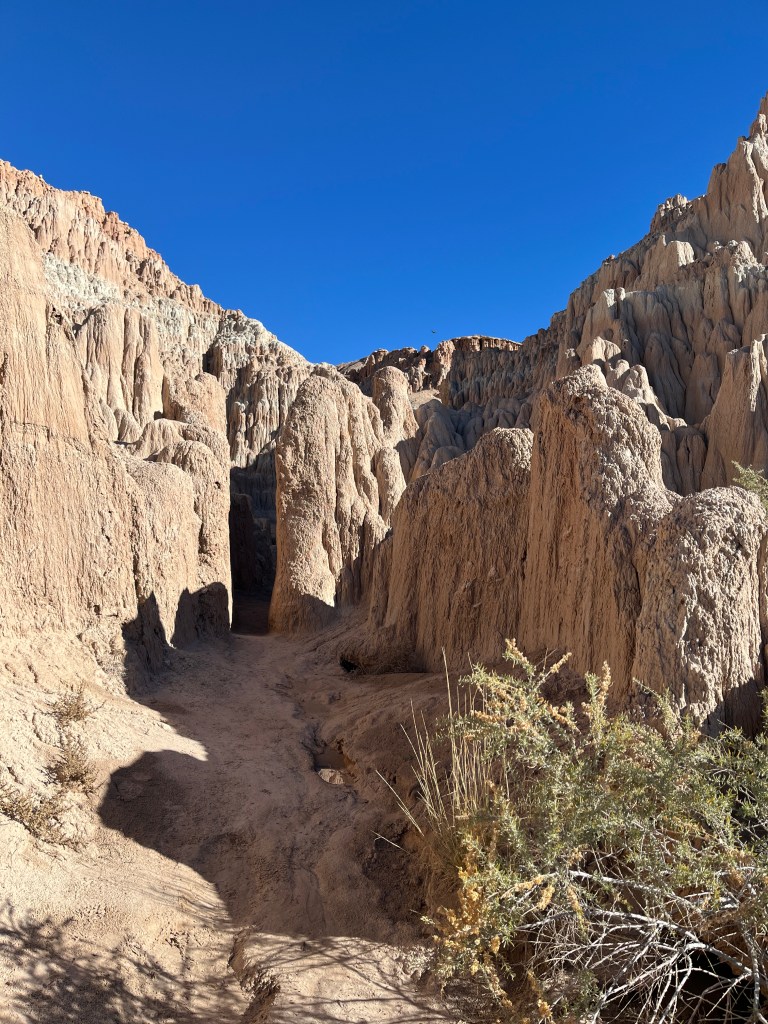
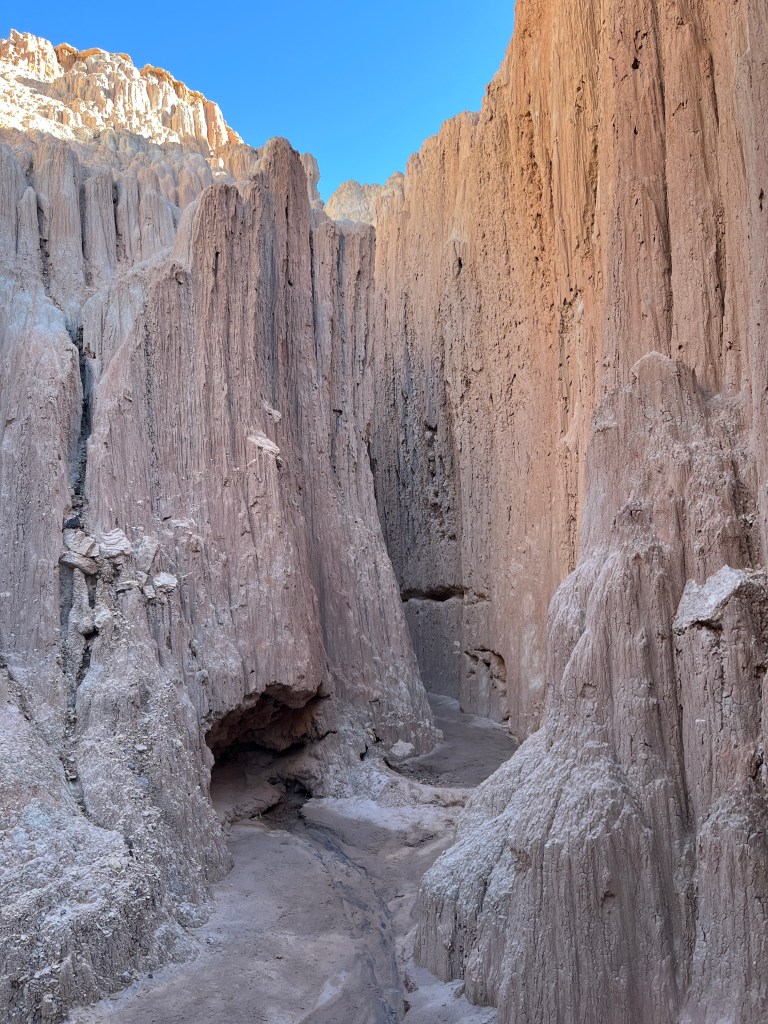
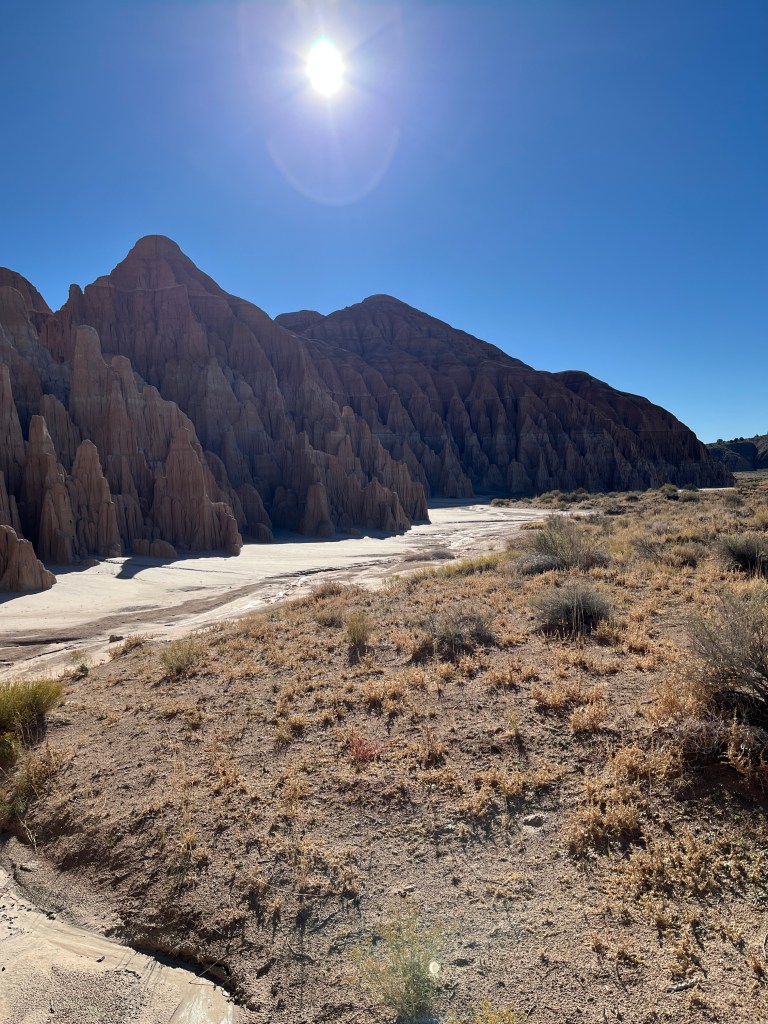
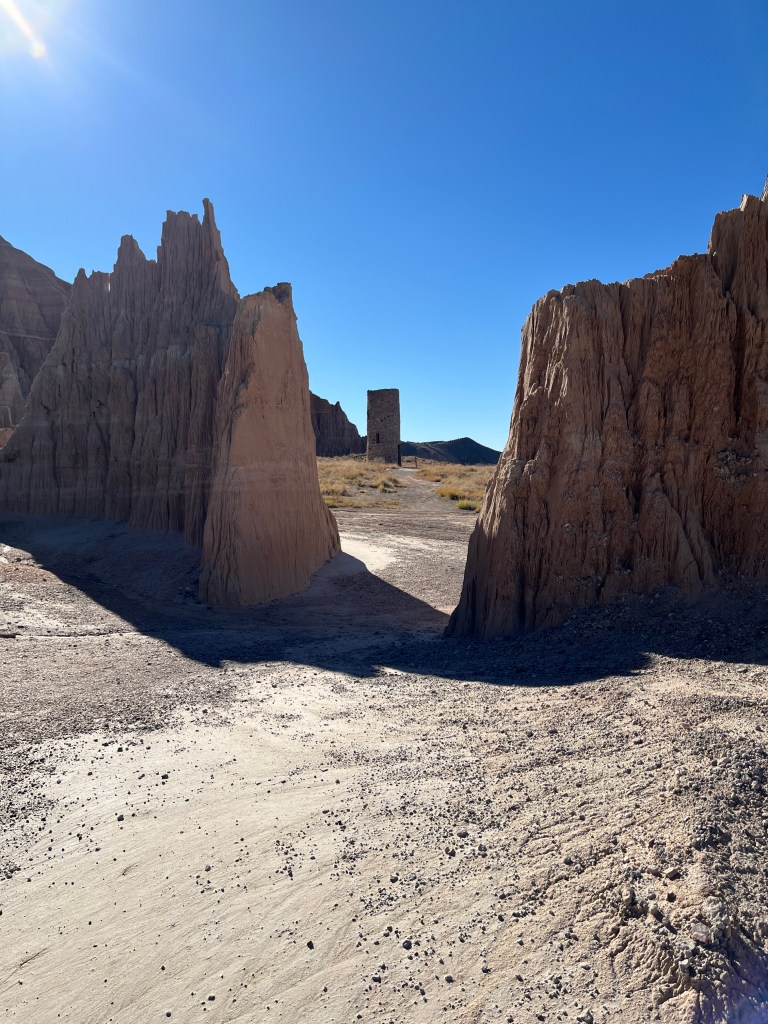
Cathedral Gorge State Park is located in a long, narrow valley in southeastern Nevada, where erosion has carved dramatic and unique patterns in the soft bentonite clay. The park’s beauty began with explosive volcanic activity that, with each eruption, deposited layers of ash hundreds of feet thick. Great walking trails abound for exploring the cave-like formations and cathedral-like spires that are the result of geologic processes from tens of millions of years ago. A photographer’s dream, the park offers stunning views of the scenic canyon and visitors can enjoy hiking, picnicking, camping and nature study. https://parks.nv.gov/parks/cathedral-gorge
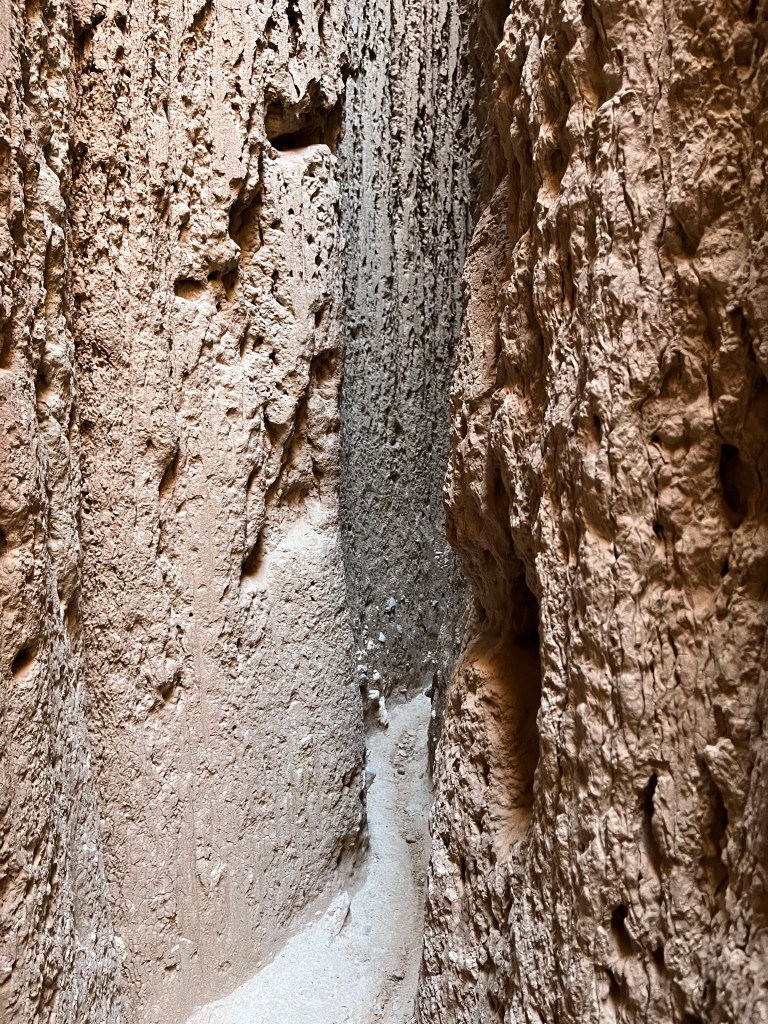
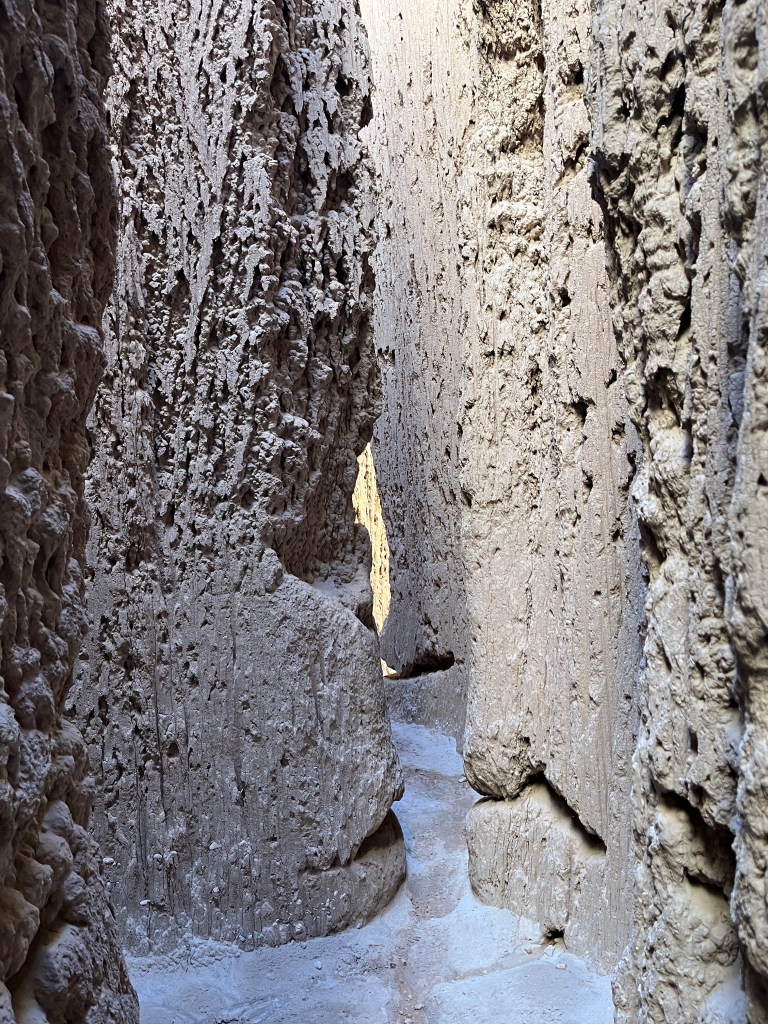
If you have kids, you most definitely should go here with them. It is full of “slot” canyons for them to explore with little risk of them getting lost or hurt (same for us grown-ups). The “canyons” are all short, but you can go from one to another to another to another . . .
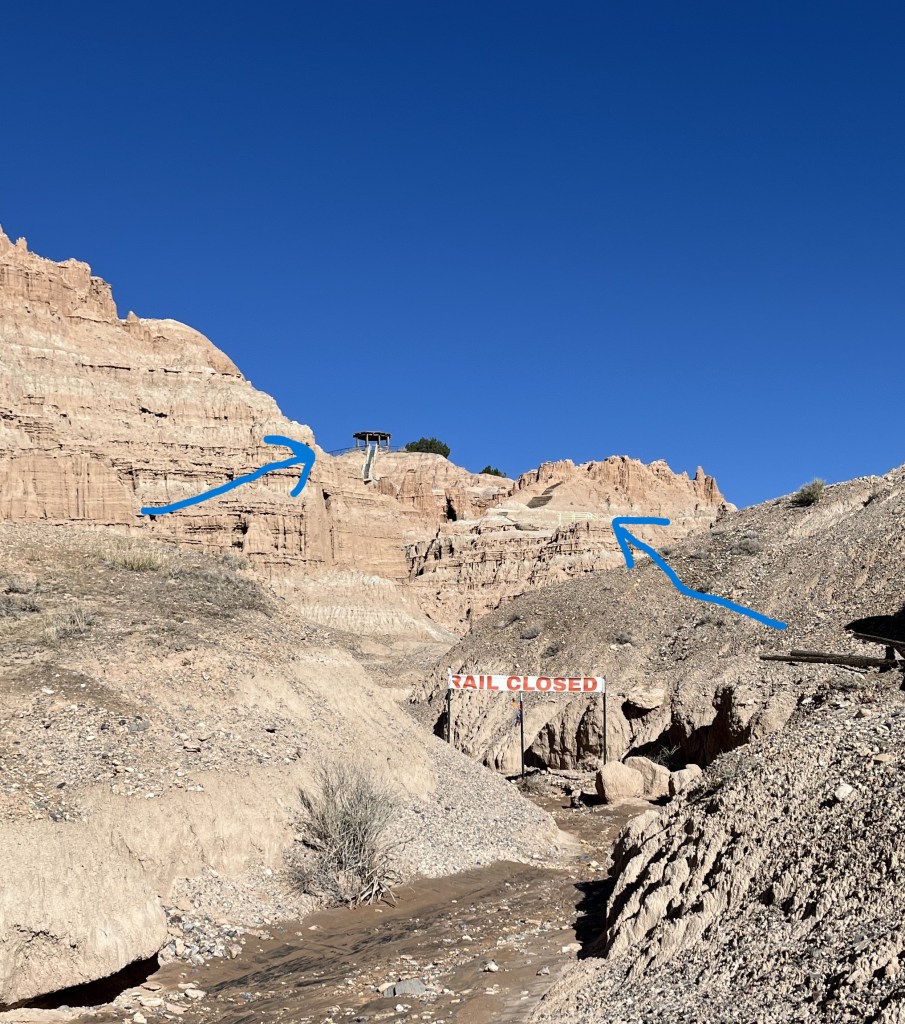
The view from Miller Point is supposed to be very nice, but unfortunately the road to it has been closed for months. I thought maybe I would hike up to it instead, but the trail was closed too. Once I saw the number of steps that would have been involved, I figured that was just as well. You can just make out some of the steps in this photo:
I very much enjoyed my brief visit here and would definitely go back, especially when they get the road to Miller Point open.
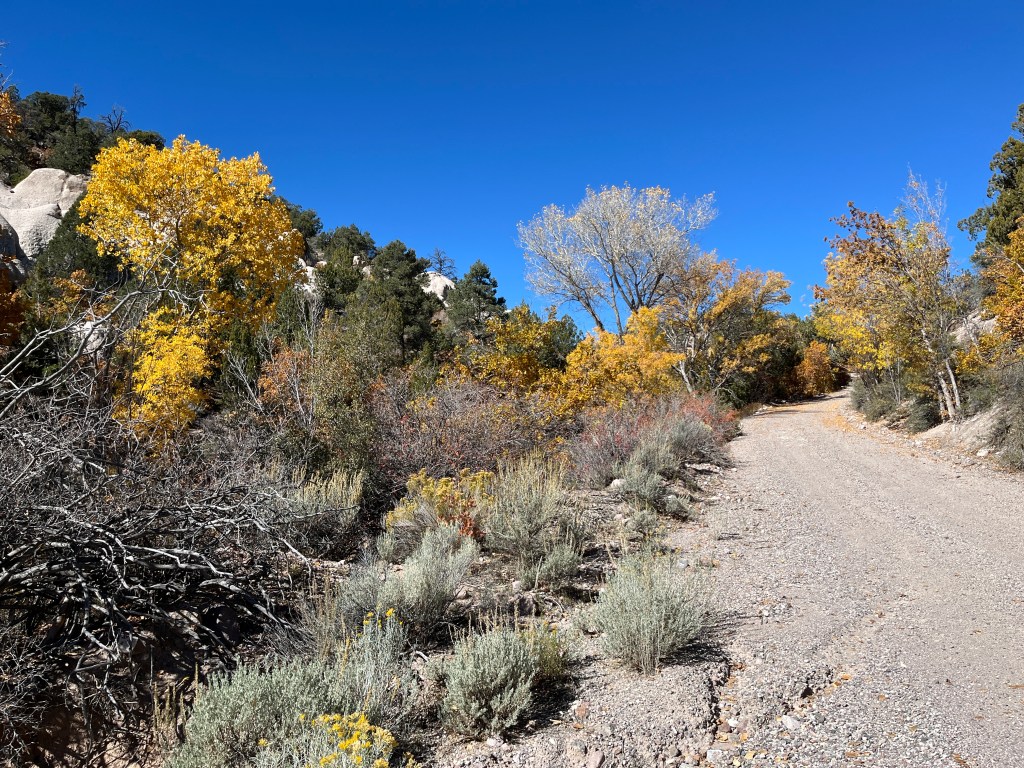
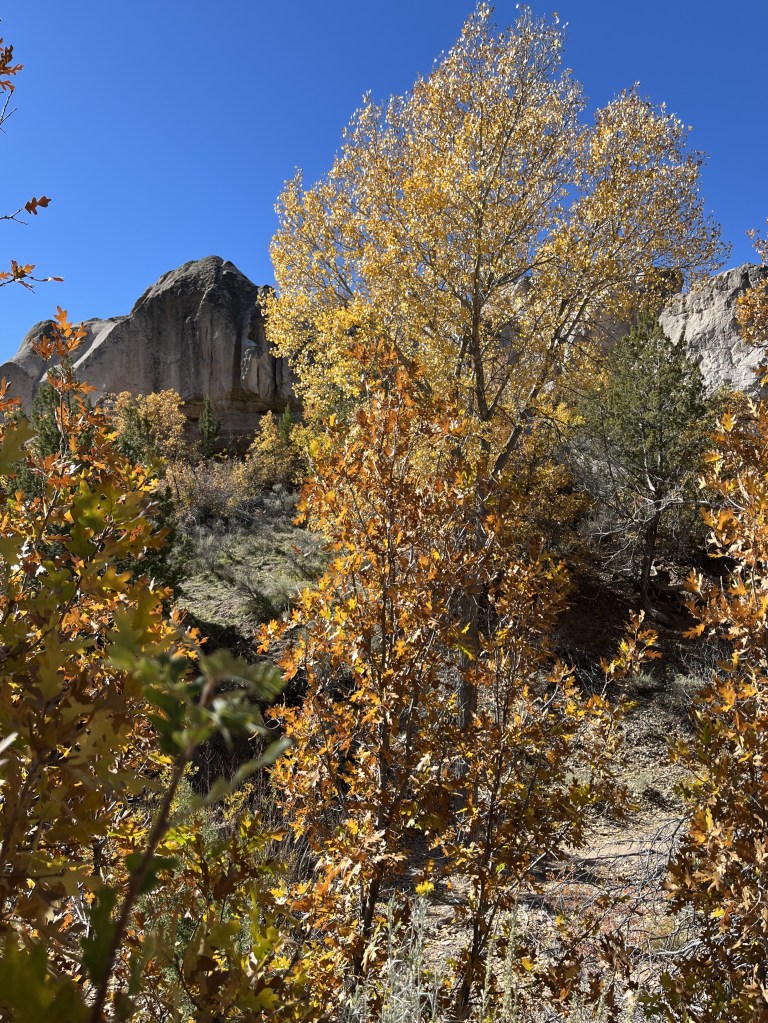
Beaver Dam State Park was the last of my planned sites to visit. It is 28 miles down a dirt road from US 93, eastward, almost to the Utah border. The park did not have much in the way of signage and I did not find many of the places that were listed on the map. An example of the type of problem: the map lists campgrounds “A” and “B” but the signs at the site itself only lists the campgrounds by names.
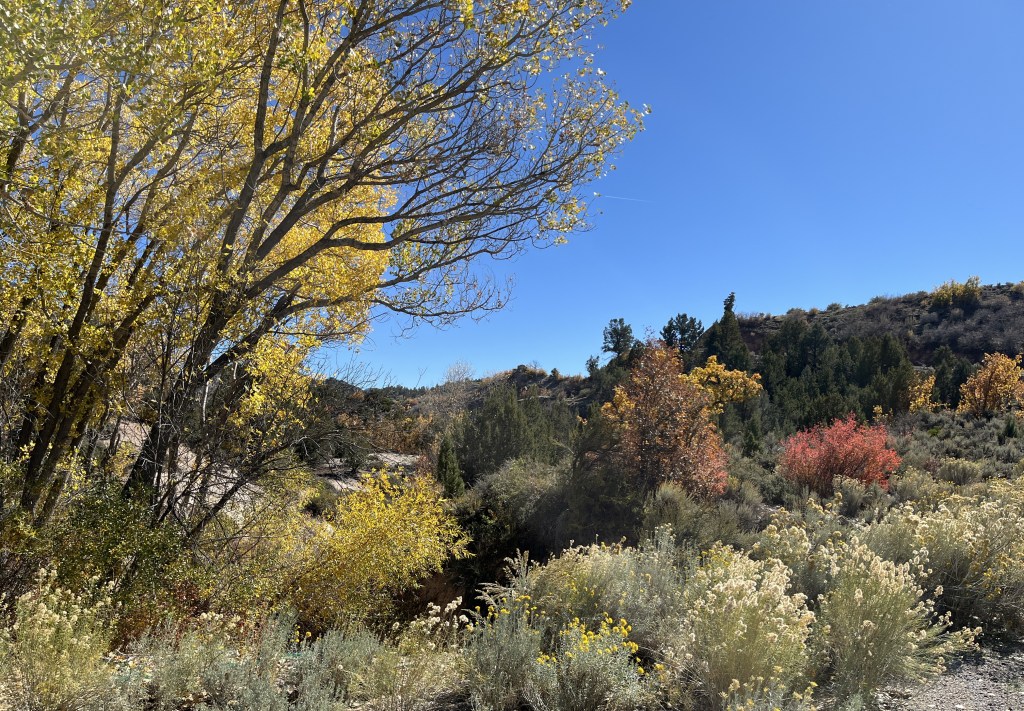
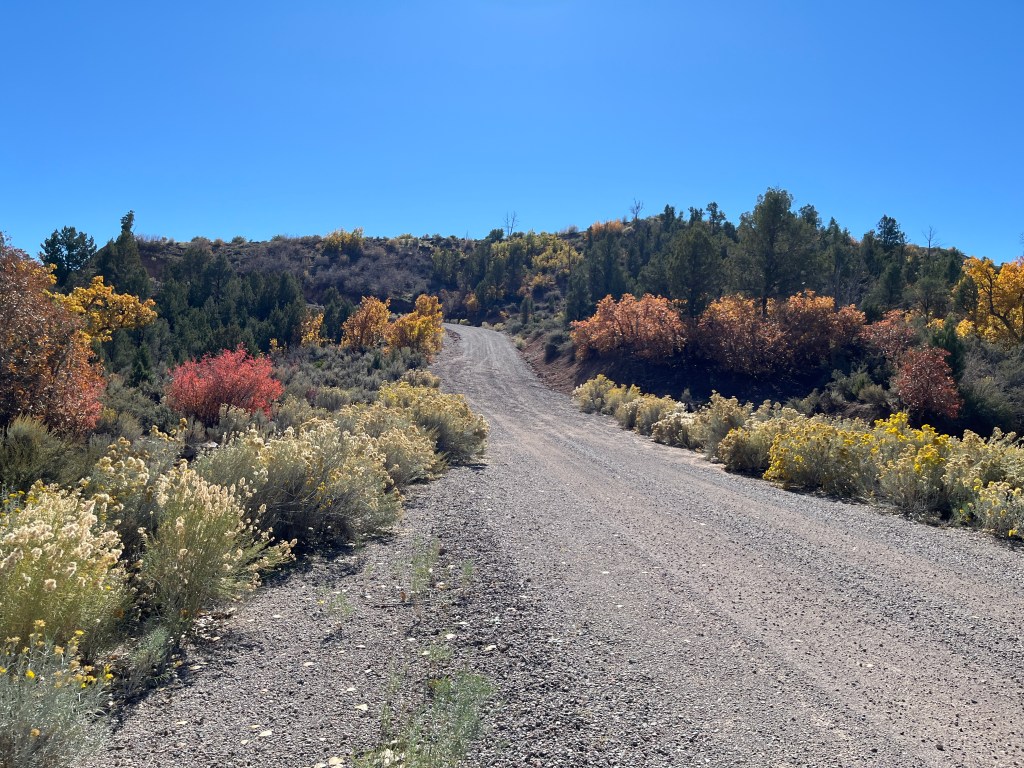
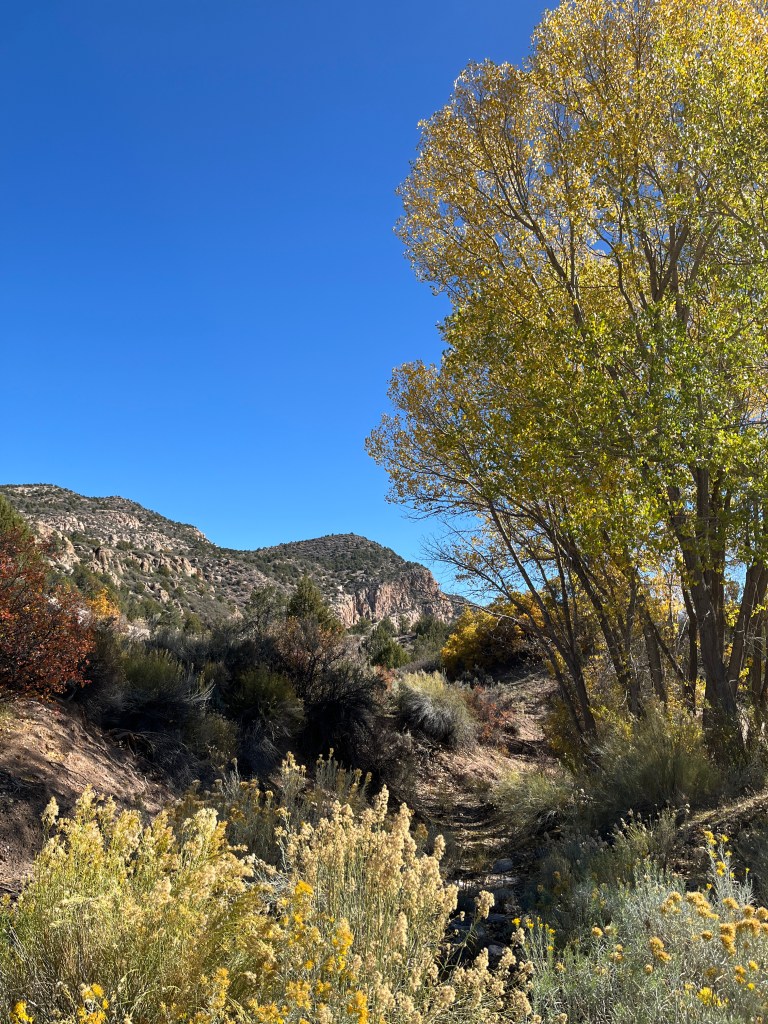
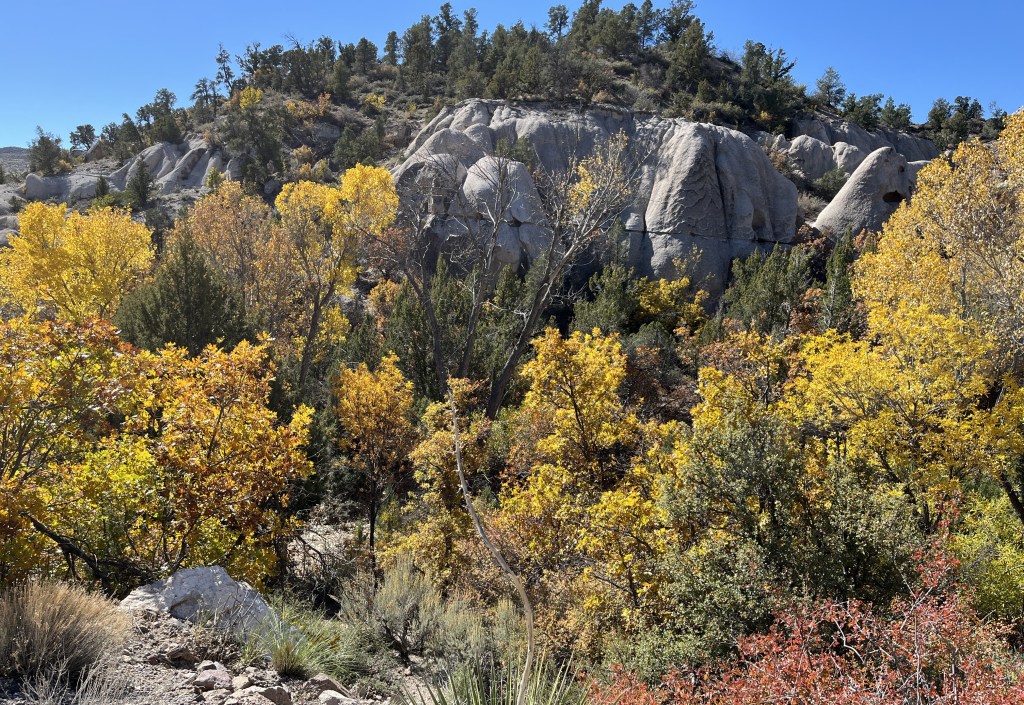
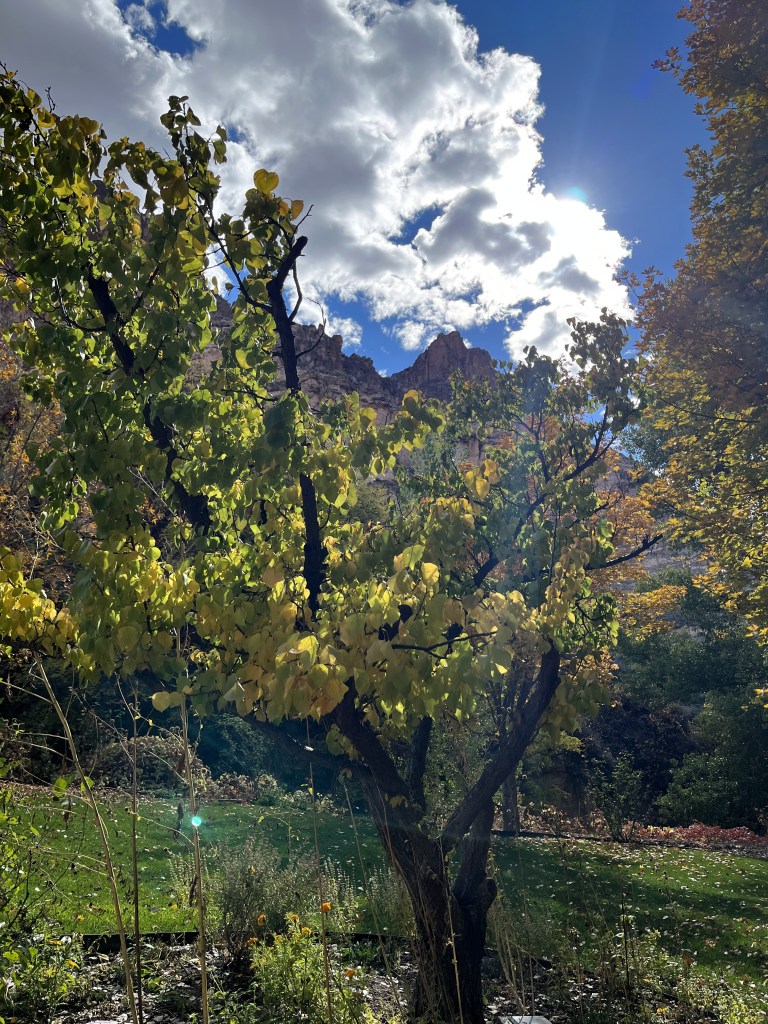
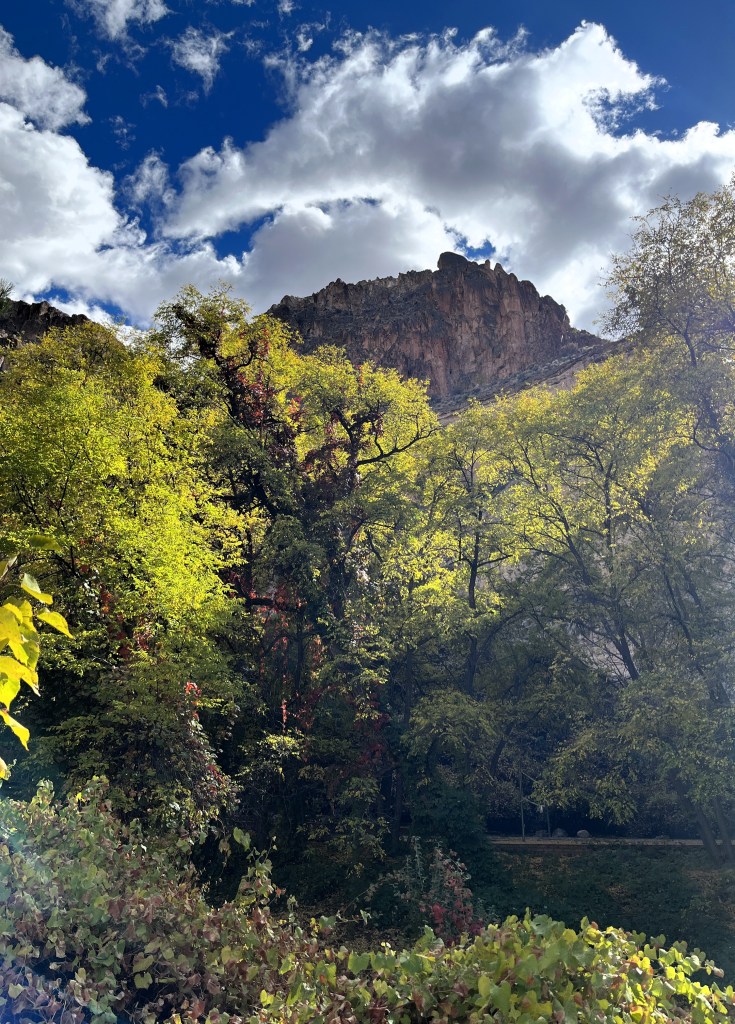
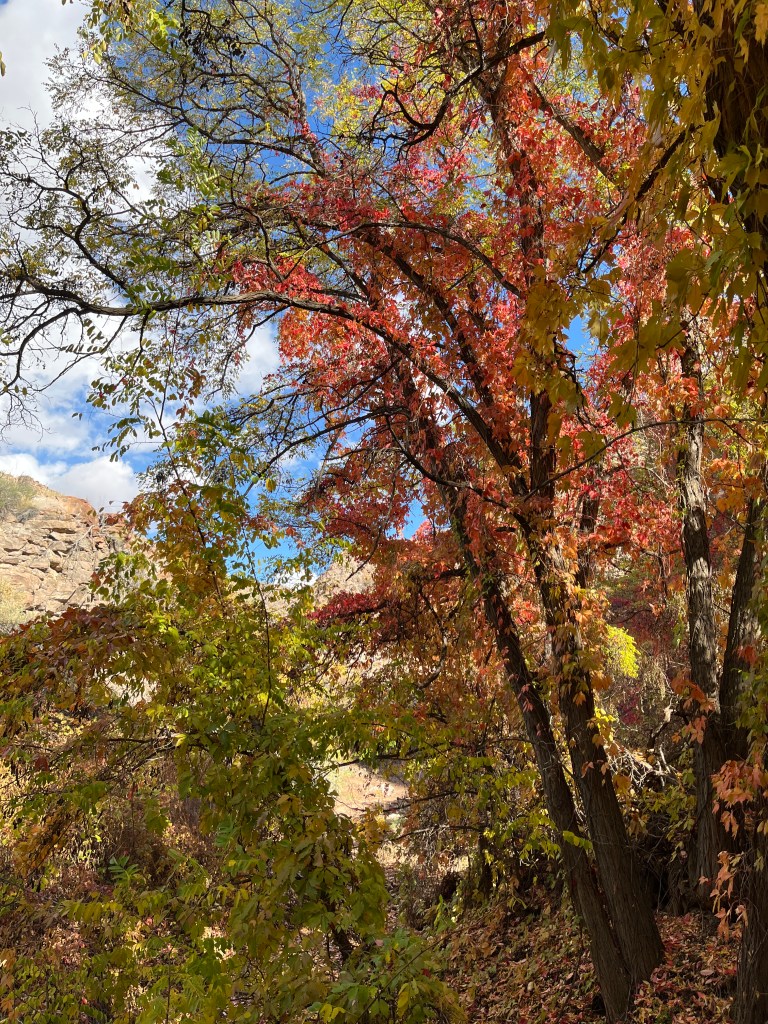
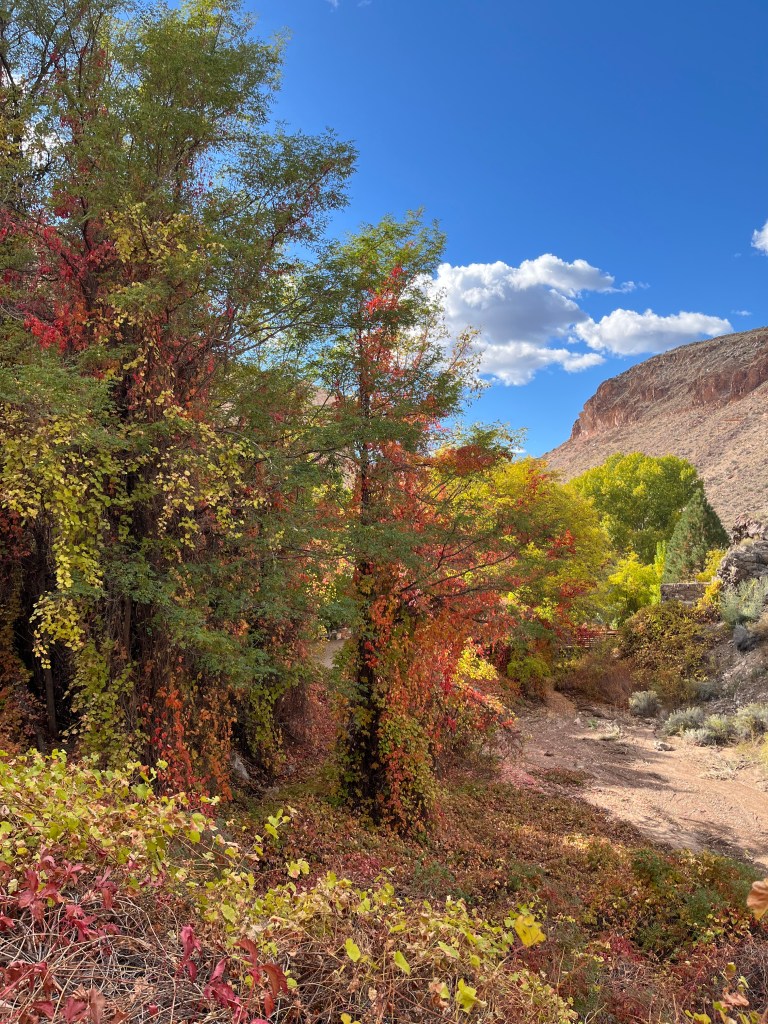
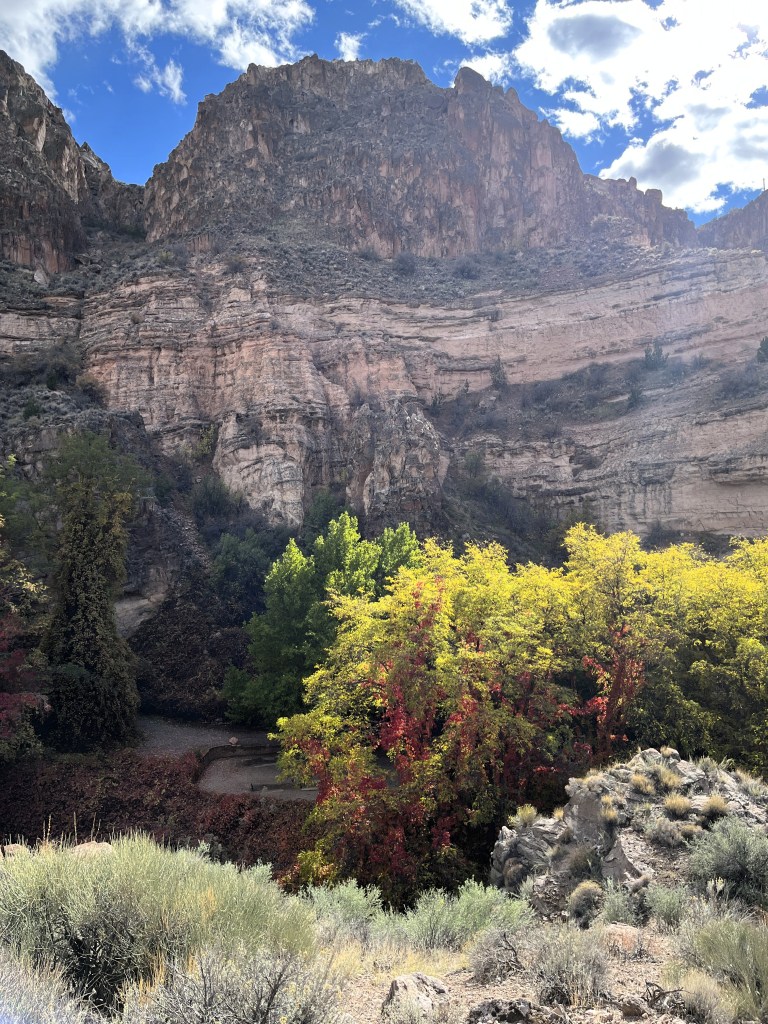
So, although I never did find any of the listed hikes, I did find one of the main sights I was hoping for on this trip: autumn foliage:
I got back from Beaver Dam State Park in the early afternoon. I had booked my motel room for two nights, but I realized I was only 2-1/2 or 3 hours from home. I called the kennel, and they could have Brindy bathed and ready for me by six, so I took off for Henderson.
Naturally, after all the hours on empty roads, I hit a major accident the minute I got into North Las Vegas. Turned the radio back on and rejoined civilization. Picked up the dog and was home before seven.
I had planned this trip to coincide with the “anniversary” of my little stroke last year which happened just before I was supposed to go on a long trip by myself. Although I had been on a cruise in June with a friend, I just felt the need to do something on my own and (with my doctor’s blessing) I am so glad I did it; I had a wonderful time and got a lot of confidence back. I want to explore more of Nevada soon: after all, I don’t want to let that annual state park pass go to waste!
This drive was all on US 93, The Great Basin Highway. A part of the highway is a Nevada scenic byway as well. I covered 135 miles or so (plus some side trips) on another fairly empty road.
In city driving, I always have the radio on and mainly switch among five different channels on Sirius XM. For some reason, listening to music while driving in town seems necessary. However, the minute I left the outskirts of Las Vegas, I turned the radio off and did not turn it back on until I got back to Vegas the evening of my last day.
There was something about being out in those broad expanses and on those empty roads that just called for silence. I also found that I was much more attuned to the actual driving experience: the sound of the tires on the road, the feel of the steering wheel under my hands, etc. Driving was a joy again just for its own sake during the whole trip.
I drove through the town of Panoche as it has a couple of historical sites and buildings, but the town just didn’t appeal to me and I drove on.
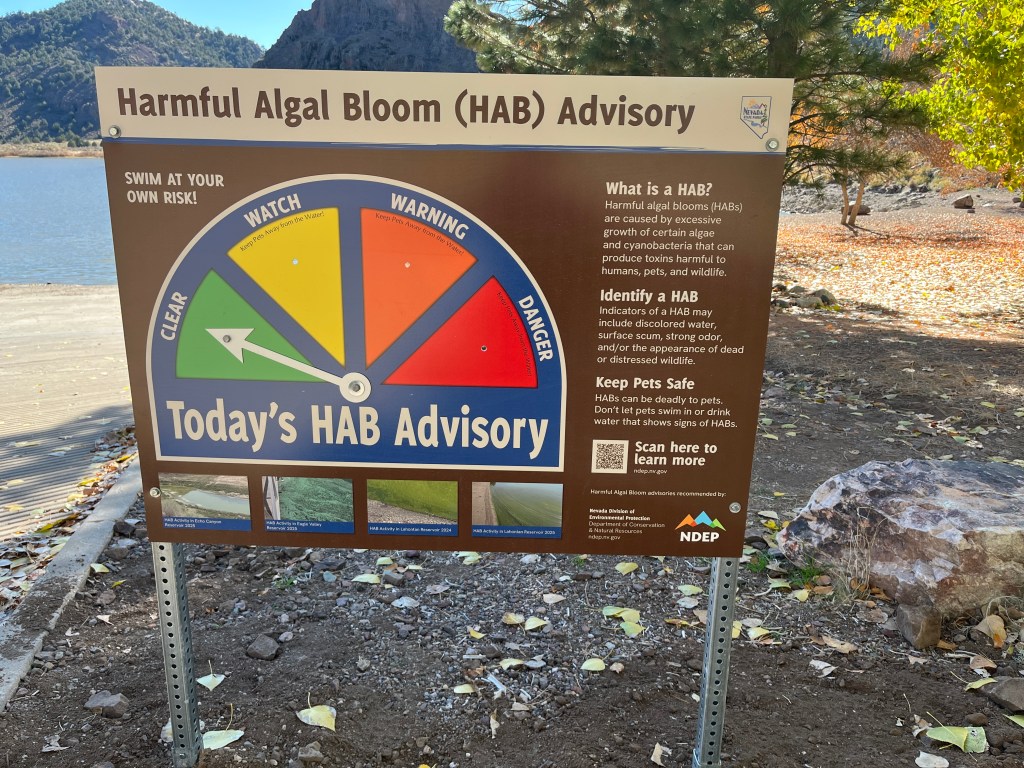
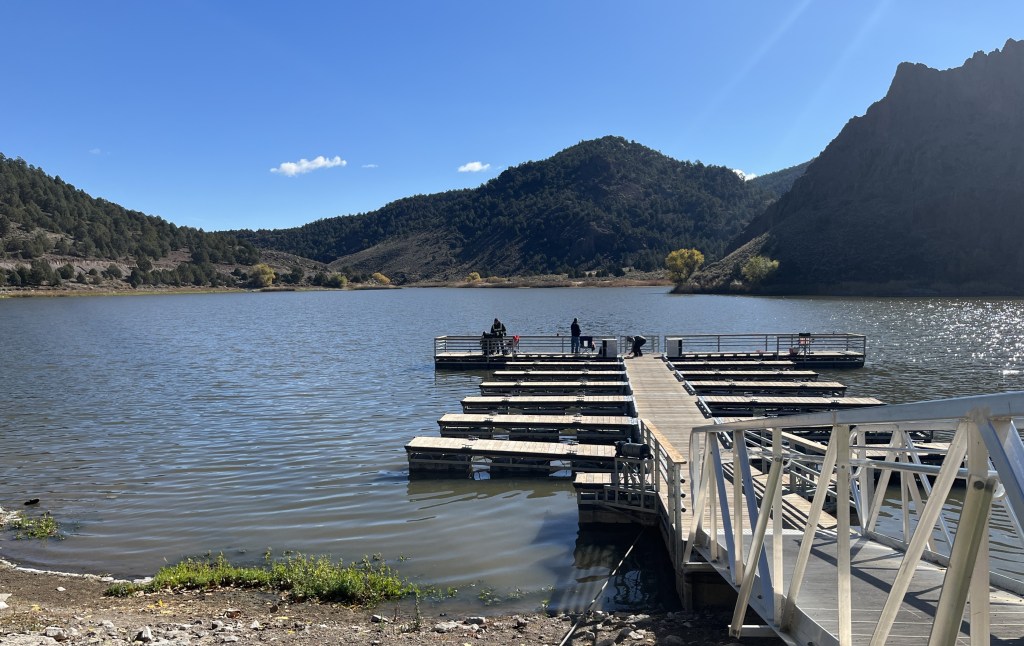
My first stop, then, was Spring Valley State Park. Here is the sign that greeted me at the lake within the park:
If you’re like me, at first glance, you assume it is warning you about fire danger. Look more closely and you will see that it is a “Harmful Algal Bloom Advisory”. Here are the four zones:
Clear
Watch: Keep Pets Away from the Water!
Warning: Keep Pets Away from the Water!
Danger: Keep Pets Away from the Water!
What I find interesting is that while the sign explains that the algae and cyanobacteria can be harmful to humans, wildlife, and pets, the main emphasis is on protecting your pet: “HABS can be deadly to pets. Don’t let pets swim in or drink water that shows signs of HABS.” Nothing about when humans should stay out of the water!
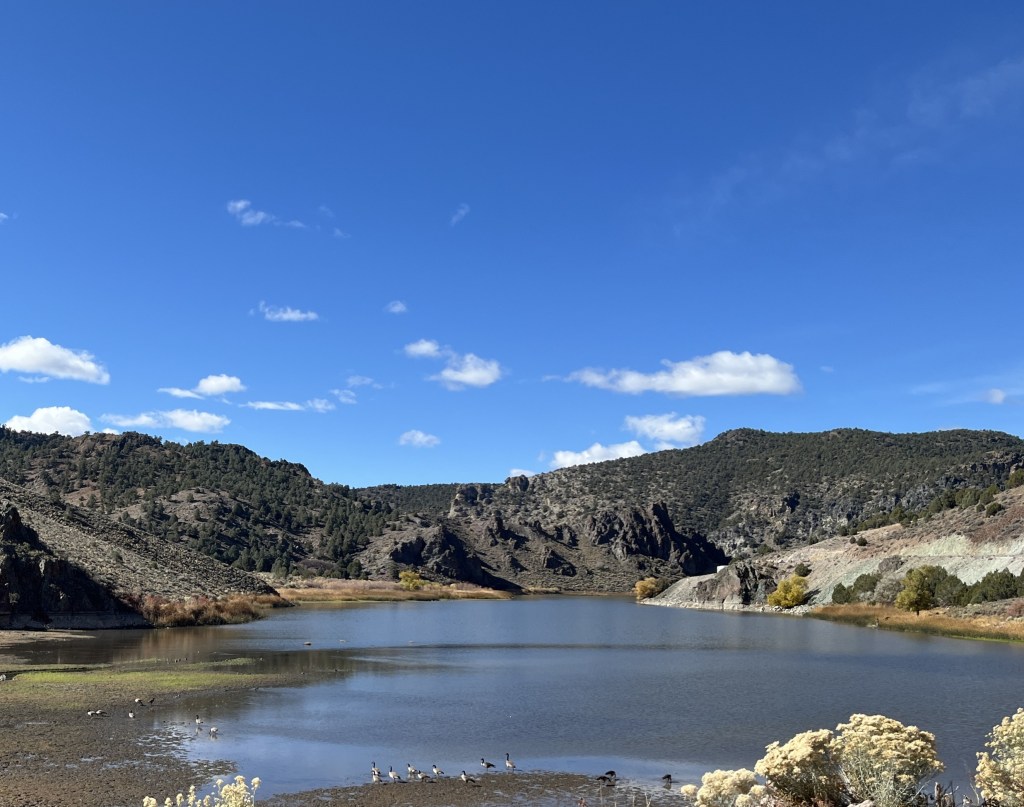
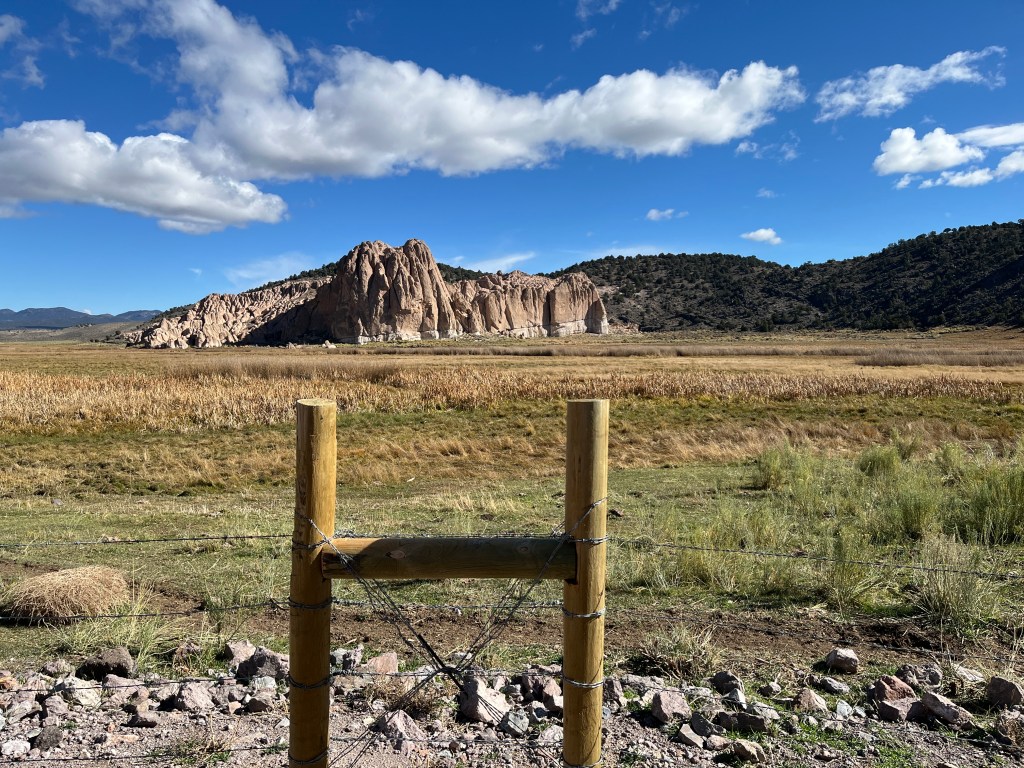
The park is named for the large number of springs that irrigate lush pastures in a historical ranching area. Volcanic tuff and sediment make the hills a light-gray, pink, and white backdrop.
The next scenic spot of the day was Kershaw-Ryan State Park:
Situated in a colorful canyon, with towering walls up to 700 feet high and a long, verdant valley in between, Kershaw-Ryan State Park is an oasis in the desert, a sharp contrast to the rugged landscape that surrounds it. Natural springs grow a garden of wild grapevines, white oaks, fruit trees and willows, and a spring-fed pond provides a seasonal children’s wading pool. It is not unusual to see wild horses, deer and other wildlife come to the water. With plenty of places to picnic and a series of trails that wind throughout, the park is a great choice for hiking, camping and nature study. https://parks.nv.gov/parks/kershaw-ryan
If you ever find yourself in Caliente, I can highly recommend the Side Track Restaurant. I had a great turkey sandwich. When I asked about what the fries were like I was told to imagine if McDonald’s fries and Wendy’s fries had a baby; that would be their fries. And, yes, they were terrific!
This was the only day of my trip that the weather wasn’t perfect. Fortunately, none of my planned activities were outdoors.
I woke up to the health app on my phone telling me I had some outlier readings during the night. My respiratory rate had gone up to 15 something instead of its usual 13 and my blood oxygen level had dropped to 92. The app then proceeded to inform me that this sometimes occurs when you are at higher altitudes. Ely is at around 6400 feet, so the app was correct about the reason for the changes (I was back to normal by the 2nd night).
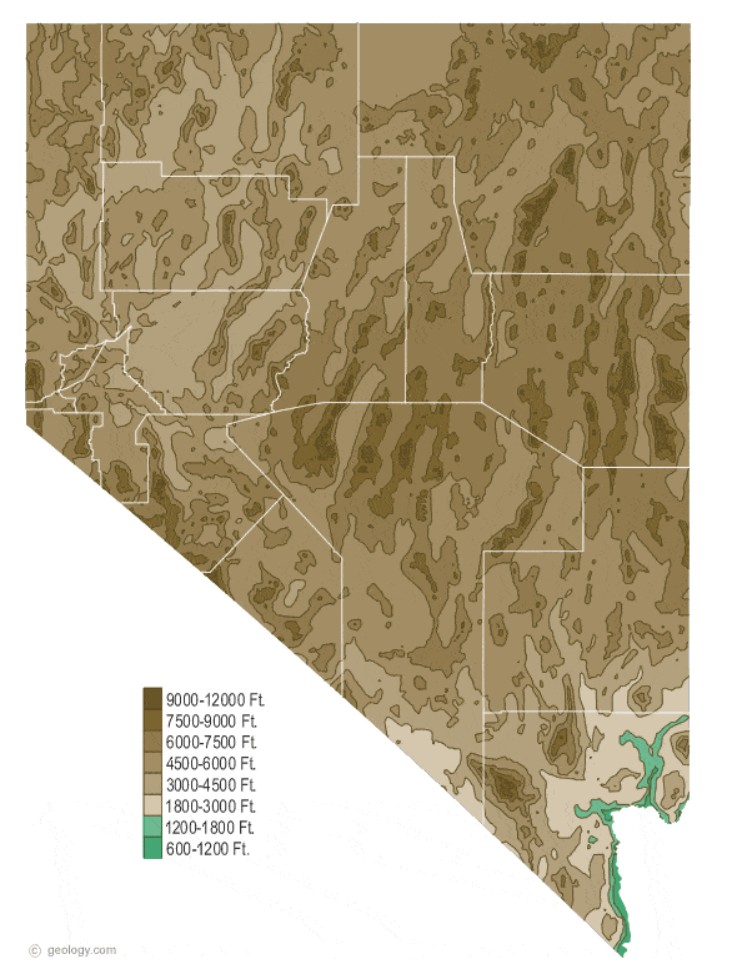
Many people don’t realize just how high in elevation most of Nevada is. Its average elevation is the 5th highest among the states at 5500 feet. It is also the 2nd most mountainous state after Alaska. Basically, the whole state is in the Basin and Range Province (https://en.wikipedia.org/wiki/Basin_and_Range_Province) and most of it is also part of The Great Basin (https://en.wikipedia.org/wiki/Great_Basin).
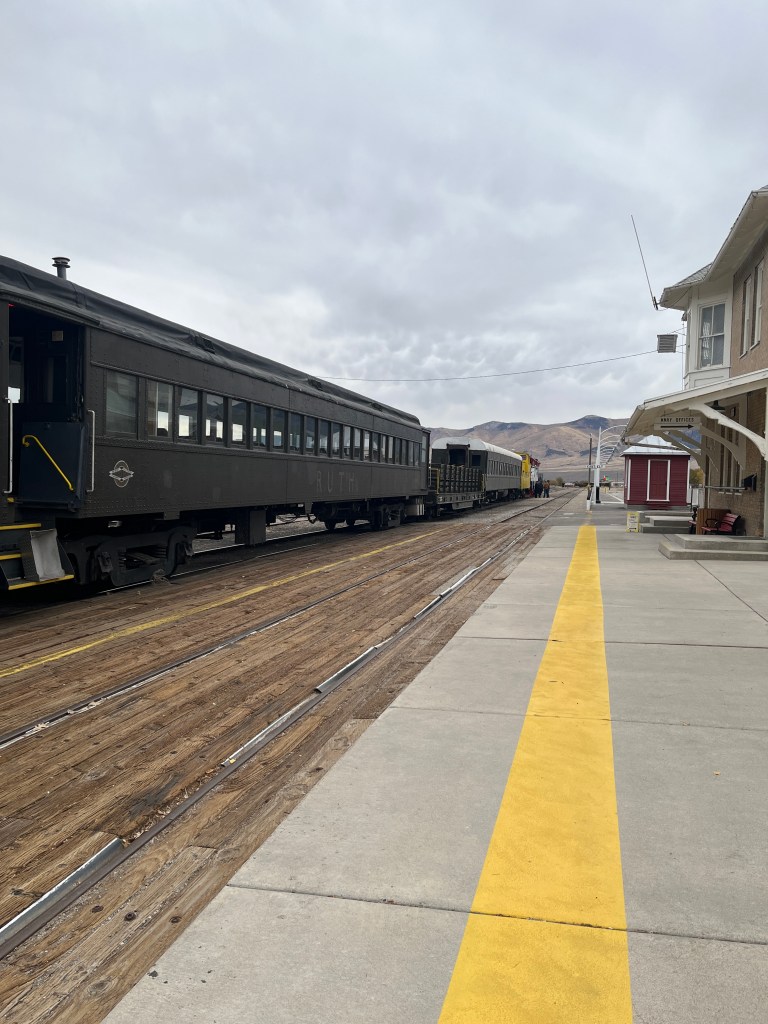
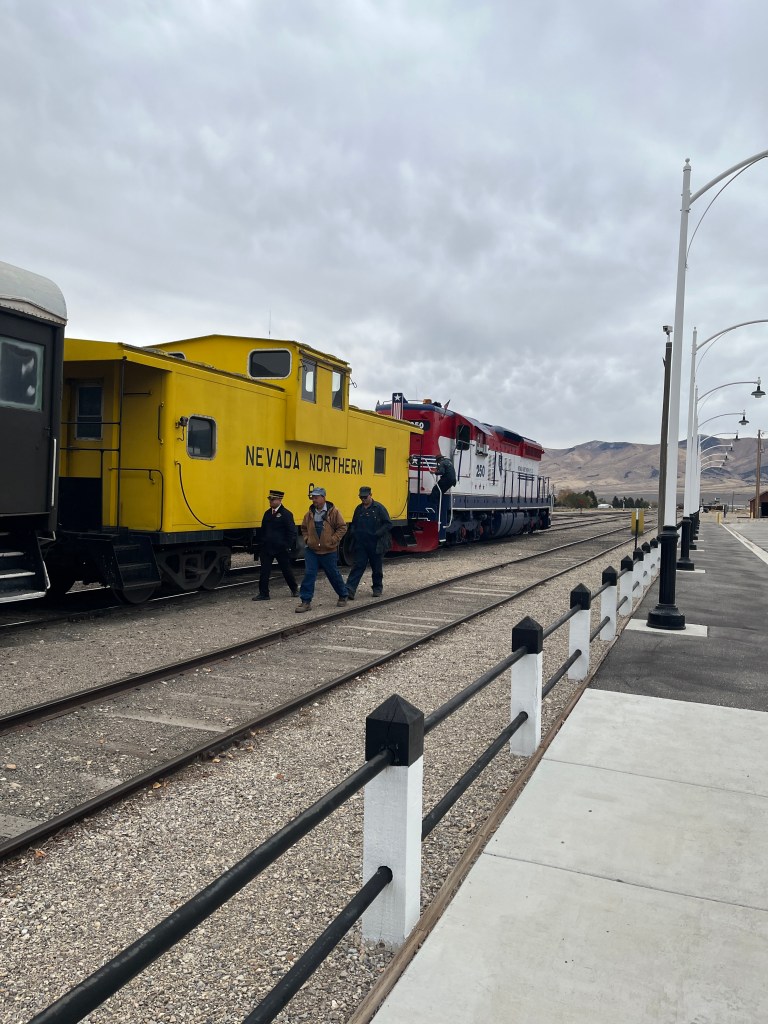
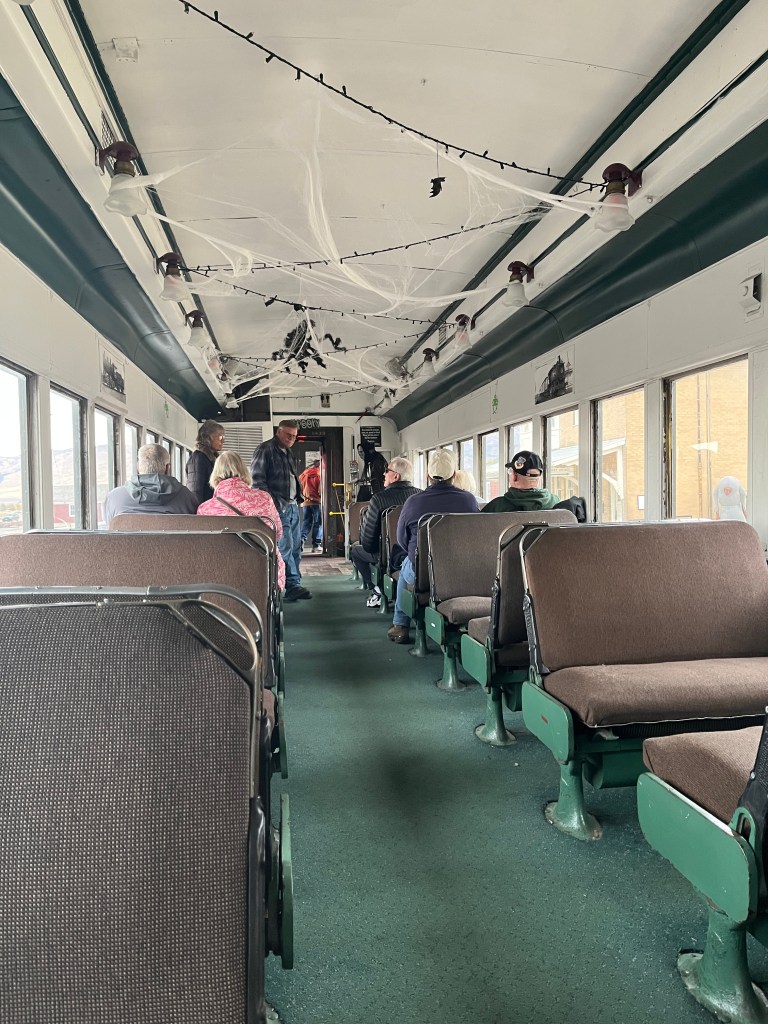
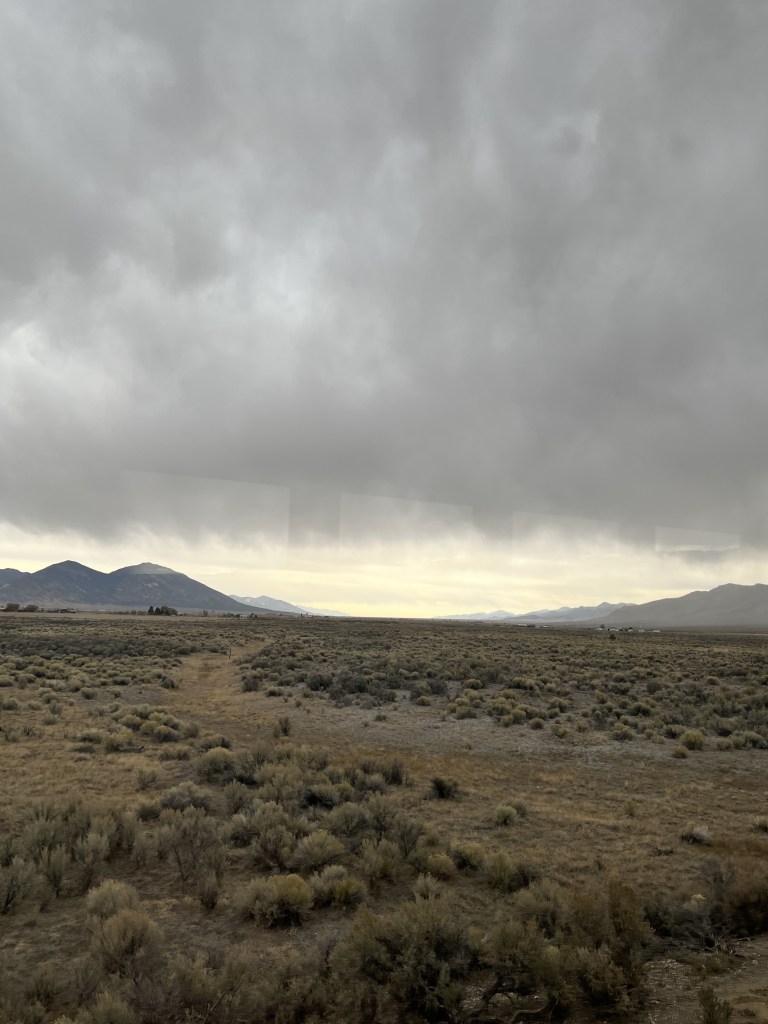
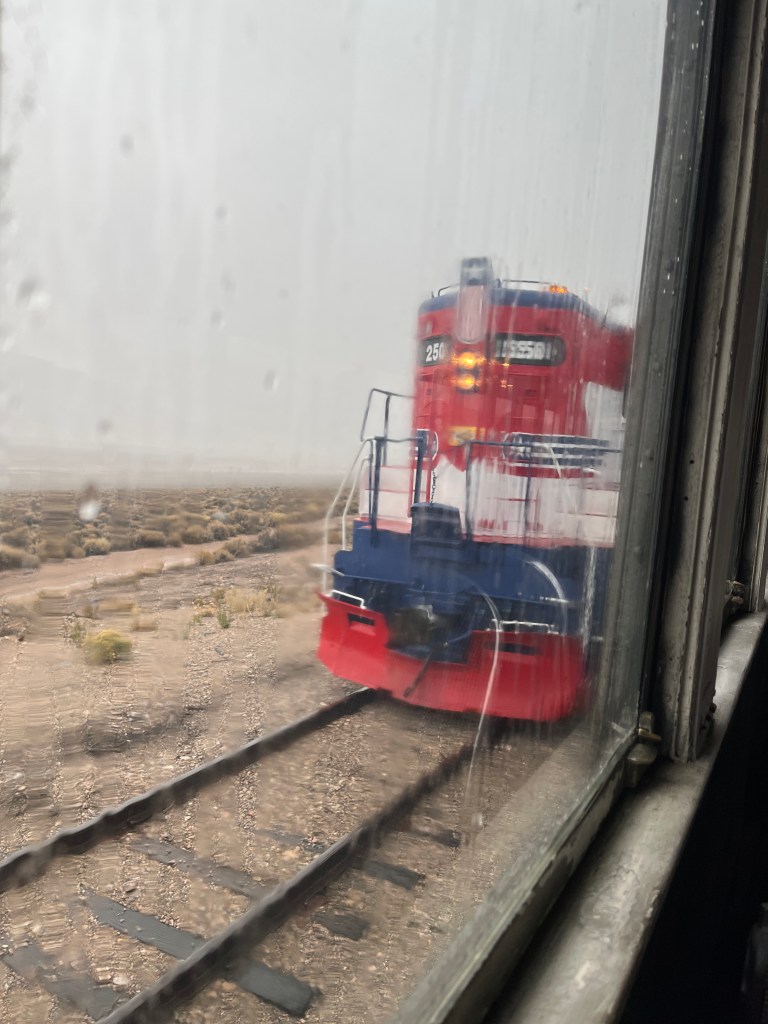
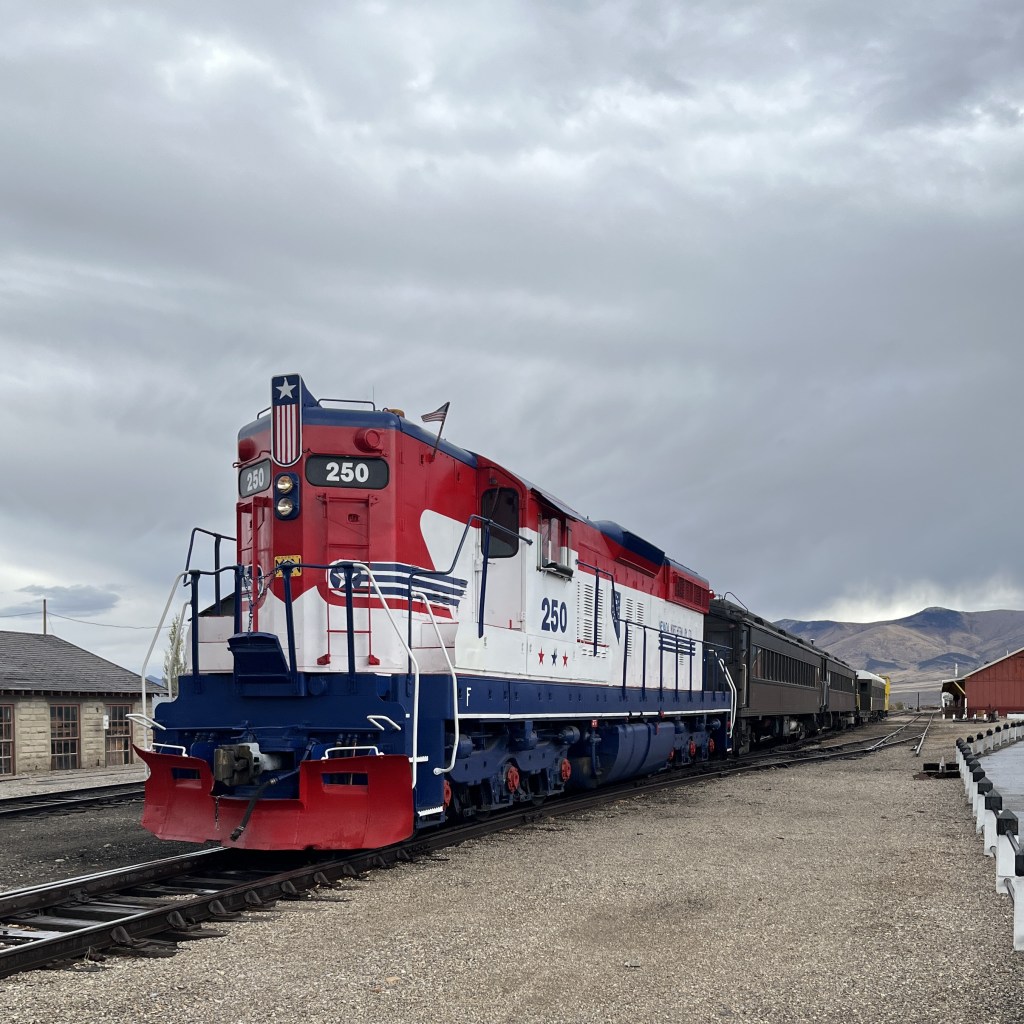
The train ride I went on in the morning was just up the Steptoe Valley a bit. This valley is one of the many “basins” to be found in basin and range country. At about 100 miles long, it’s not setting any records, but it’s no little thing either. We went about 12 or 13 miles up the valley and then the locomotive decoupled and came around to the other end of the train and we went back to Ely.
It was an enjoyable trip and if you’re ever in Ely, you should check out what kind of excursions are available. Although this trip was not stunningly scenic (in part due to the rain), a guide provided plenty of history about the area. You can check out some of the other trips they make here: https://nnry.com/
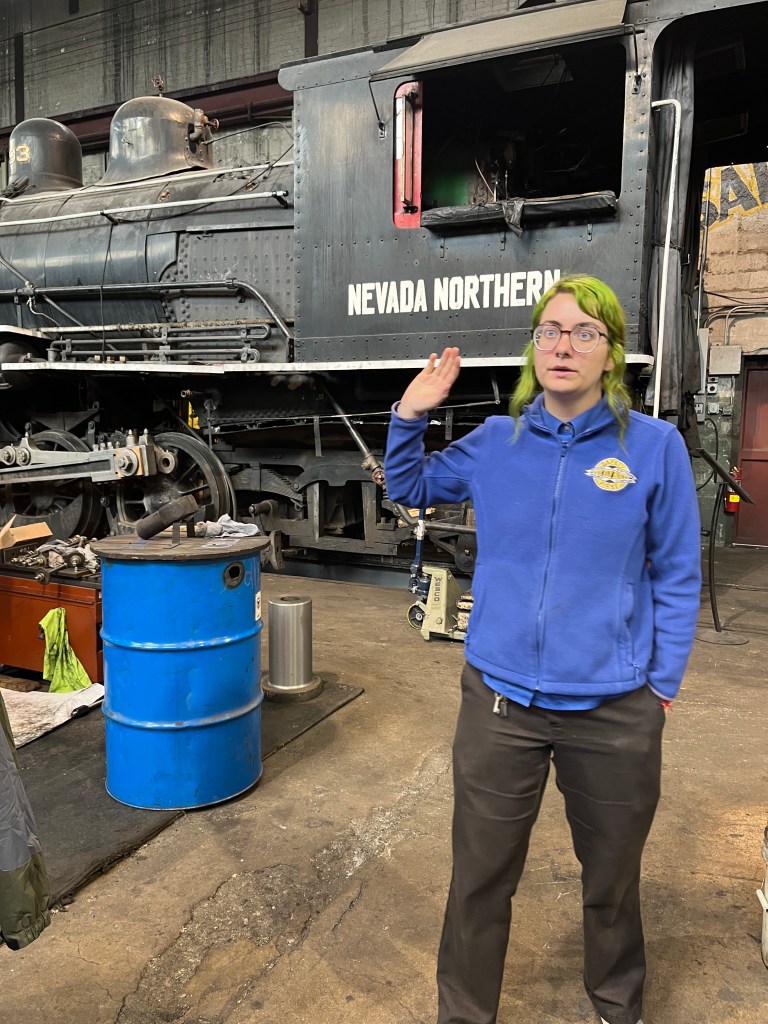
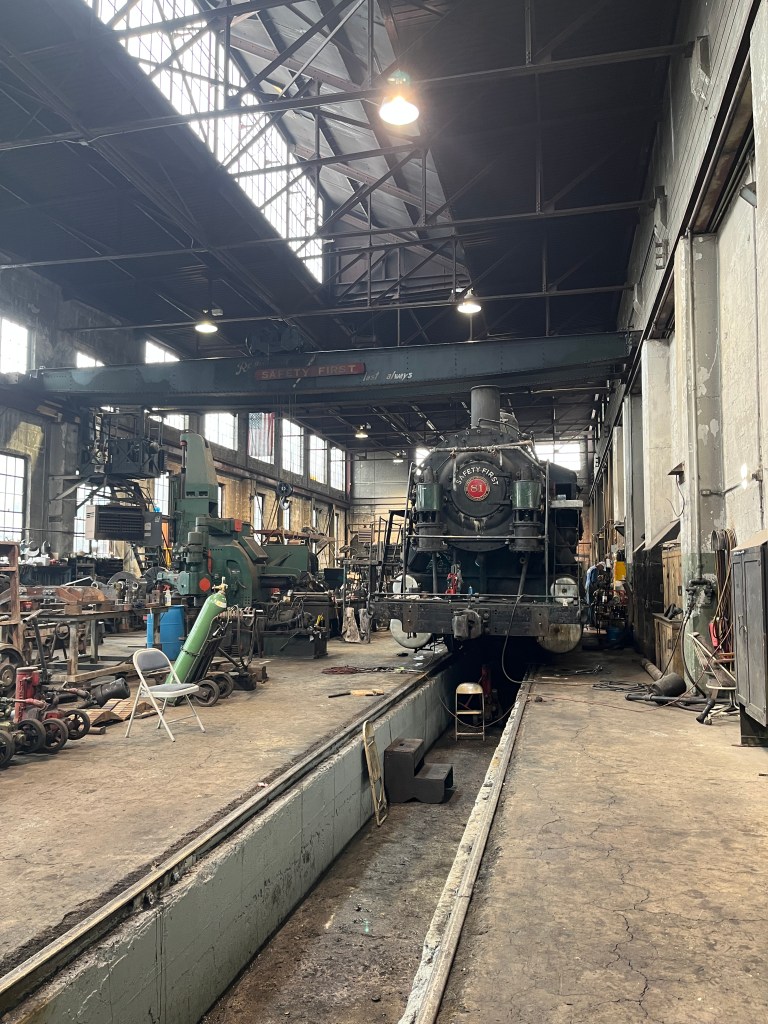
At the end of the train ride, we were offered a tour of the locomotive shed. There were a dozen or so of us on the train, but only three of us went on the tour. Wow, did those other people miss out!
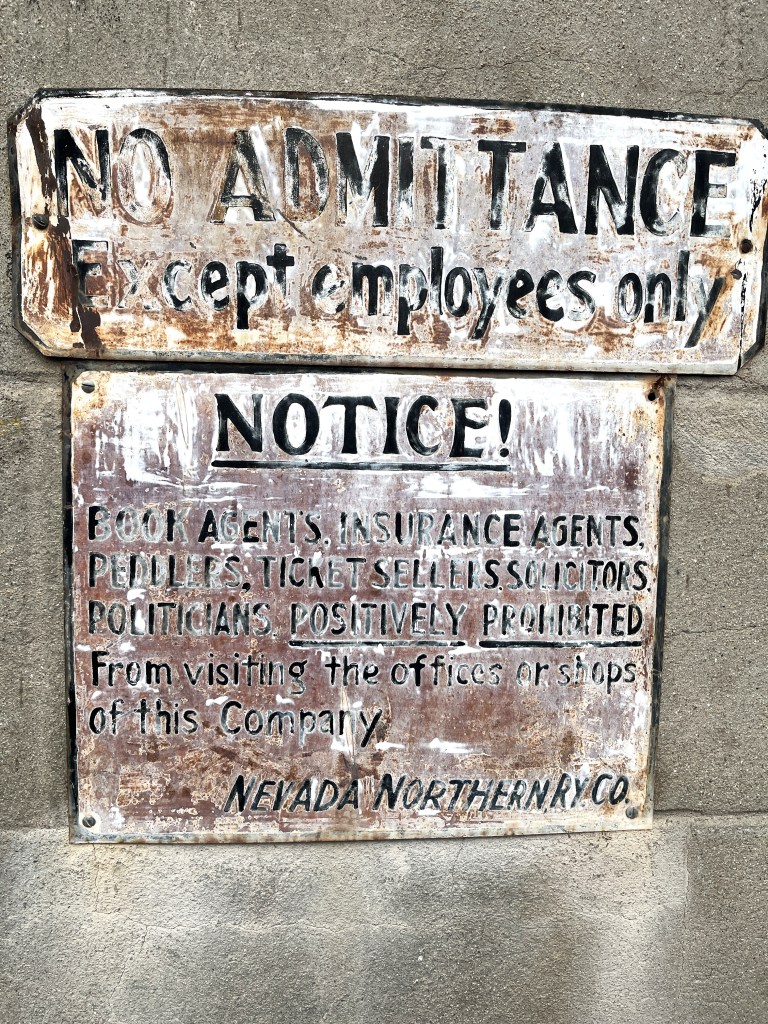
An original sign on the outside of the shed:
“Book agents, insurance agents, peddlers, ticket sellers, solicitors, politicians positively prohibited from visiting the offices or shops of this Company”
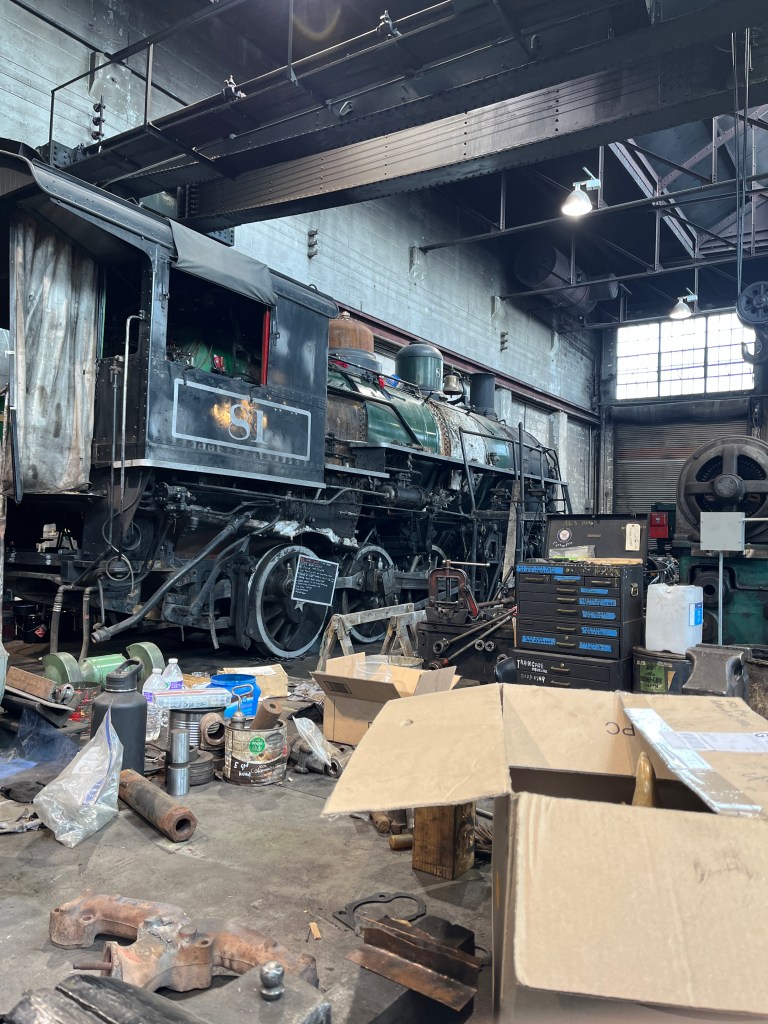
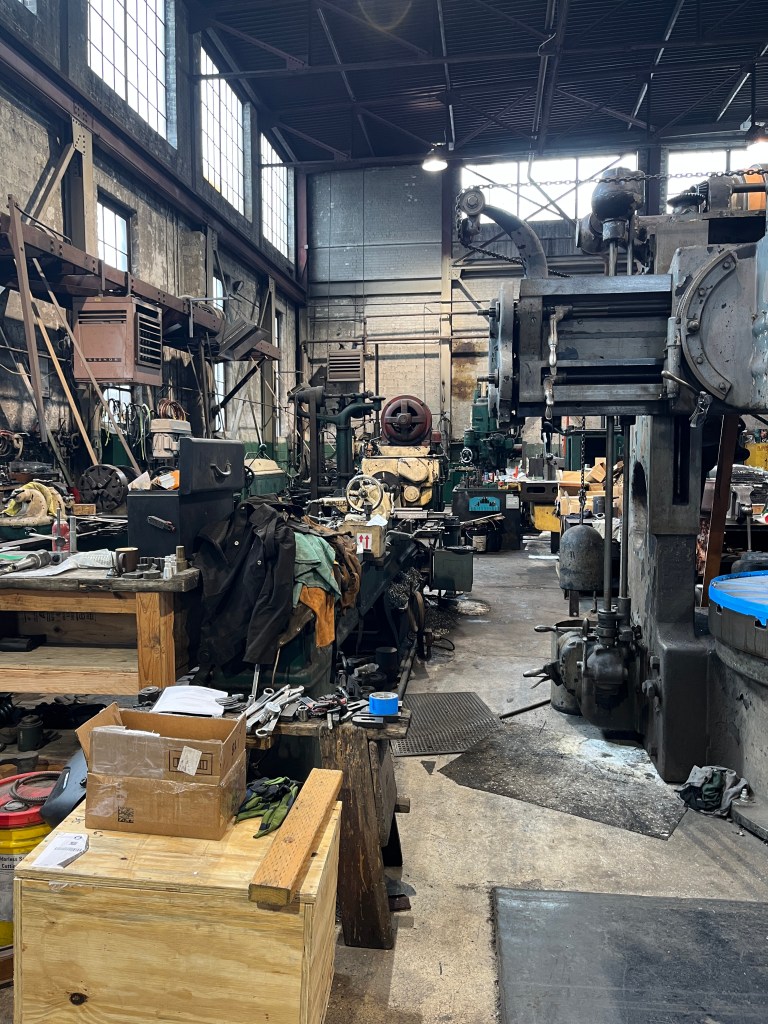
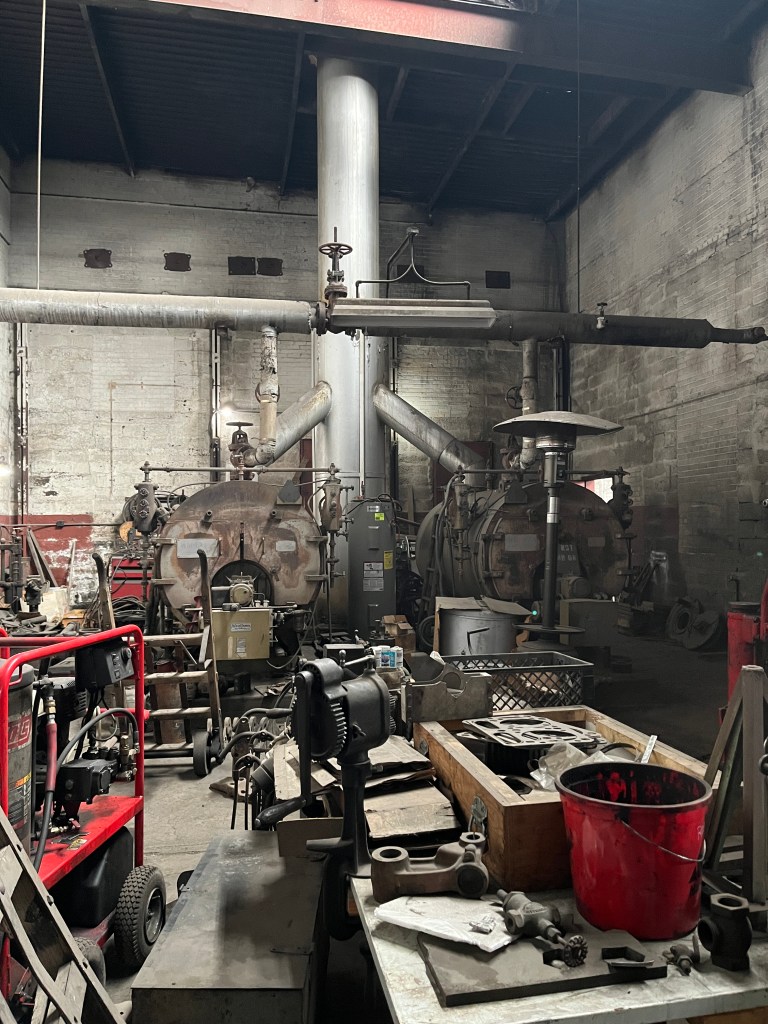
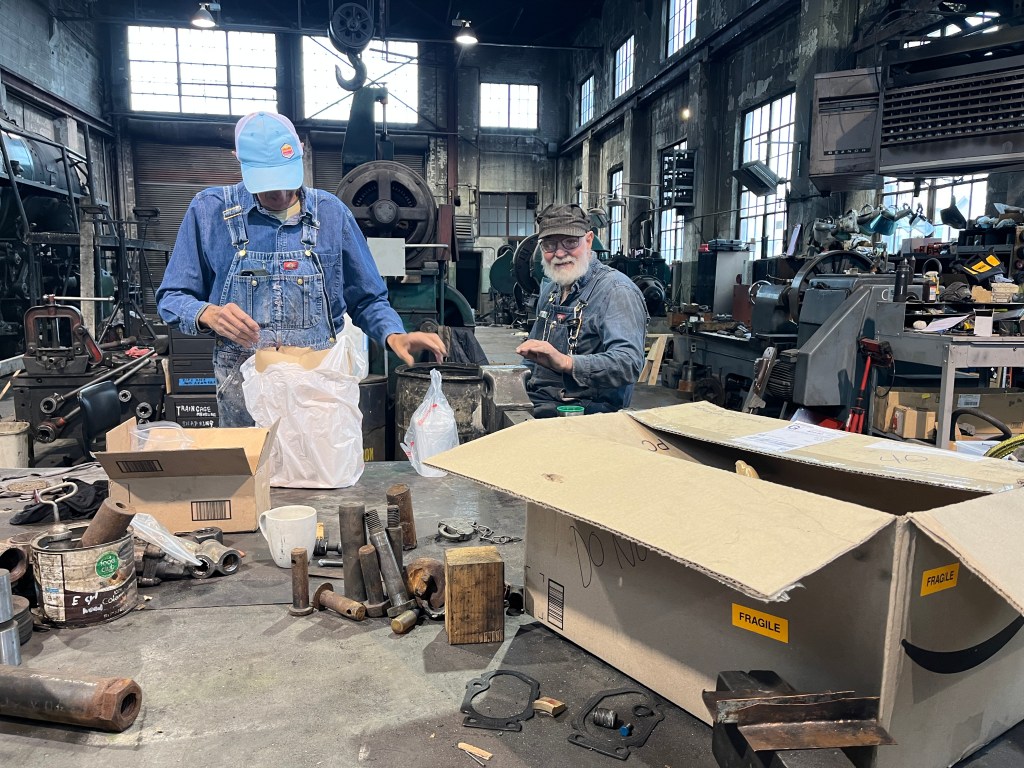
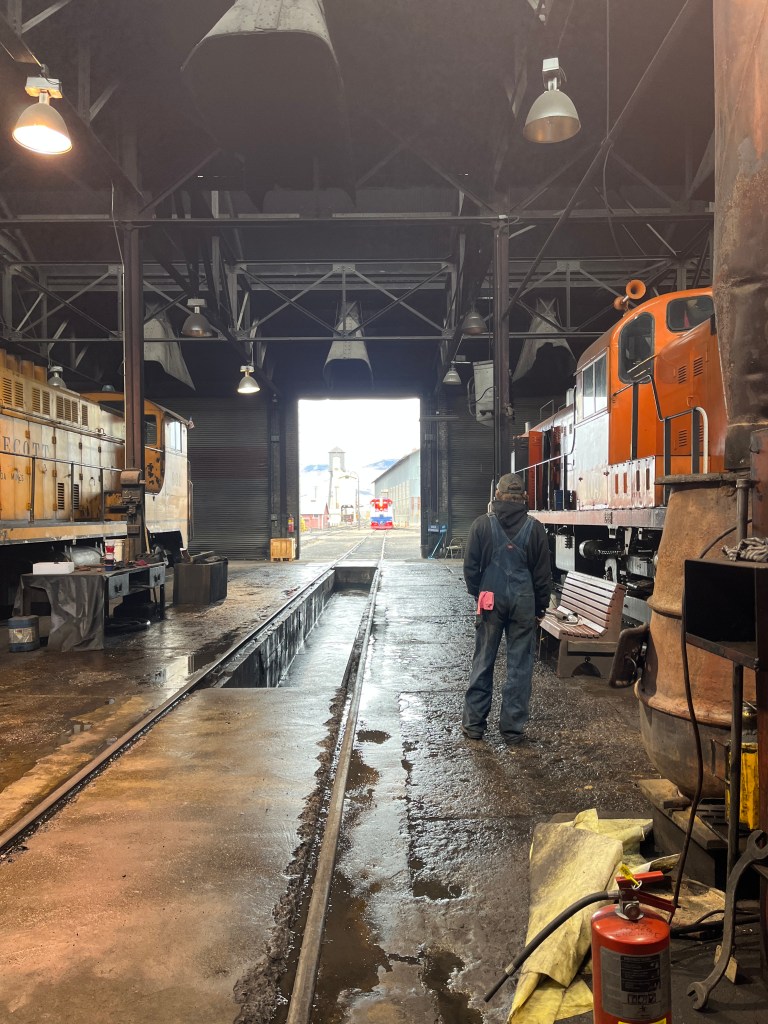
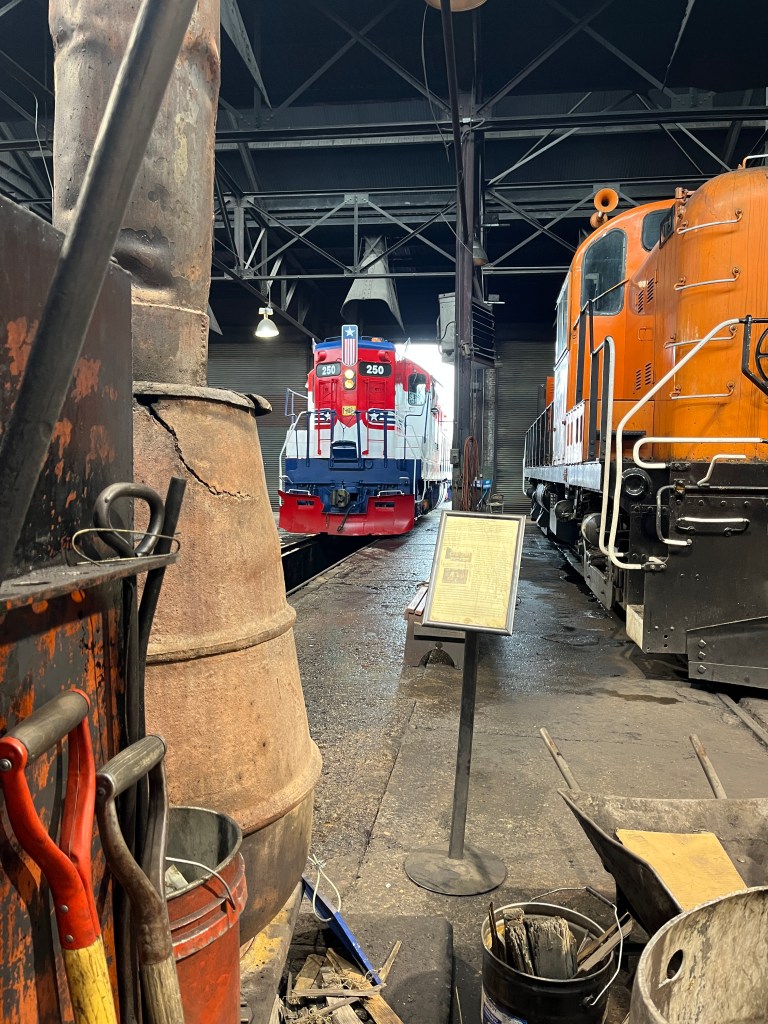
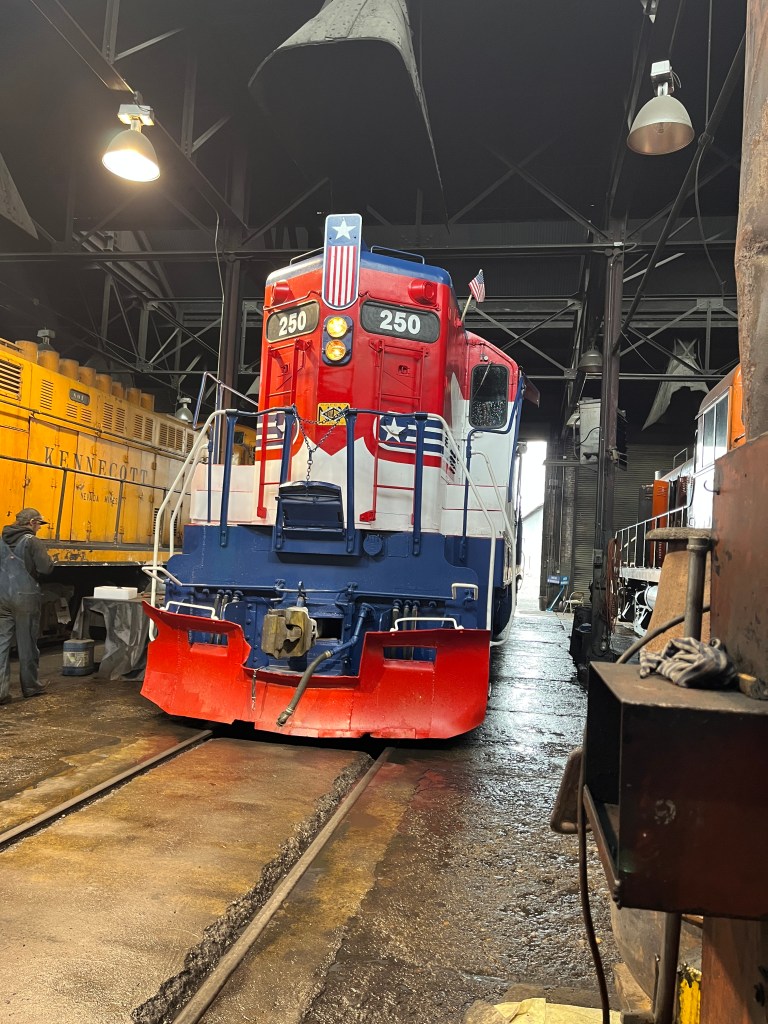
The first thing our guide did was to warn us to step over not on the rails as they were slippery, especially in the rain. Once inside, she cautioned, do not touch anything, be careful not to step on anything, and don’t fall into anything. I think you can see from these pictures why the warnings were necessary.
Here’s a series of pictures showing our locomotive coming back into the shed:
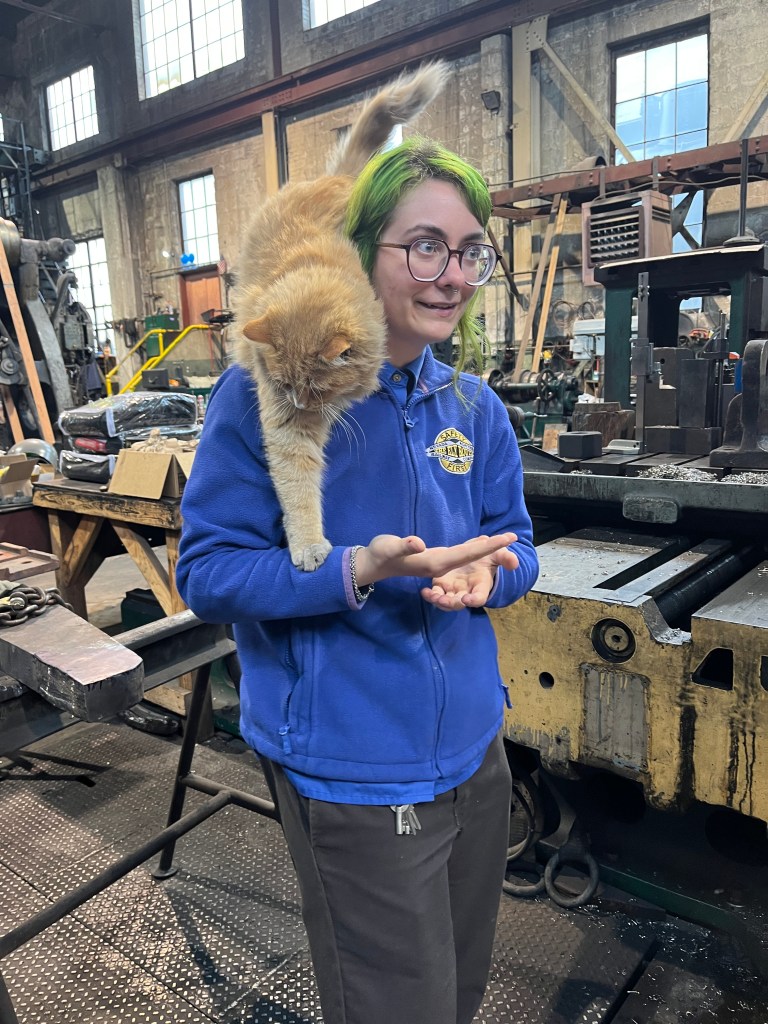
During the whole tour, out guide kept us entertained with lots of stories about the various engines and also about the shop cats. Make sure you take this tour if you can.
I spent the afternoon roaming through the White Pine Public Museum (White Pine is the county that Ely is in). It was refreshing to be in a museum small enough that I could take a good look at everything and just enjoy the cornucopia of items from local history.
Learn all about the area’s first inhabitants with a seriously impressive American Indian display comprised of baskets, arrowheads, intricate beadwork, and more. The Pony Express route ran through northern Nevada, and the White Pine Public Museum does a masterful job at showcasing those stories alongside ranching and buckaroo history. The museum is also home to an impressive mineral collection with more than 300 samples from the region, including gold, silver, and copper ore mined from the hills surrounding Ely. Outdoor exhibits feature mining equipment, a caboose, a historic jail cell, and a complete historic pioneer cabin. https://travelnevada.com/museums/white-pine-public-museum/
And let’s not forget the cave bear:
One of the main attractions at the White Pine Public Museum is the storied Cave Bear. This prehistoric giant bear roamed North America during the Pleistocene era and was the most common bear in this region of Nevada. Sometimes called the Short-Faced Bear, these ancient creatures had a disproportionately short snout compared to other bears. In 1982, Cave Bear bones were discovered in White Pine County, and a replica model is always on display.
It’s 170 miles from Tonopah to Ely, all on US 6. US 6 used to run from Long Beach, CA to Provincetown, MA; at that time, it was the longest US highway in the country. Now it officially starts in Bishop, CA and is only the 2nd longest (after US 20).
US 6 does not serve a major transcontinental corridor, unlike other highways. George R. Stewart, author of U.S. 40: Cross Section of the United States of America, initially considered US 6, but realized that “Route 6 runs uncertainly from nowhere to nowhere, scarcely to be followed from one end to the other, except by some devoted eccentric”. https://en.wikipedia.org/wiki/U.S._Route_6
I think it would be fun to be the “eccentric” referred to!
US 50, which meets up with US 6 in Ely, was called “The Loneliest Road in America” by Life magazine in 1986 for the section running through Nevada. Let me tell you, US 6 feels even lonelier as it seems to have even less traffic than I remember from the times I’ve driven US 50. I was passed by two cars shortly after leaving Tonopah and then didn’t see another car on my side of the road until I hit the junction with NV 318 not far from Ely. As for cars coming the other way, they were scarce: at one point it was 17 minutes between vehicles.
One of the things Ely is known for is a great number of outdoor murals. I had planned on walking around town following the map I had downloaded, but the entire main street of town was torn up, making it very difficult to get around. And my next day there was my only day of wet, drizzly, and/or rainy weather. I’ll just have to hit the murals next time, because I enjoyed Ely enough to go back.
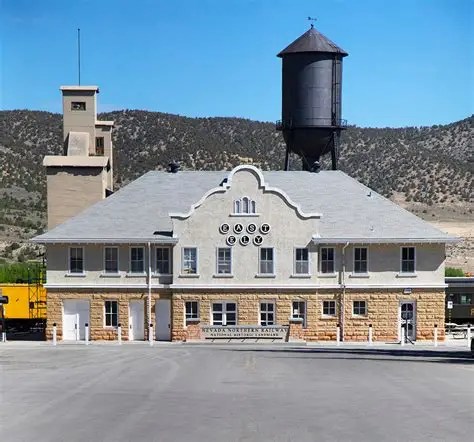
My first stop, then, was the Northern Nevada Railway Museum:
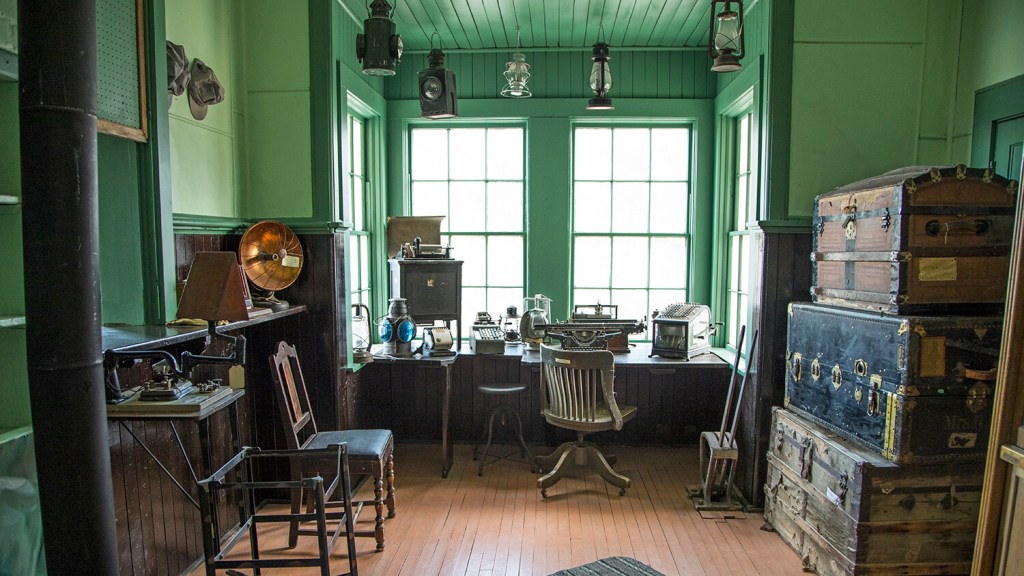
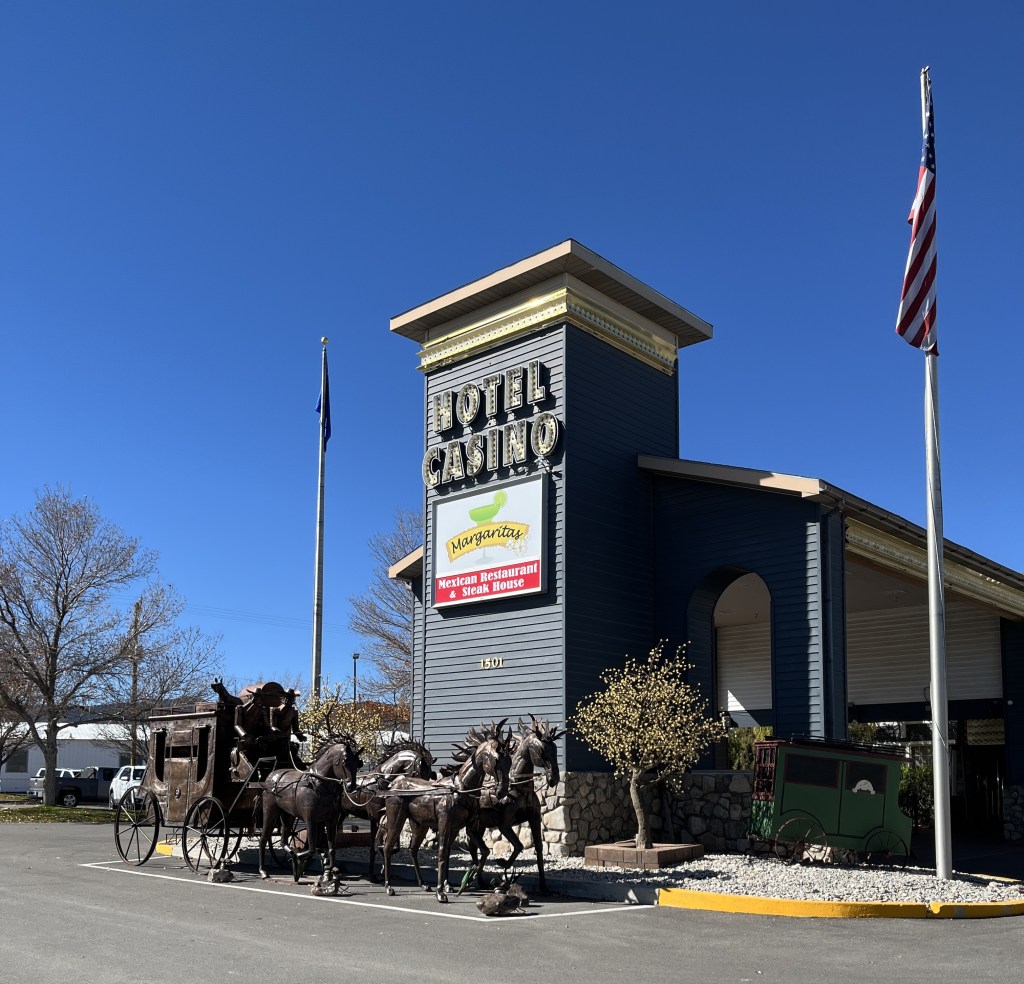
There’s not much to the museum exhibits; the fun is in seeing all the actual locomotives and rail cars. The two women in the gift shop were really nice and after chatting for a bit I asked them where I should have dinner. They both suggested “Margaritas”. Turns out that restaurant was in the hotel I was staying at and it was very good. Before leaving, I bought a ticket for a train ride the next day.
My hotel was the Prospector Hotel and Casino for the two nights I was in Ely and I loved it. Besides a good restaurant and friendly staff, they also gave out bags of popcorn at 4 pm every evening! The room was large and had all the amenities. It also had two bottles of Wolfgang Puck wine (one red and one white) to purchase with part of the proceeds going to charity. I had the white.
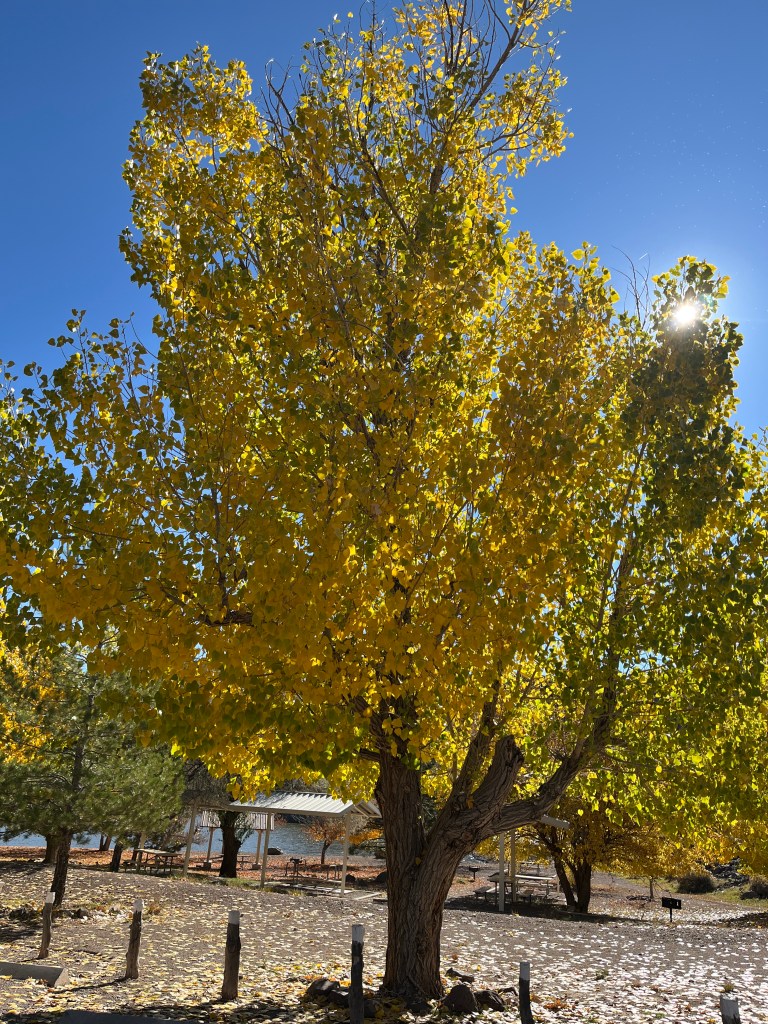
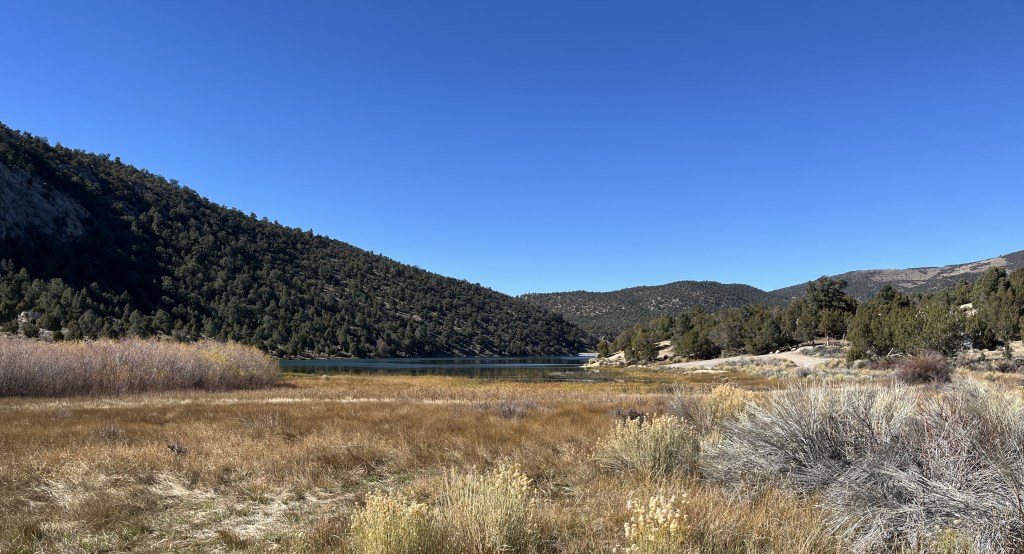
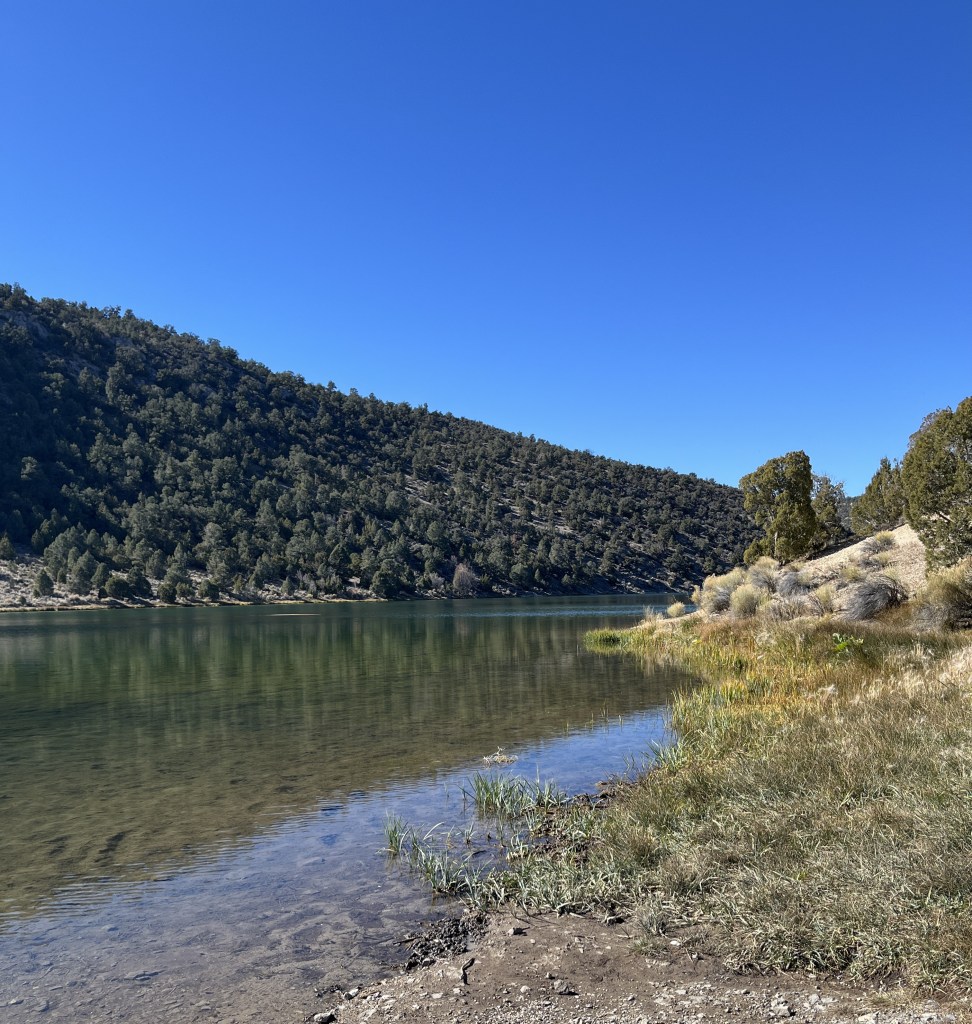
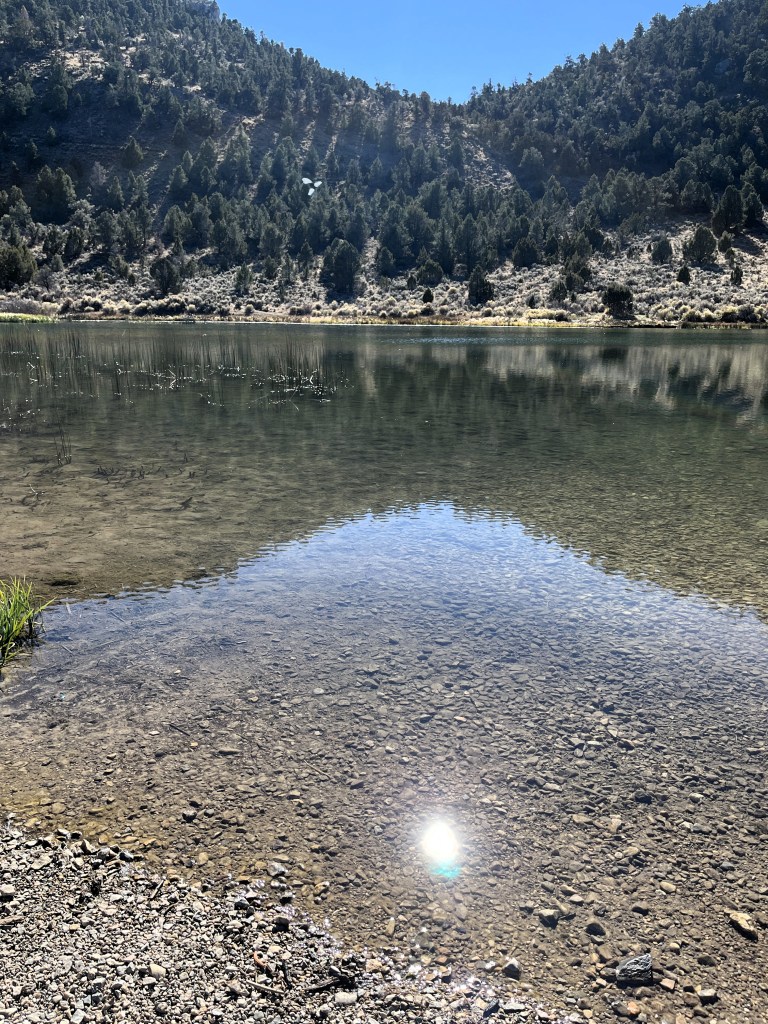
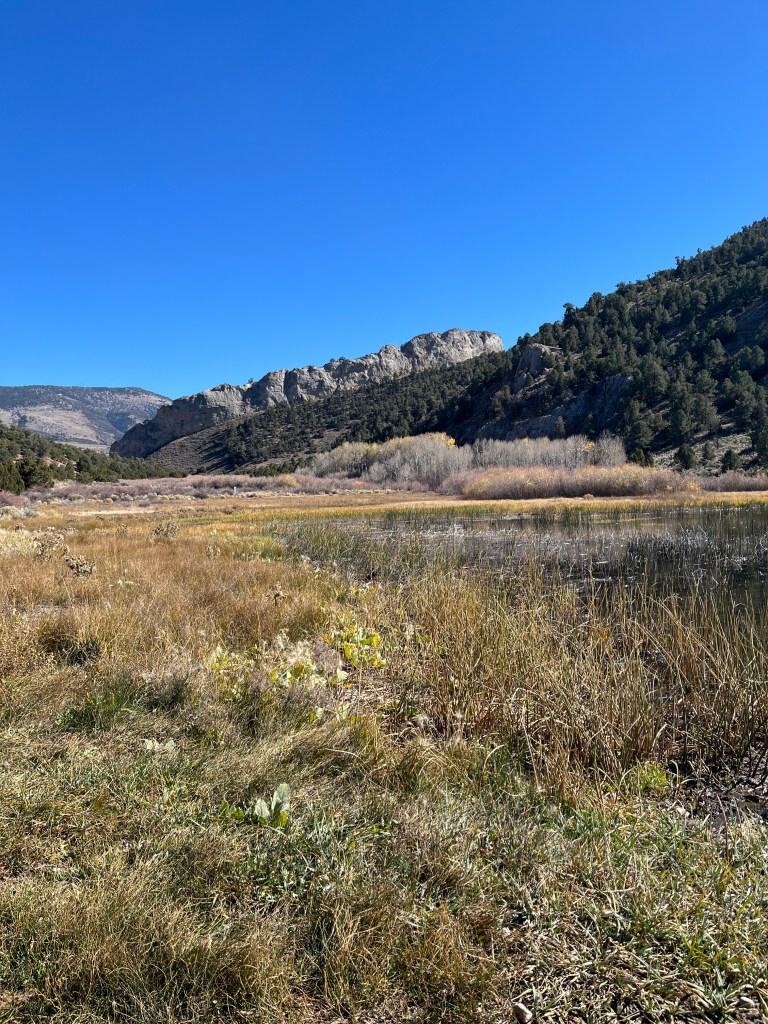
I had the afternoon to go exploring and the woman at the front desk suggested that Cave Lake State Park might have some fall colors to enjoy. The area around Ely is mostly sagebrush, pinyon pine, and juniper, so not much color there, but all the creek beds were full of bright yellow willows.
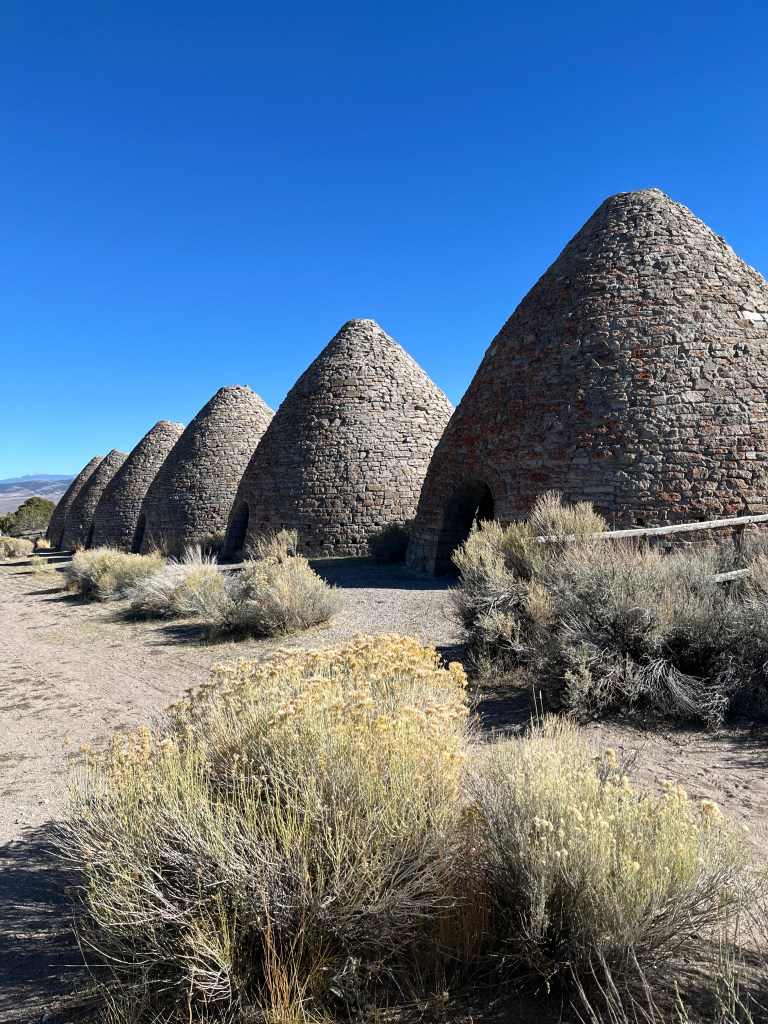
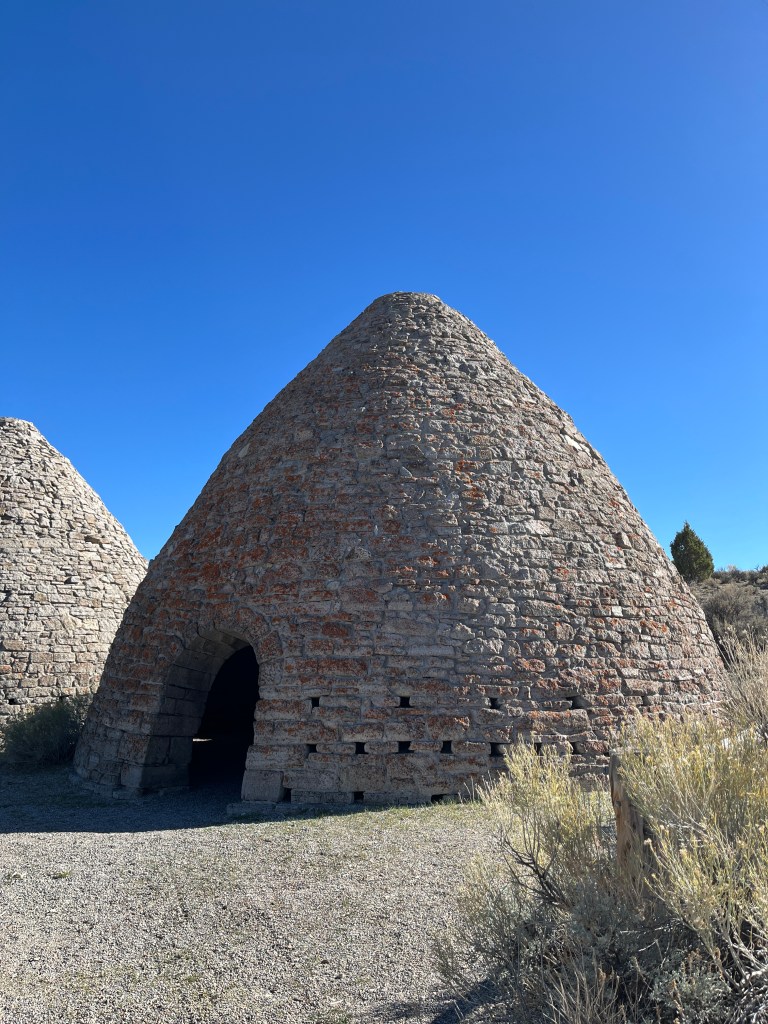
Next up was Ward Charcoal Ovens. I have been to some other charcoal ovens, but these were in really fine shape. They were built in the 1870s to produce charcoal for a nearby smelter. This means the area is just beginning to recover from being deforested. Fortunately for the rest of the trees in the area, the newly built railroads started bringing in coal for the smelter to use.
A note about the color of the sky in most of these photos. The pictures were all taken with my iPhone 13 mini. The only adjustments I made to them was cropping and maybe lightening up some shadows. I don’t adjust the color or tint at all. The sky really is that intense blue that I associate with my visits to the Southwest in my childhood and that I so rarely see any more.
Tomorrow will be trains and a short-faced bear fossil.
I hit the road with a handful of trail mix as I was sure I would be in Tonopah by lunch time. It’s under a hundred miles between the two towns, but I had a few stops planned along the way in the little town of Goldfield.
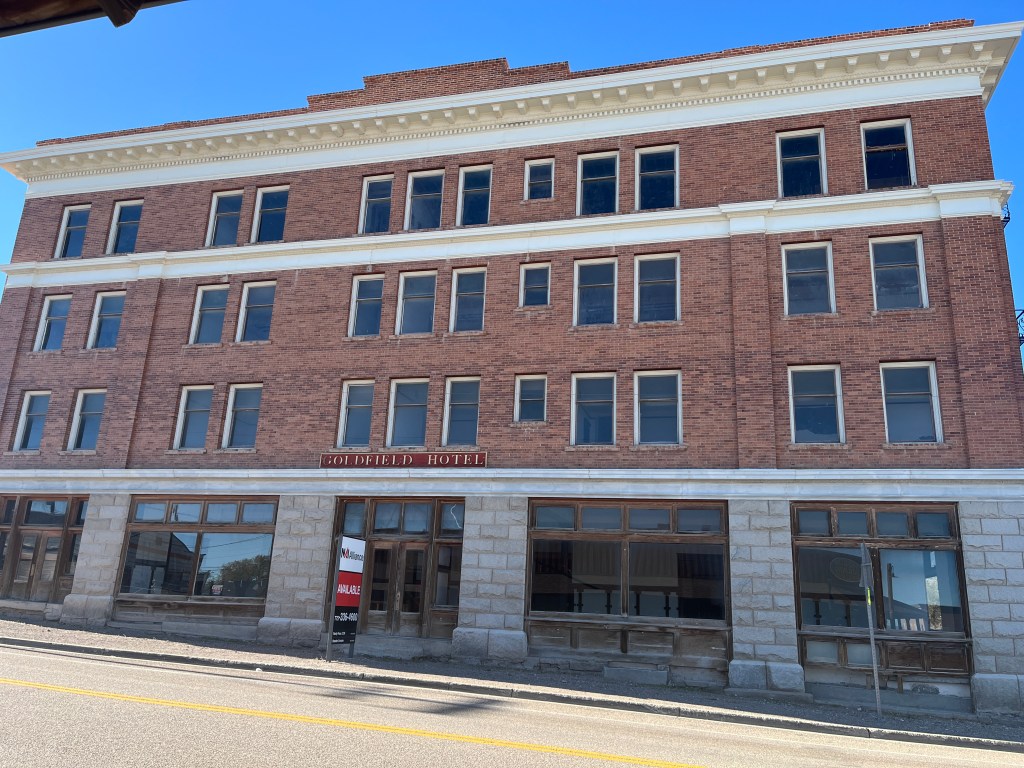
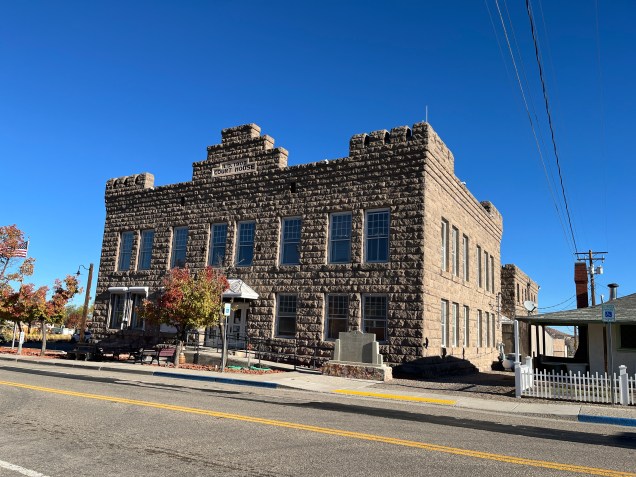
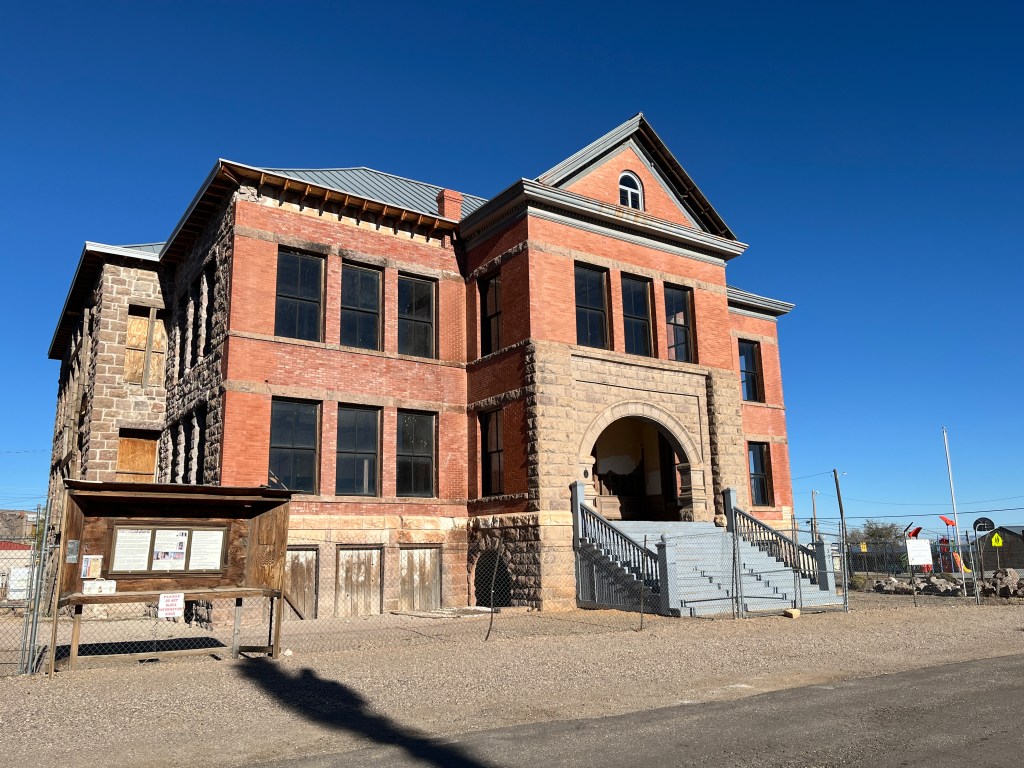
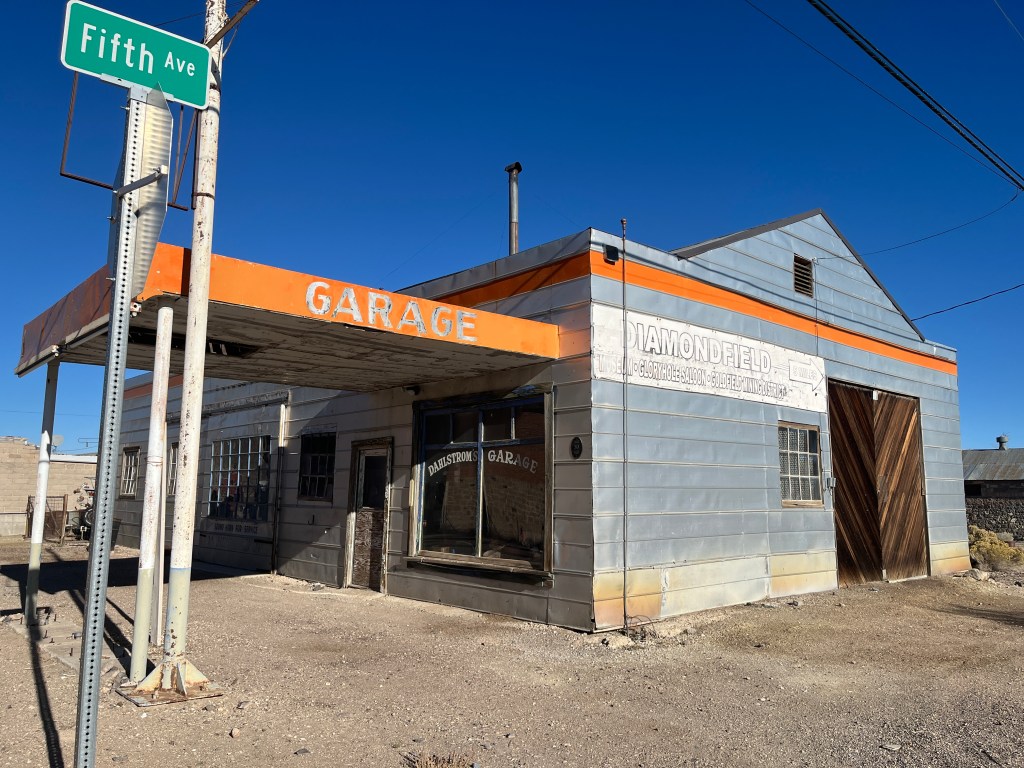
Goldfield is the county seat of Esmeralda County in spite of the fact that the town qualifies in some respects as a ghost town. In its heyday, it had around 20,000 residents, it now has about 400, with another 300 or so in the rest of the county. Unlike most ghost towns, though, the buildings are not abandoned. just largely unoccupied. In fact, here’s a piece of history, the Goldfield Hotel, that you could own:
The county courthouse (which also houses the county clerk, assessor, sheriff, jail, etc.):
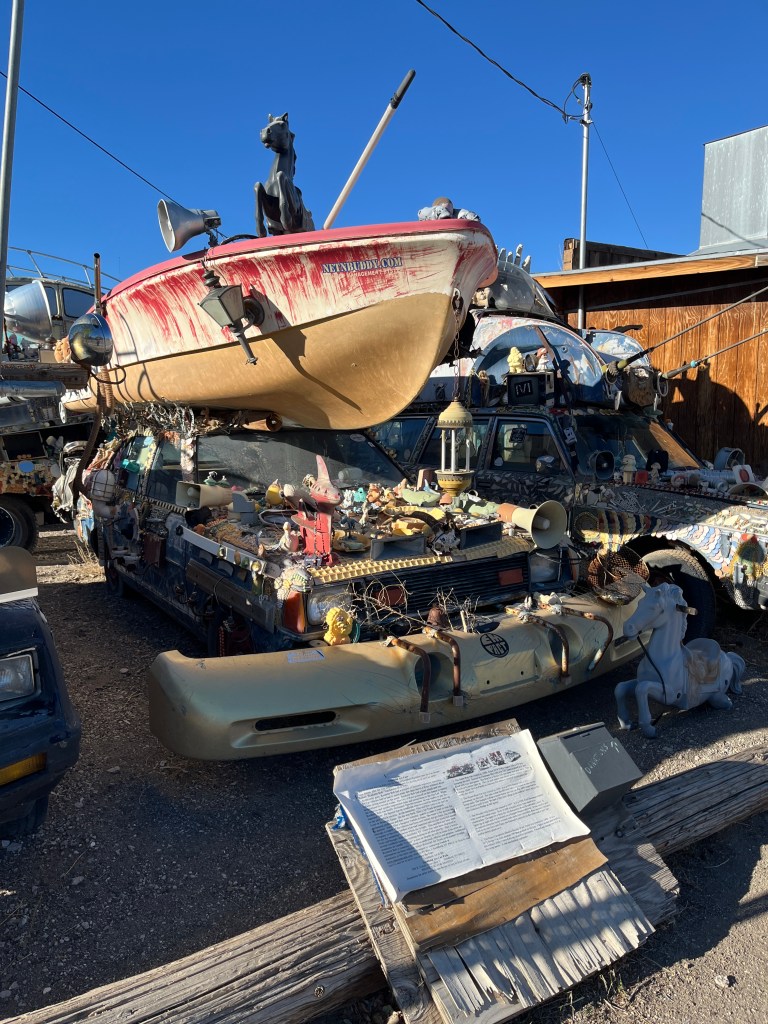
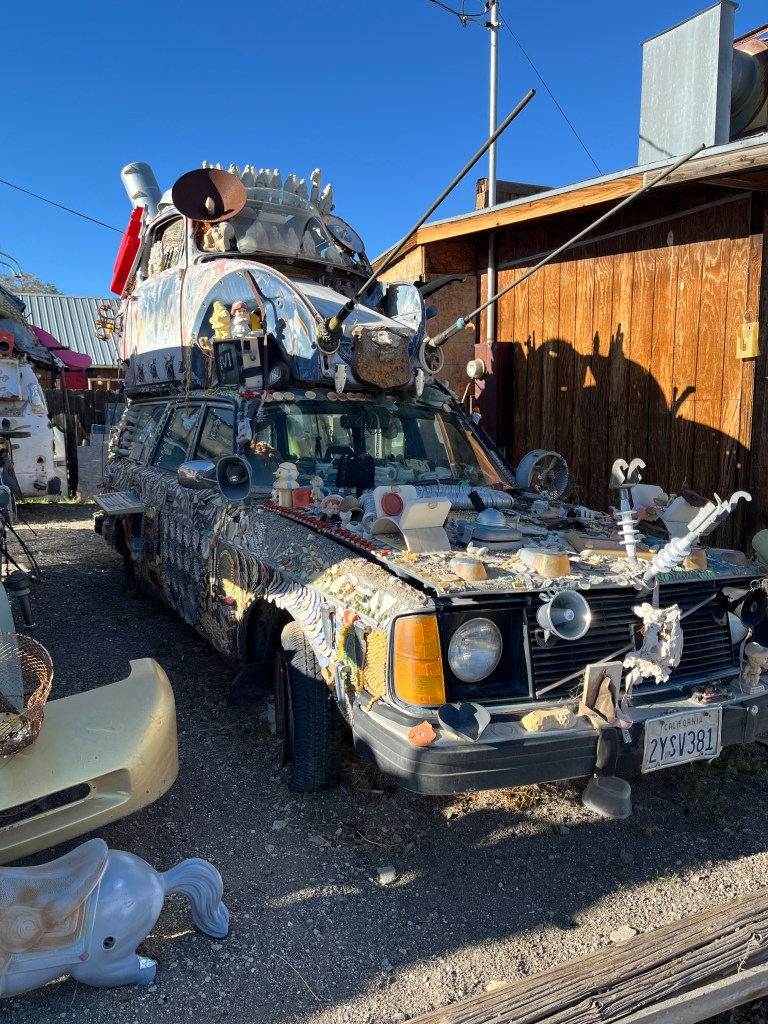
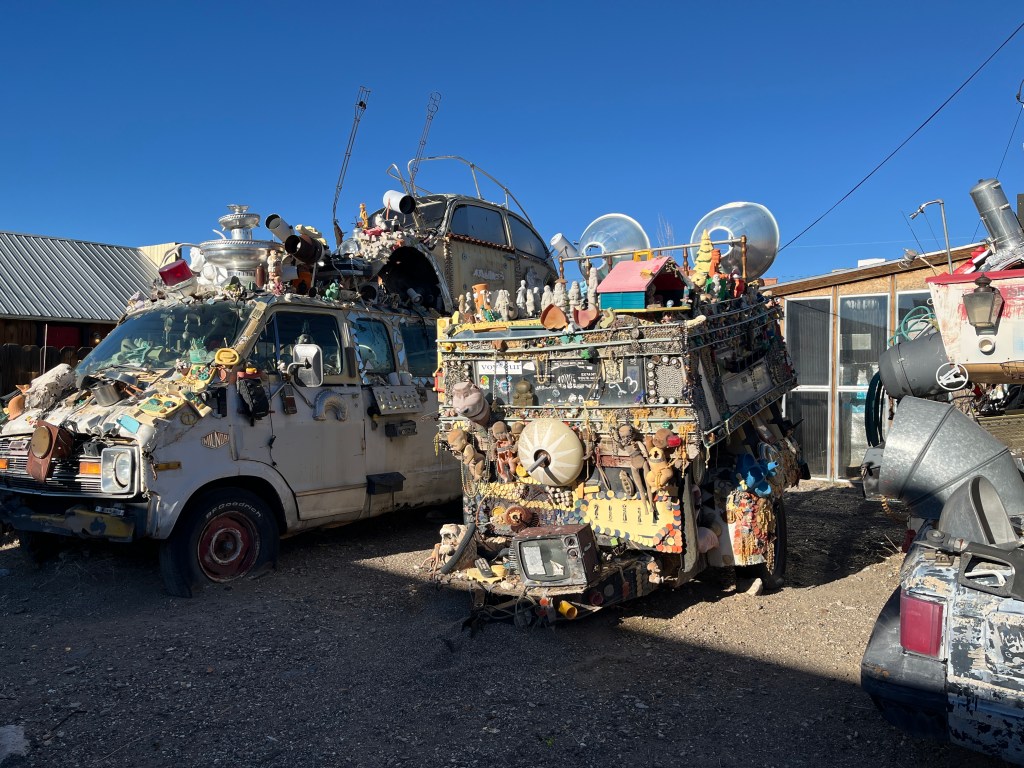
I couldn’t resist copying out part of the information on the sign in front of these beauties:
The Goldfield Art Car Park was the idea of Goldfield Resident and Art Car Owner Slim Sirnes, after the City of Reno impounded the moving art of Art Car Artist Robert “Rockette Bob” Van Keuren III in 2001. As the story goes, Rockette Bob had a number of licensed, registered, operating vehicles that he had to move every few days due to a Reno ordnance about vehicles sitting around on the street. Rockette Bob had a heart attack and was hospitalized for several weeks. The City of Reno pounced on the chance to remove his vehicles and quickly impounded them and towed them to the City Lot. When Rockette Bob was finally discharged from the hospital, he was unable to pay the impound fees. He figured that he would see what he could do when they came up at the next vehicle auction. In the meantime, Slim and Bob went to an Art Car Event in Houston, Texas. On the way back, Slim’s Art Truck developed mechanical problems and they were stranded, unable to make it back in time for the auction. Enter Slim’s daughter Nadiah in Reno. She went to the auction and although a couple of the vehicles had been sold before she got there, she was able to explain to the other bidders what had happened, and no one would bid against her for the remaining vehicles which she bought. Slim and Bob got back from Texas and brought them to Goldfield, NV where they have been displayed in several Goldfield locations creating interest in all who pass by.
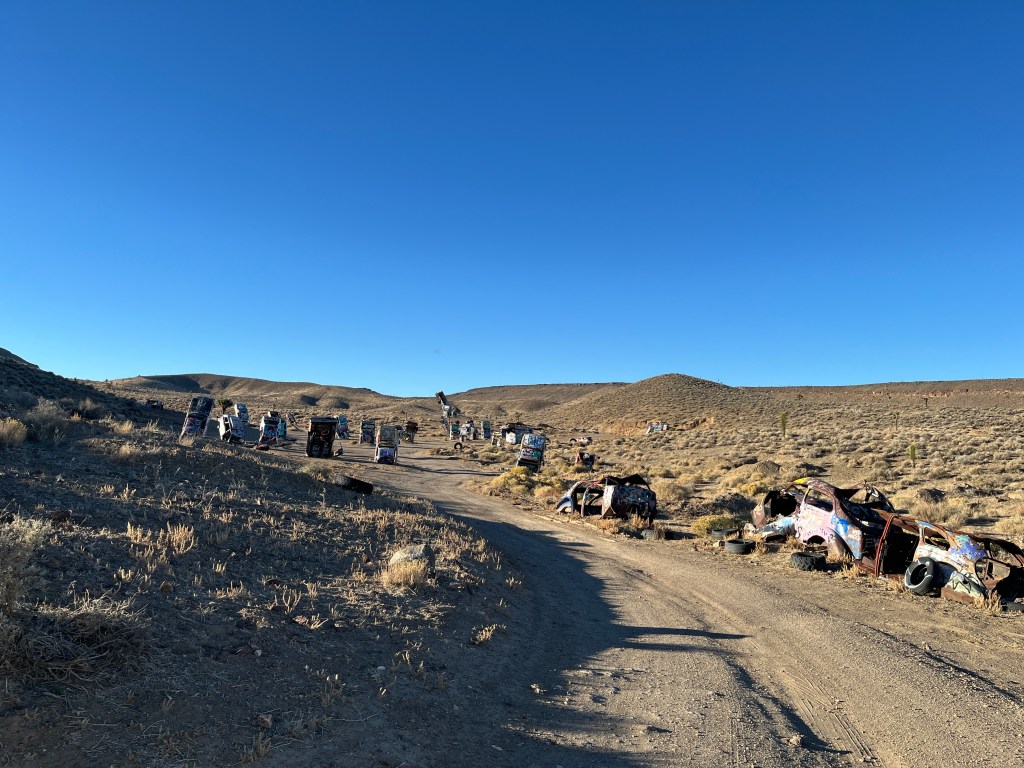
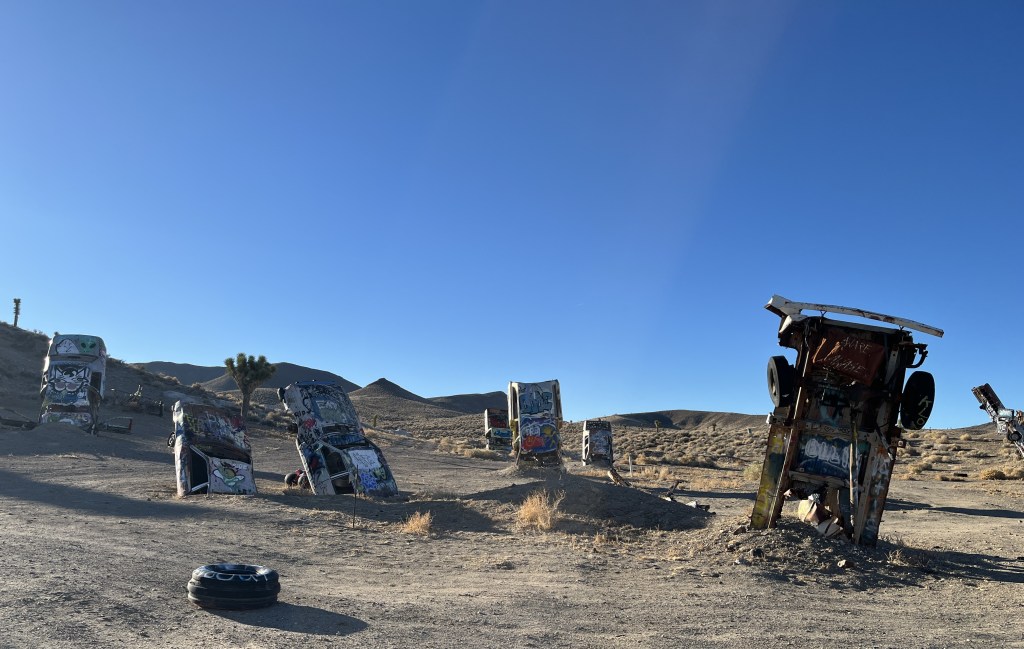
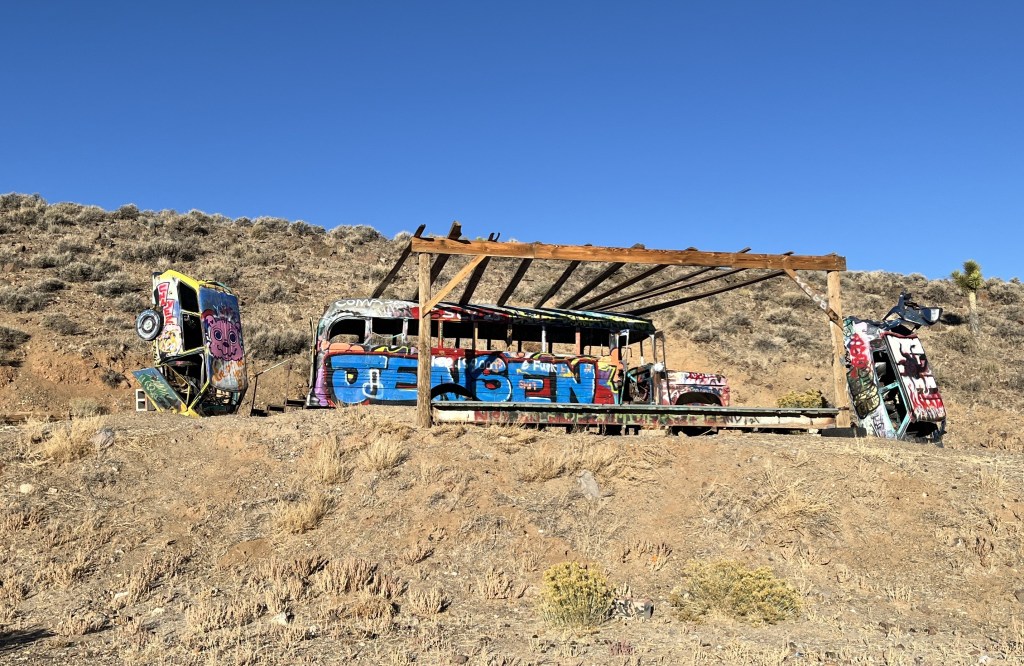
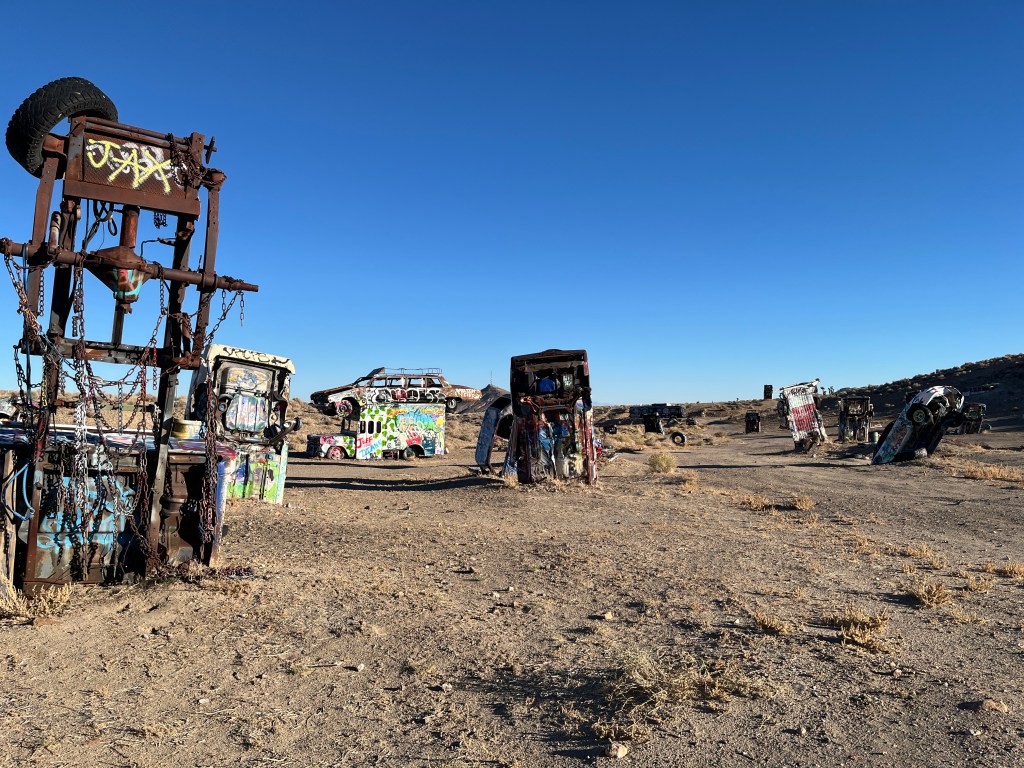
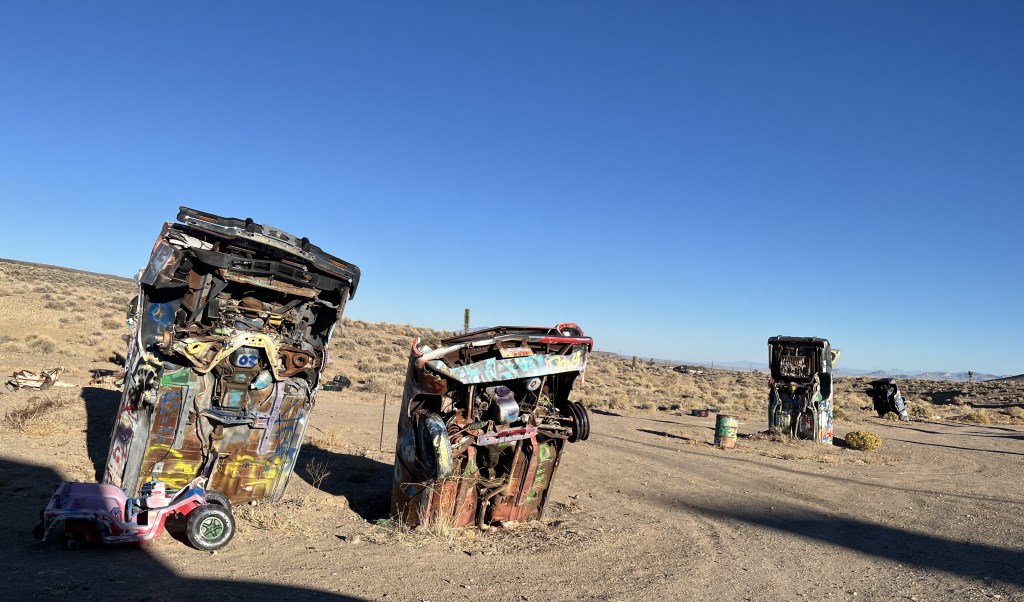
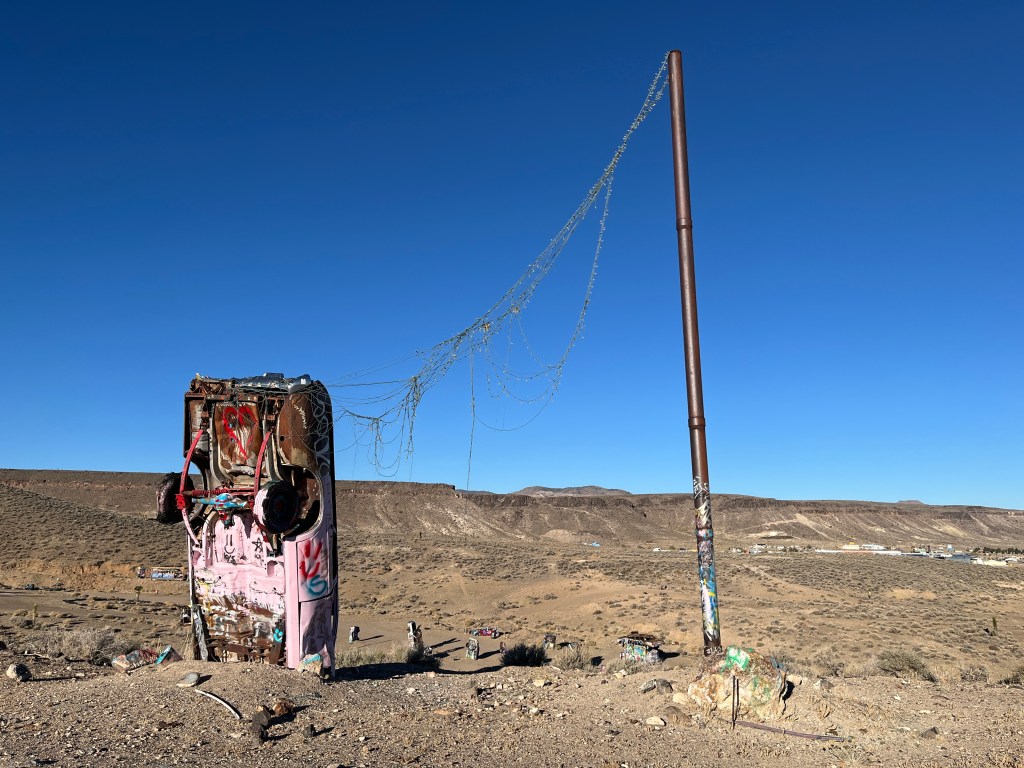
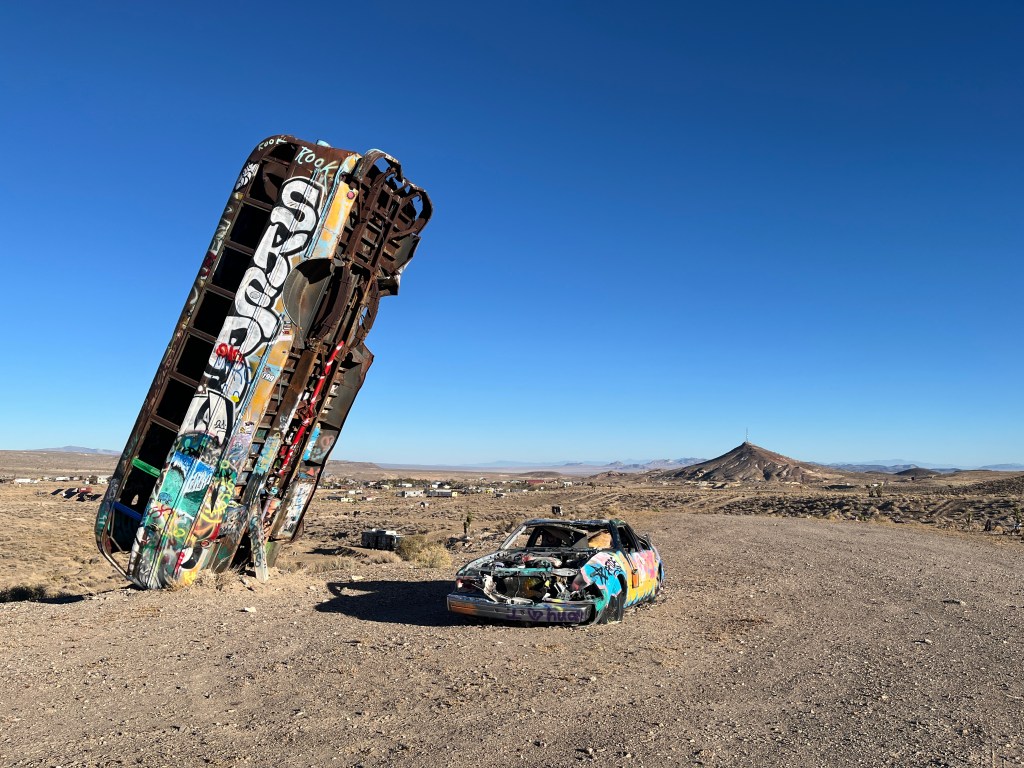
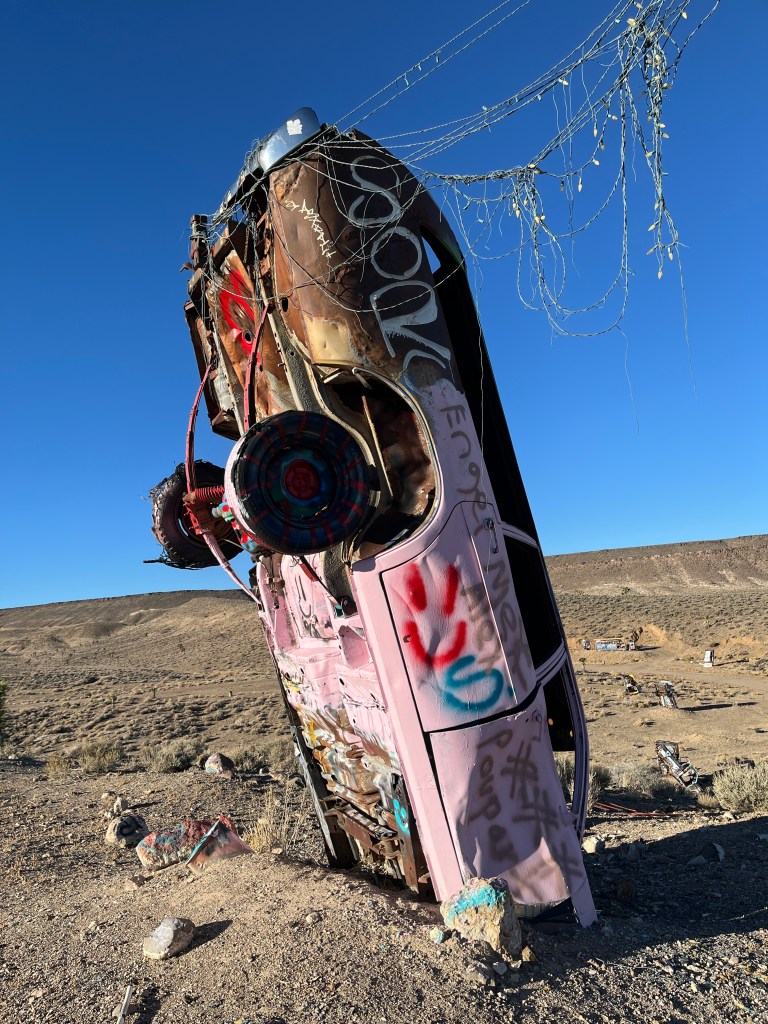
These are not the most famous cars to be found in Goldfield, however. That distinction must go to the vehicles to be found in the “International Car Forest of the Last Church”.
Part of the Goldfield scene for years, the International Car Forest was created by longtime resident Mark Rippie, whose vision was to break the Guinness World Record for the world’s biggest car forest. Joined by artists Chad Sort and Zak Sargent, the three set to work, burying the noses of more than 40 cars, vans, trucks, and buses. Outdoor car exhibits are found in other states (like Texas’ Cadillac Ranch or Nebraska’s Carhenge, for example), but Goldfield’s International Car Forest of the Last Church is, in fact, the largest in the country. (https://travelnevada.com/arts-culture/international-car-forest-of-the-last-church/)
The “International Car Forest” part of the name was a spoof on “National Forest”. “The Last Church” portion was as a representation of the Last Church being inside each of us.
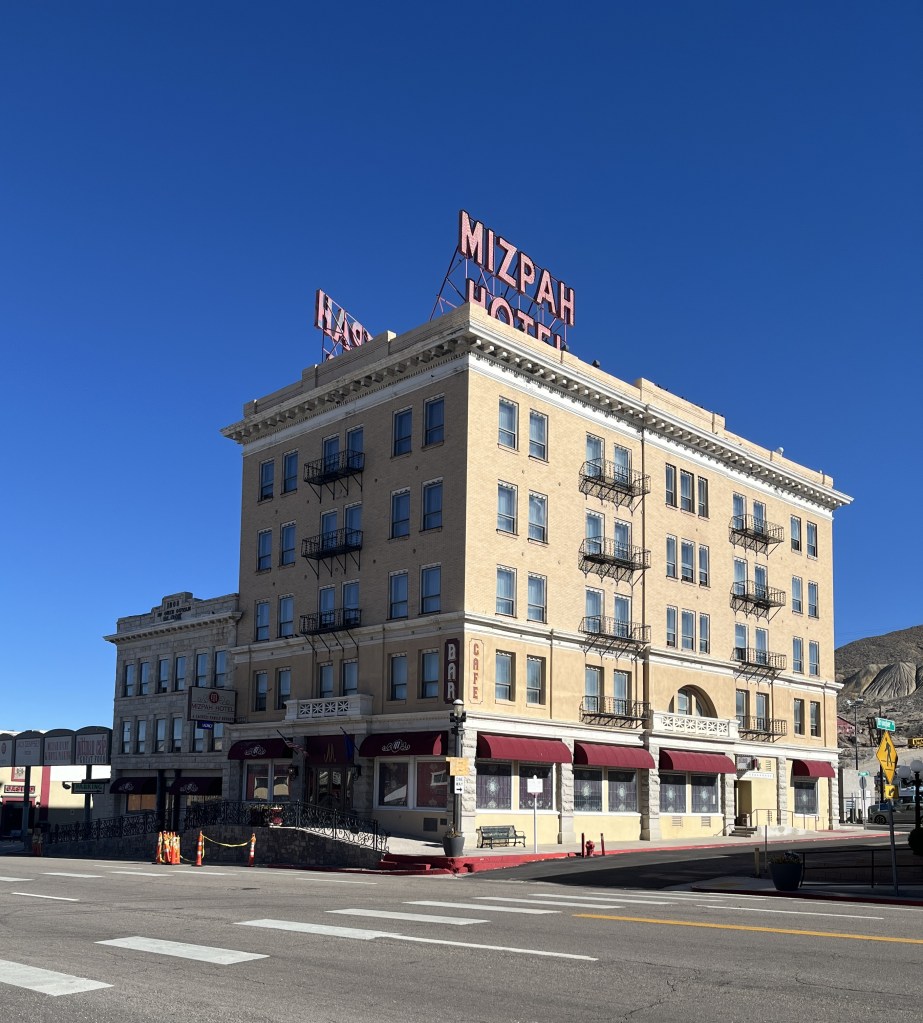
I did make it to Tonopah by lunch and in the afternoon checked into the historic Mizvah Hotel.
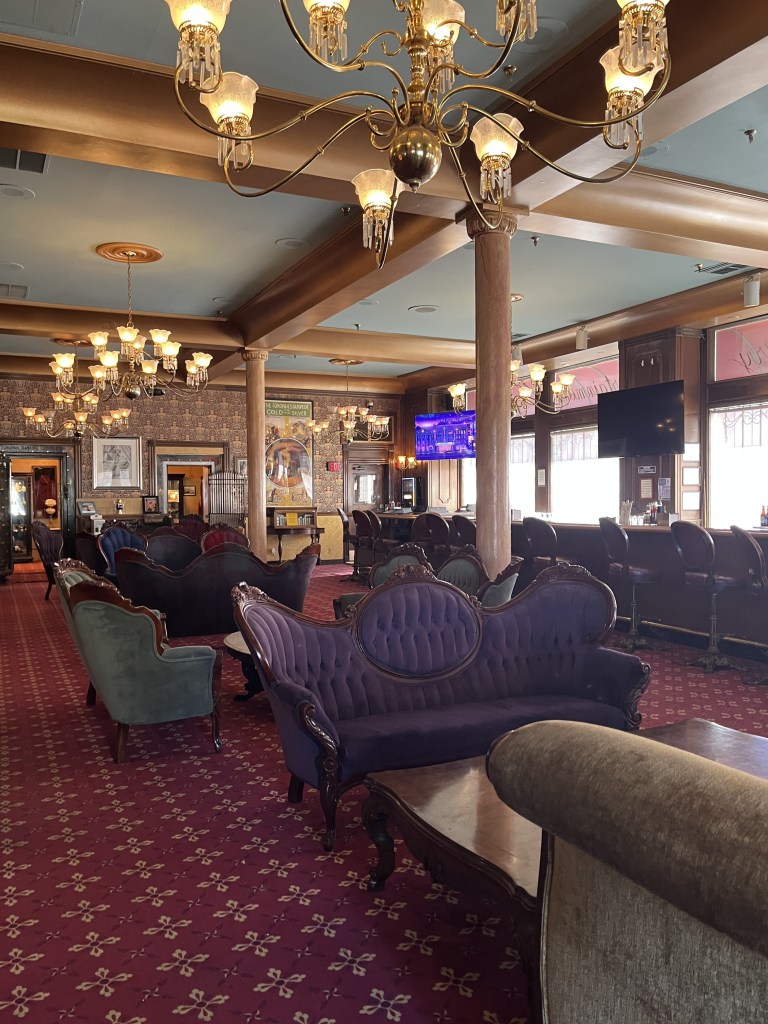
It’s reputed to be haunted, but I wasn’t visited by any spirits. The lobby was delightful, though.
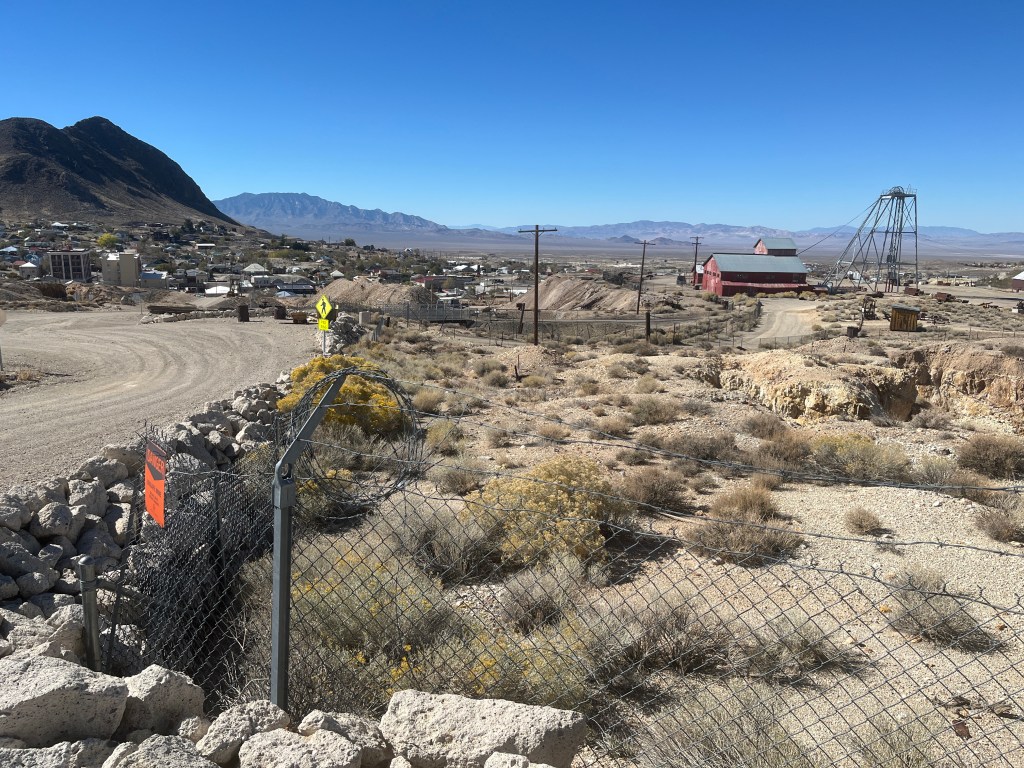
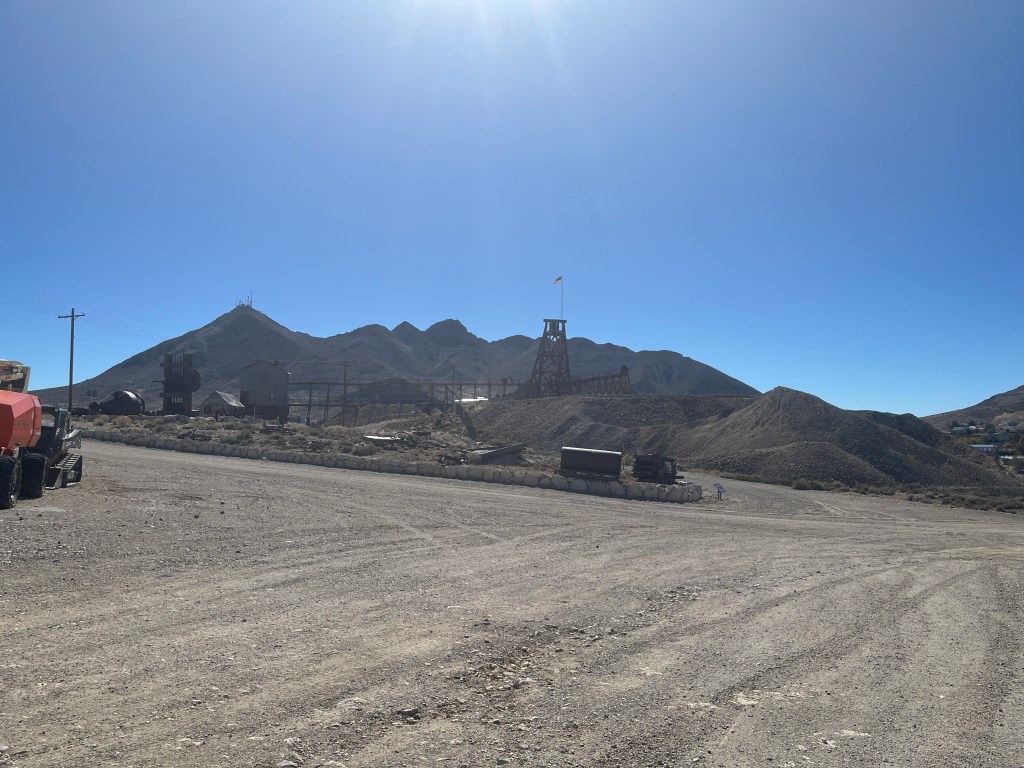
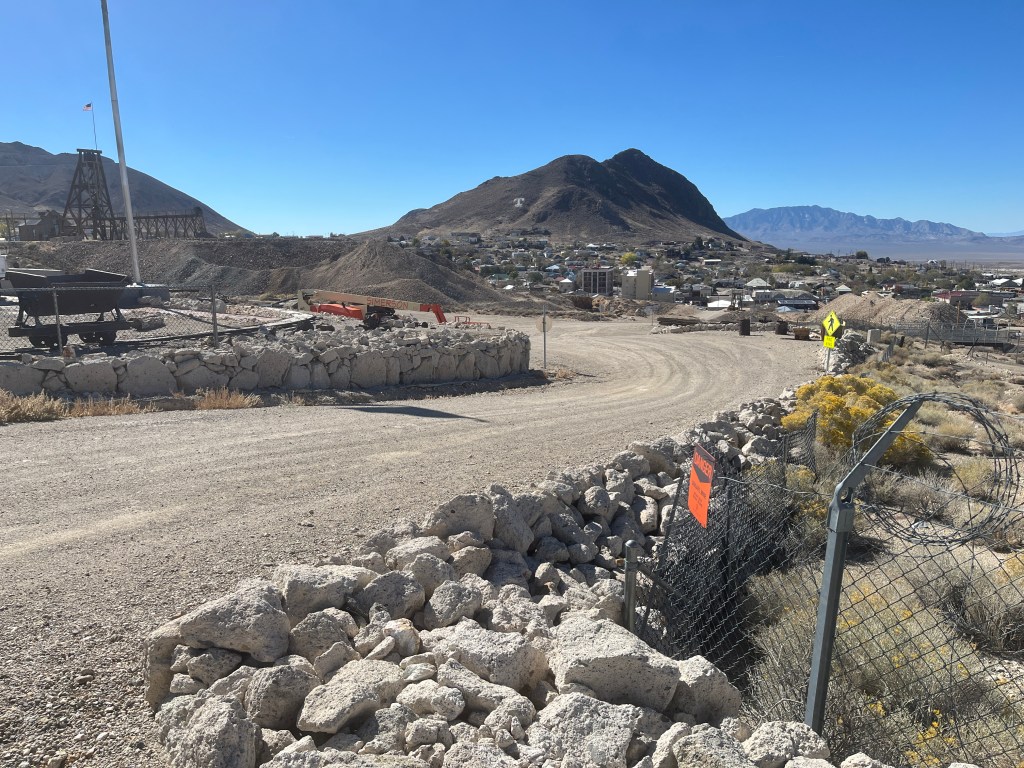
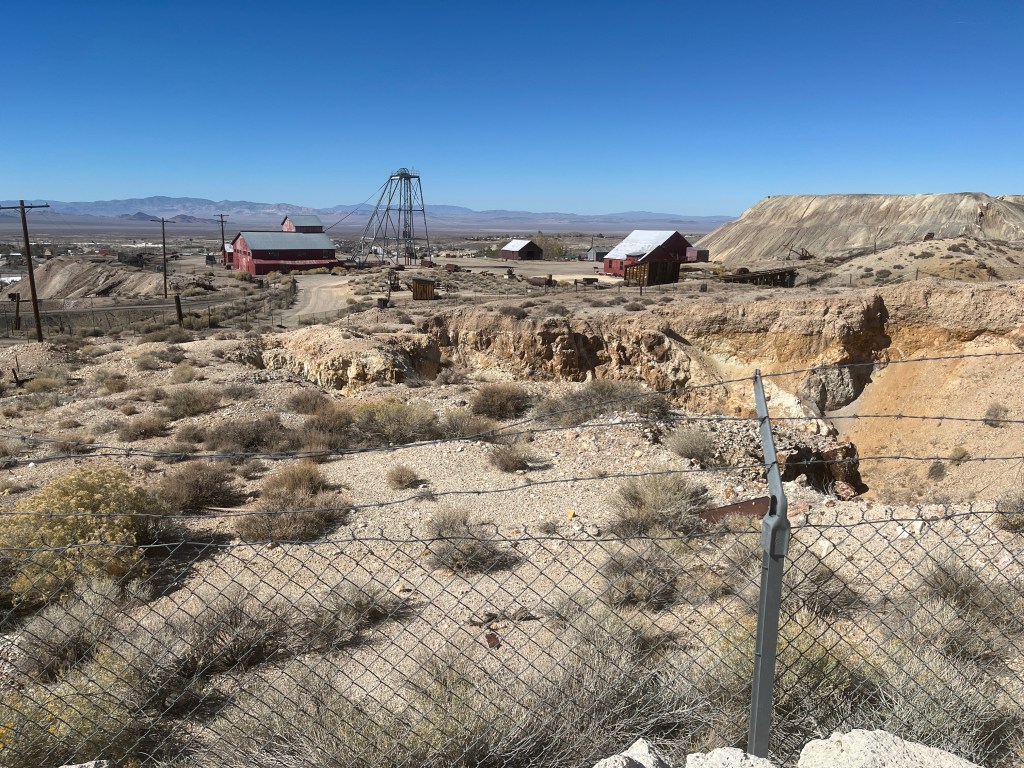
My only other activity for the day was to visit the historic Tonopah Mining Park: nice exhibits and views of some of the biggest mines around town (all of which shut down long ago).
I started the morning with a pancake from Mel’s Diner. The only other customers were five locals in their jeans and hats spending the morning solving the problems of the world.
Rhyolite is a ghost town just a few miles from Beatty (https://en.wikipedia.org/wiki/Rhyolite,_Nevada). The town began its life in 1905, and, by 1907, Rhyolite had electric lights, water mains, telephones, newspapers, a hospital, a school, an opera house, three railroads, and a stock exchange. Its peak population ranged between 3,500 and 5,000 in 1907–08.
The town died almost as quickly as it had arisen. By 1910 the boom was over, and businesses began to close. In 1916, the power company turned off the electricity and even removed the poles. There is very little left of the town as most of the buildings were moved elsewhere or the materials were repurposed.
As I was taking pictures of one of the buildings, I heard this buzzing noise: not like a snake, more like a hive of angry hornets. Just as I was beginning to worry, I realized that of the two other people who were there, one of them was flying a drone. I walked down to meet him and found that he and his wife were from Australia, on a four-week visit to the West Coast. They were on their way to Yosemite. I thought Rhyolite was a rather esoteric choice of stops, but apparently they were fascinated by ghost towns.
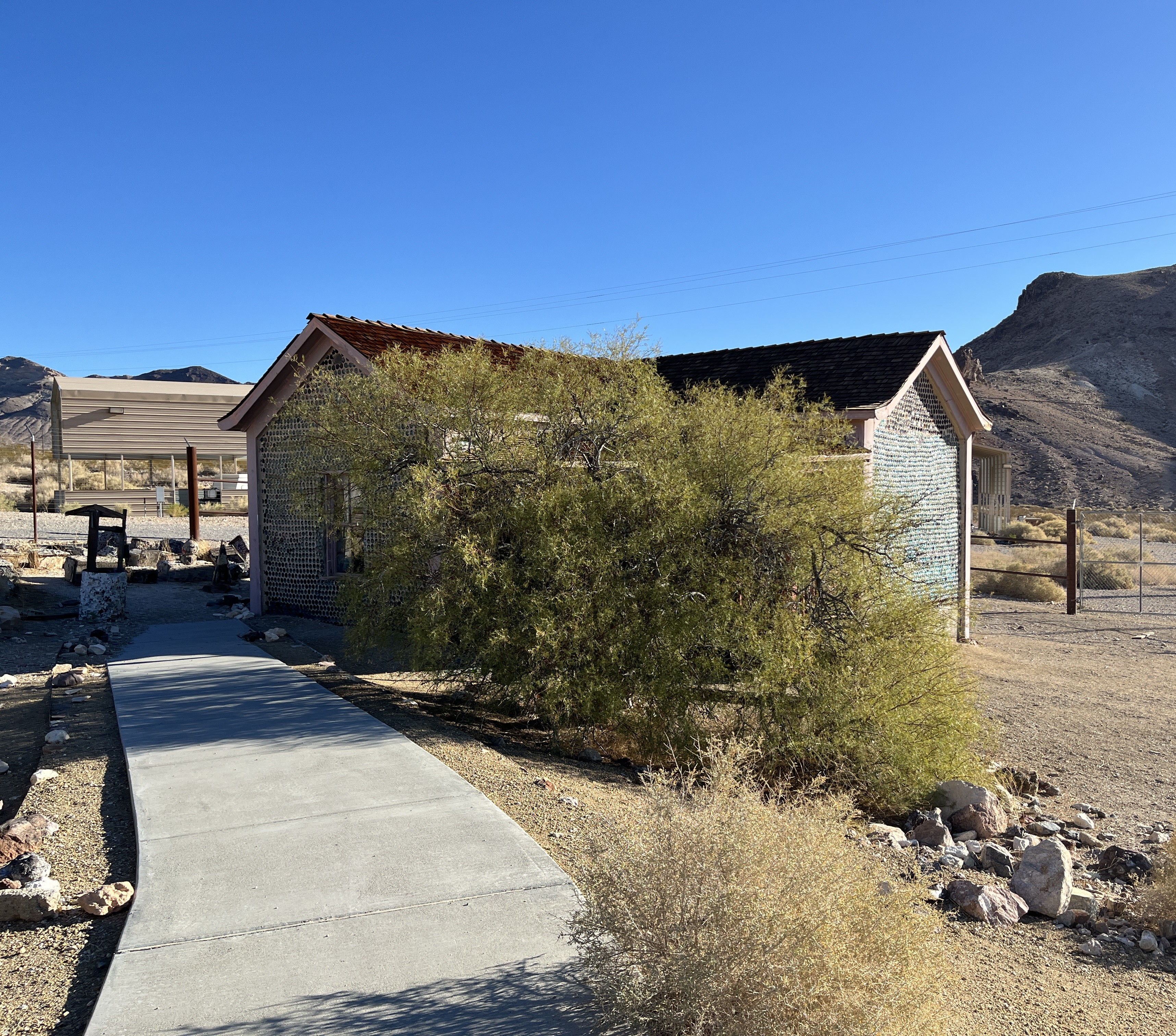
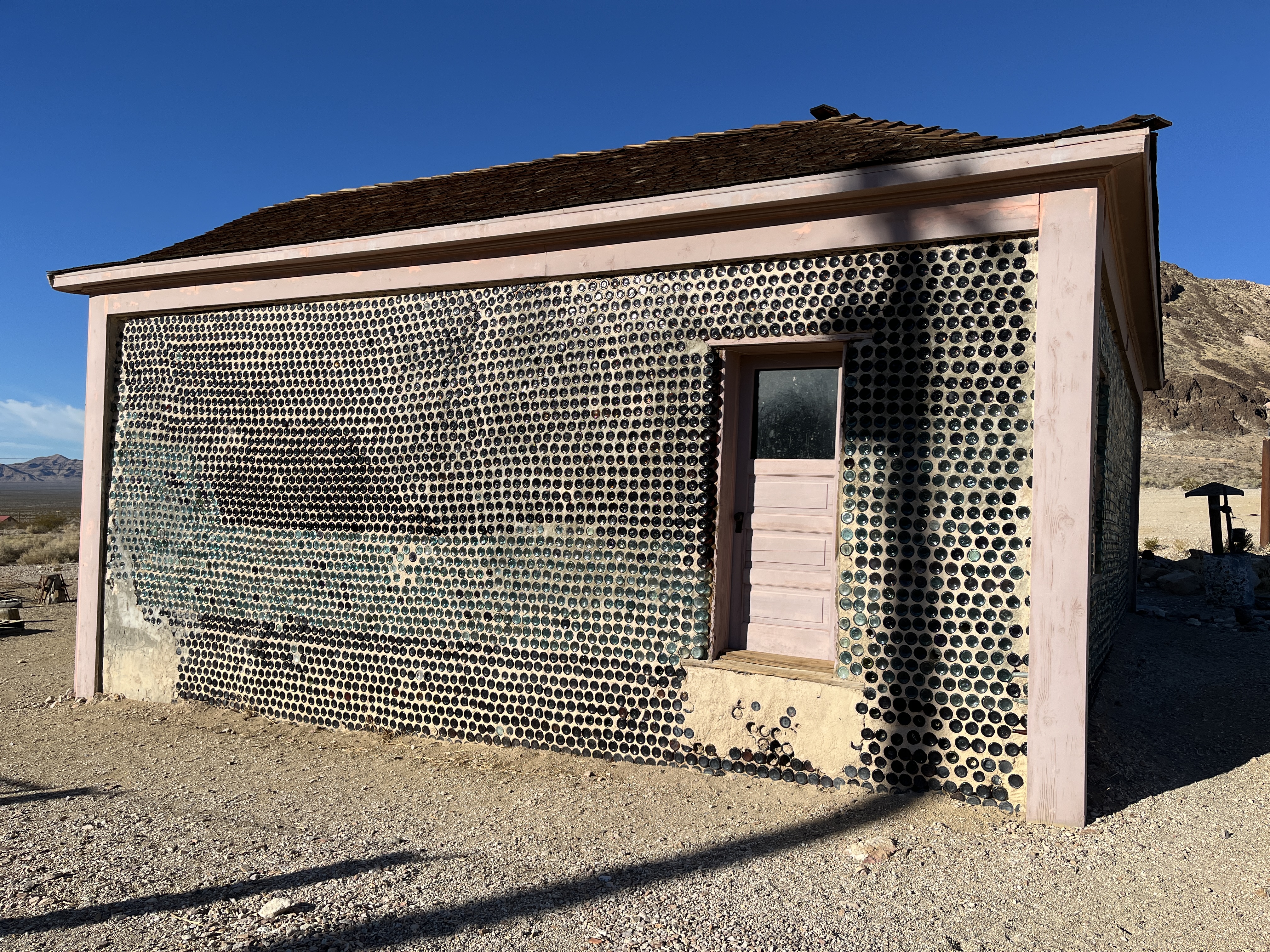
One building in town that is still fairly well preserved is Tom Kelly’s Bottle House:
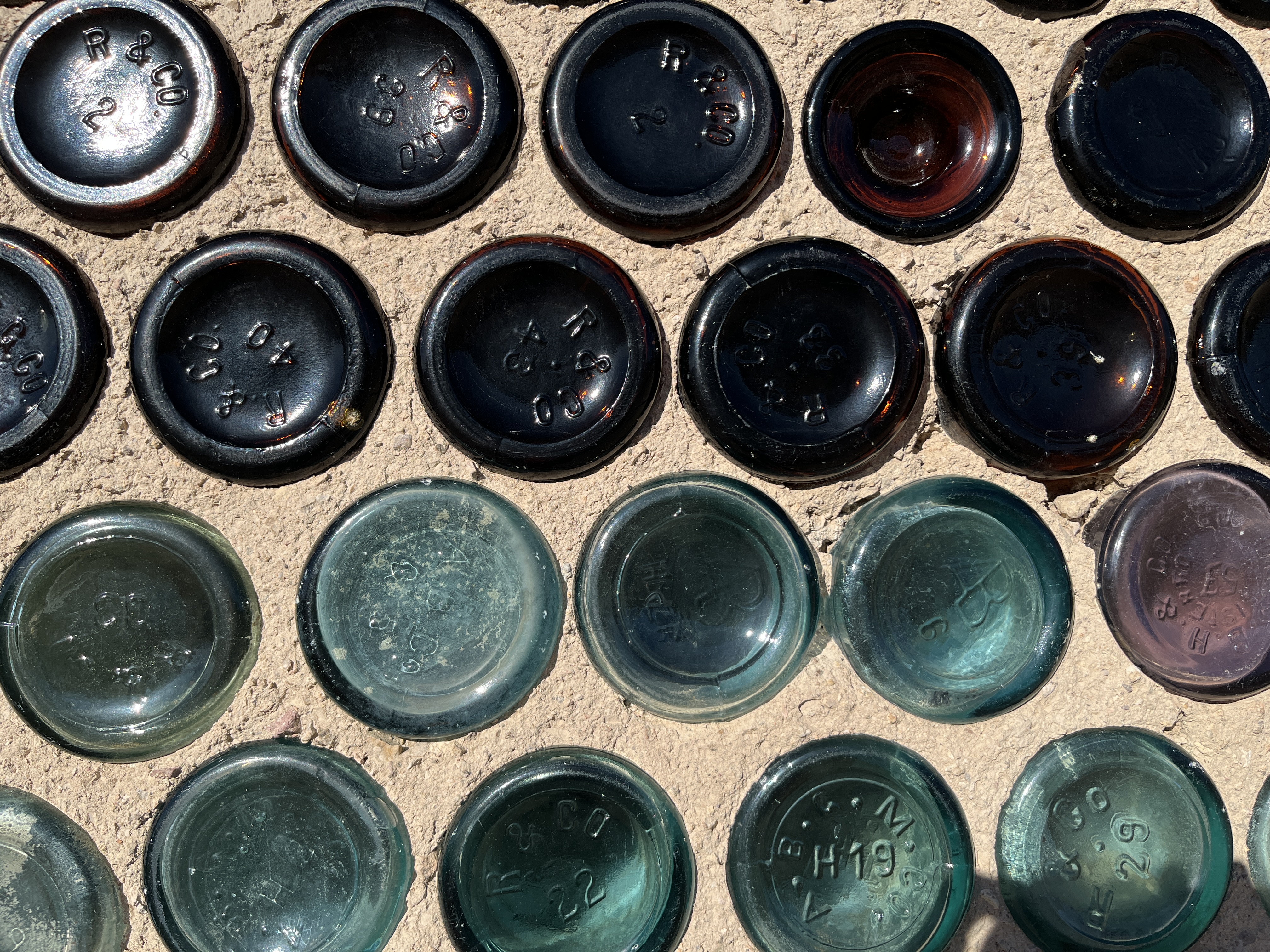
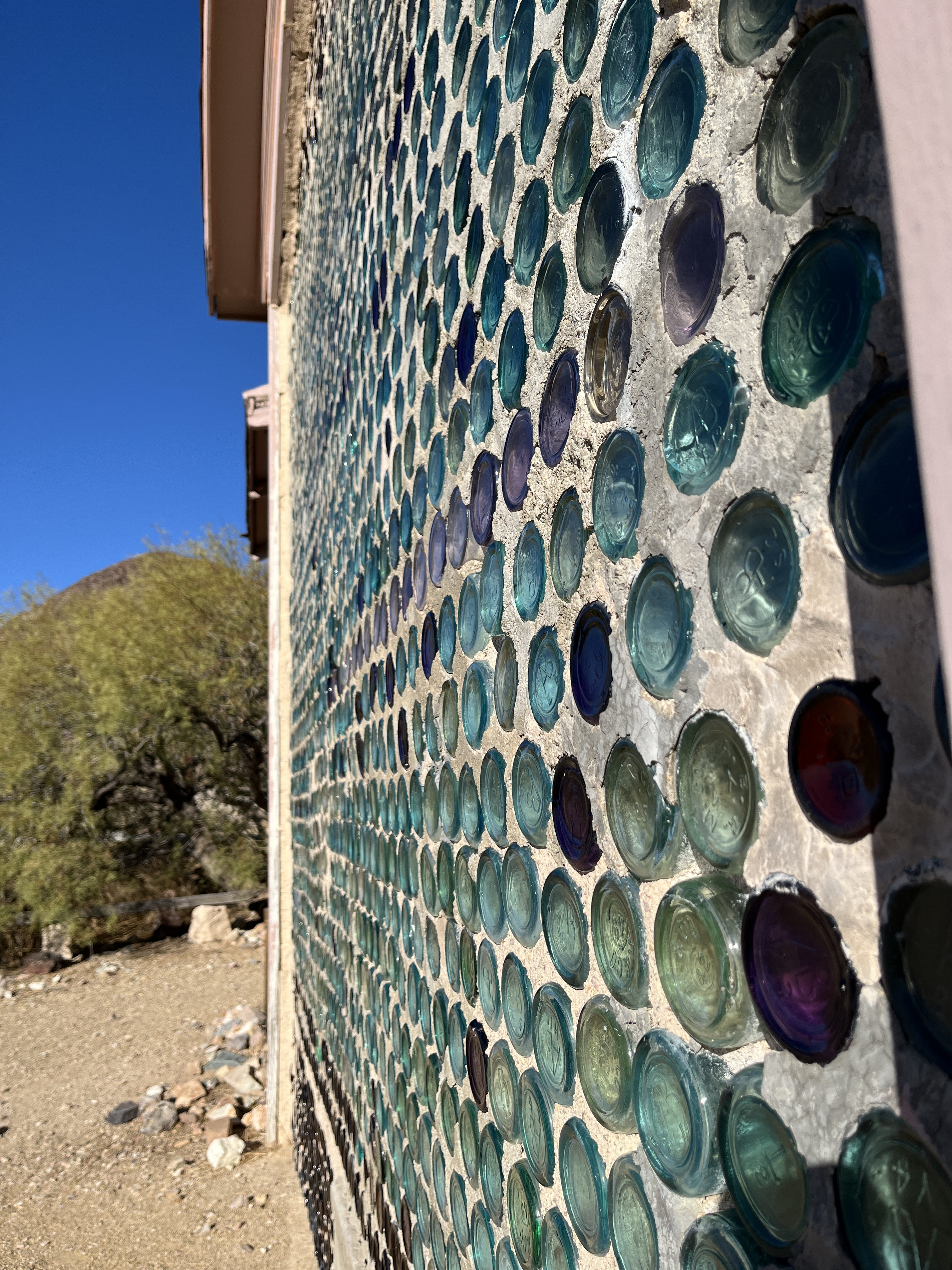
Though the lights went out in 1914, they turned back on a decade later when Paramount Pictures used Rhyolite as a setting for the 1926 film The Air Mail. Some of Rhyolite’s remaining structures were restored for their film debut, including the Tom Kelly bottle house. This residence—built completely out of 50,000 medicine, whiskey, and beer bottles—demonstrates that glass in the American West was sometimes a cheaper construction material than wood or stone. The house still stands today and is the oldest and largest known bottle house in the United States. https://travelnevada.com/ghost-town/rhyolite-ghost-town/
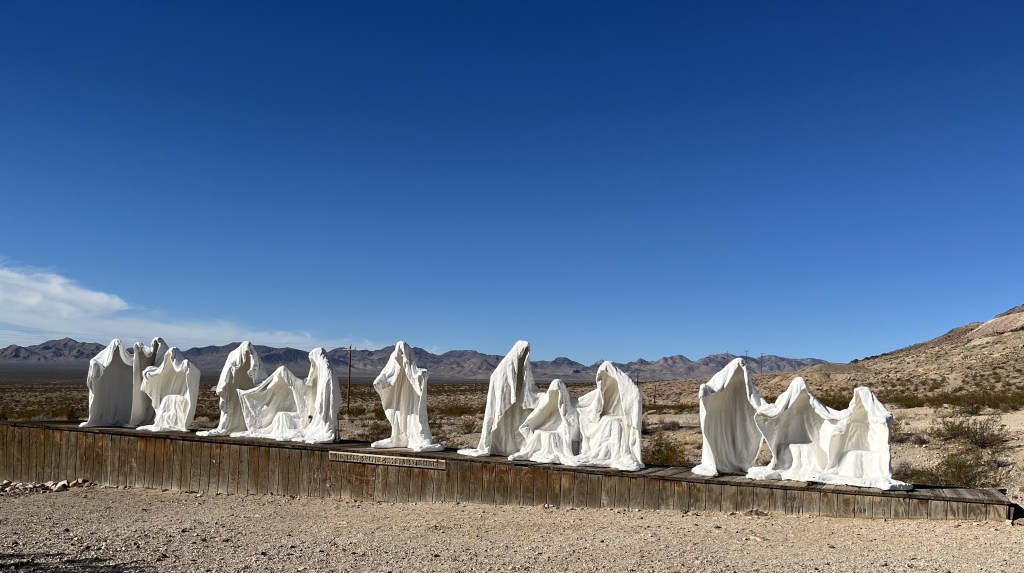
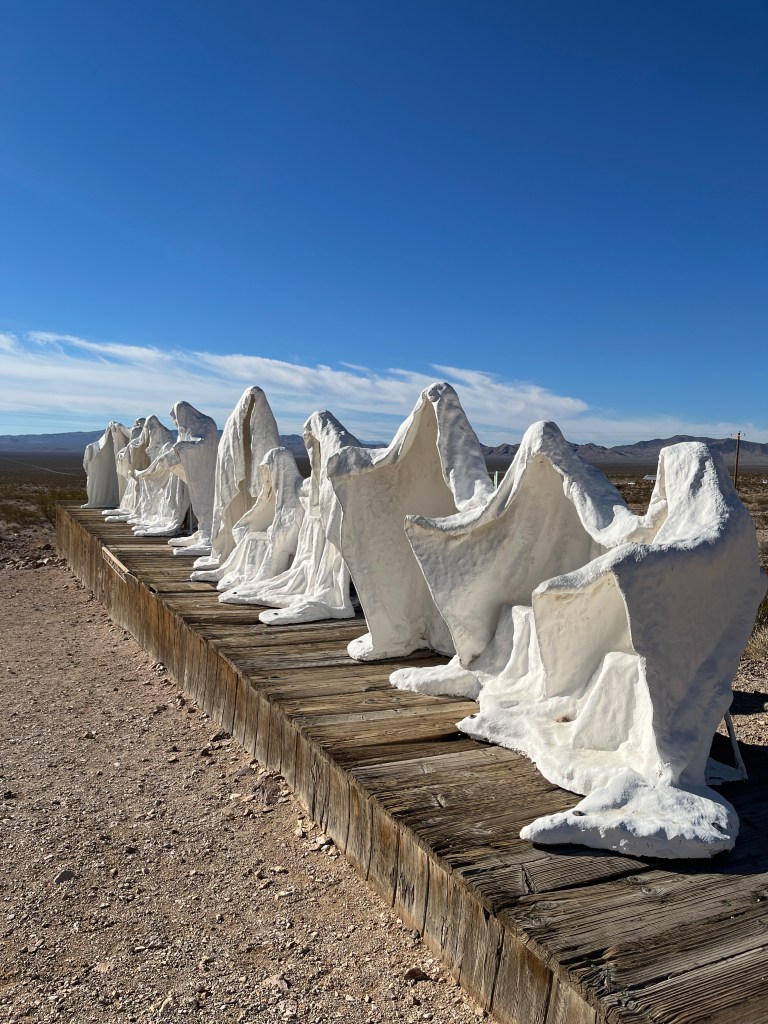
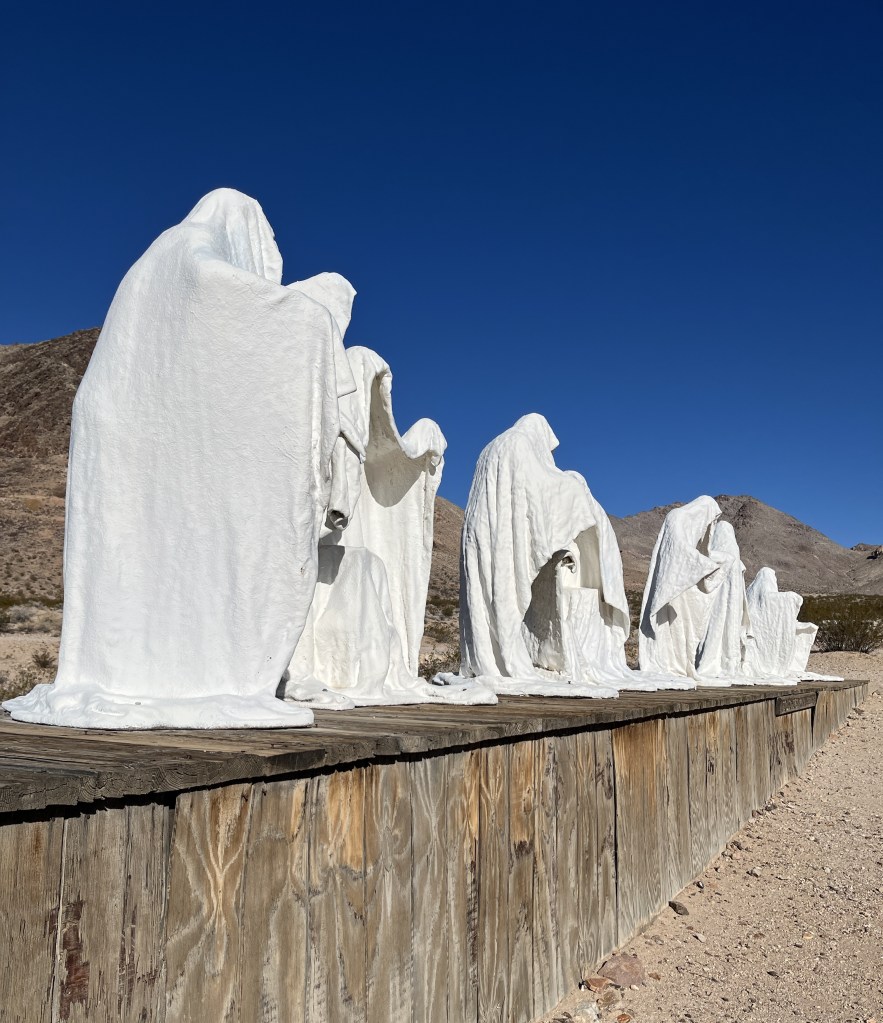
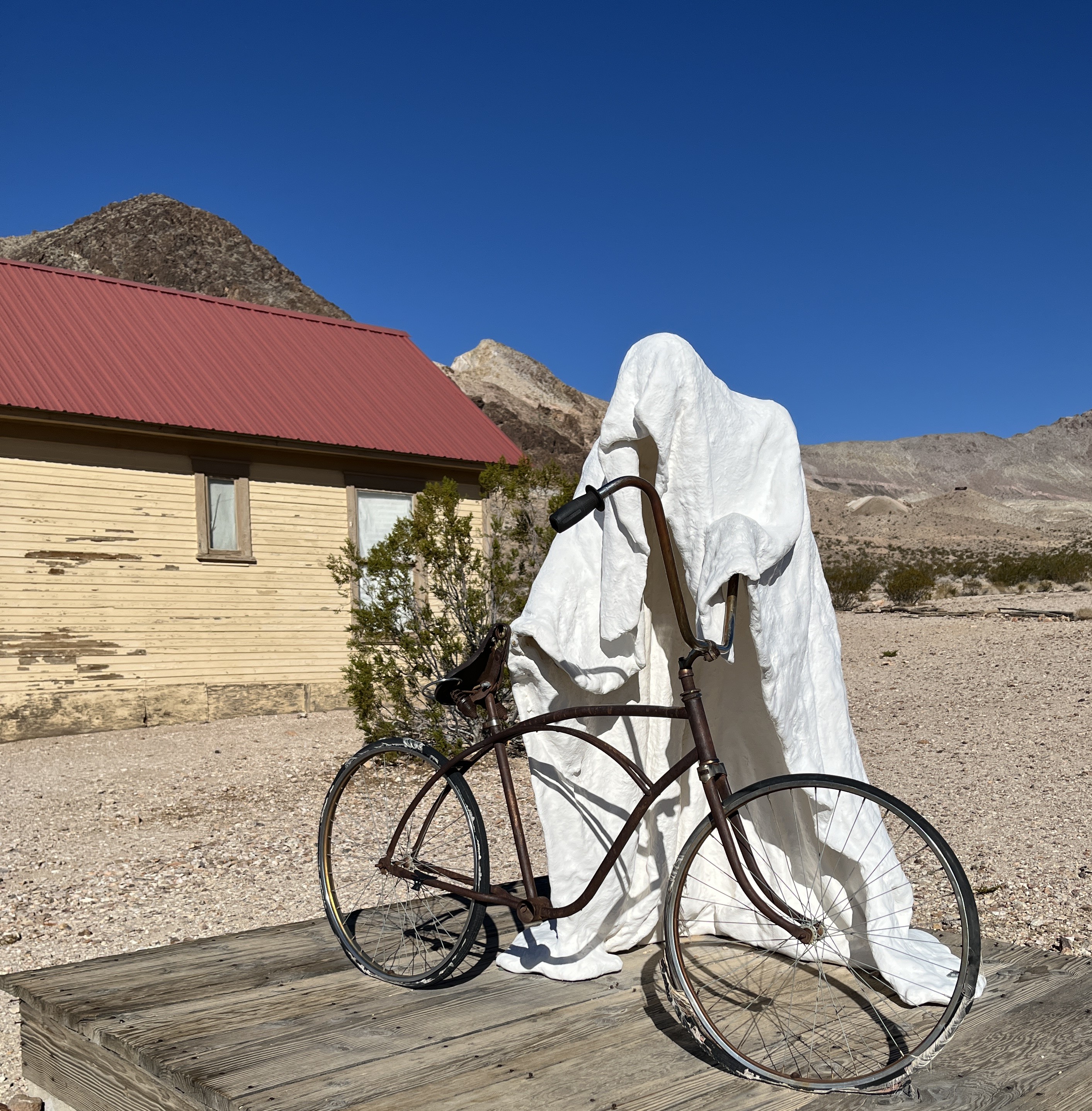
Right next door to Rhyolite is the Goldwell Open Air Museum. This outdoor sculpture park “was created in 1984 by a group of well-known Belgian artists (led by the late Albert Szukalski) who were drawn to the remote upper portion of the vast Mojave Desert to pursue artistic vision free from convention. Each piece was designed within the context of the landscape and should be interpreted as such.” (https://travelnevada.com/museums/goldwell-open-air-museum/) Since then, more sculptures have been added.
The first sculpture was a ghostly life-size version of Leonardo Da Vinci’s “Last Supper:
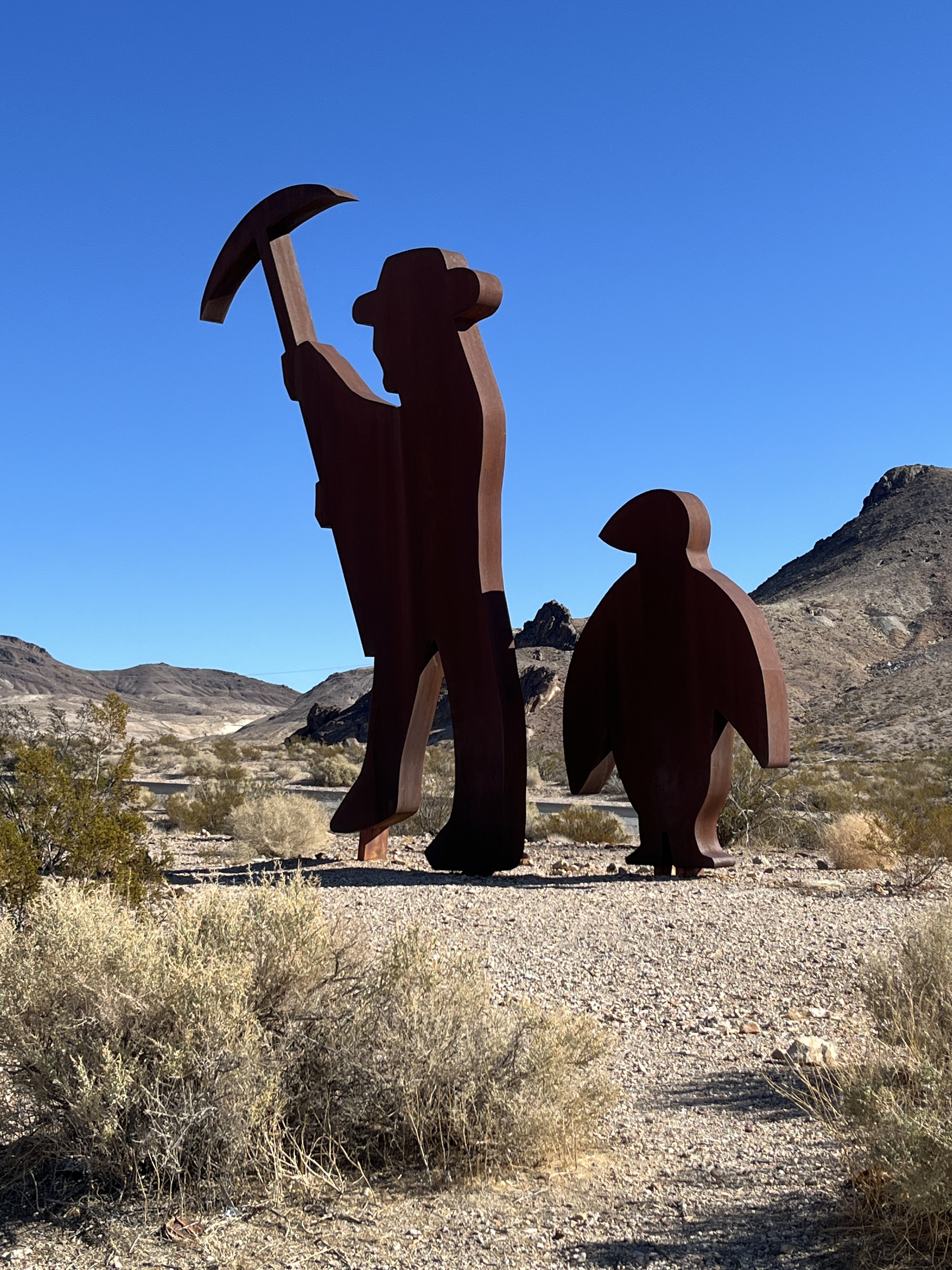
Later sculptures included a 25-foot woman constructed from pink cinder blocks and a 24-foot steel prospector and his penguin companion:
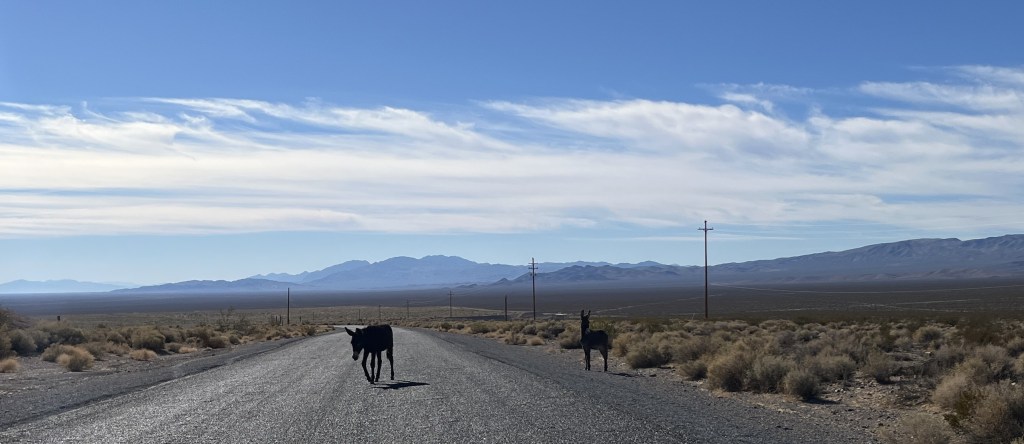
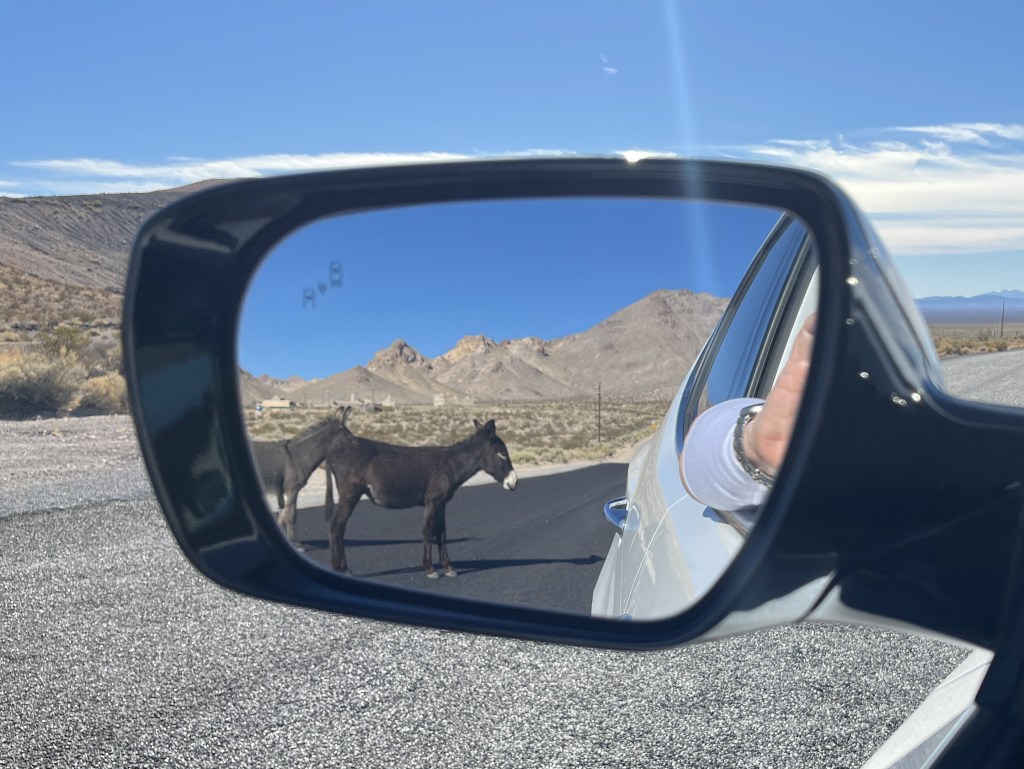
Beatty is famous for the number of wild burros that are in the area and that wander through town. I didn’t see any while in town (although they left plenty of evidence of their presence), but a few did show up as I was leaving Rhyolite:
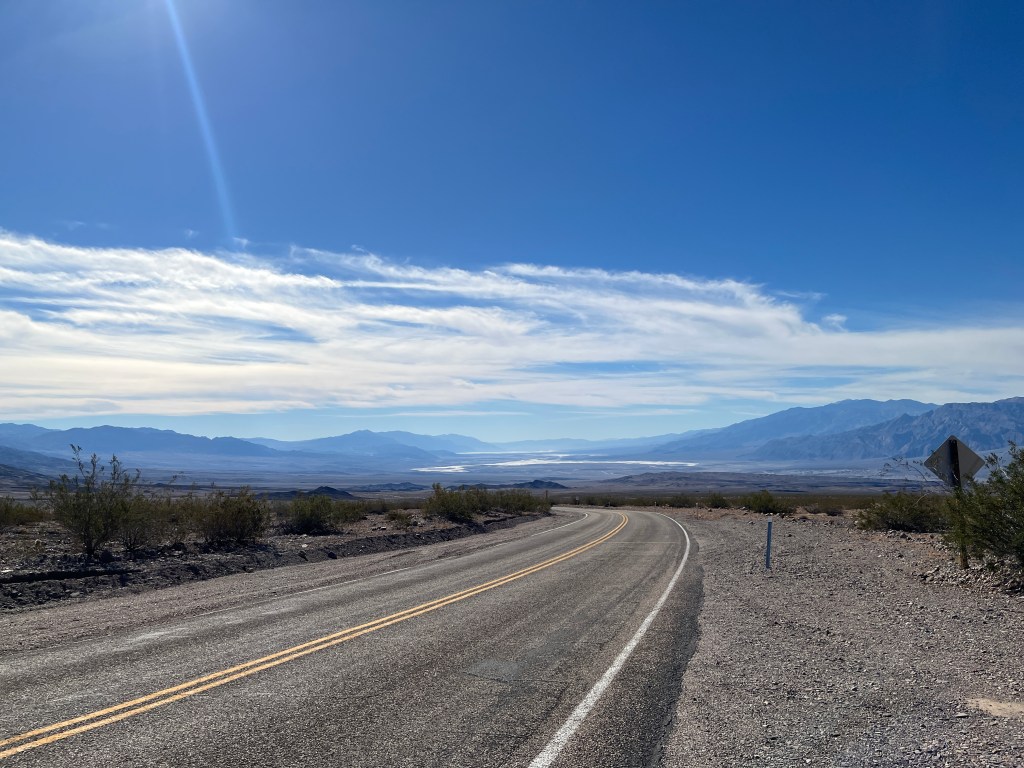
Next was a quick trip down to Death Valley National Park:
From there it was back to the Atomic Inn for a late afternoon of relaxing, reading, and watching football.
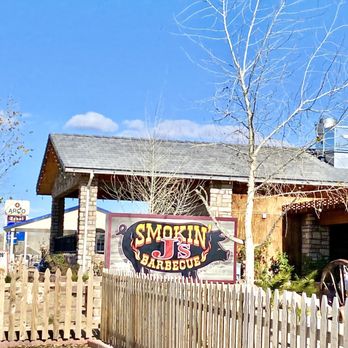
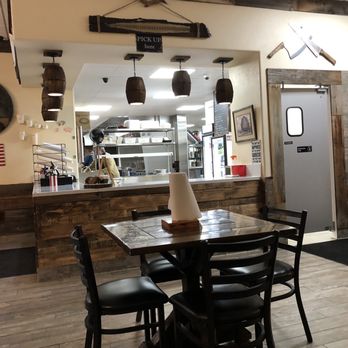
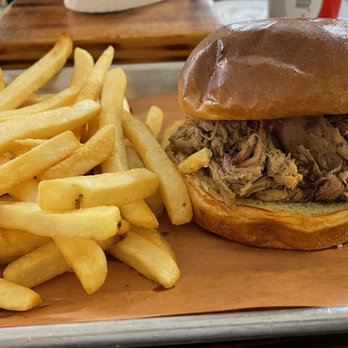
Dinner that night was at Smokin’ J’s Barbeque: an excellent “senior” serving of a pulled pork sandwich and fries:
Day 3 will be the 100 miles or so from Beatty to Tonopah with a stop in Goldfield.
I hadn’t been on a road trip in years and wanted to take one to celebrate the one-year anniversary of my little stroke. Decided to visit a number of small Nevada towns and avoid any national restaurant or hotel chains.
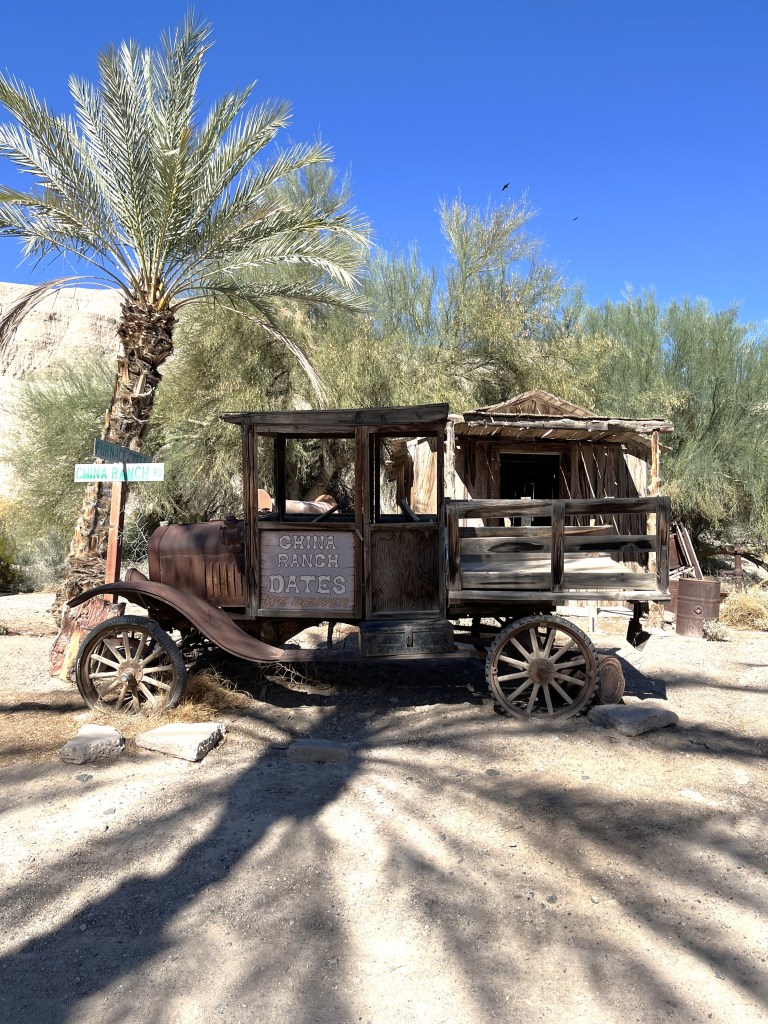
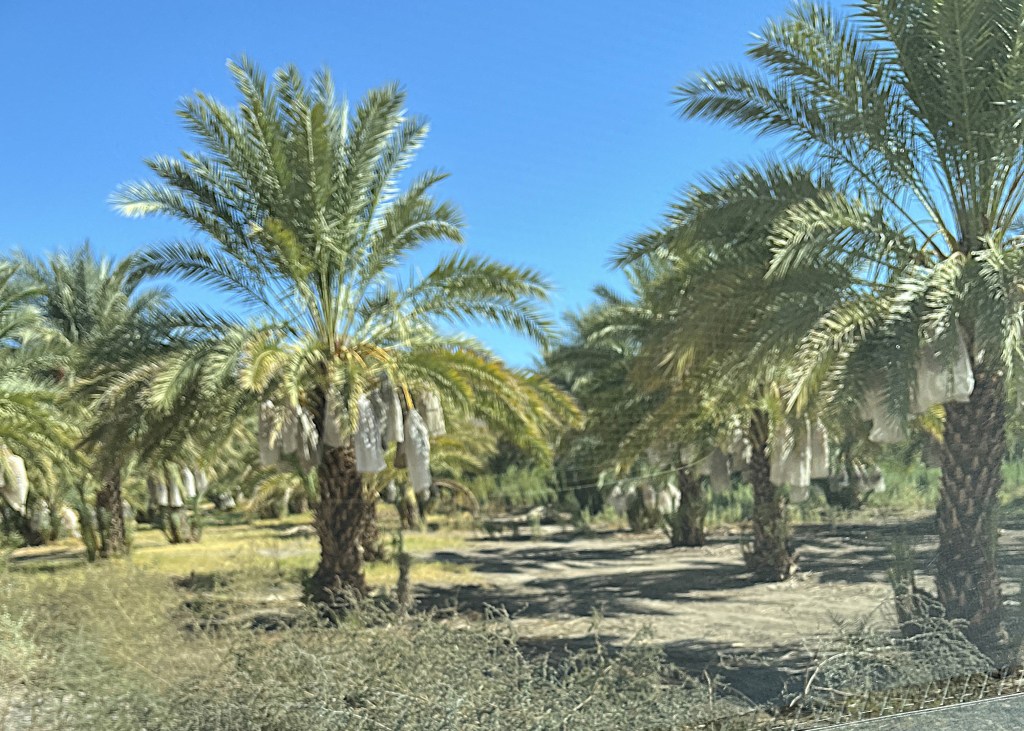
I left home on the morning of the 18th of October. My first stop was actually just over the state border in California: China Ranch Date Farm (https://www.chinaranch.com/).
This place is less than 100 miles from Vegas and south of Death Valley. You have to want to go there just for its own sake, though, because it’s not really on the way to or from anywhere. It is not going to visited by hordes of tourists
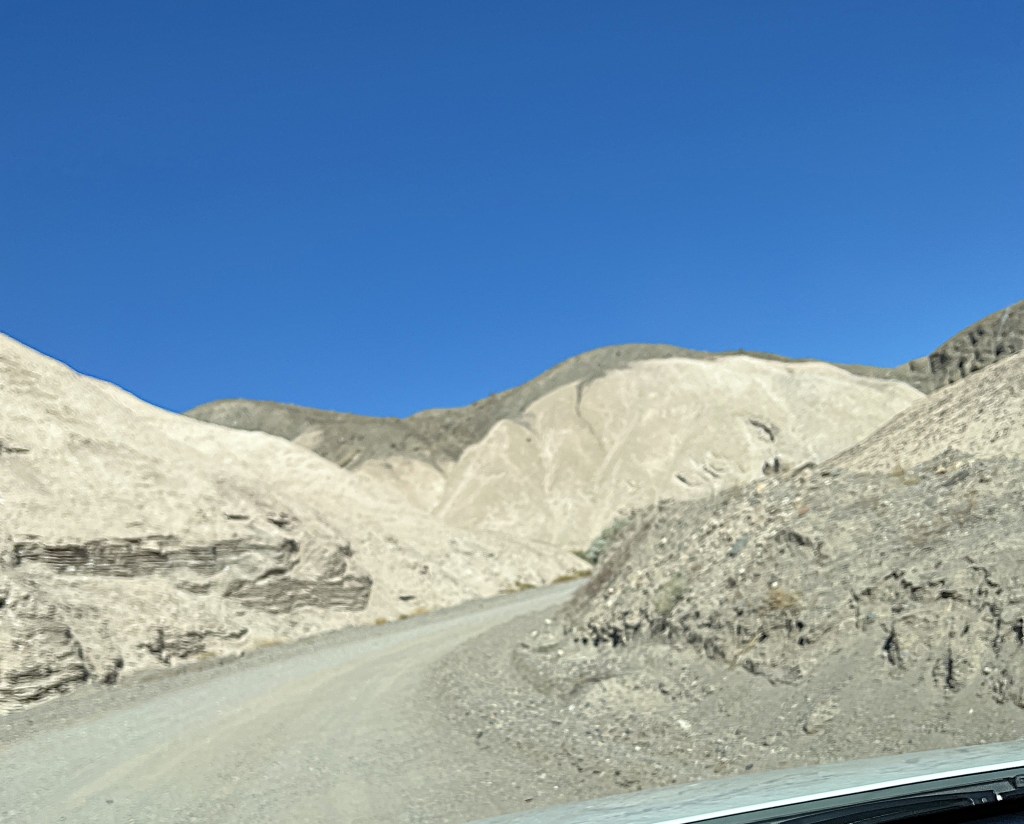
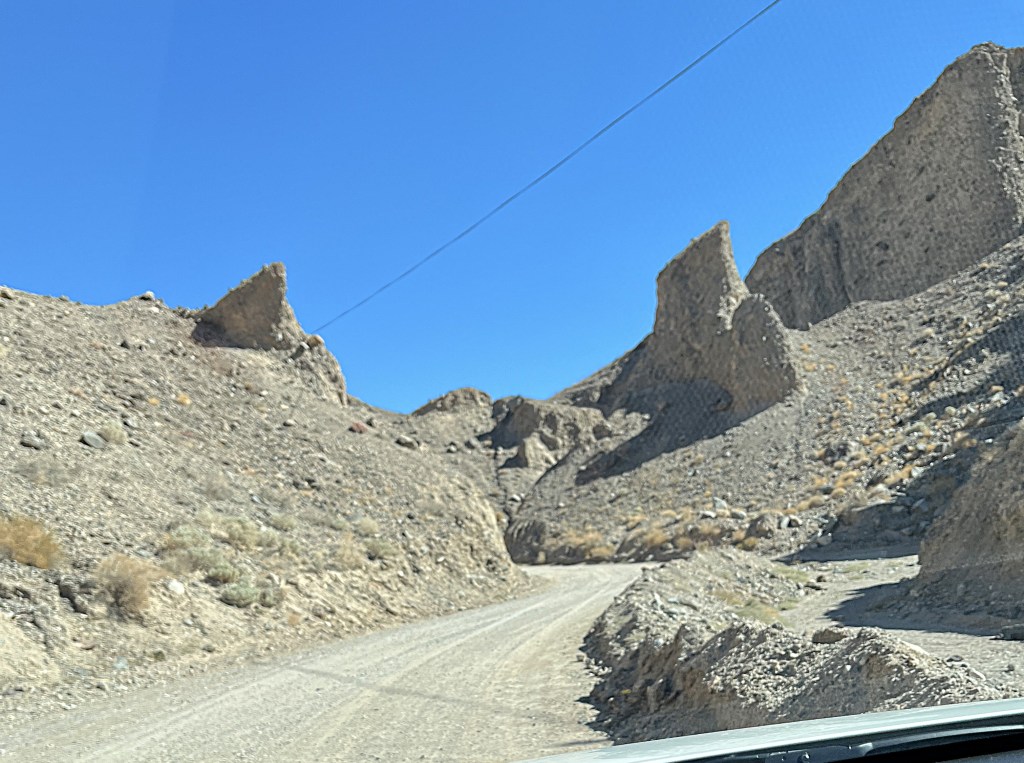
I didn’t snap any pictures of the road on my way in, but here’s a few I took on my way out:
You would not want to be on this road in one of the areas infrequent rainstorms.
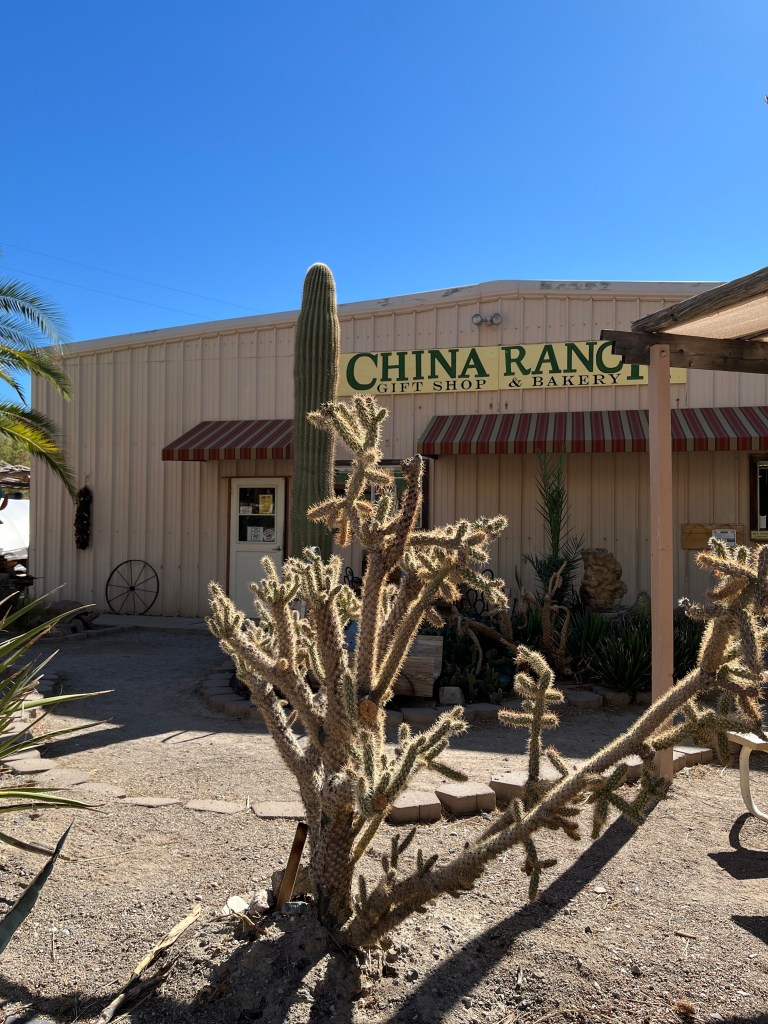
Here’s the gift shop:
They had a dozen or so different types of dates, date baked goods, souvenirs, rocks, and, of course, date shakes. One bathroom, a picnic table or two, and some hiking trails. It made for an interesting stop for an hour or so.
From there, I drove into Pahrump, which is pretty much an exurb of Las Vegas. Although it has around 45,000 residents now, it didn’t even have telephone service until the 1960s.
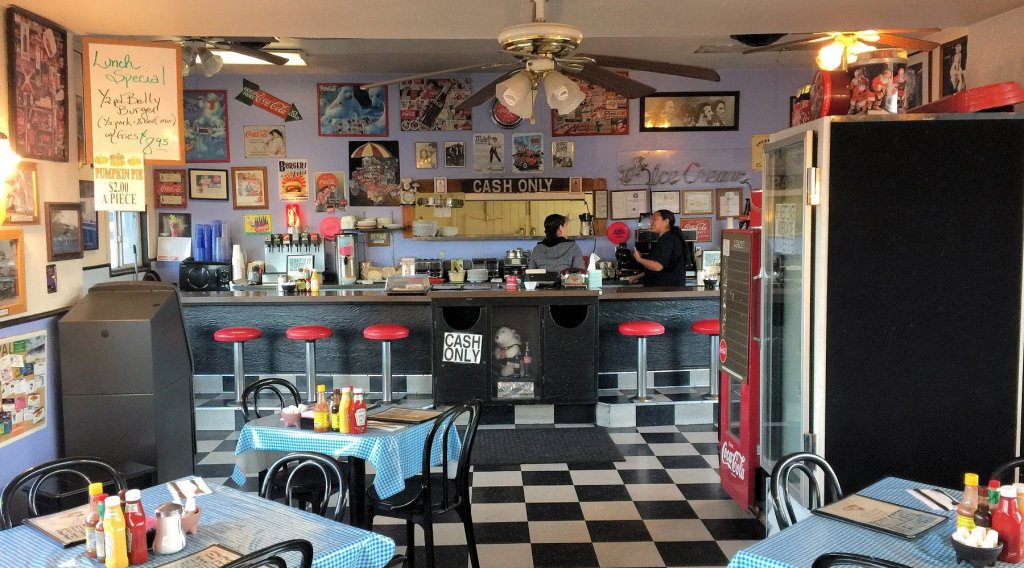
The main road through town has all the usual businesses and chains, but I was looking for somewhere local for lunch and settled on Mom’s Diner, which you can check out here https://www.facebook.com/people/Moms-Diner/100048743390385/# if you have Facebook (which I don’t).
The place was full of vintage items on the walls and had a great vibe. It was quite busy when I arrived for lunch on Saturday, but I only had to wait a few minutes for a table. They didn’t have any small tables and I felt a bit guilty taking up a table for four, but that soon sorted itself out: The family at the table next to me had 6 people and were having trouble fitting everyone in. I suggested we share my table, so rather than lunching by myself, I spent my time chatting with the grandfather about Pahrump and his history there. Made for an unexpected but interesting time. And the food was good, too!
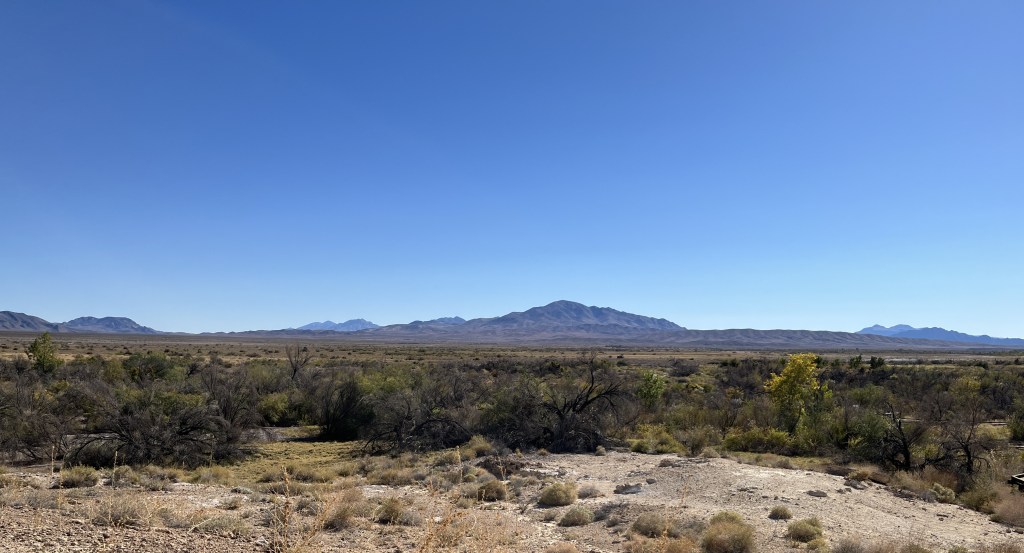
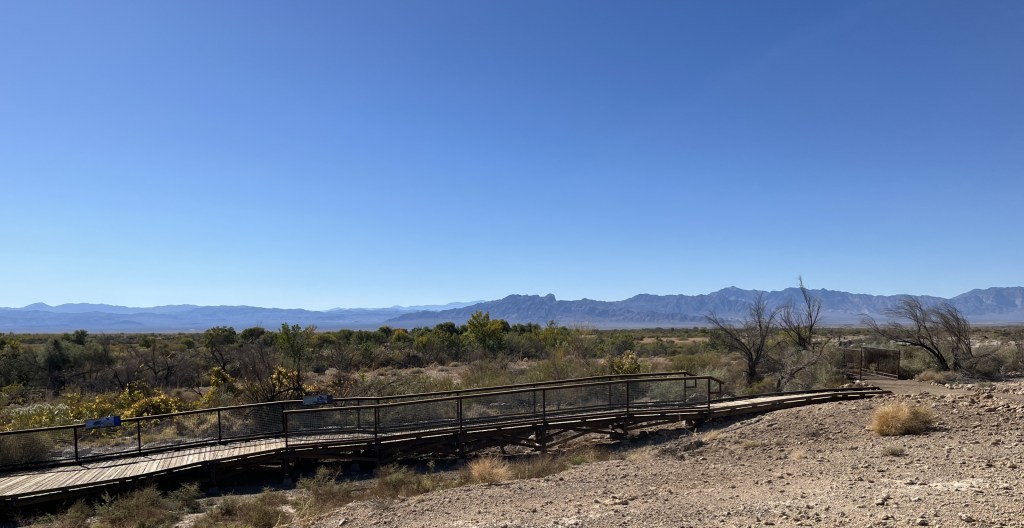
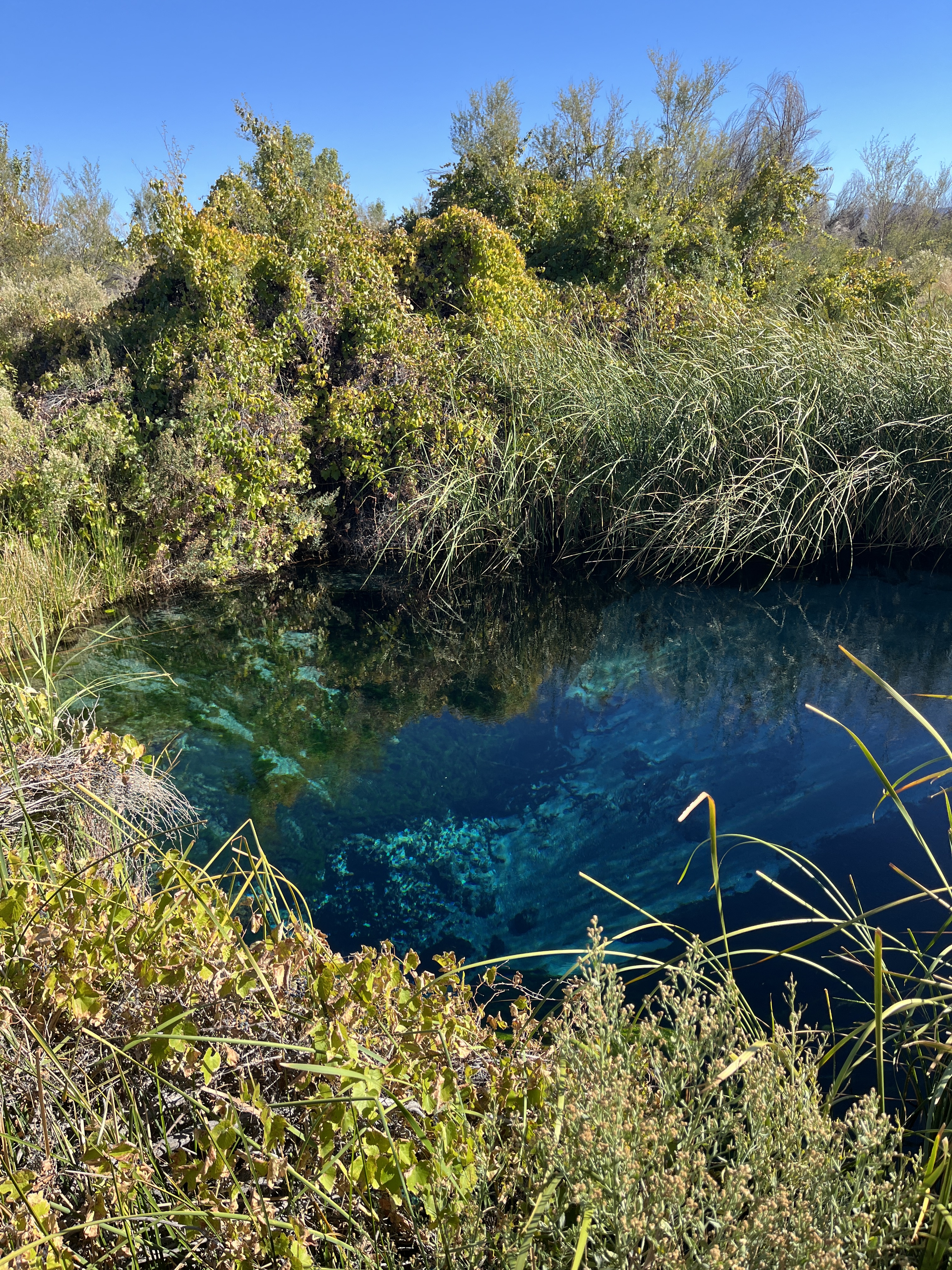
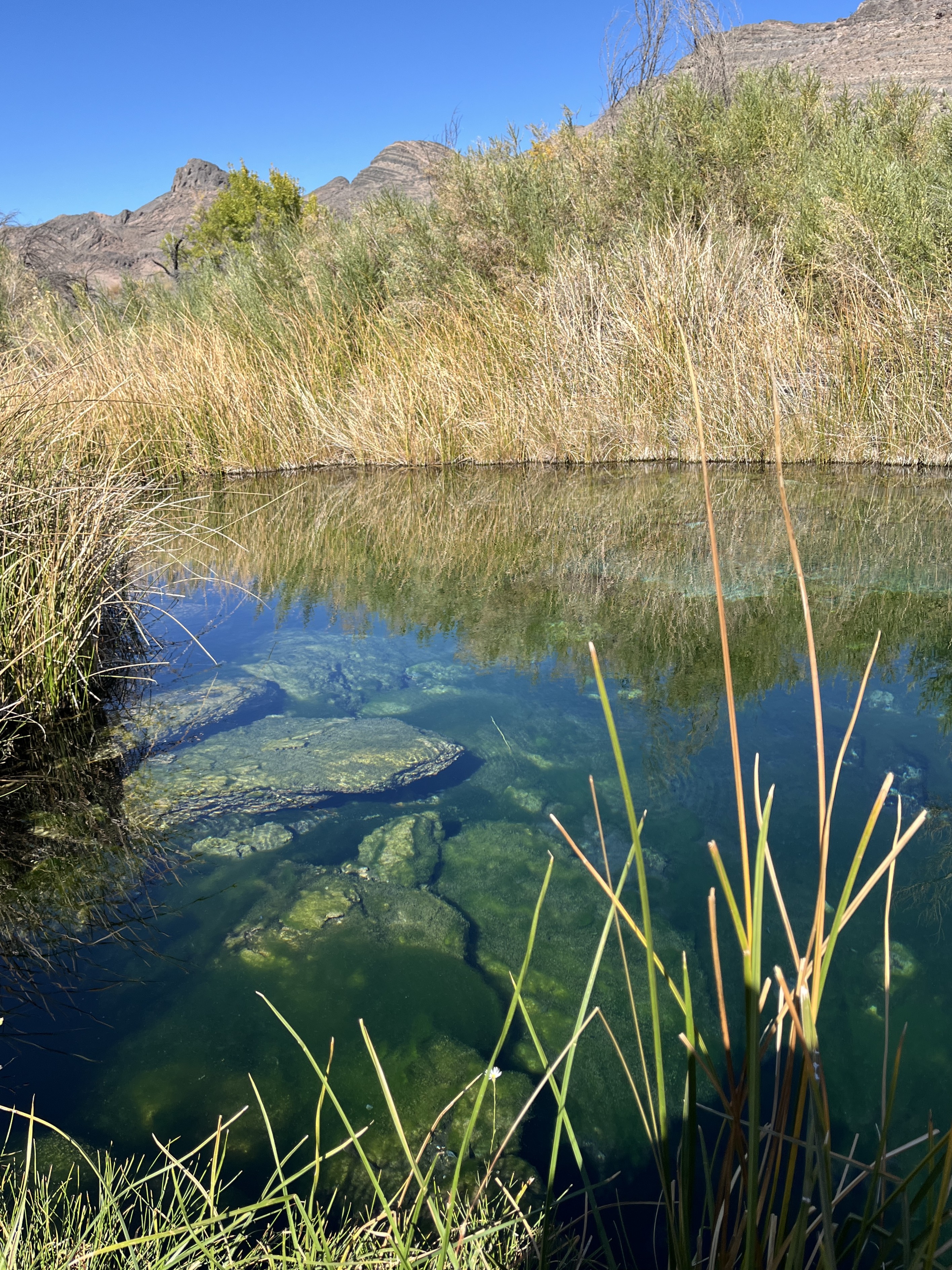
Next stop was Ash Meadows National Wildlife Refuge (https://www.fws.gov/refuge/ash-meadows). Thanks to our dysfunctional government, the visitor center was closed, but the trails (and bathrooms) were still open. Ash Meadows is the largest remining oasis in the Mojave Desert, but it’s hard to realize that because there is not a lot of open water. Here are typical landscapes:
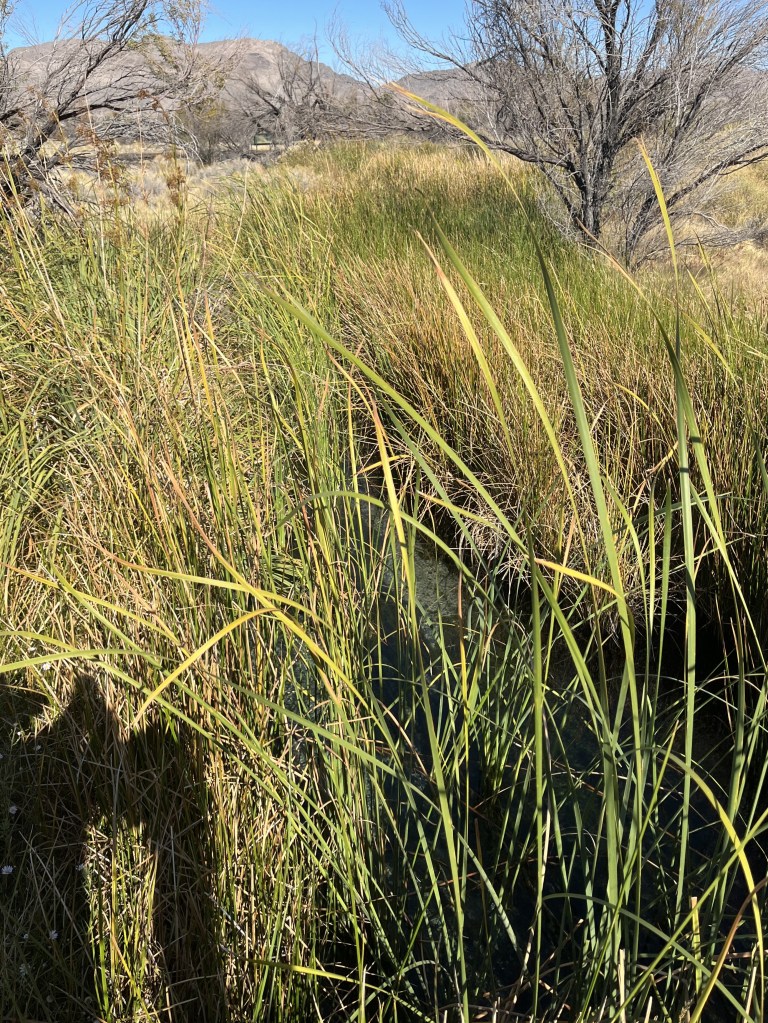
The water is almost completely grown over by bushes like this:
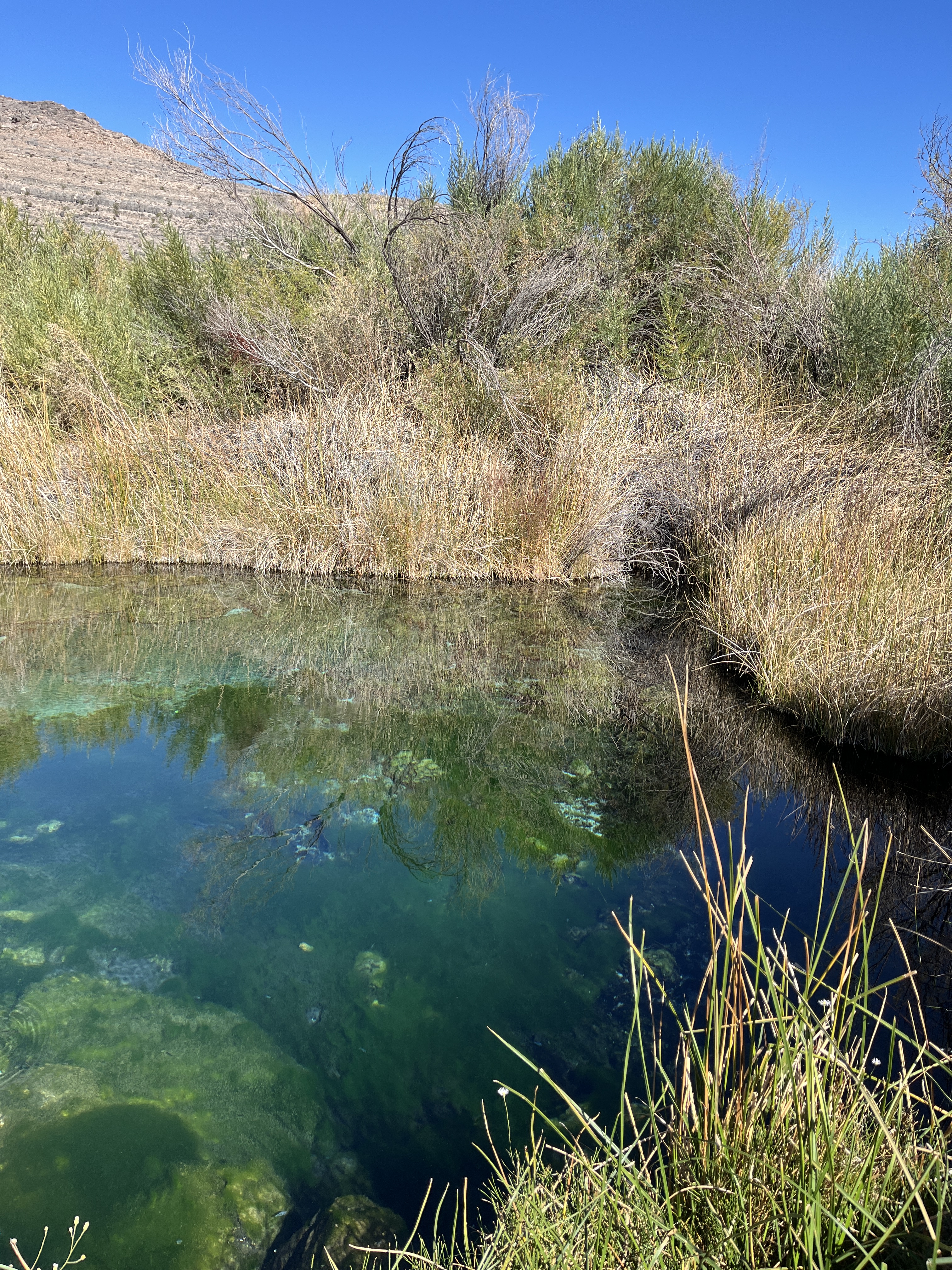
When you do glimpse the water, though, it’s stunning:
After a fairly warm afternoon of hiking the boardwalks, I headed for Beatty, NV, “Gateway to Death Valley” and home to 1,000 inhabitants (not counting the burros). After my big lunch, I just picked up a few snacks and a bottle of Diet Coke for the evening. I haven’t been drinking sodas much at all lately, but the day’s walking just seemed to call for it.
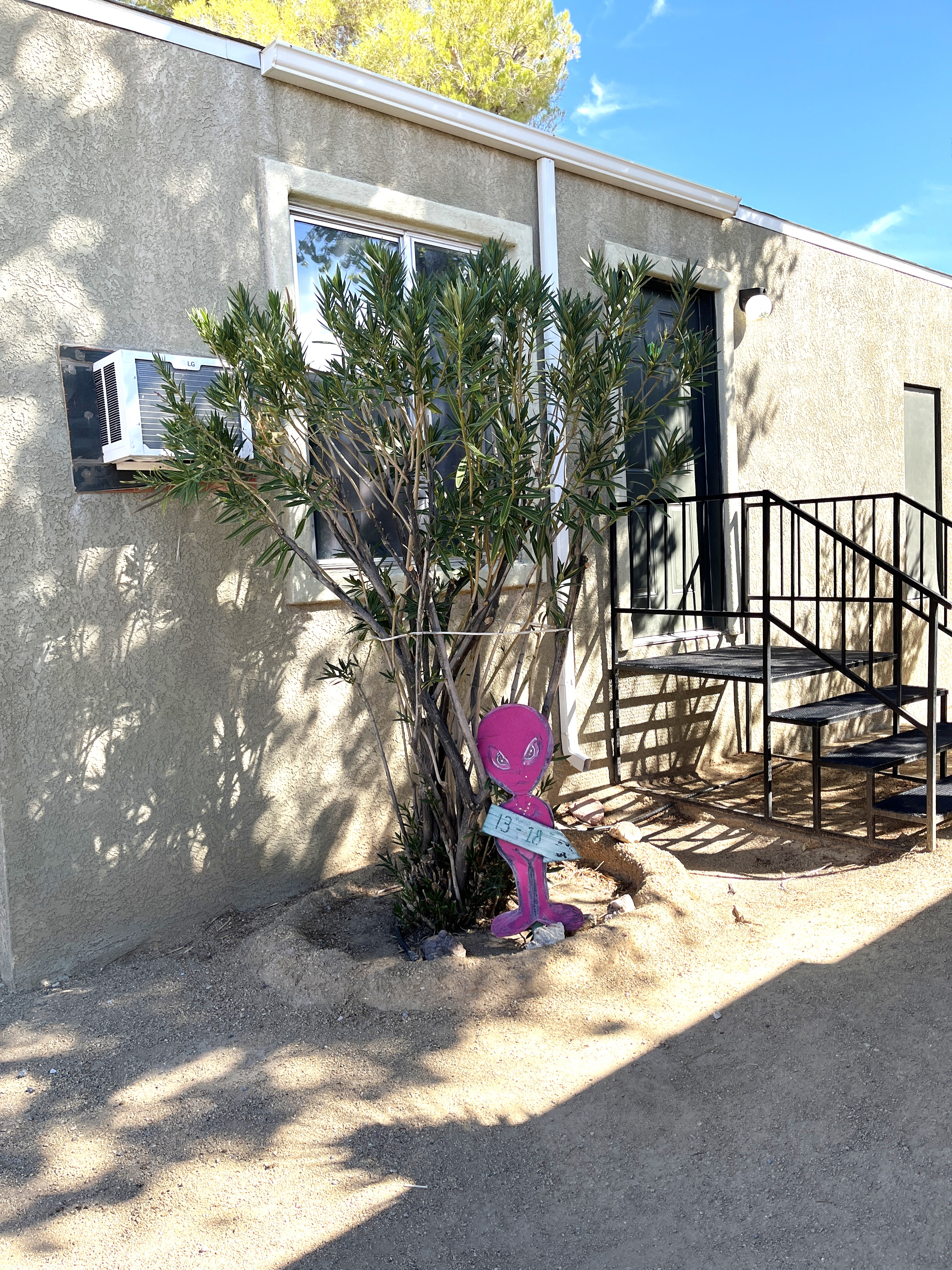
Completed in 1980, the Atomic Inn (originally the Lori Motel) was built to accommodate defense contractor and military personnel working with the Ford Aerospace Corporation who worked at military installations at nearby Nellis Air Force Base – home to top secret installations like the world famous Area 51 (Groom Lake), the Nevada Nuclear Test Site (where over 500 above-ground nuclear bomb tests were tested, and the Yucca Mountain Nuclear Waste Repository.
No wonder we call it the ATOMIC Inn! The Atomic Inn/Phoenix Inn is a retro-themed motel establishment dedicated to great value and great service reminescent of the good ‘ol days when Eastern Europe was the Warsaw Pact and the United States was ready to “duck and cover”! Now a popular Death Valley motel choice, the Atomic Inn / Phoenix Inn has survived the Cold War and has been remodeled into the 21st Century yet is still a classic. Rated as #1 in Beatty out of 6 motels on TripAdvisor!!!
Here’s the Inn and the steps up to my room:
Day two will be a ghost town, outdoor art installations, and Death Valley.

















 Tuples and Attributes