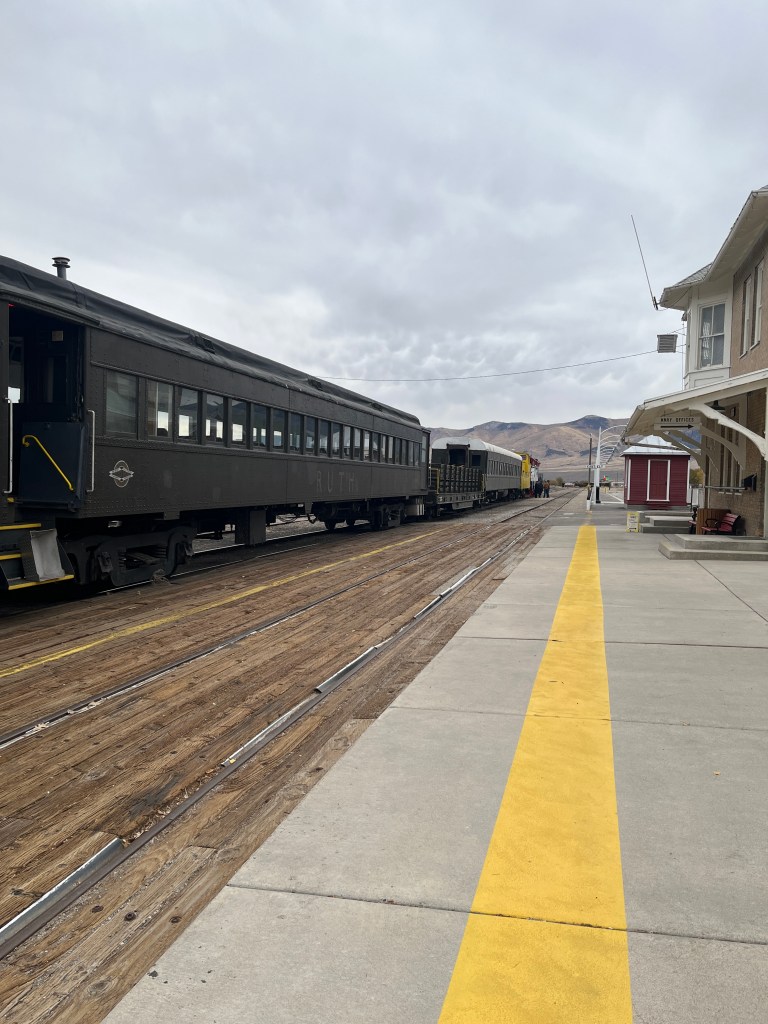
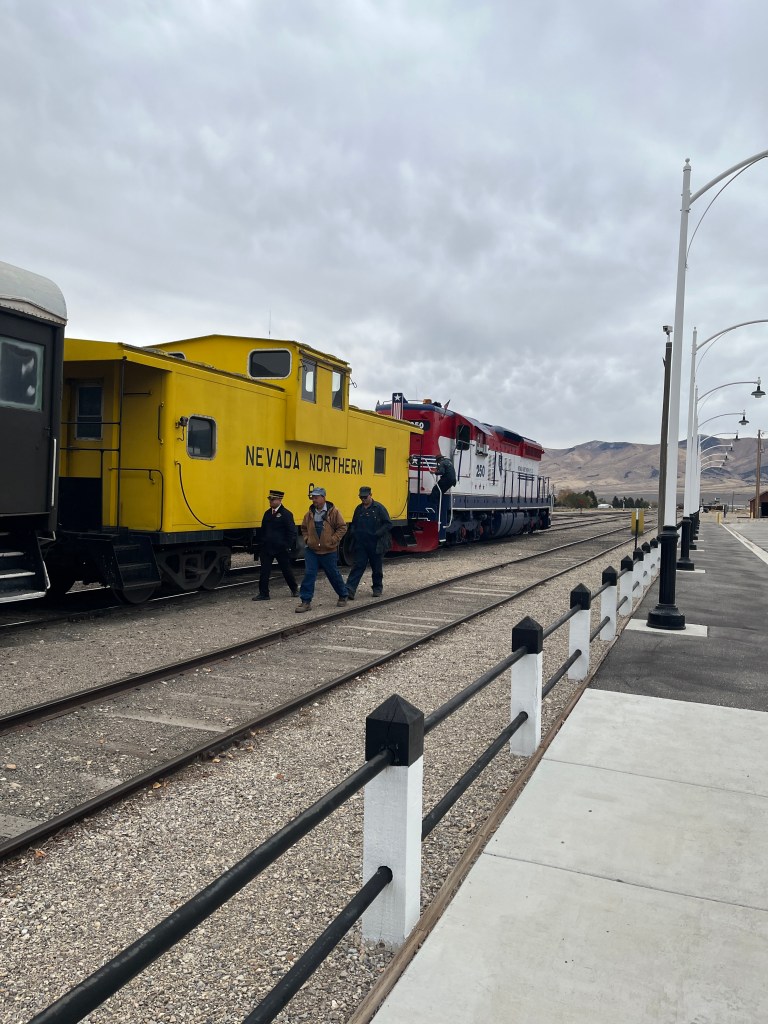
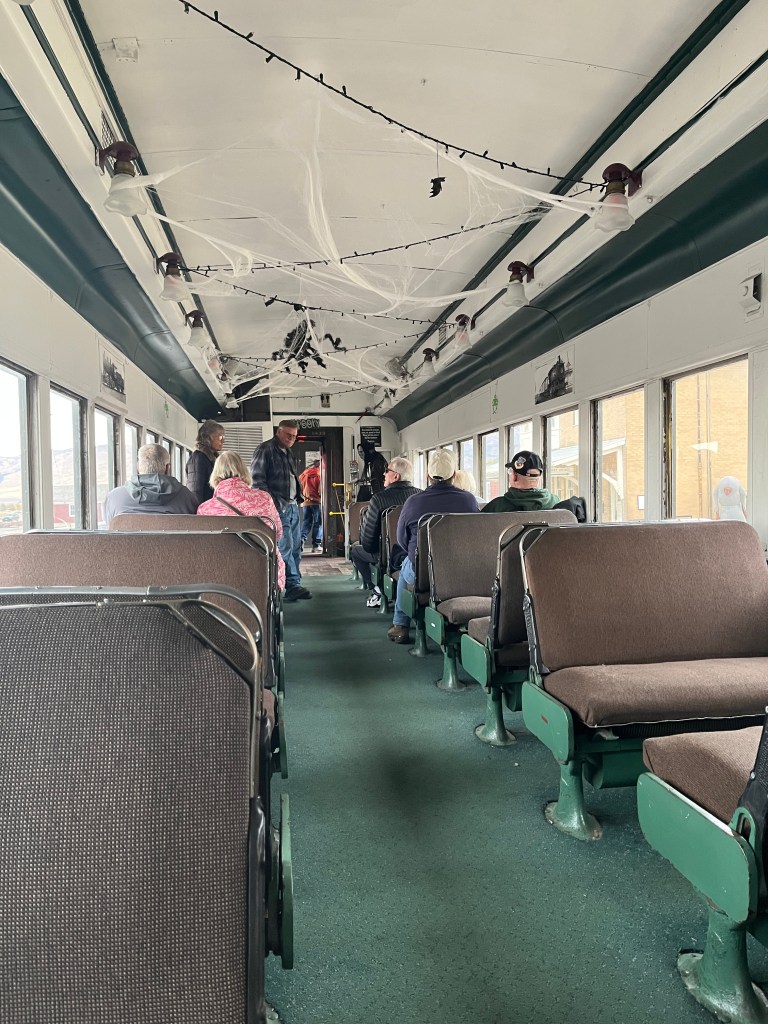
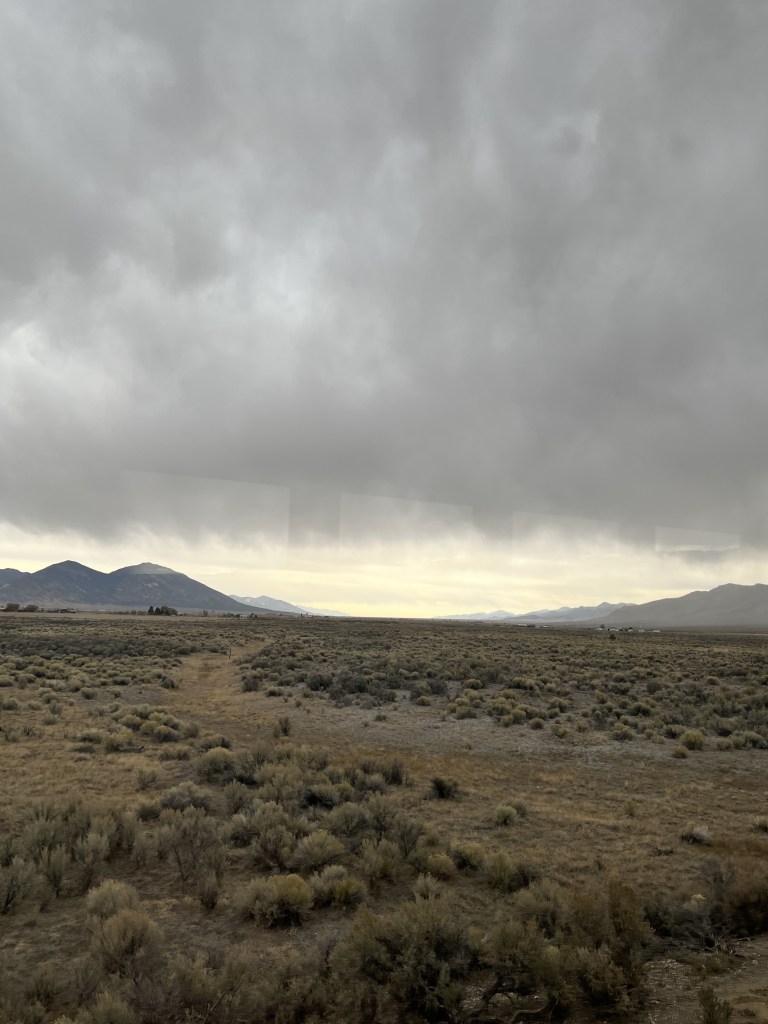
Nevada Road Trip: Around Caliente (Day 7)

This day started with another trip to the Side Track restaurant, which, fortunately for me, was open for breakfast on Friday (as well as Saturday and Sunday). It did not disappoint, and I headed out for my morning with a nice protein fix.

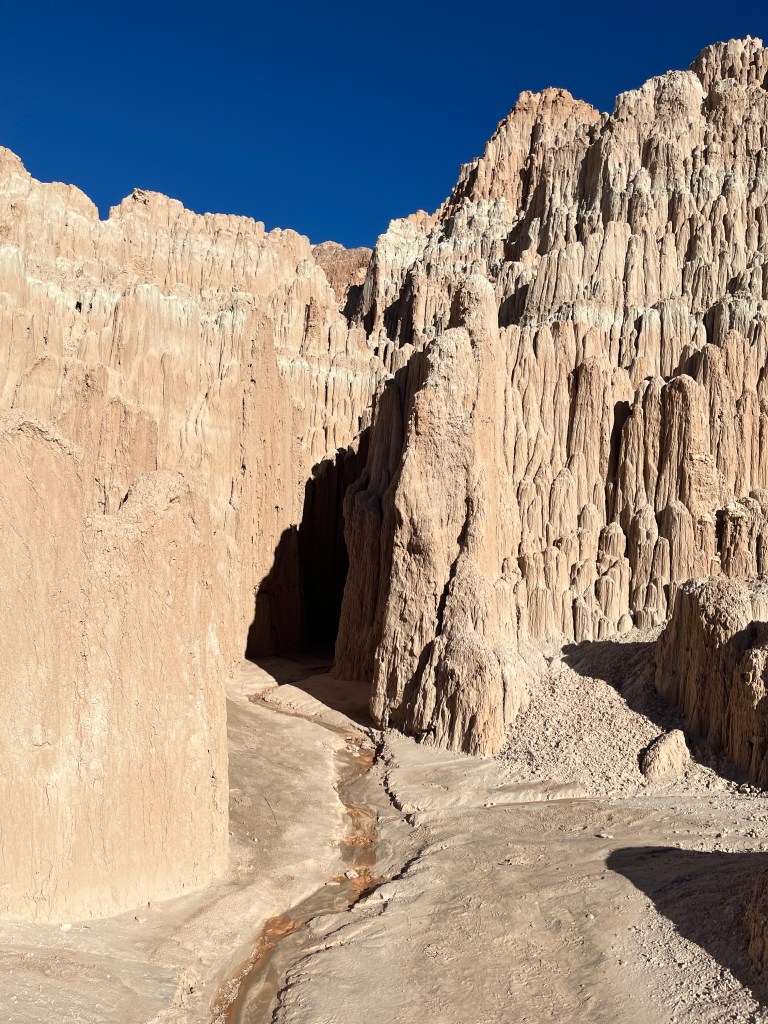
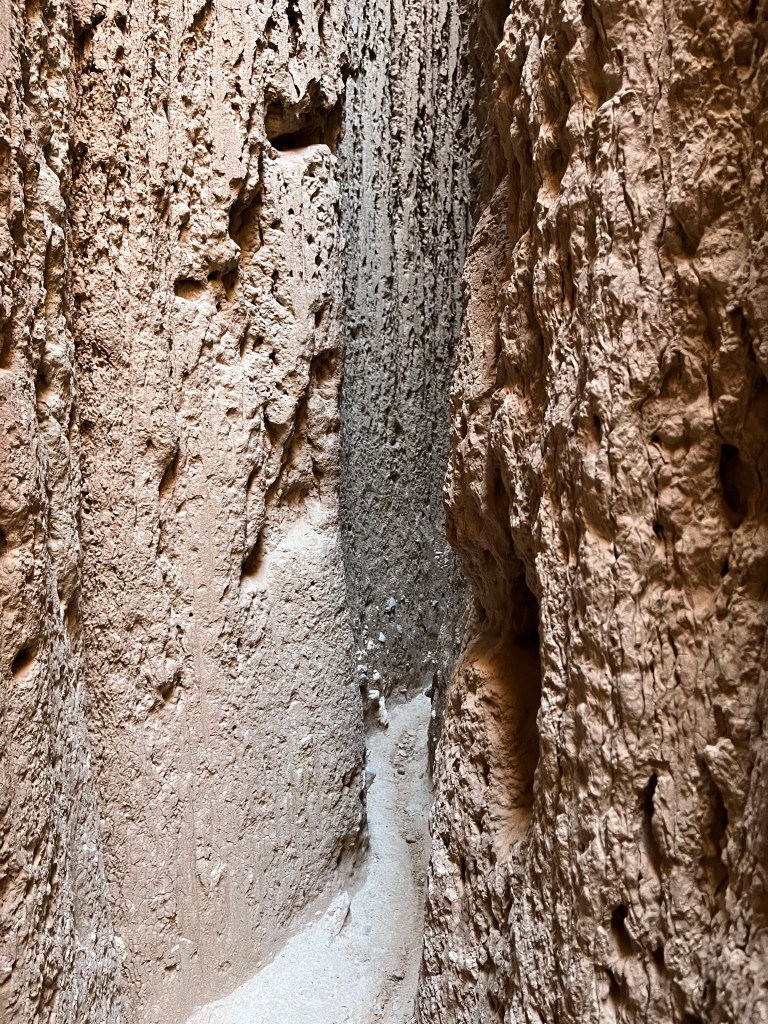
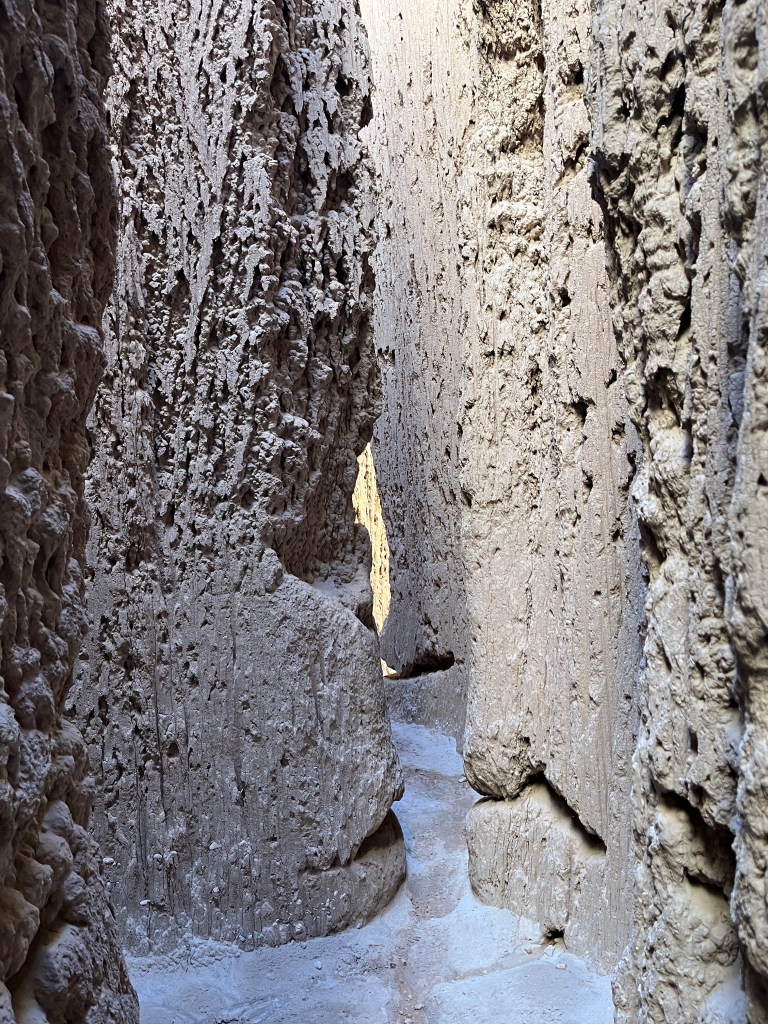
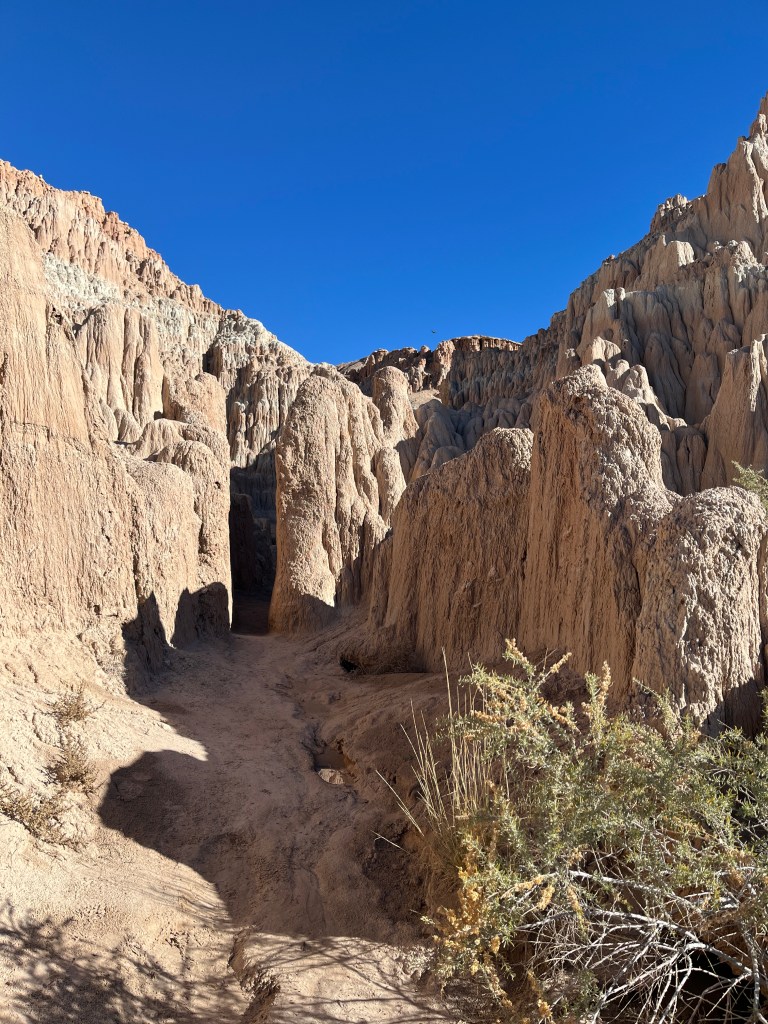
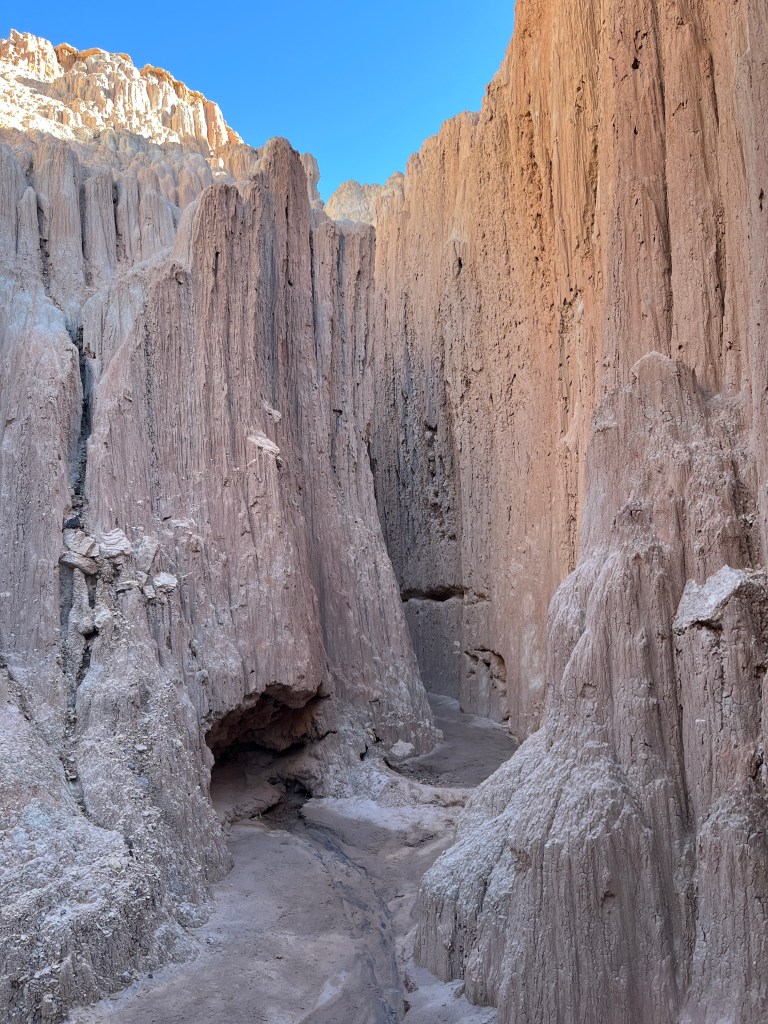
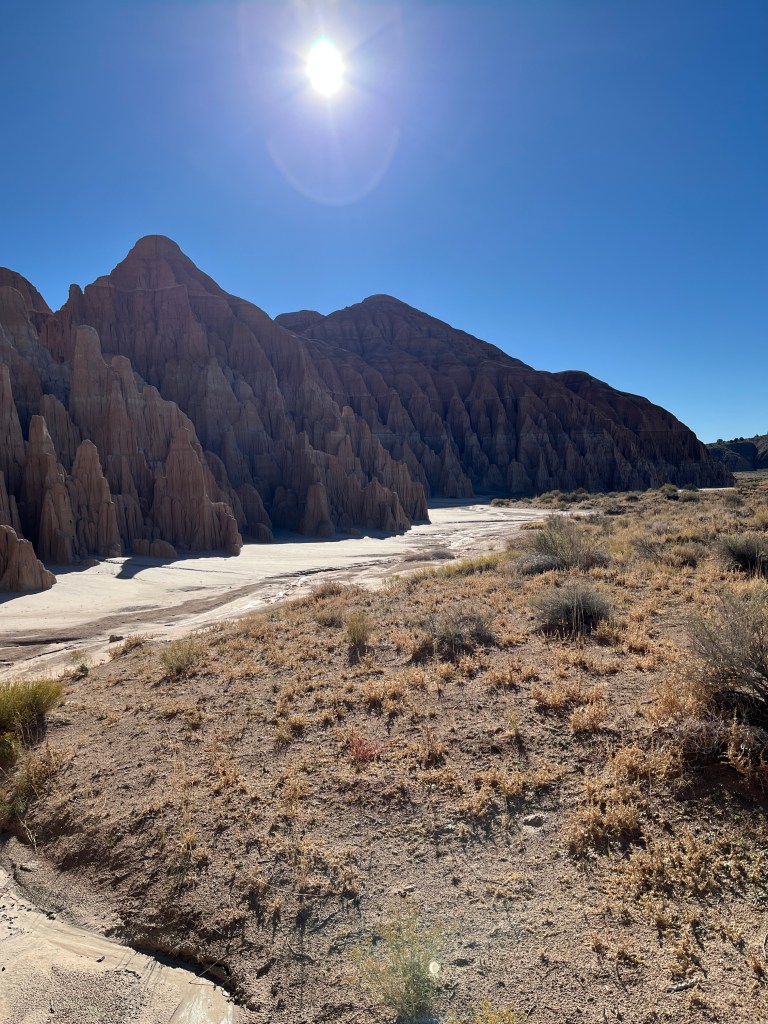
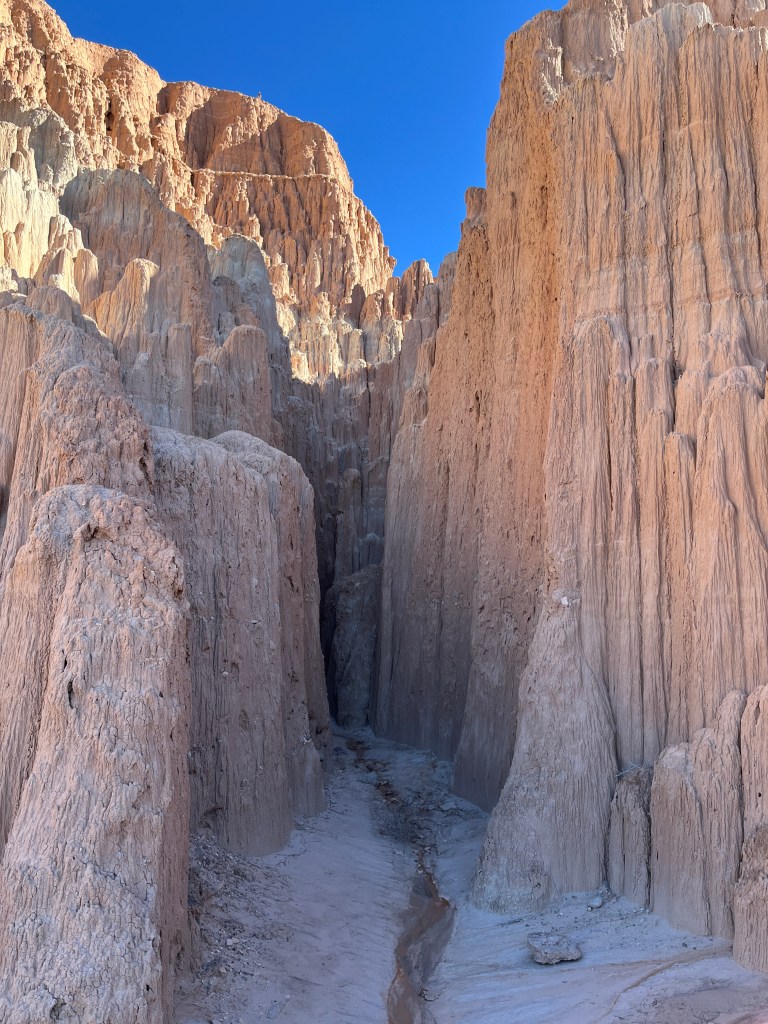
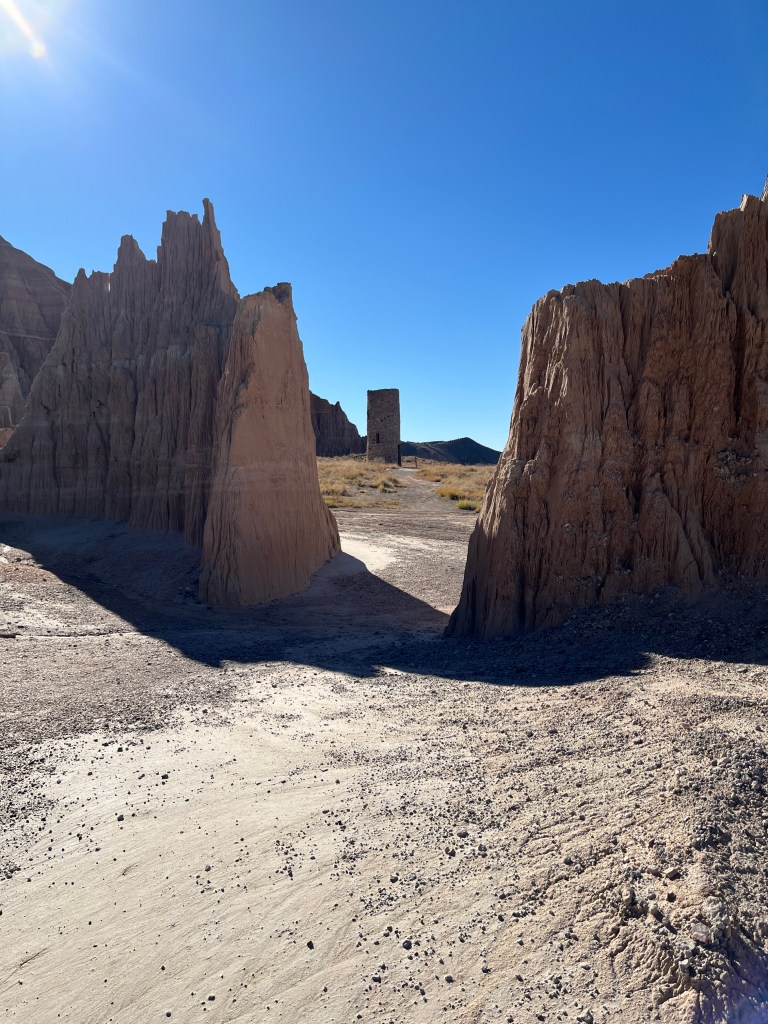
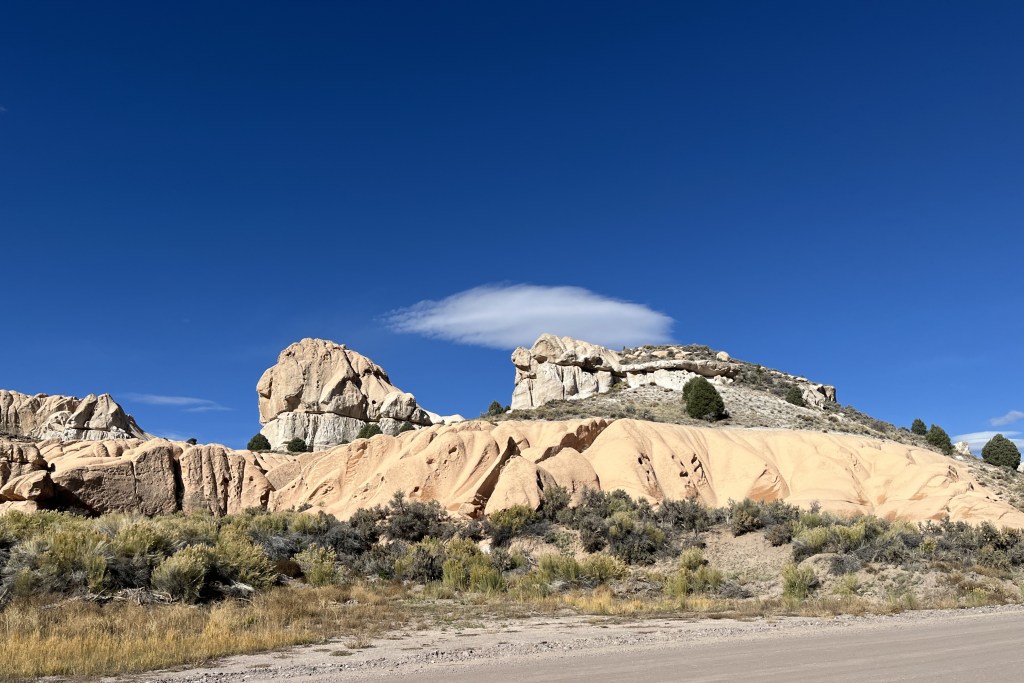
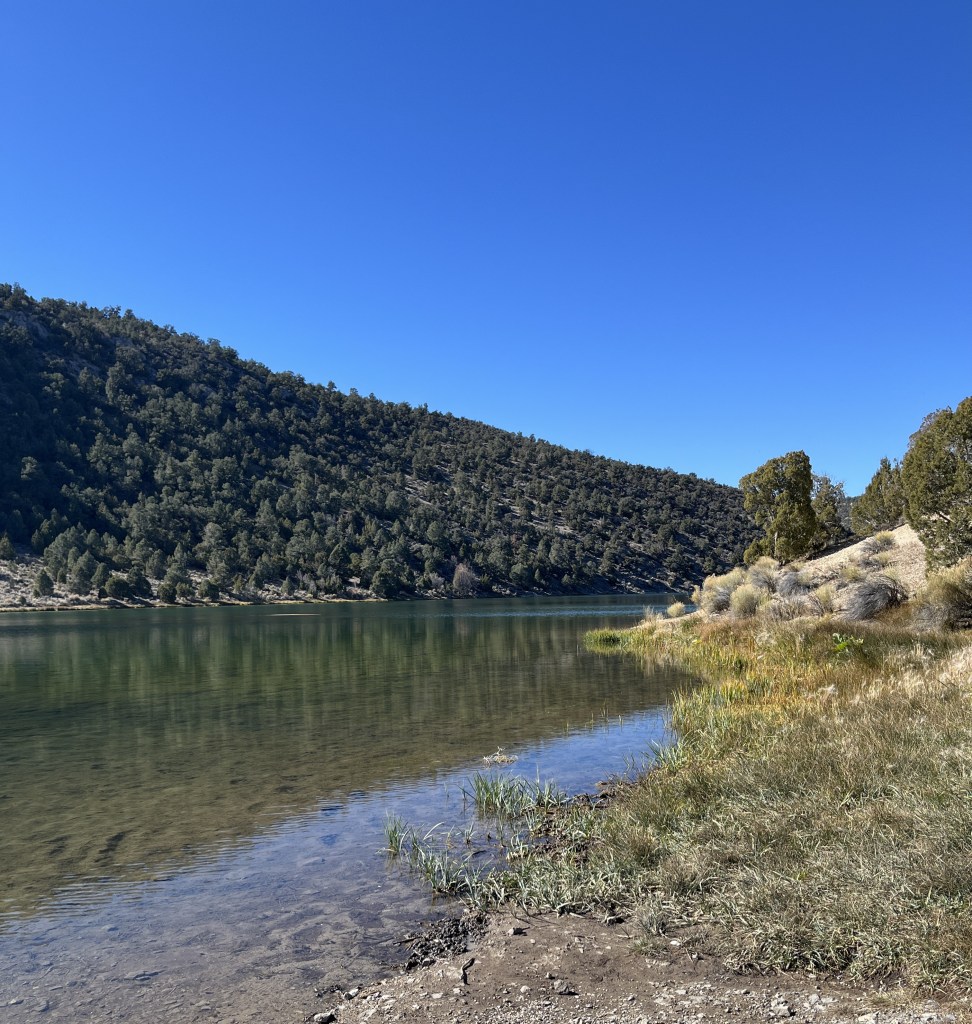
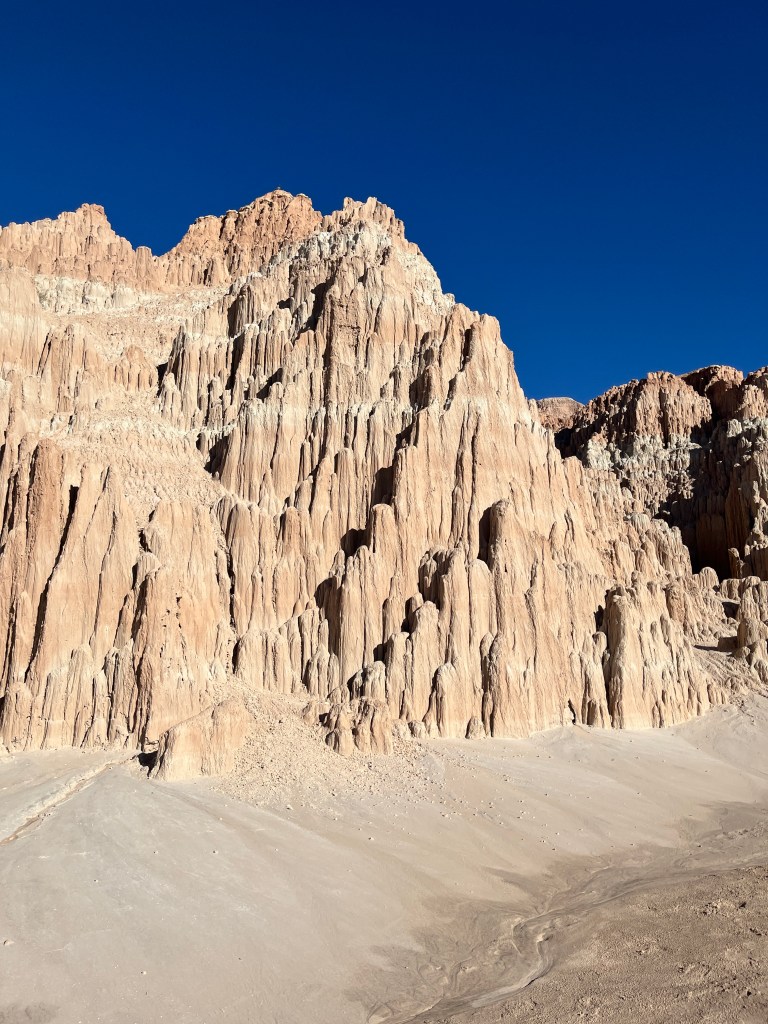
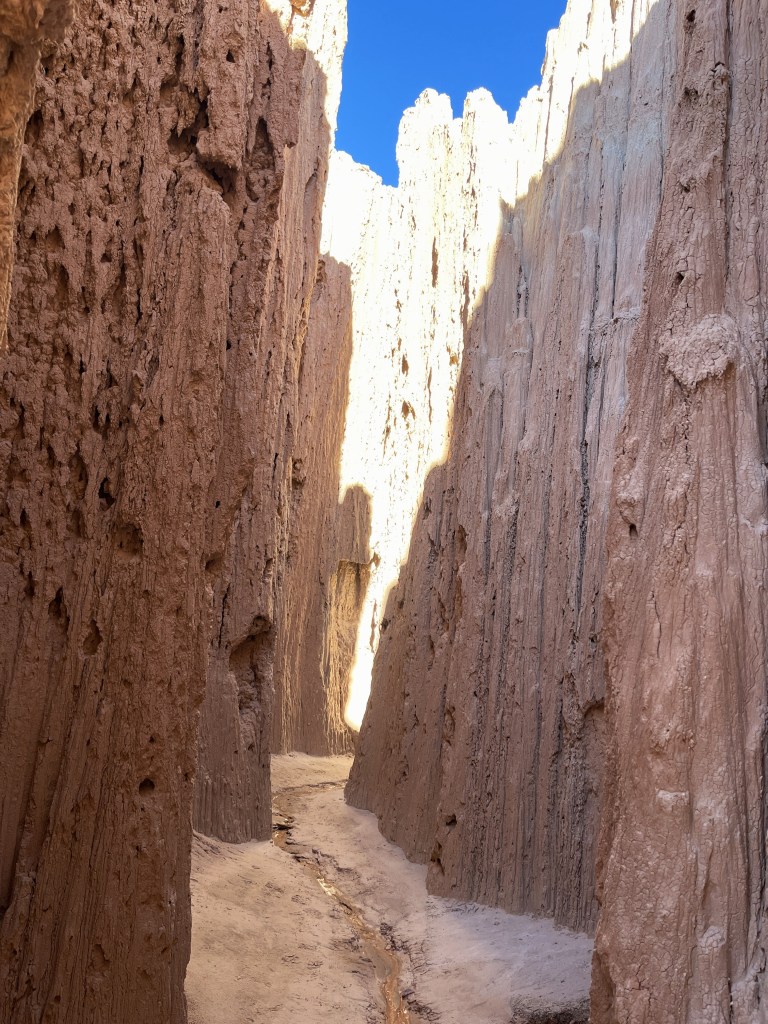
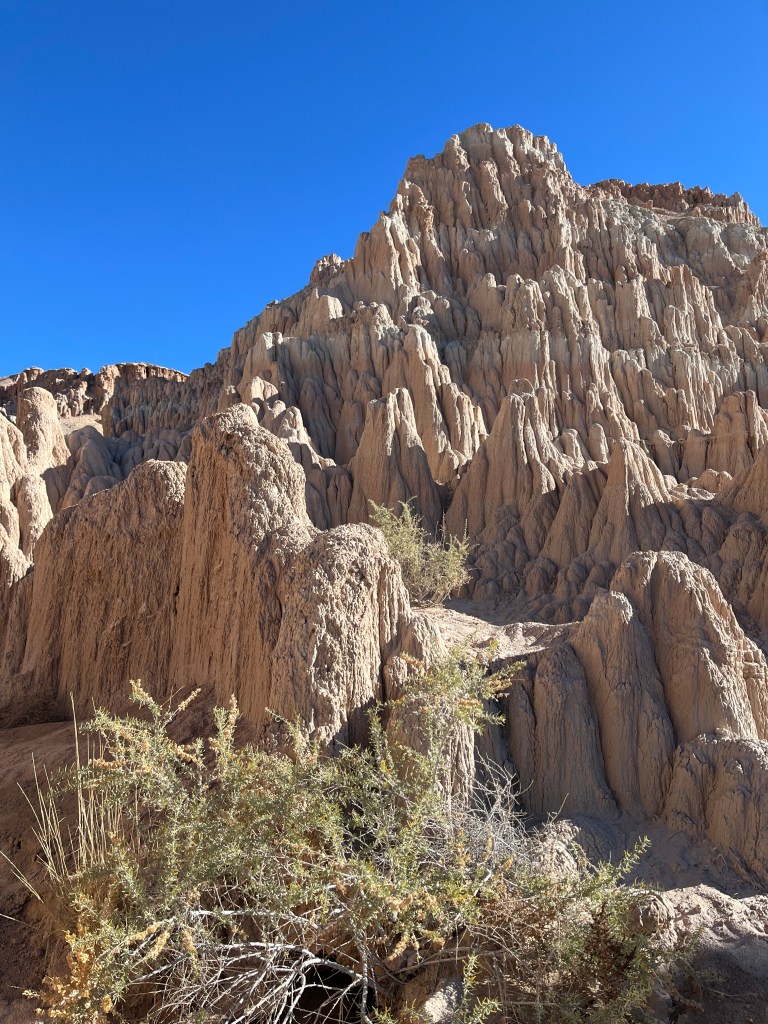
First stop: Cathedral Gorge State Park. There is a nice visitor center here where I was finally able to buy my annual senior pass to Nevada State Parks. Better late than never. Of all the state parks I visited, this was the only one where I saw an actual park employee. The other parks all had fee stations, but you can’t buy annual passes at those. In the parks I was in earlier, I resorted to leaving a note in the windshield giving my phone number and saying I wanted an annual pass. It never came to that, however.

Here’s the blurb from the park’s site:

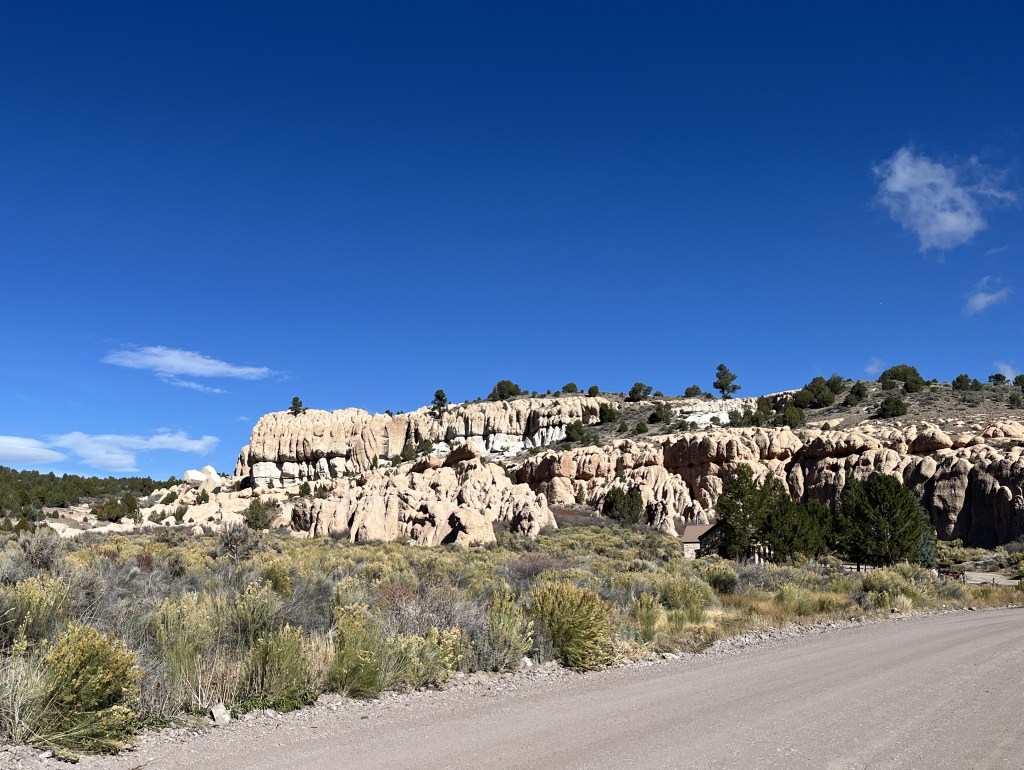
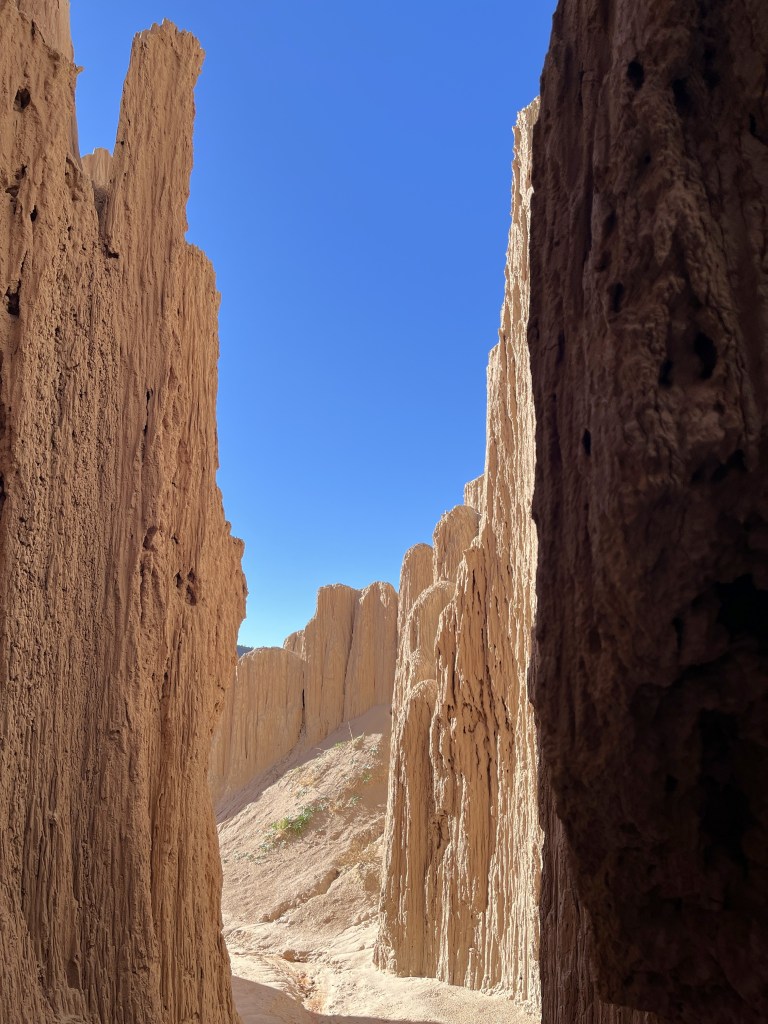
If you have kids, you most definitely should go here with them. It is full of “slot” canyons for them to explore with little risk of them getting lost or hurt (same for us grown-ups). The “canyons” are all short, but you can go from one to another to another to another . . .
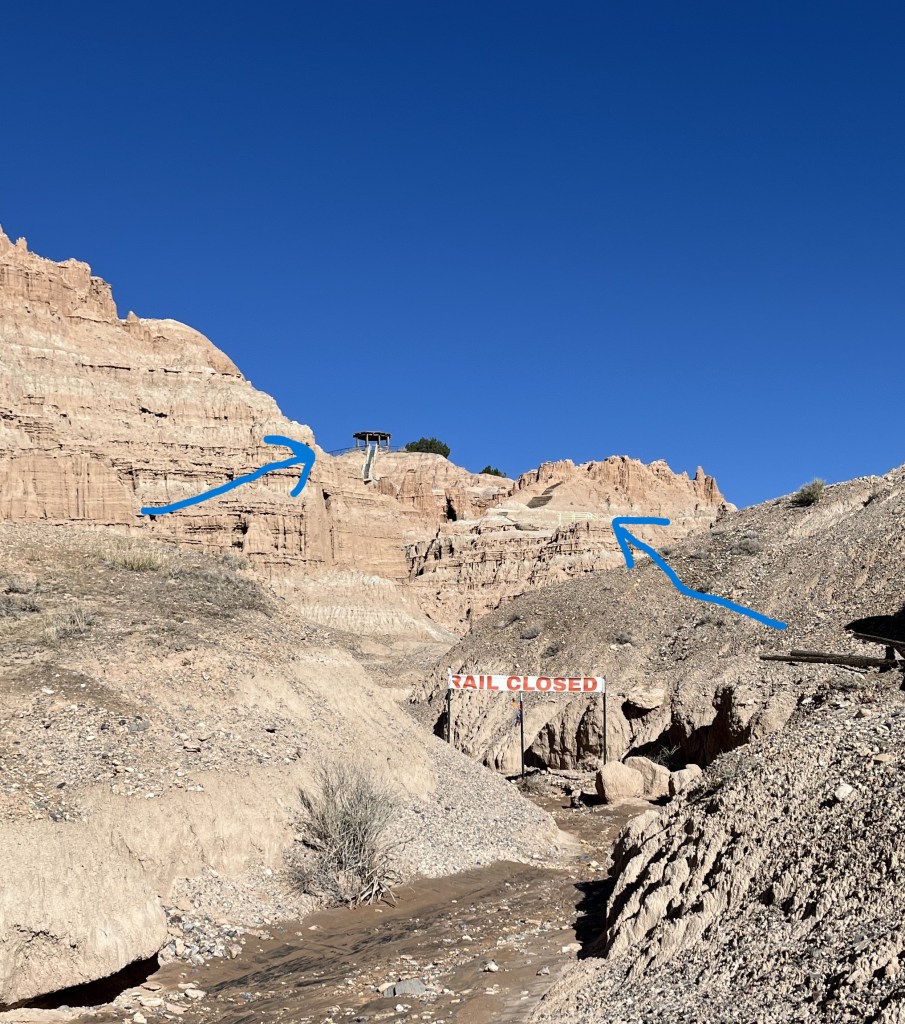
The view from Miller Point is supposed to be very nice, but unfortunately the road to it has been closed for months. I thought maybe I would hike up to it instead, but the trail was closed too. Once I saw the number of steps that would have been involved, I figured that was just as well. You can just make out some of the steps in this photo:
I very much enjoyed my brief visit here and would definitely go back, especially when they get the road to Miller Point open.
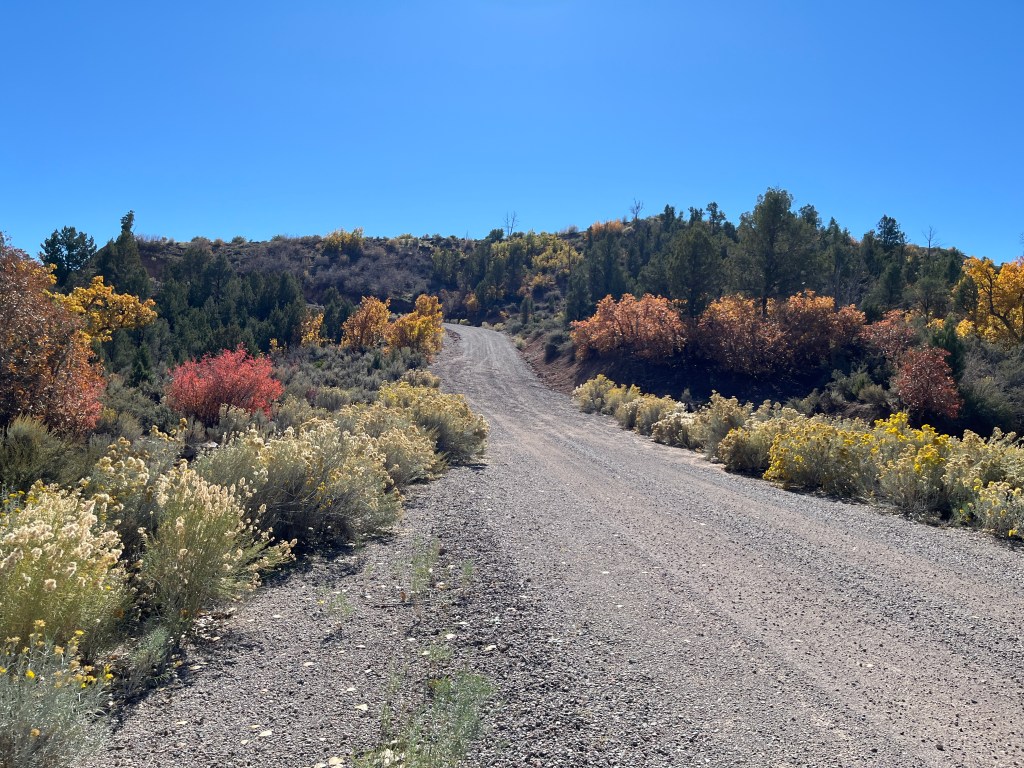
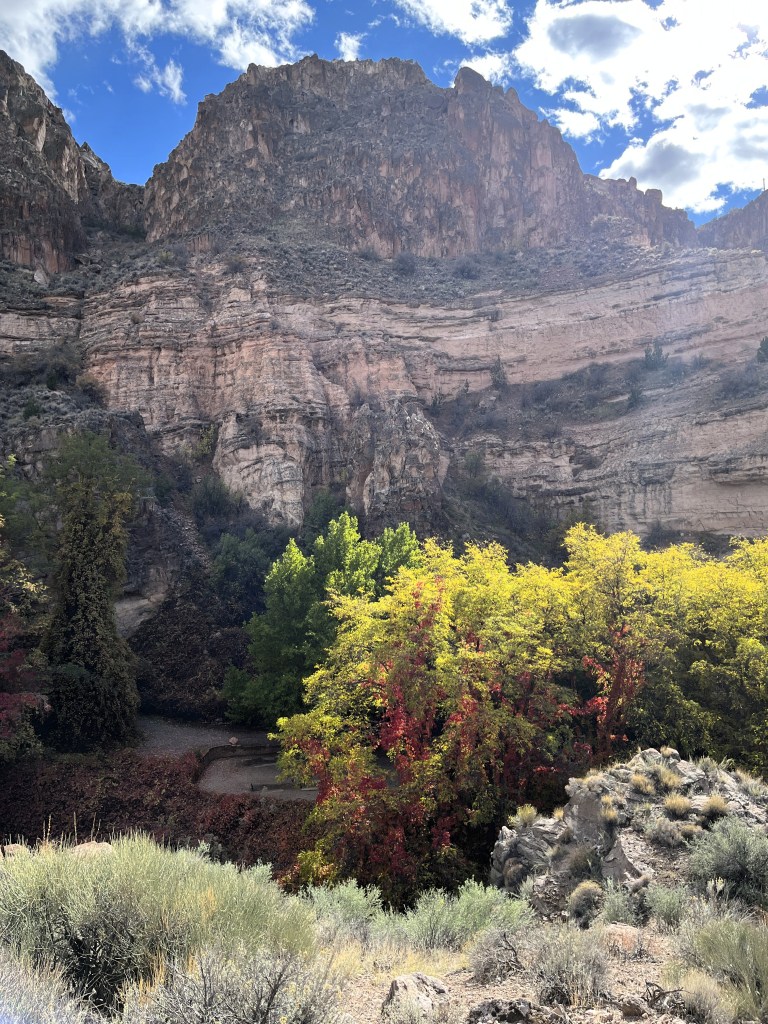
Beaver Dam State Park was the last of my planned sites to visit. It is 28 miles down a dirt road from US 93, eastward, almost to the Utah border. The park did not have much in the way of signage and I did not find many of the places that were listed on the map. An example of the type of problem: the map lists campgrounds “A” and “B” but the signs at the site itself only lists the campgrounds by names.

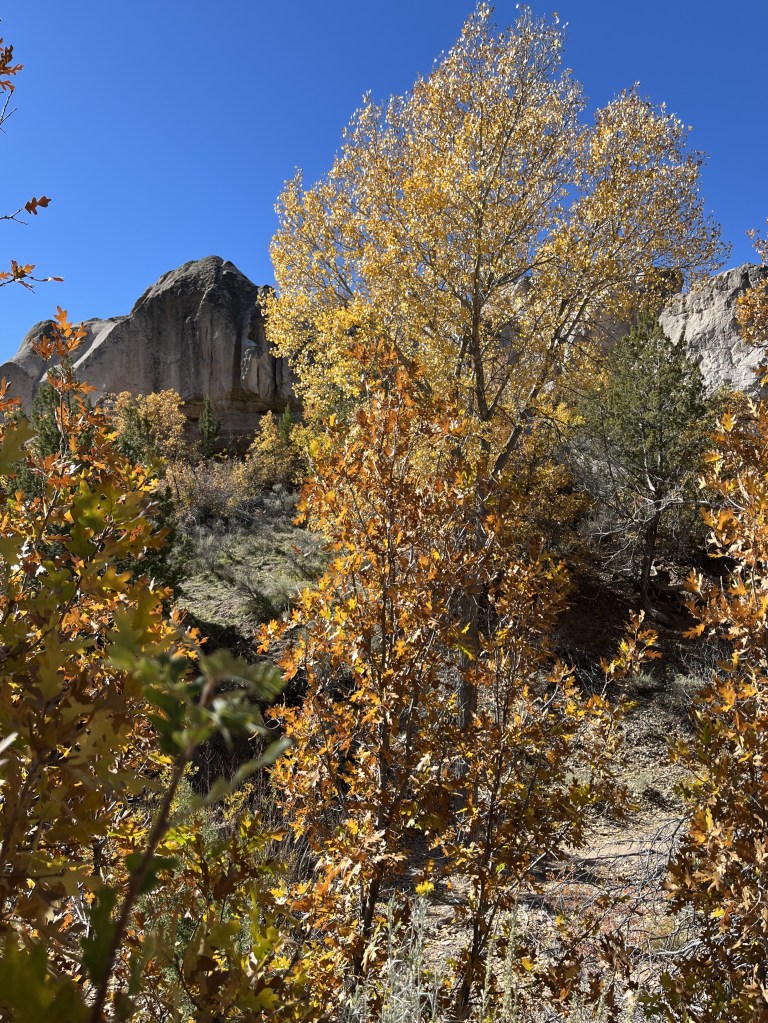
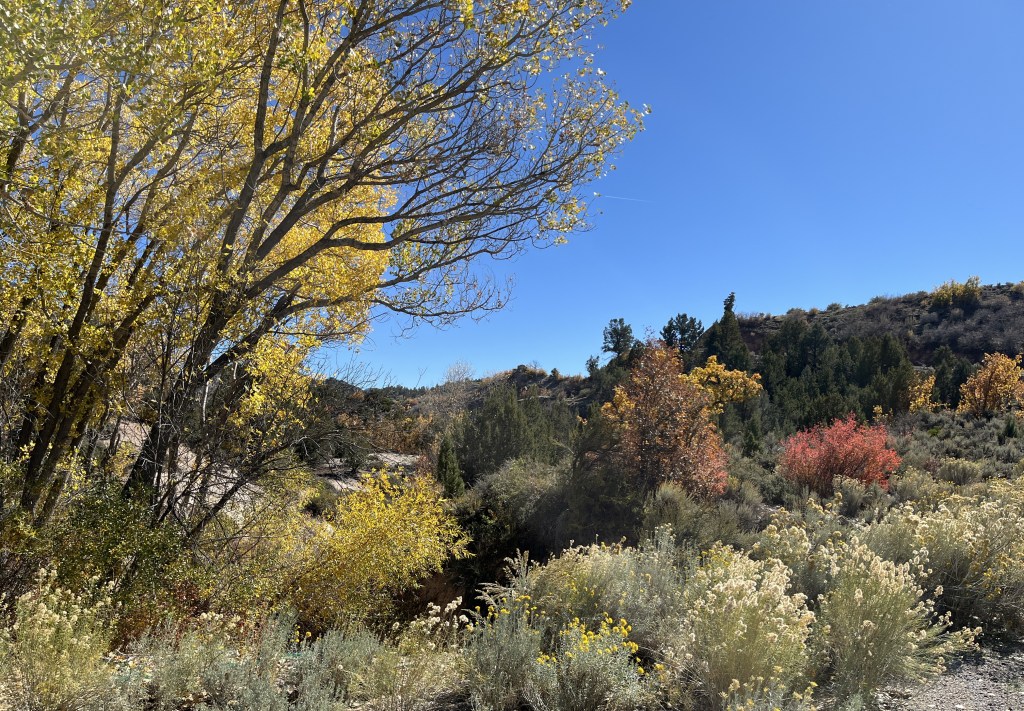
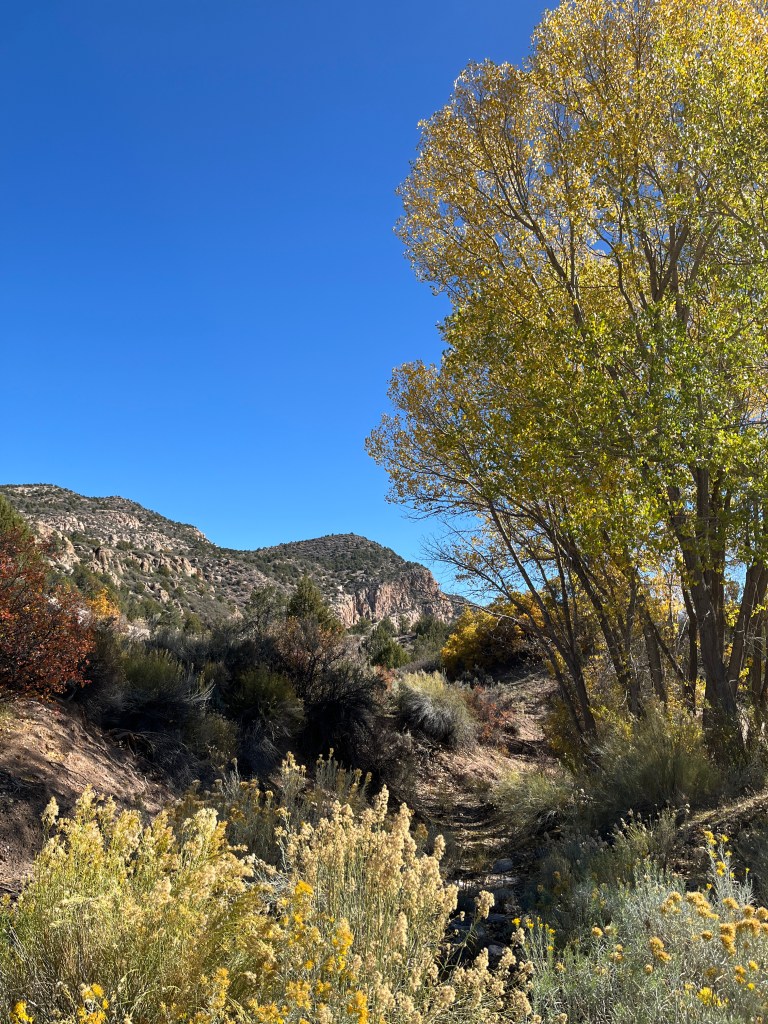
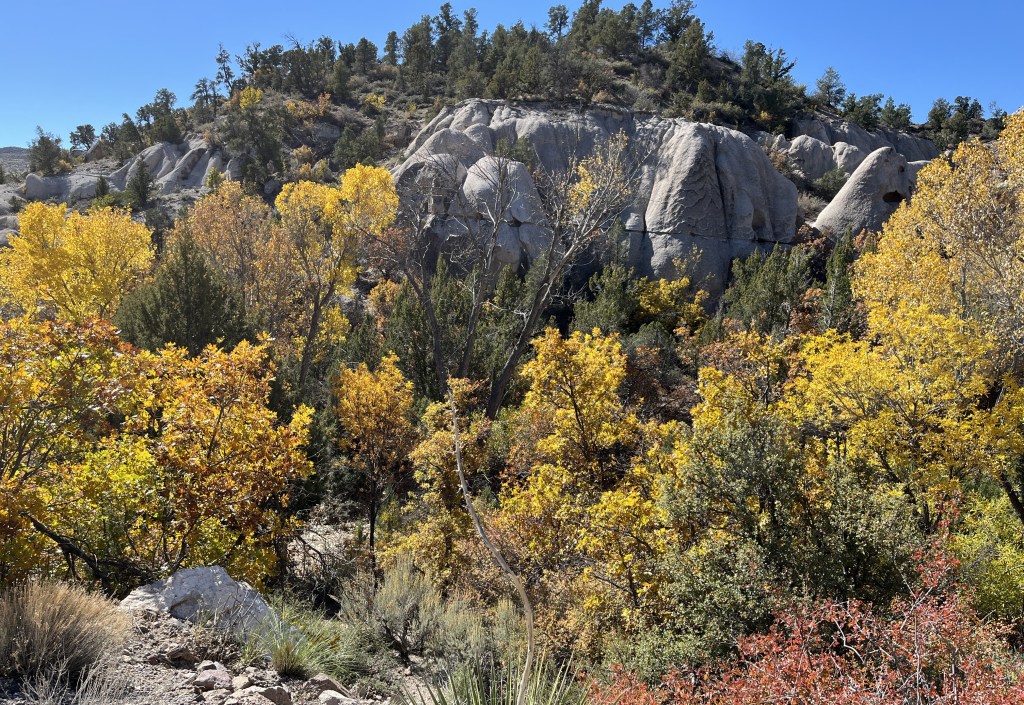
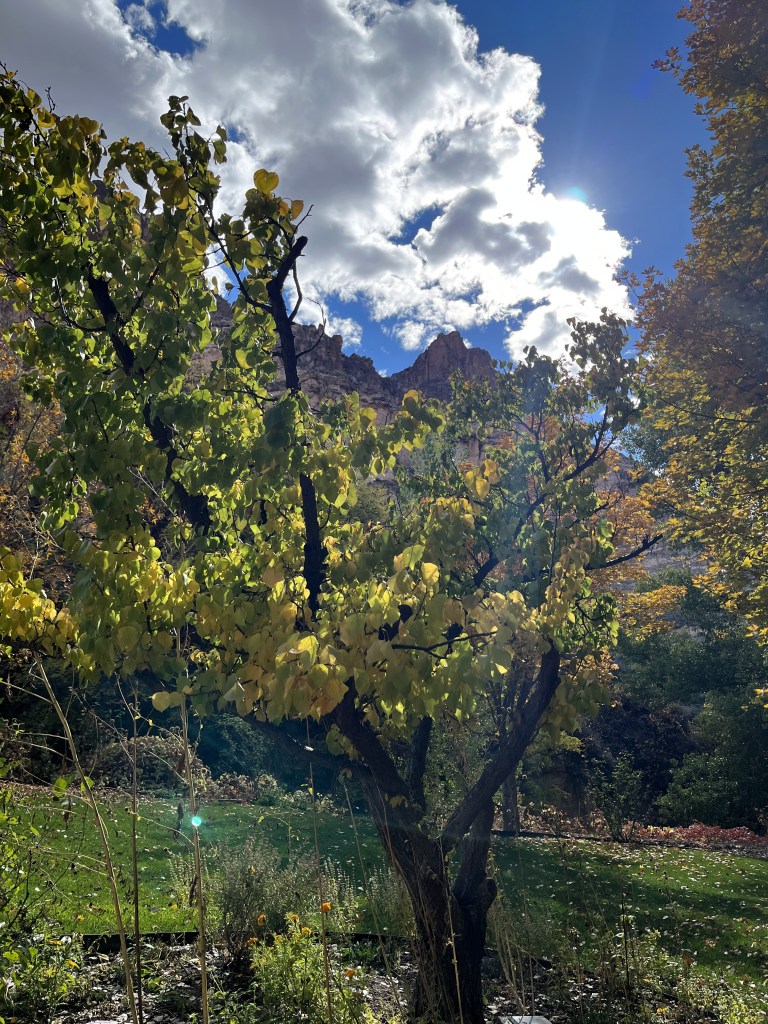
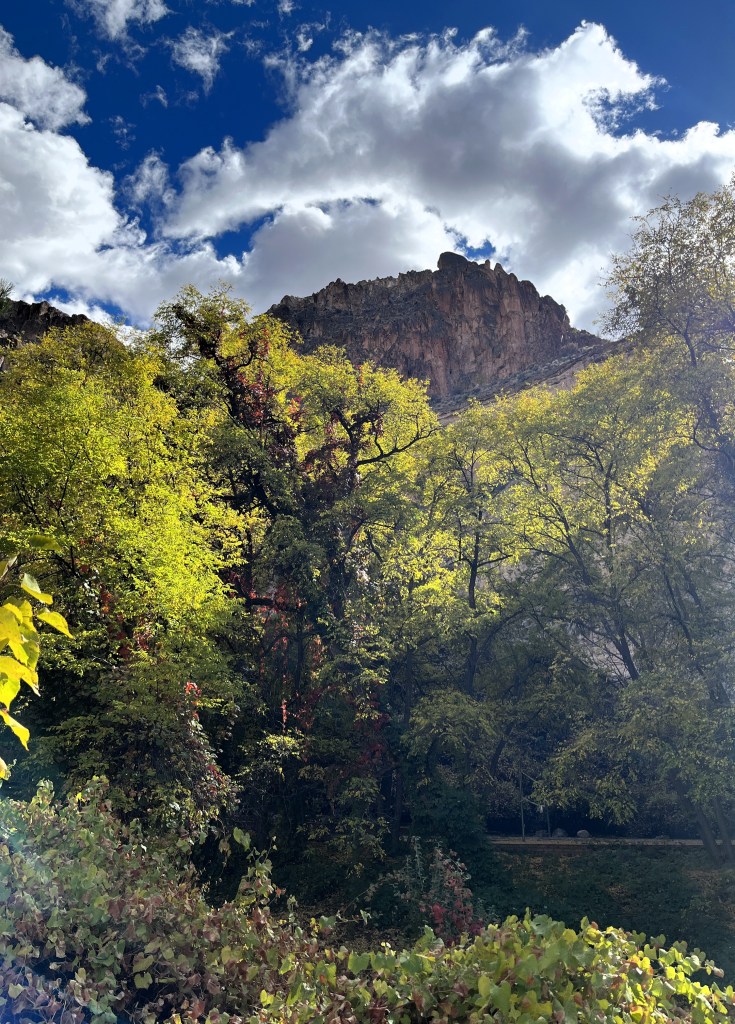
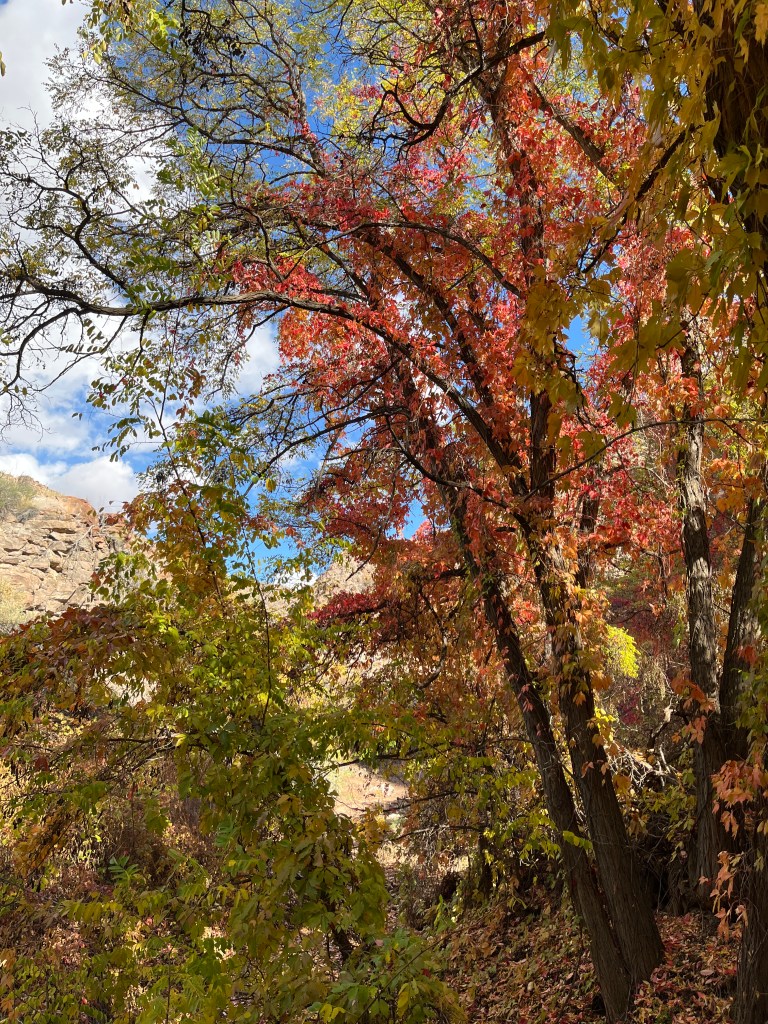
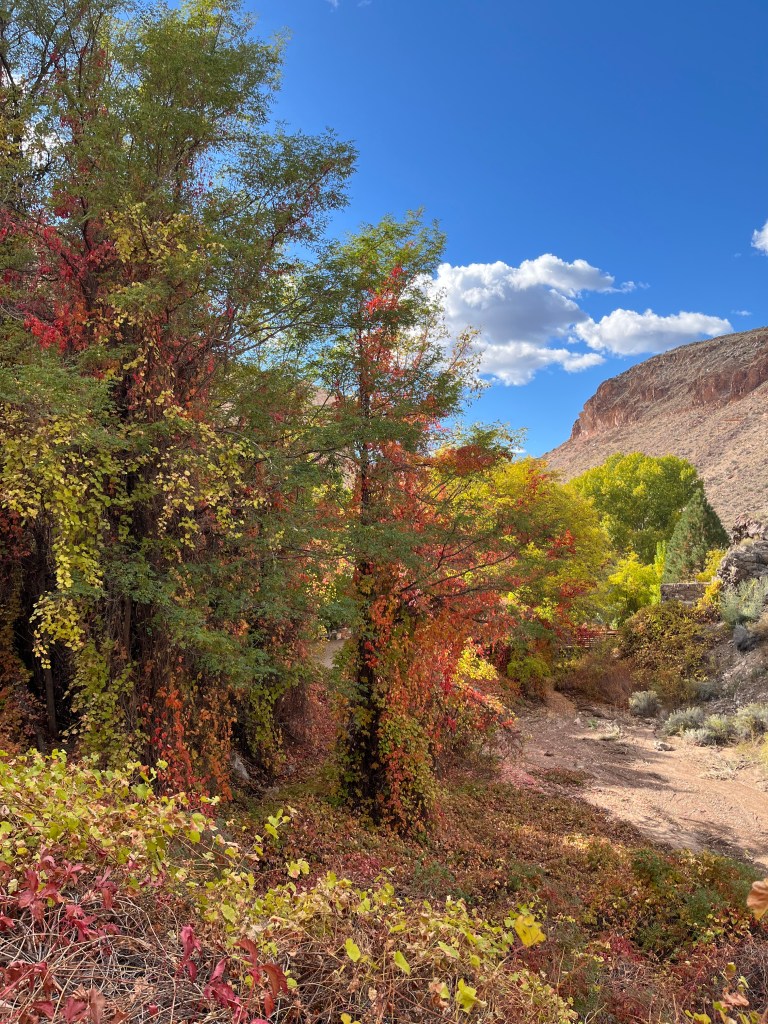
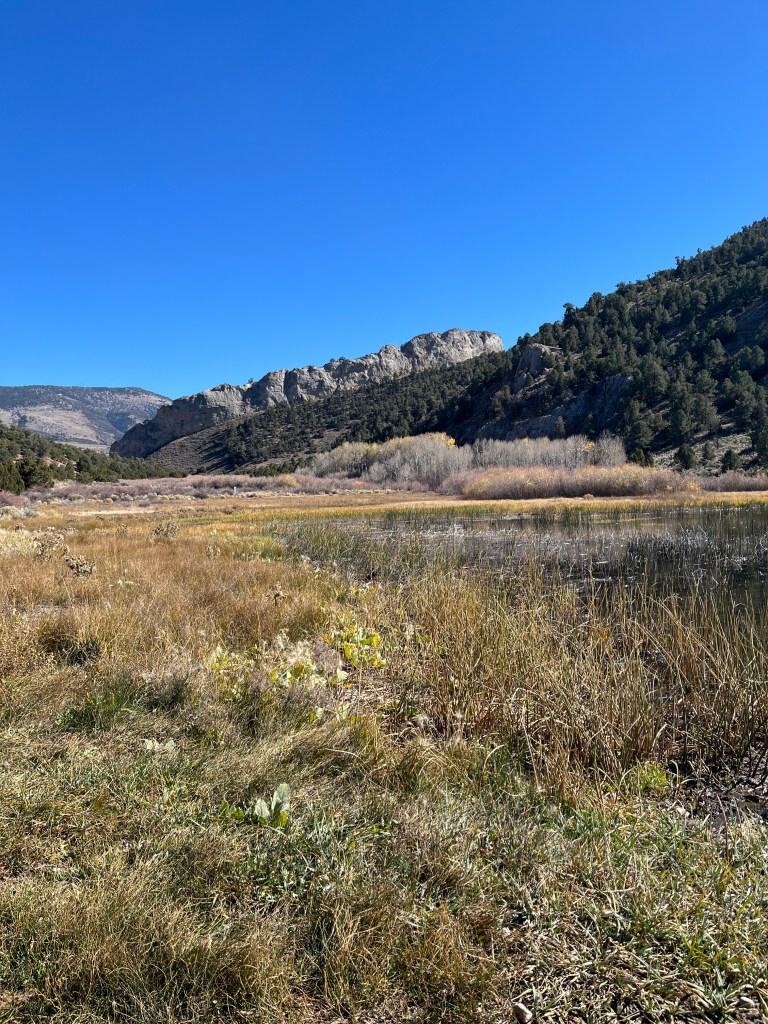
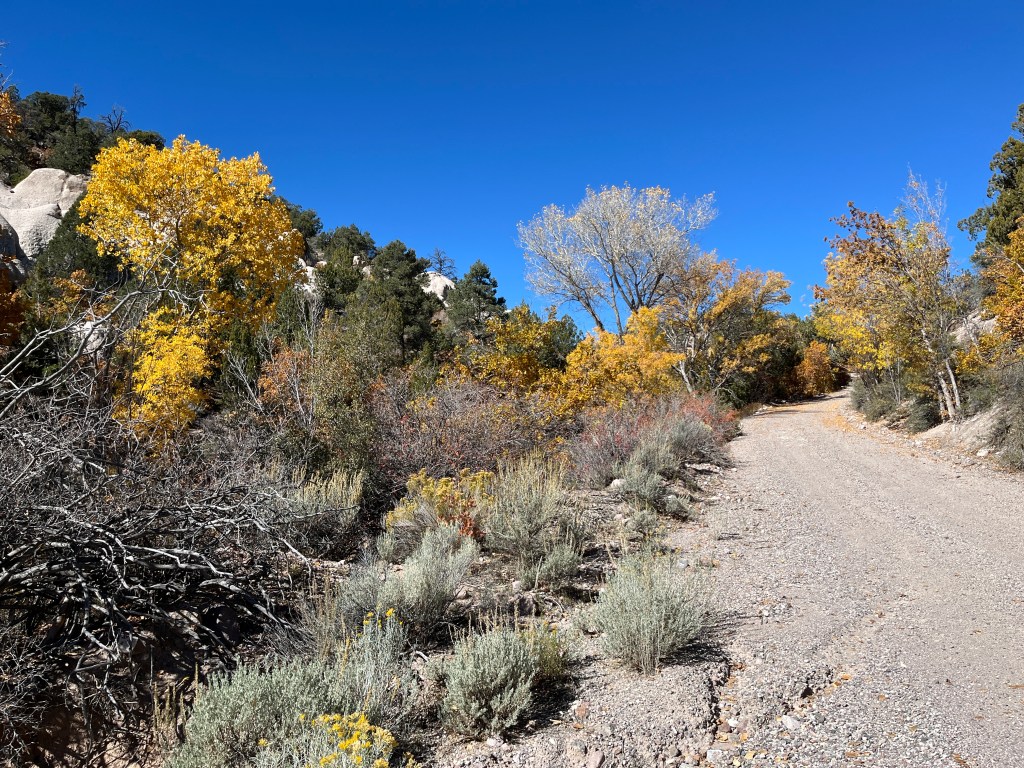
So, although I never did find any of the listed hikes, I did find one of the main sights I was hoping for on this trip: autumn foliage:
I got back from Beaver Dam State Park in the early afternoon. I had booked my motel room for two nights, but I realized I was only 2-1/2 or 3 hours from home. I called the kennel, and they could have Brindy bathed and ready for me by six, so I took off for Henderson.

Naturally, after all the hours on empty roads, I hit a major accident the minute I got into North Las Vegas. Turned the radio back on and rejoined civilization. Picked up the dog and was home before seven.

I had planned this trip to coincide with the “anniversary” of my little stroke last year which happened just before I was supposed to go on a long trip by myself. Although I had been on a cruise in June with a friend, I just felt the need to do something on my own and (with my doctor’s blessing) I am so glad I did it; I had a wonderful time and got a lot of confidence back. I want to explore more of Nevada soon: after all, I don’t want to let that annual state park pass go to waste!
Nevada Road Trip: Ely to Caliente (Day 6)

This drive was all on US 93, The Great Basin Highway. A part of the highway is a Nevada scenic byway as well. I covered 135 miles or so (plus some side trips) on another fairly empty road.

In city driving, I always have the radio on and mainly switch among five different channels on Sirius XM. For some reason, listening to music while driving in town seems necessary. However, the minute I left the outskirts of Las Vegas, I turned the radio off and did not turn it back on until I got back to Vegas the evening of my last day.

There was something about being out in those broad expanses and on those empty roads that just called for silence. I also found that I was much more attuned to the actual driving experience: the sound of the tires on the road, the feel of the steering wheel under my hands, etc. Driving was a joy again just for its own sake during the whole trip.

I drove through the town of Panoche as it has a couple of historical sites and buildings, but the town just didn’t appeal to me and I drove on.

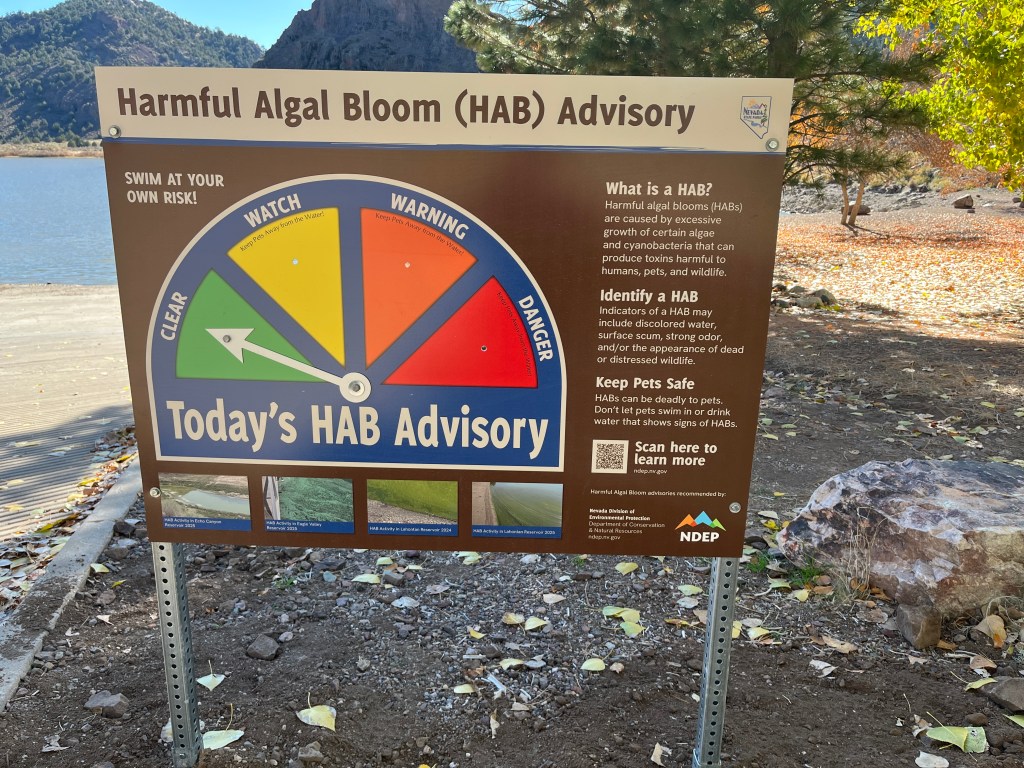
My first stop, then, was Spring Valley State Park. Here is the sign that greeted me at the lake within the park:

If you’re like me, at first glance, you assume it is warning you about fire danger. Look more closely and you will see that it is a “Harmful Algal Bloom Advisory”. Here are the four zones:

  • Clear
  • Watch: Keep Pets Away from the Water!
  • Warning: Keep Pets Away from the Water!
  • Danger: Keep Pets Away from the Water!

What I find interesting is that while the sign explains that the algae and cyanobacteria can be harmful to humans, wildlife, and pets, the main emphasis is on protecting your pet: “HABS can be deadly to pets. Don’t let pets swim in or drink water that shows signs of HABS.” Nothing about when humans should stay out of the water!

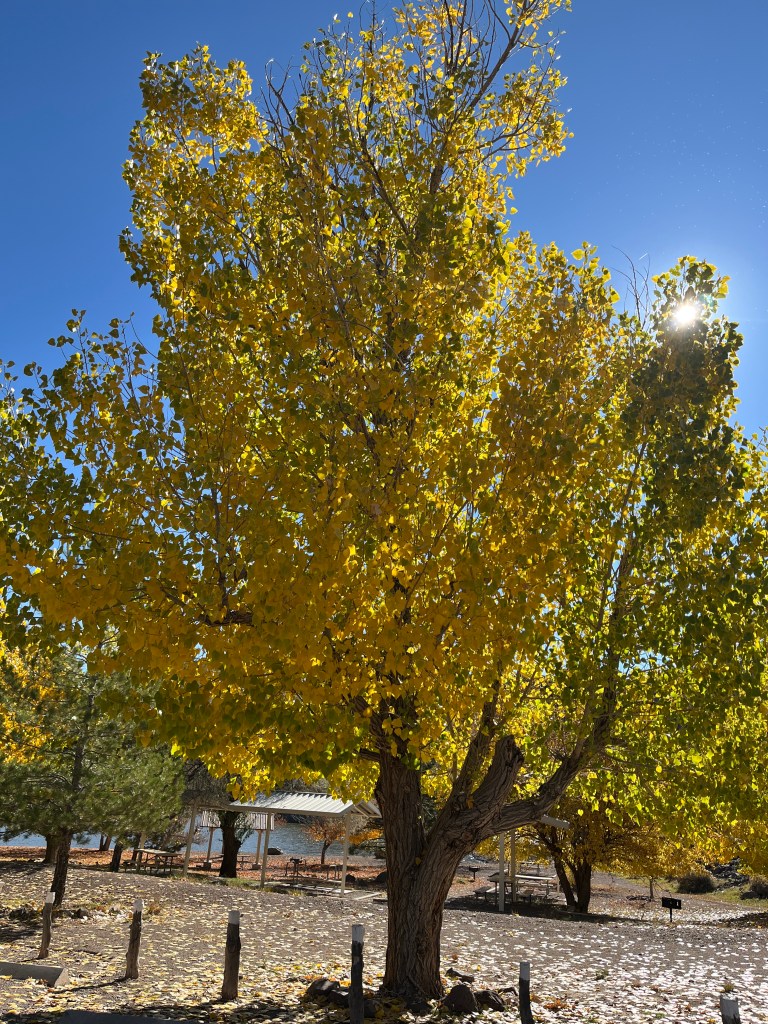
The park is named for the large number of springs that irrigate lush pastures in a historical ranching area. Volcanic tuff and sediment make the hills a light-gray, pink, and white backdrop. 

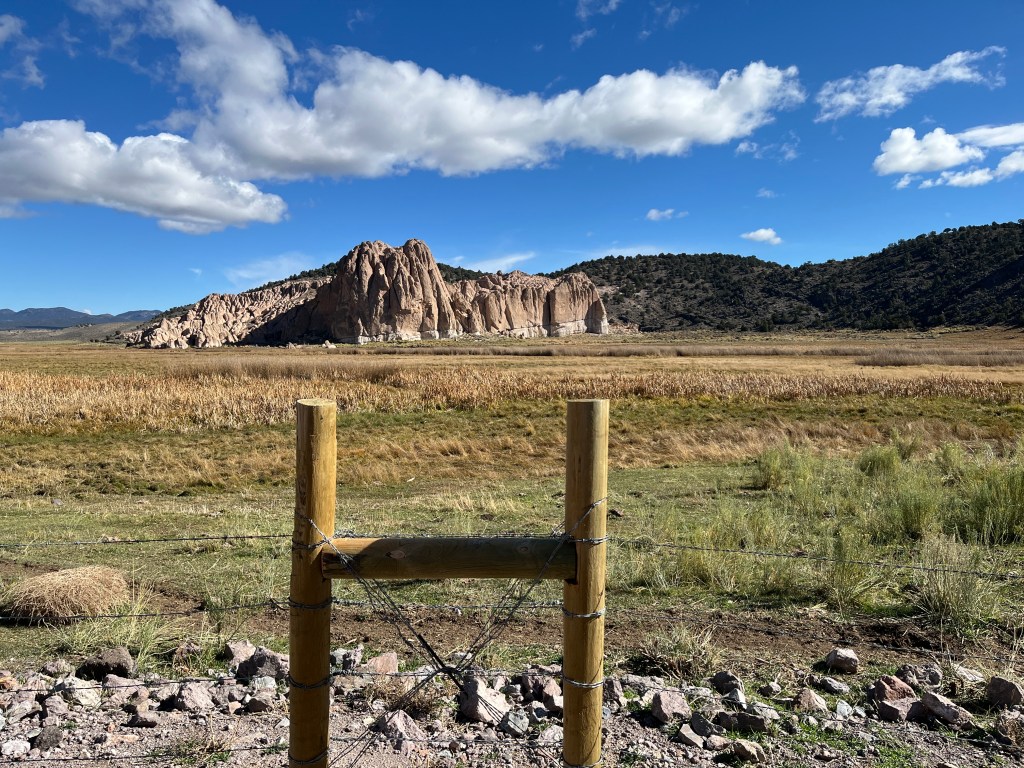
The next scenic spot of the day was Kershaw-Ryan State Park:

If you ever find yourself in Caliente, I can highly recommend the Side Track Restaurant. I had a great turkey sandwich. When I asked about what the fries were like I was told to imagine if McDonald’s fries and Wendy’s fries had a baby; that would be their fries. And, yes, they were terrific!

Day 7 is more state parks around Caliente.

Nevada Road Trip: Ely Excursions (Day 5)

This was the only day of my trip that the weather wasn’t perfect. Fortunately, none of my planned activities were outdoors.

I woke up to the health app on my phone telling me I had some outlier readings during the night. My respiratory rate had gone up to 15 something instead of its usual 13 and my blood oxygen level had dropped to 92. The app then proceeded to inform me that this sometimes occurs when you are at higher altitudes. Ely is at around 6400 feet, so the app was correct about the reason for the changes (I was back to normal by the 2nd night).

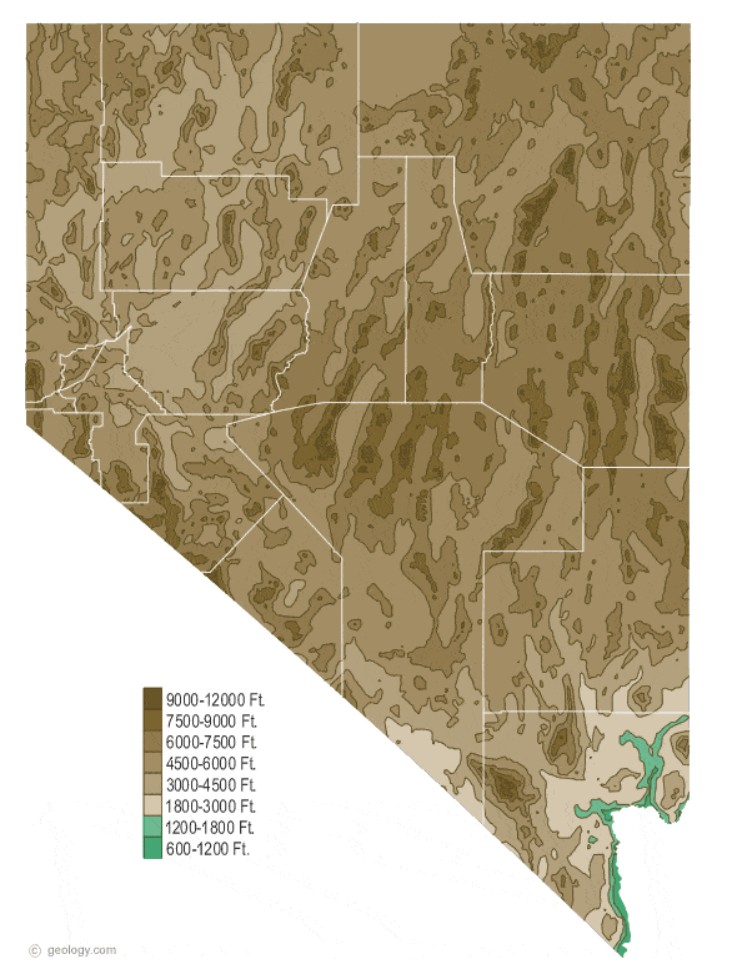
Many people don’t realize just how high in elevation most of Nevada is. Its average elevation is the 5th highest among the states at 5500 feet. It is also the 2nd most mountainous state after Alaska. Basically, the whole state is in the Basin and Range Province (https://en.wikipedia.org/wiki/Basin_and_Range_Province) and most of it is also part of The Great Basin (https://en.wikipedia.org/wiki/Great_Basin).

I pulled this map off https://geology.com/topographic-physical-map/nevada.shtml. It gives a nice sense of just how mountainous Nevada is.

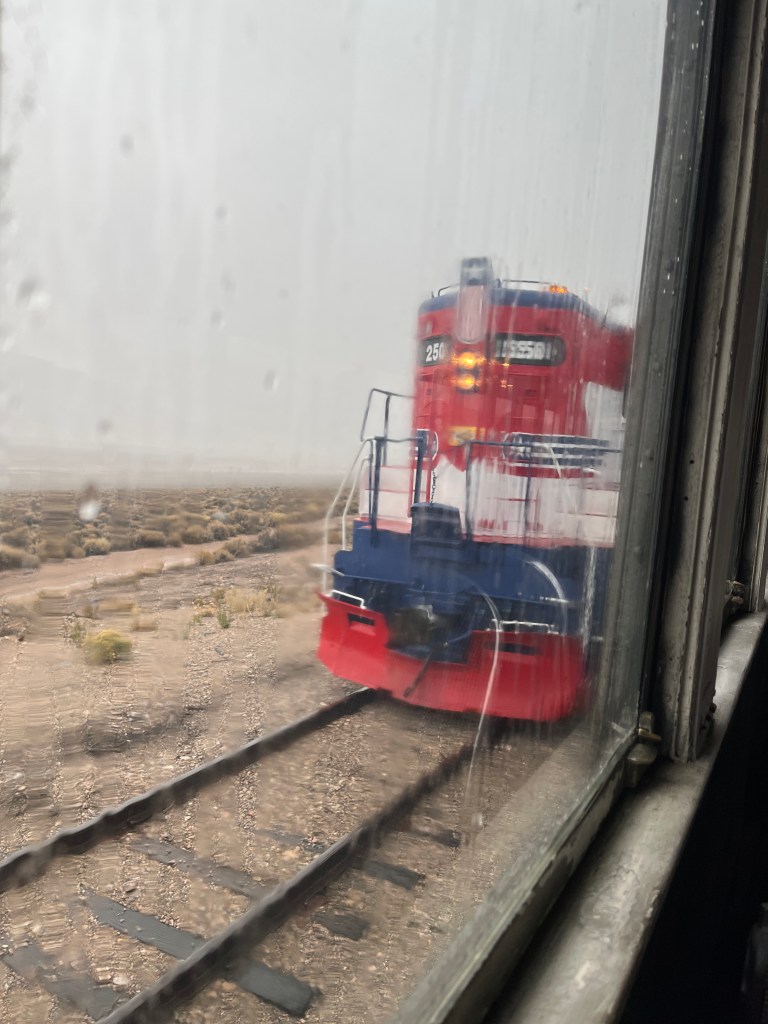
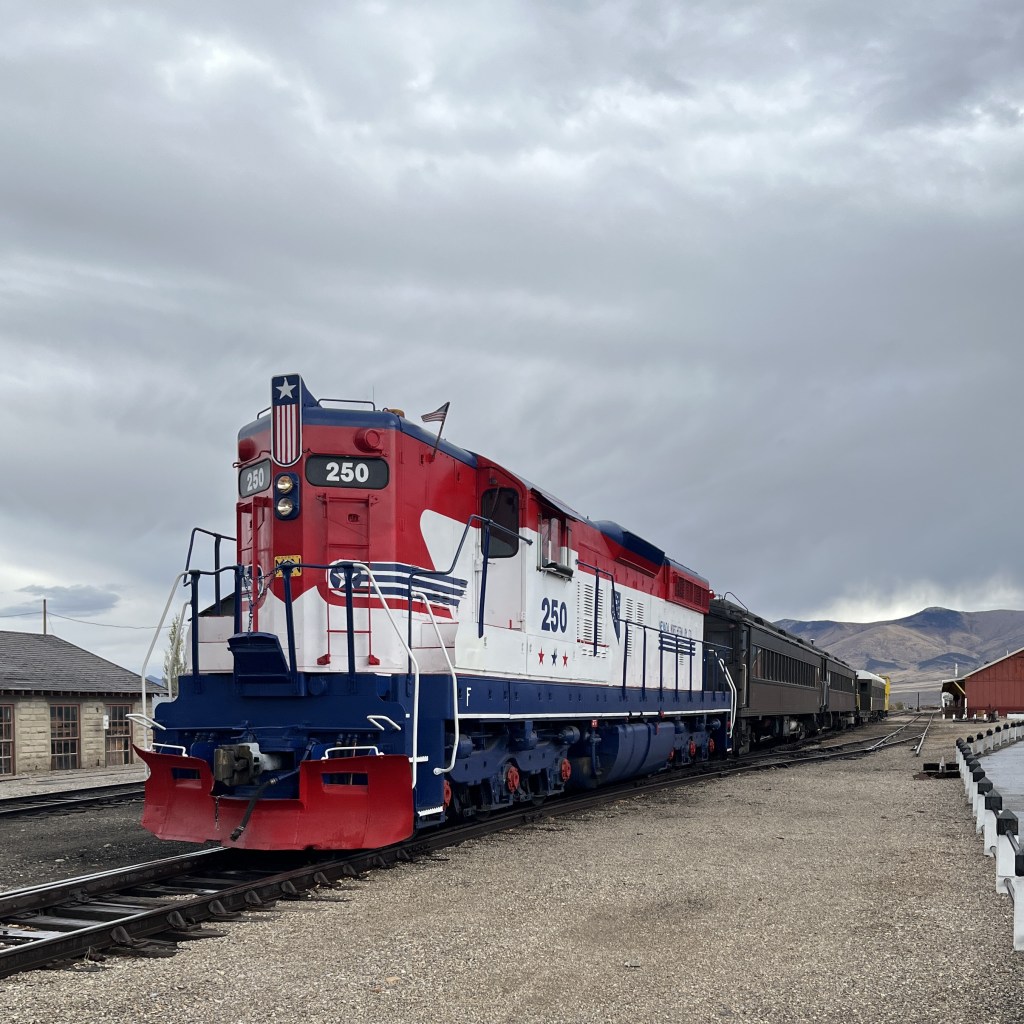
The train ride I went on in the morning was just up the Steptoe Valley a bit. This valley is one of the many “basins” to be found in basin and range country. At about 100 miles long, it’s not setting any records, but it’s no little thing either. We went about 12 or 13 miles up the valley and then the locomotive decoupled and came around to the other end of the train and we went back to Ely.

It was an enjoyable trip and if you’re ever in Ely, you should check out what kind of excursions are available. Although this trip was not stunningly scenic (in part due to the rain), a guide provided plenty of history about the area. You can check out some of the other trips they make here: https://nnry.com/

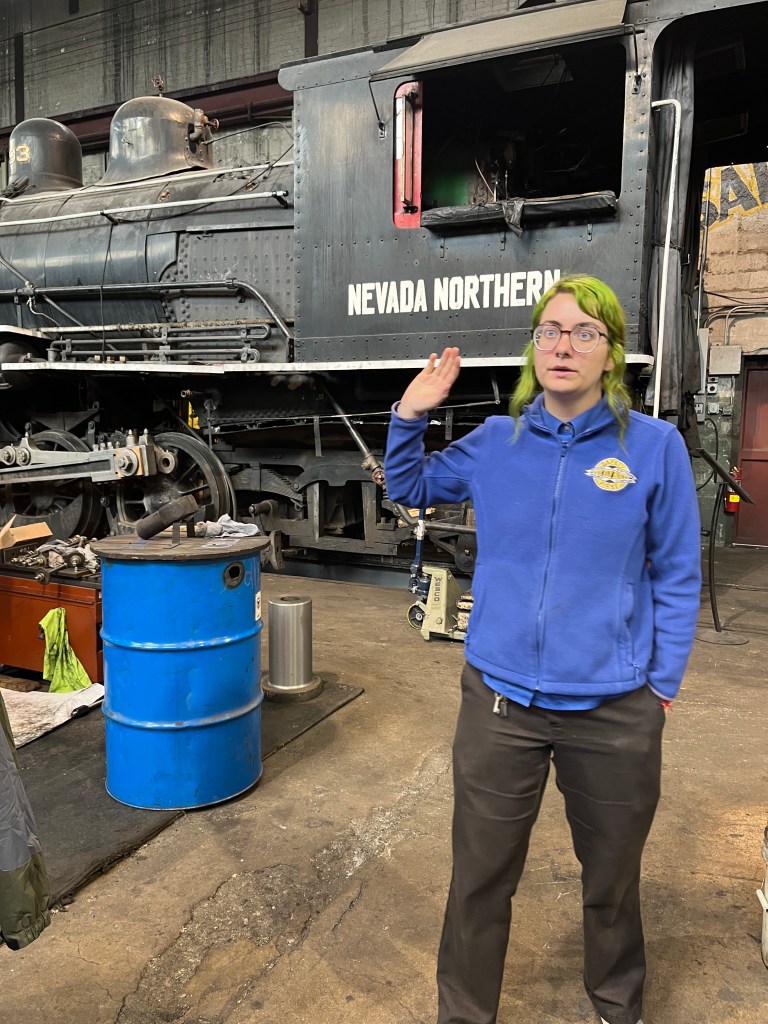
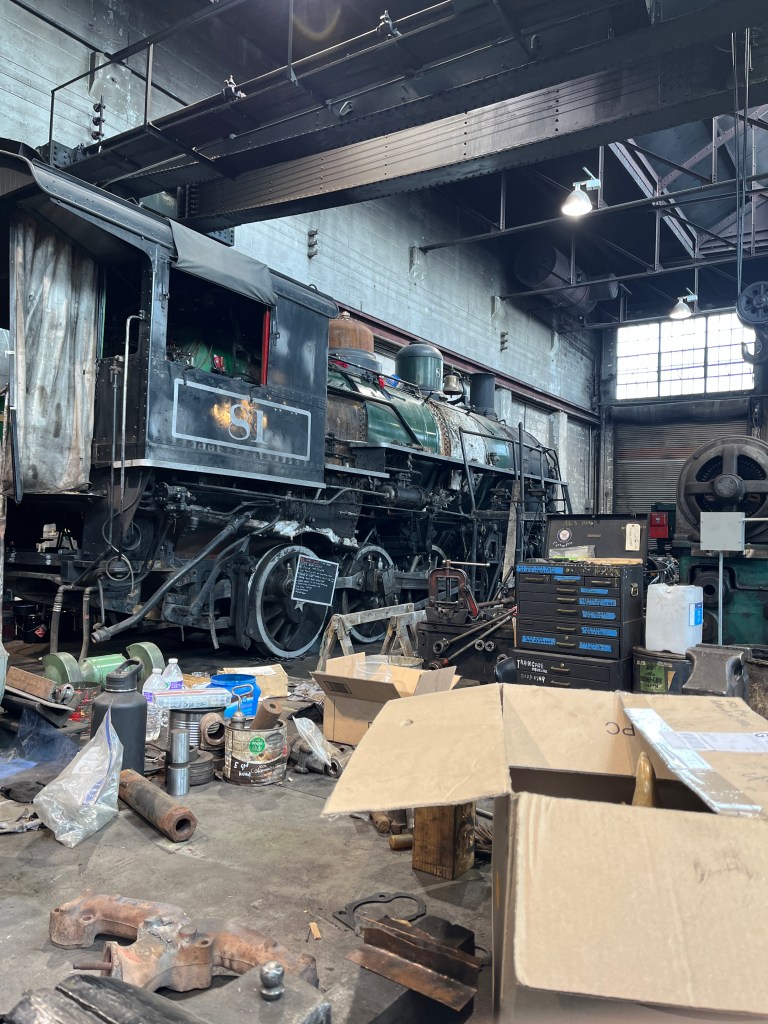
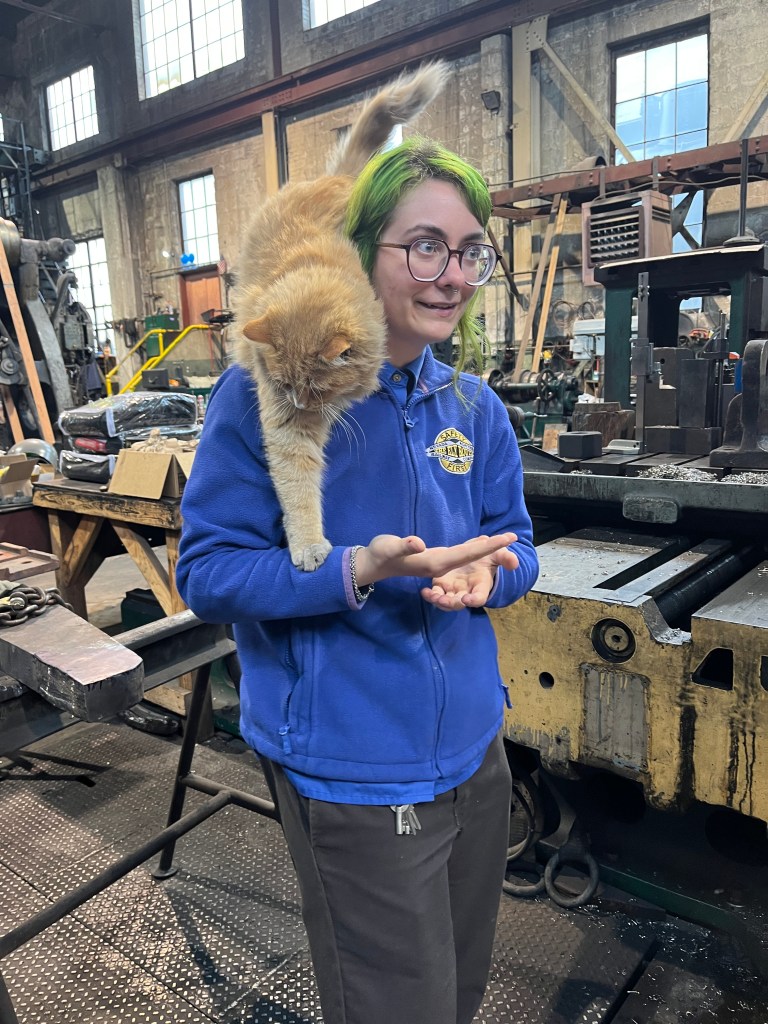
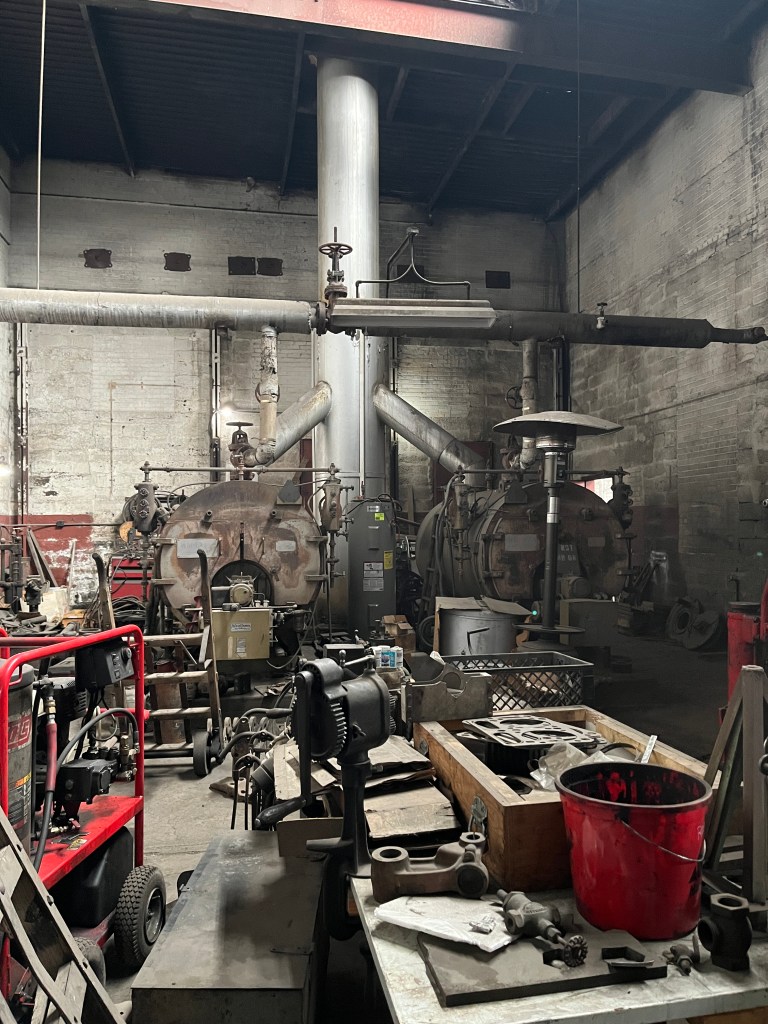
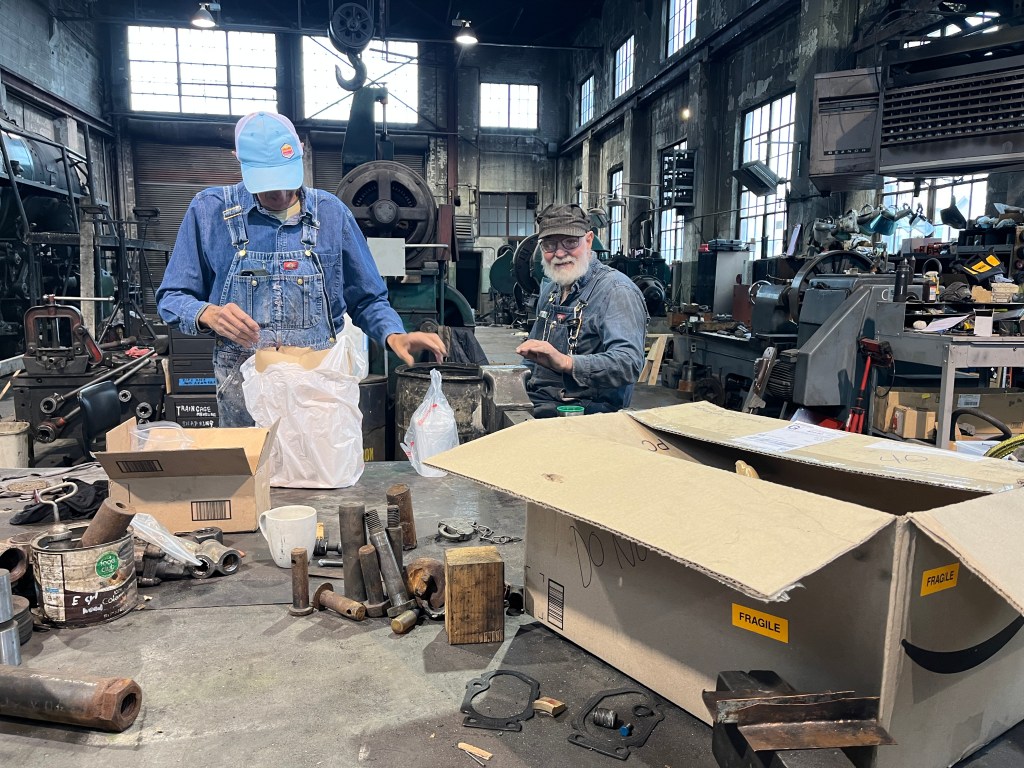
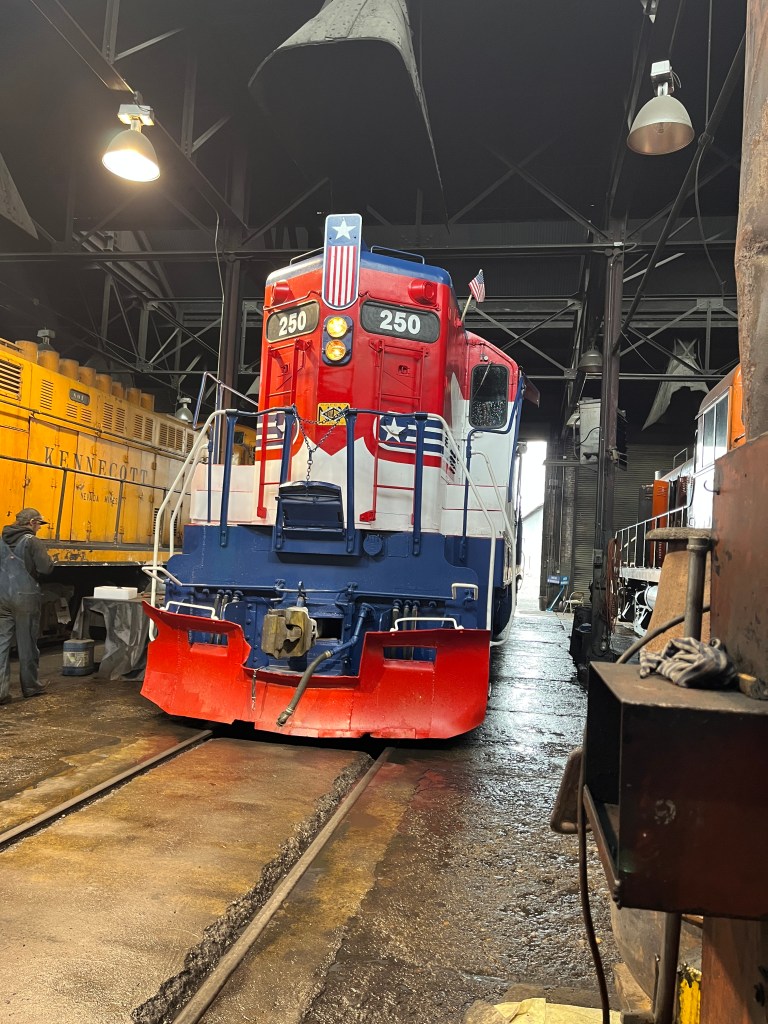
At the end of the train ride, we were offered a tour of the locomotive shed. There were a dozen or so of us on the train, but only three of us went on the tour. Wow, did those other people miss out!

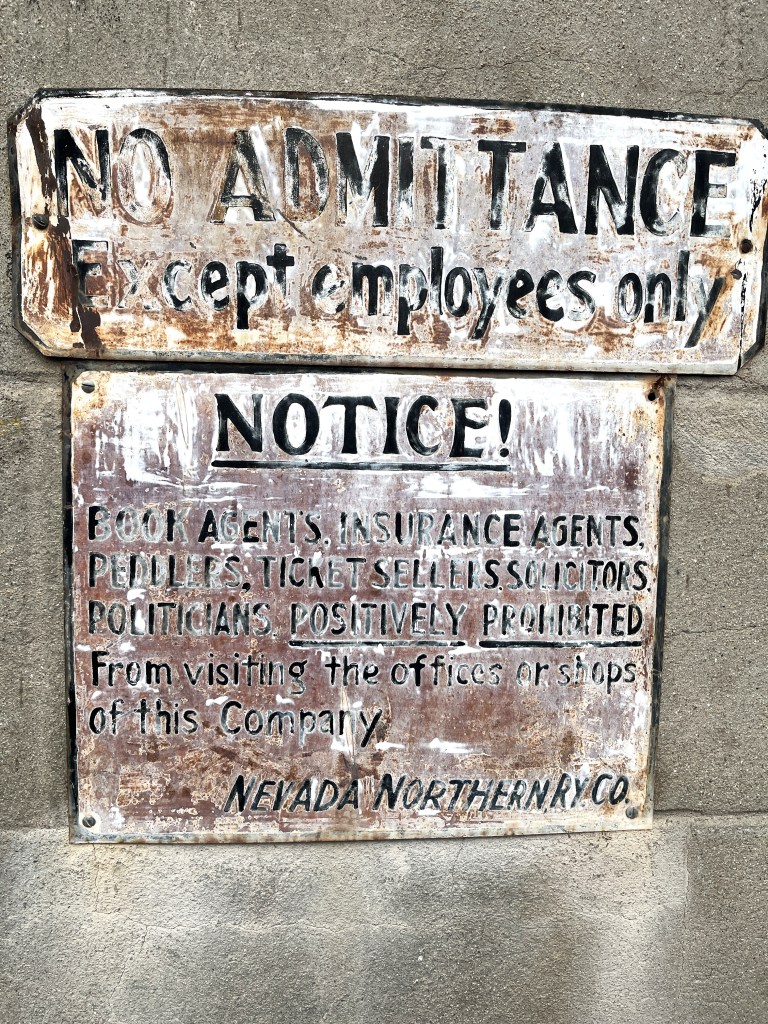
An original sign on the outside of the shed:

“Book agents, insurance agents, peddlers, ticket sellers, solicitors, politicians positively prohibited from visiting the offices or shops of this Company”

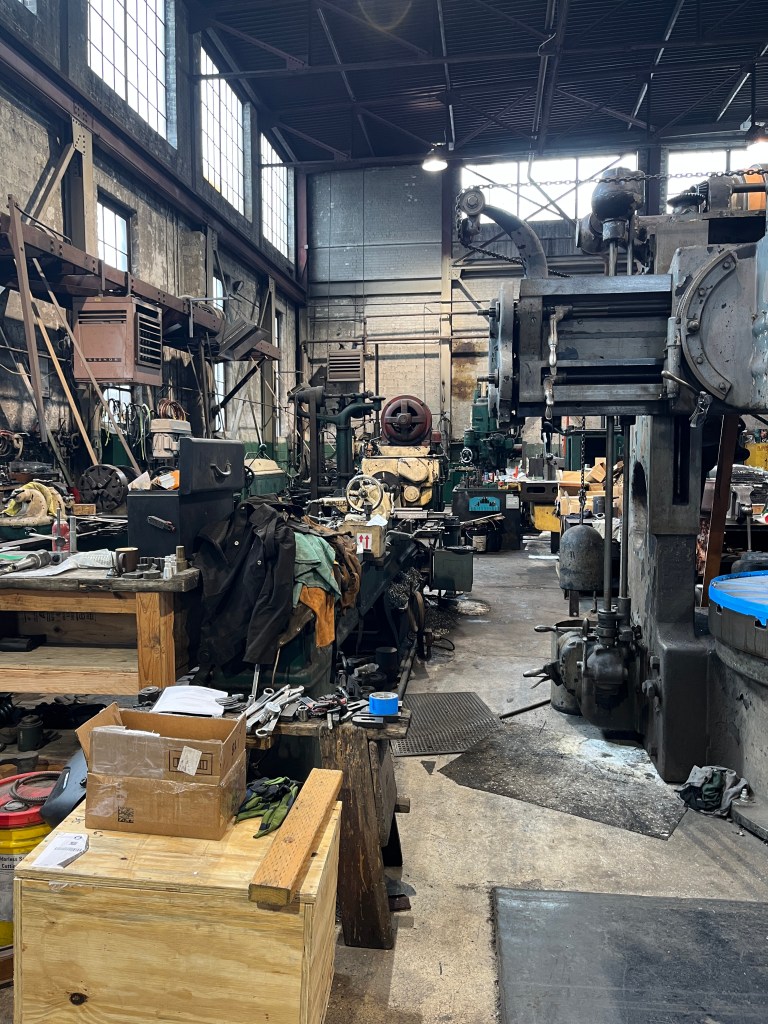
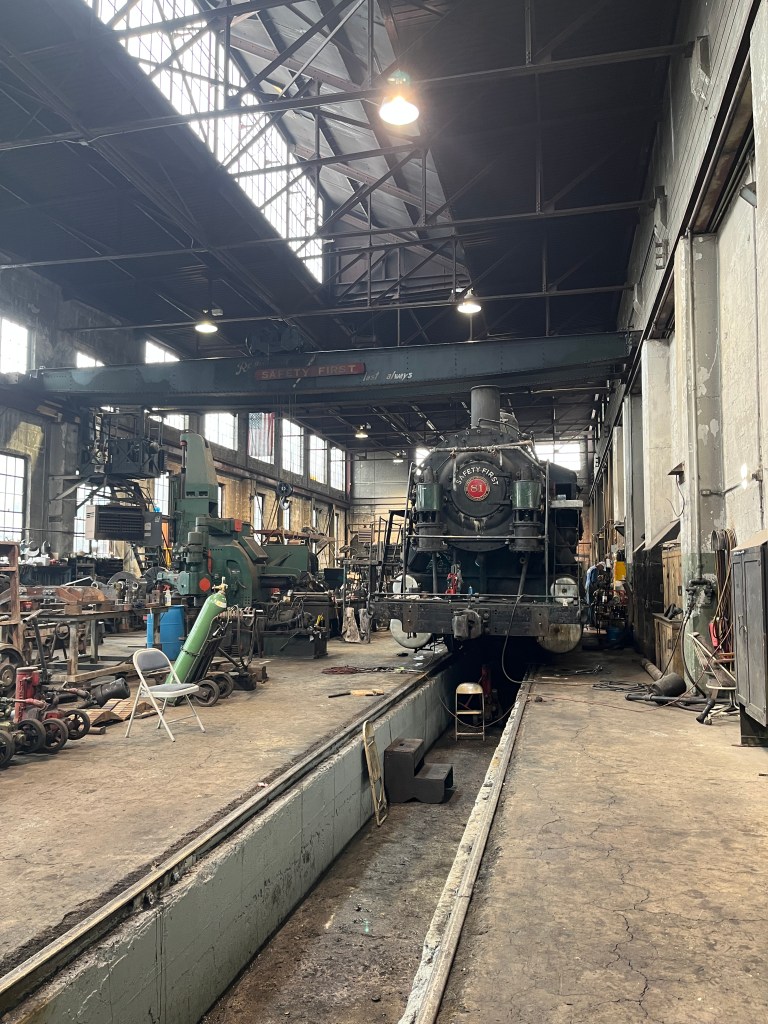
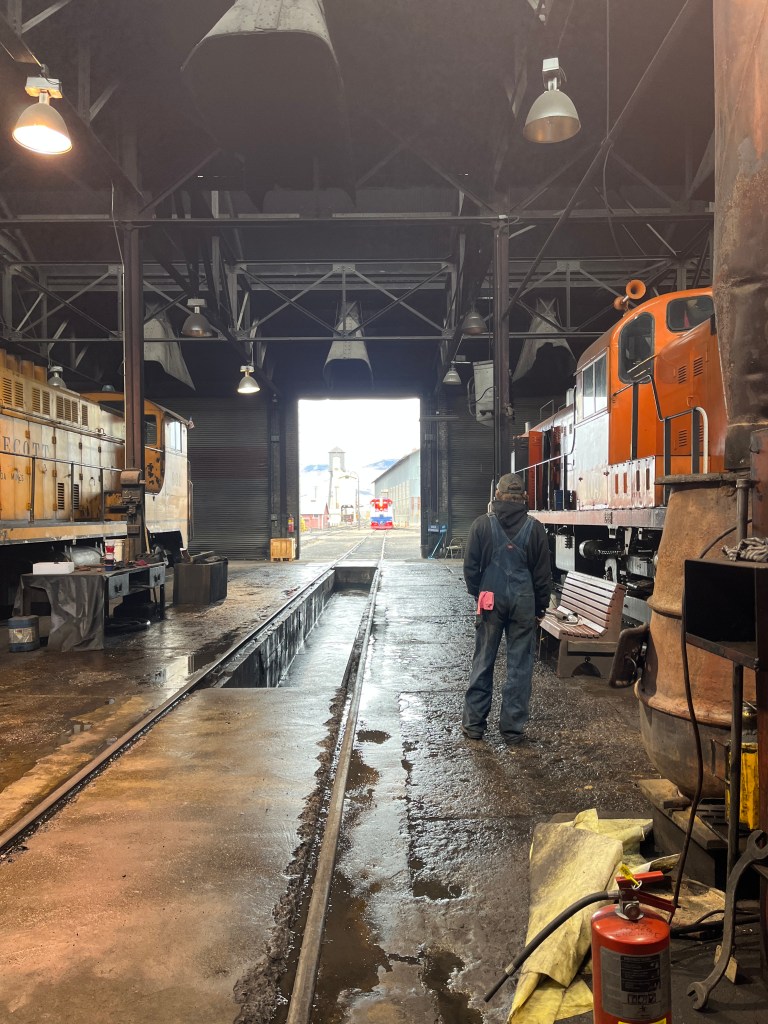
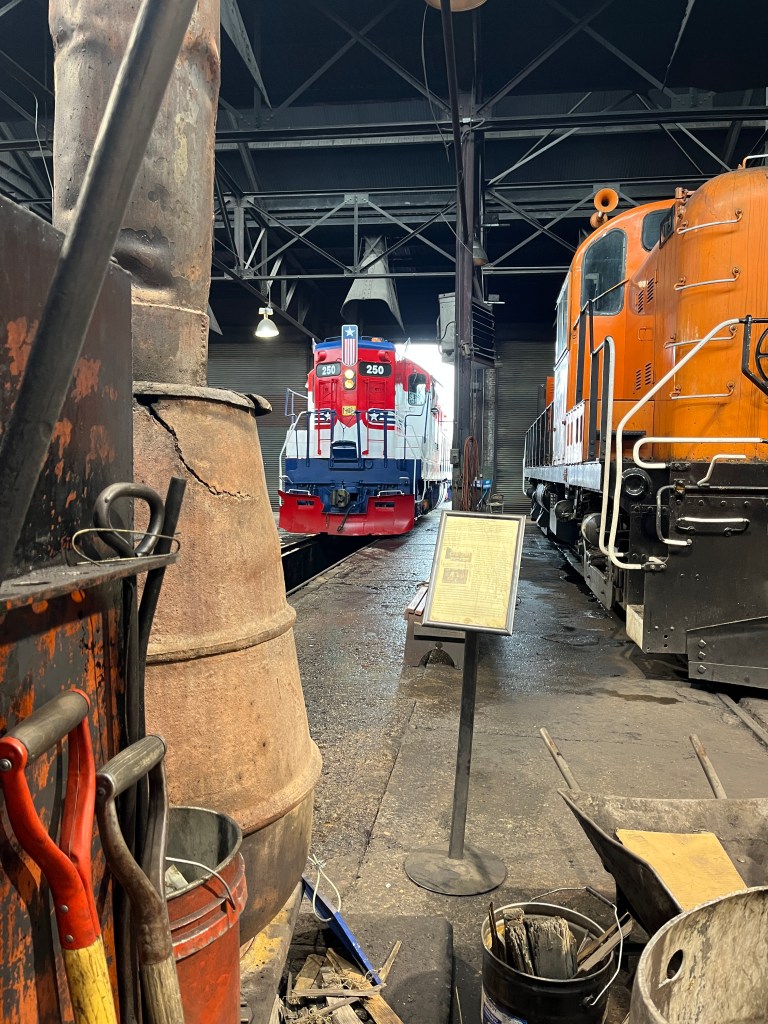
The first thing our guide did was to warn us to step over not on the rails as they were slippery, especially in the rain. Once inside, she cautioned, do not touch anything, be careful not to step on anything, and don’t fall into anything. I think you can see from these pictures why the warnings were necessary.

Here’s a series of pictures showing our locomotive coming back into the shed:

During the whole tour, out guide kept us entertained with lots of stories about the various engines and also about the shop cats. Make sure you take this tour if you can.

I spent the afternoon roaming through the White Pine Public Museum (White Pine is the county that Ely is in). It was refreshing to be in a museum small enough that I could take a good look at everything and just enjoy the cornucopia of items from local history.

And let’s not forget the cave bear:

Next stop Caliente and surrounds.

Nevada Road Trip: Tonopah to Ely (Day 4)

It’s 170 miles from Tonopah to Ely, all on US 6. US 6 used to run from Long Beach, CA to Provincetown, MA; at that time, it was the longest US highway in the country. Now it officially starts in Bishop, CA and is only the 2nd longest (after US 20).

I think it would be fun to be the “eccentric” referred to!

US 50, which meets up with US 6 in Ely, was called “The Loneliest Road in America” by Life magazine in 1986 for the section running through Nevada. Let me tell you, US 6 feels even lonelier as it seems to have even less traffic than I remember from the times I’ve driven US 50. I was passed by two cars shortly after leaving Tonopah and then didn’t see another car on my side of the road until I hit the junction with NV 318 not far from Ely. As for cars coming the other way, they were scarce: at one point it was 17 minutes between vehicles.

One of the things Ely is known for is a great number of outdoor murals. I had planned on walking around town following the map I had downloaded, but the entire main street of town was torn up, making it very difficult to get around. And my next day there was my only day of wet, drizzly, and/or rainy weather. I’ll just have to hit the murals next time, because I enjoyed Ely enough to go back.

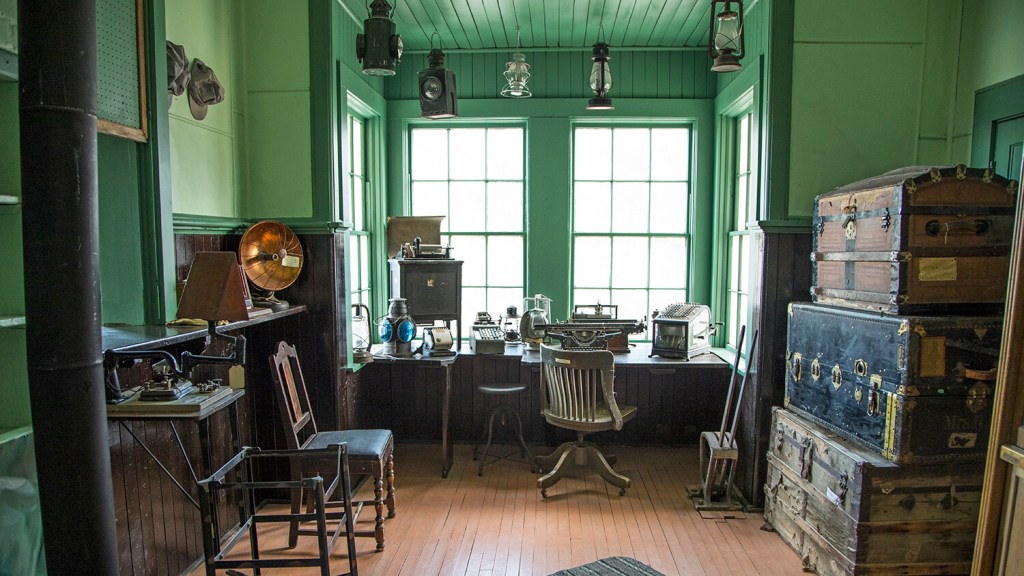
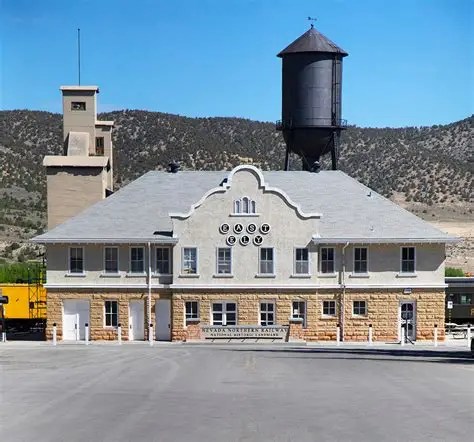
My first stop, then, was the Northern Nevada Railway Museum:

There’s not much to the museum exhibits; the fun is in seeing all the actual locomotives and rail cars. The two women in the gift shop were really nice and after chatting for a bit I asked them where I should have dinner. They both suggested “Margaritas”. Turns out that restaurant was in the hotel I was staying at and it was very good. Before leaving, I bought a ticket for a train ride the next day.

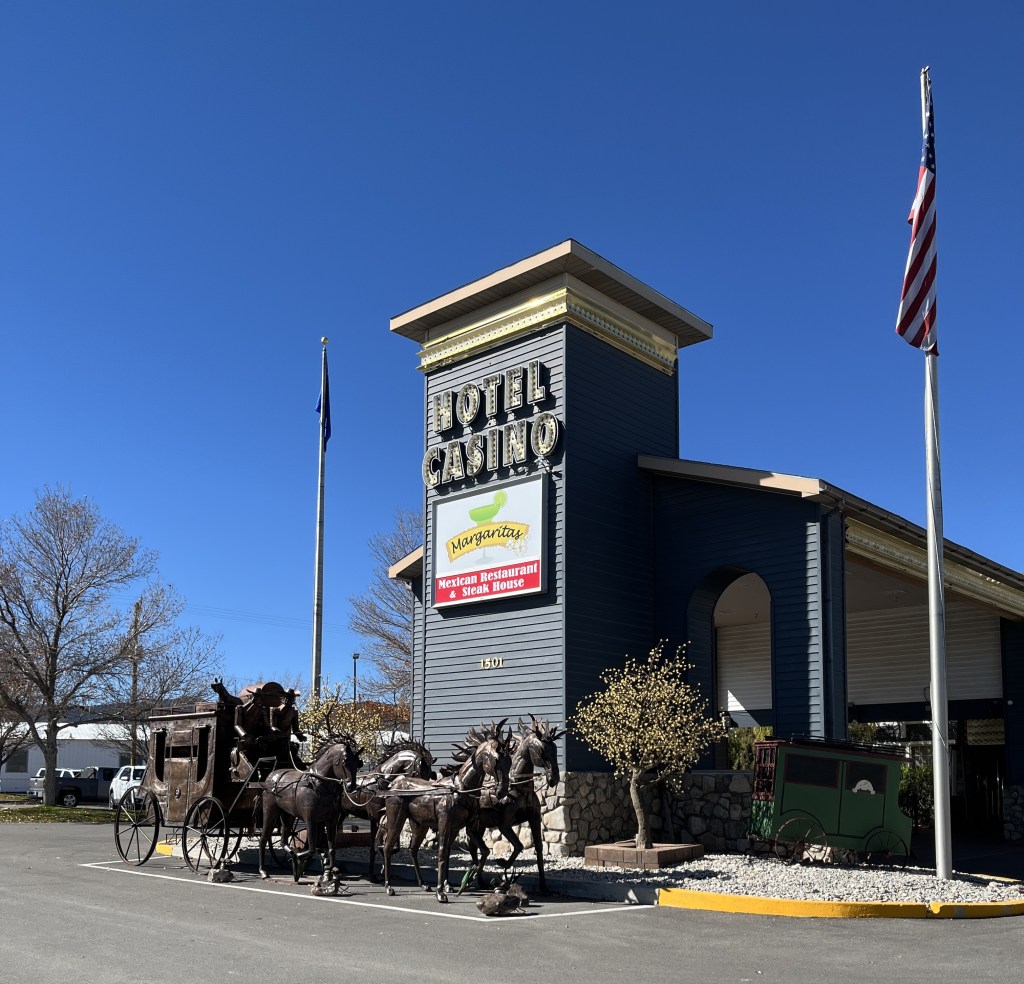
My hotel was the Prospector Hotel and Casino for the two nights I was in Ely and I loved it. Besides a good restaurant and friendly staff, they also gave out bags of popcorn at 4 pm every evening! The room was large and had all the amenities. It also had two bottles of Wolfgang Puck wine (one red and one white) to purchase with part of the proceeds going to charity. I had the white.

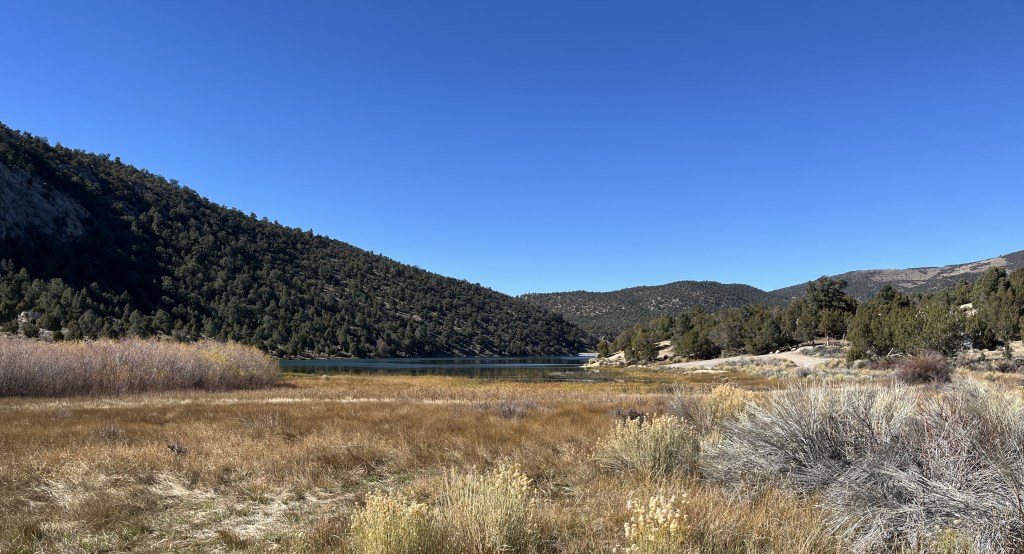
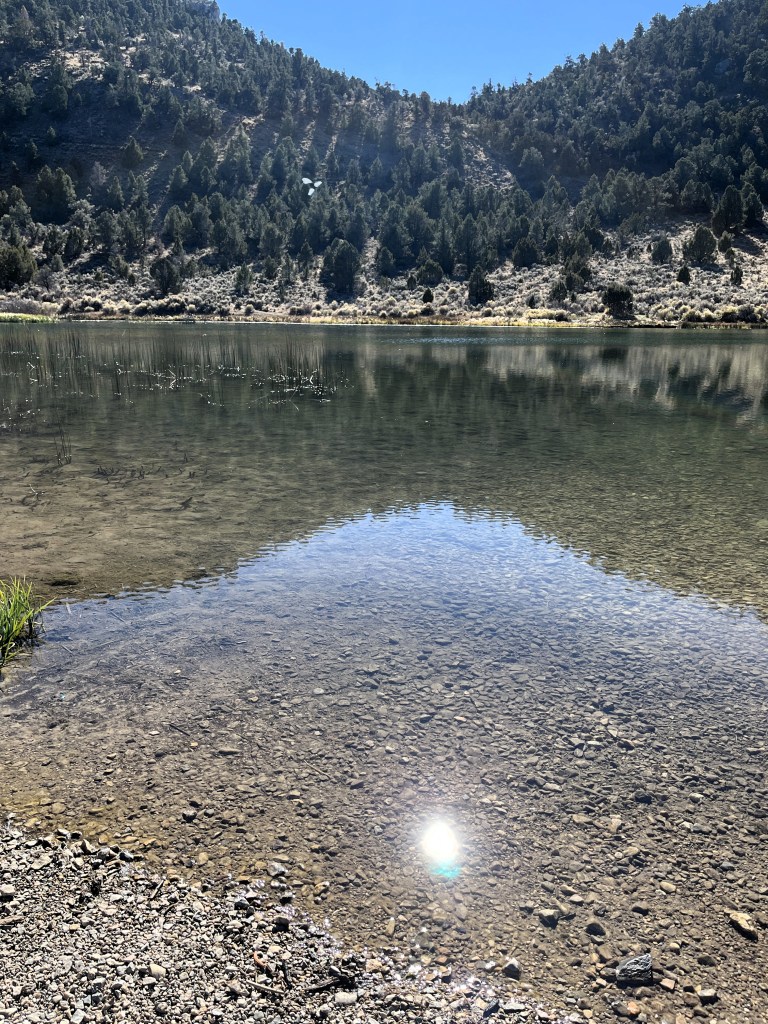
I had the afternoon to go exploring and the woman at the front desk suggested that Cave Lake State Park might have some fall colors to enjoy. The area around Ely is mostly sagebrush, pinyon pine, and juniper, so not much color there, but all the creek beds were full of bright yellow willows.

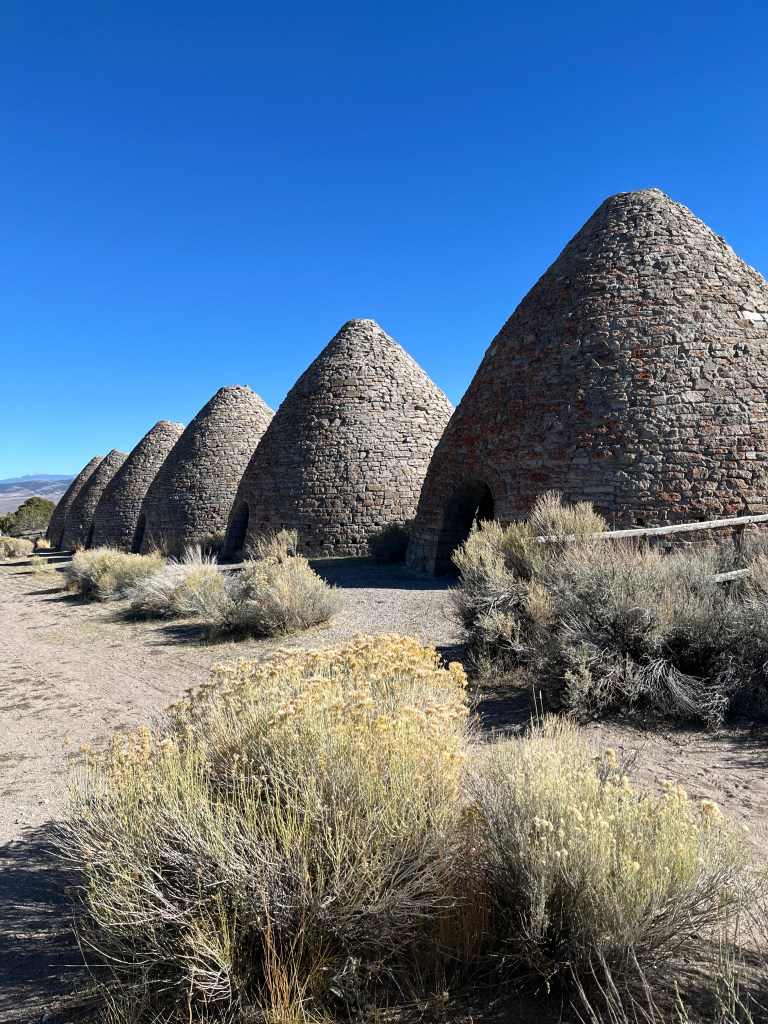
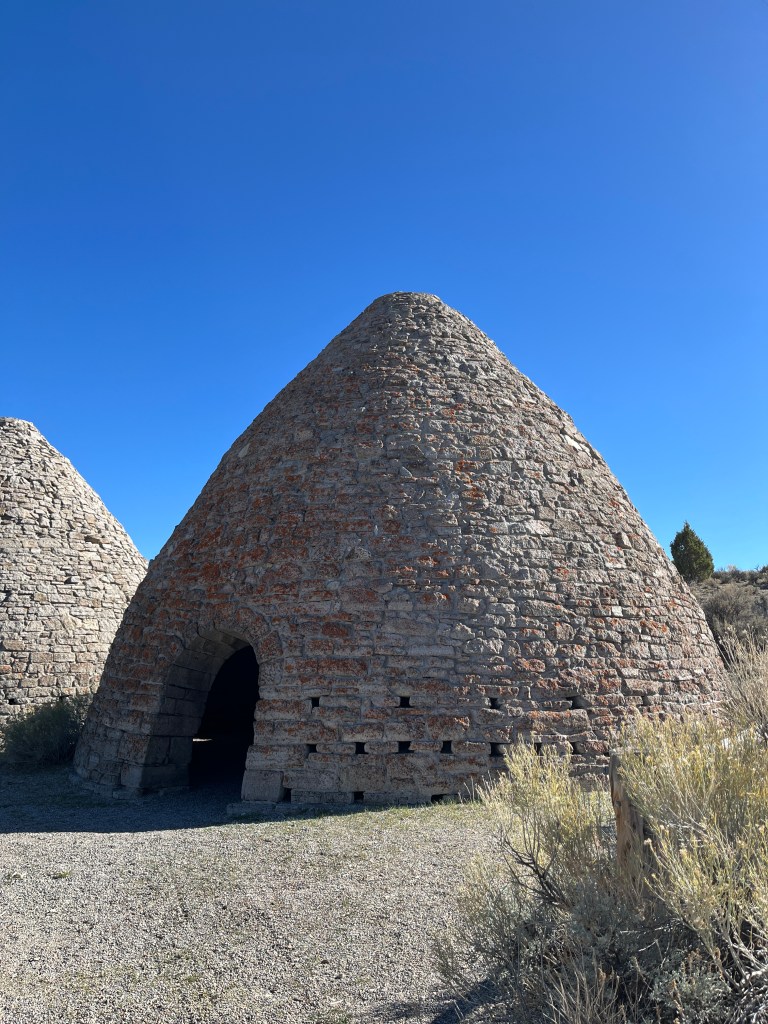
Next up was Ward Charcoal Ovens. I have been to some other charcoal ovens, but these were in really fine shape. They were built in the 1870s to produce charcoal for a nearby smelter. This means the area is just beginning to recover from being deforested. Fortunately for the rest of the trees in the area, the newly built railroads started bringing in coal for the smelter to use.

A note about the color of the sky in most of these photos. The pictures were all taken with my iPhone 13 mini. The only adjustments I made to them was cropping and maybe lightening up some shadows. I don’t adjust the color or tint at all. The sky really is that intense blue that I associate with my visits to the Southwest in my childhood and that I so rarely see any more.

Tomorrow will be trains and a short-faced bear fossil.

Nevada Road Trip: Beatty to Tonopah (Day 3)

I hit the road with a handful of trail mix as I was sure I would be in Tonopah by lunch time. It’s under a hundred miles between the two towns, but I had a few stops planned along the way in the little town of Goldfield.

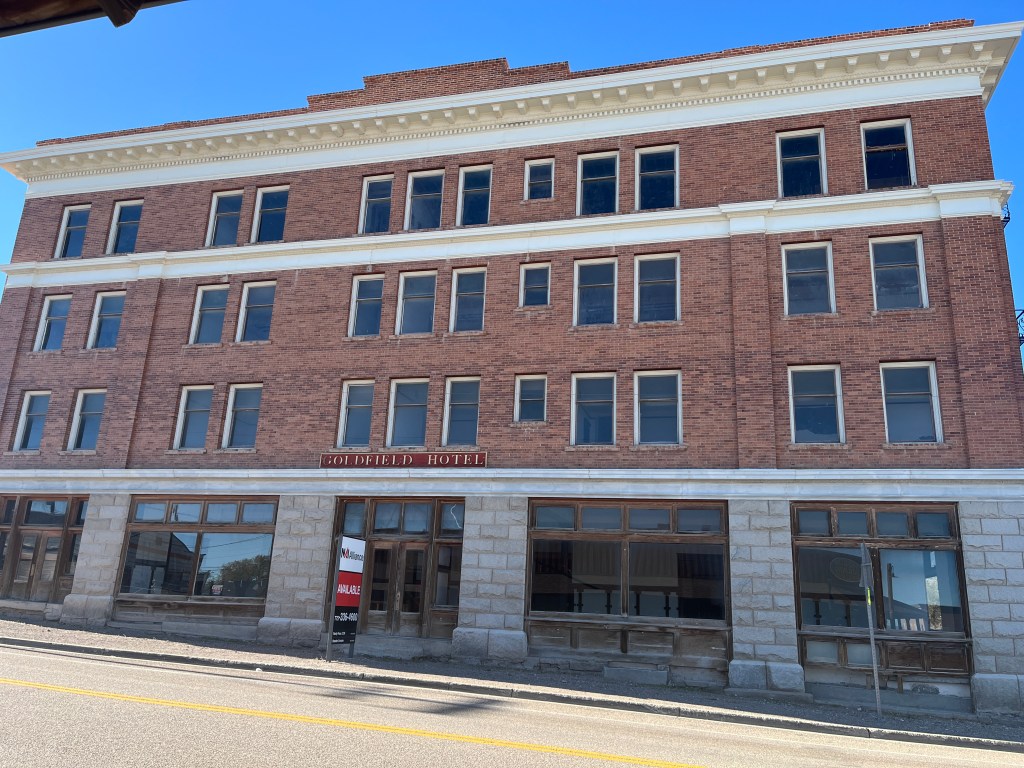
Goldfield is the county seat of Esmeralda County in spite of the fact that the town qualifies in some respects as a ghost town. In its heyday, it had around 20,000 residents, it now has about 400, with another 300 or so in the rest of the county. Unlike most ghost towns, though, the buildings are not abandoned. just largely unoccupied. In fact, here’s a piece of history, the Goldfield Hotel, that you could own:

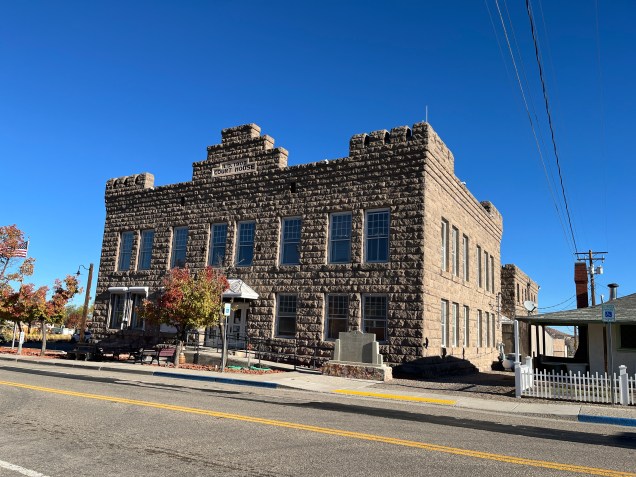
The county courthouse (which also houses the county clerk, assessor, sheriff, jail, etc.):

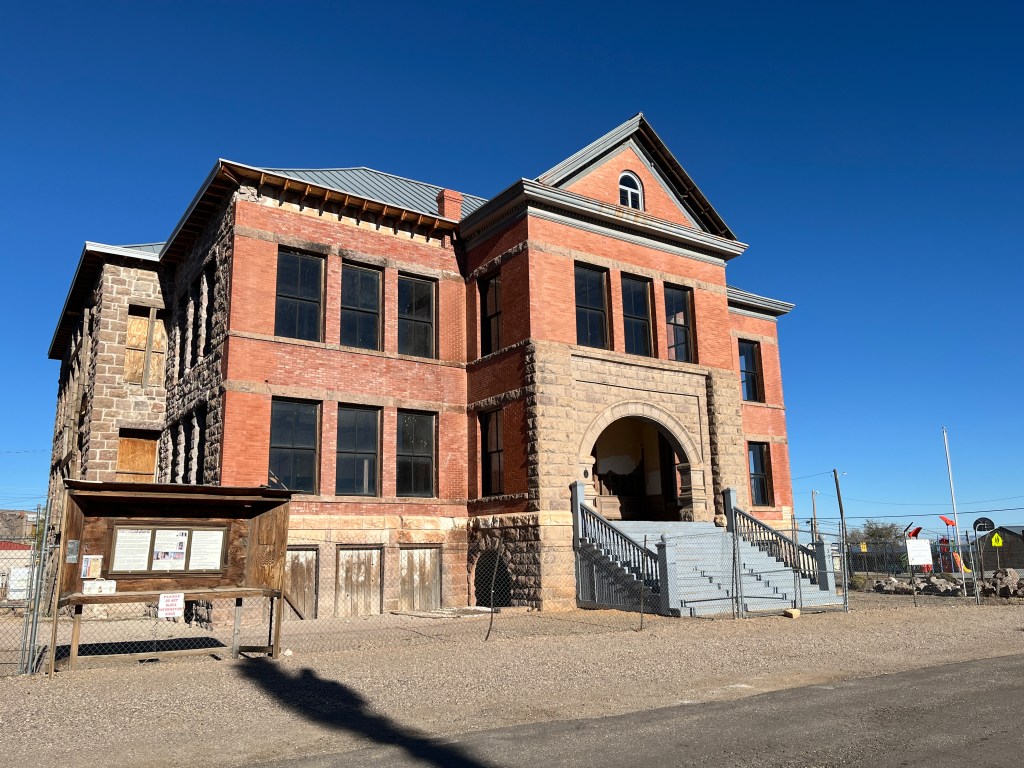
Some other buildings:

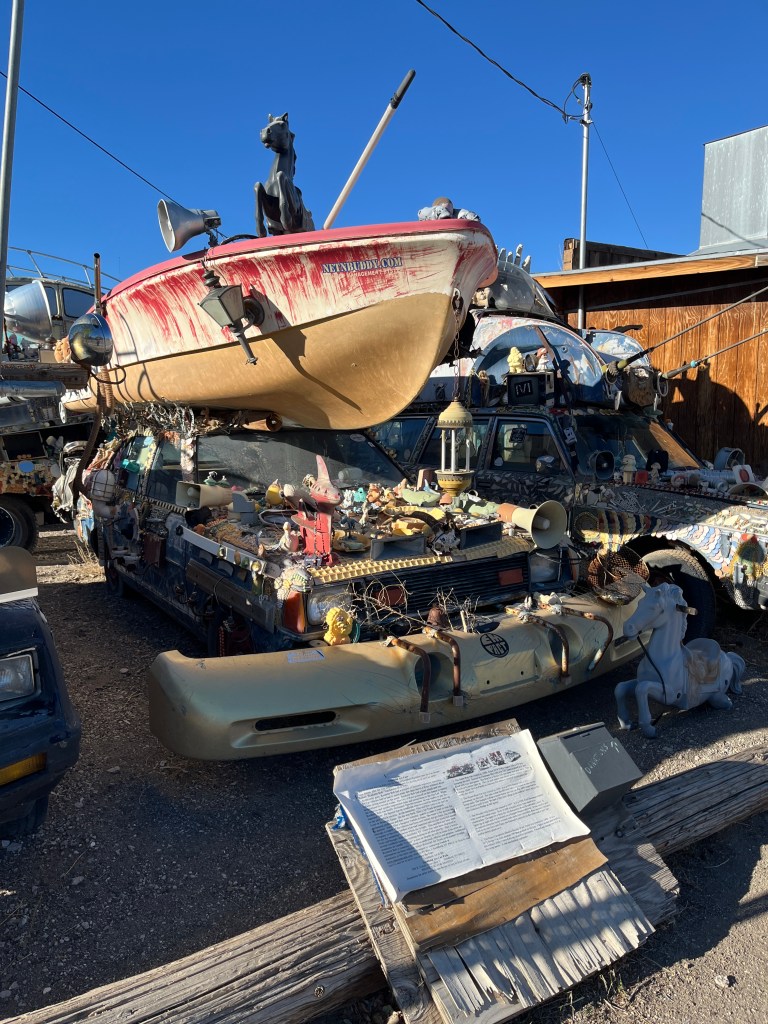
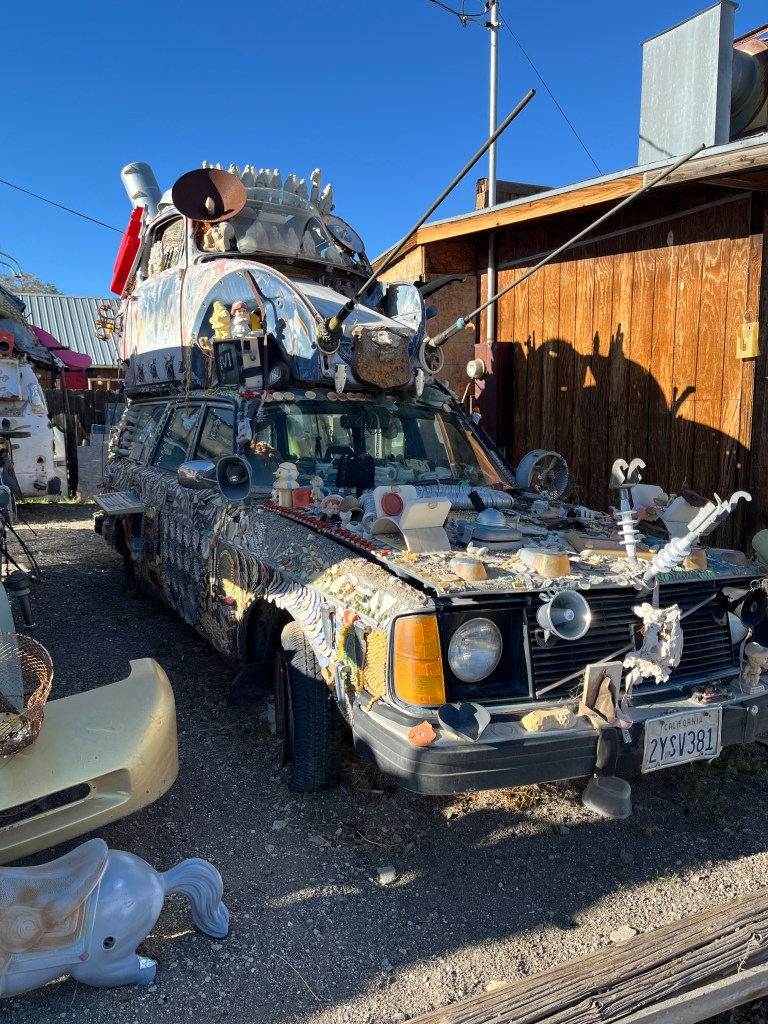
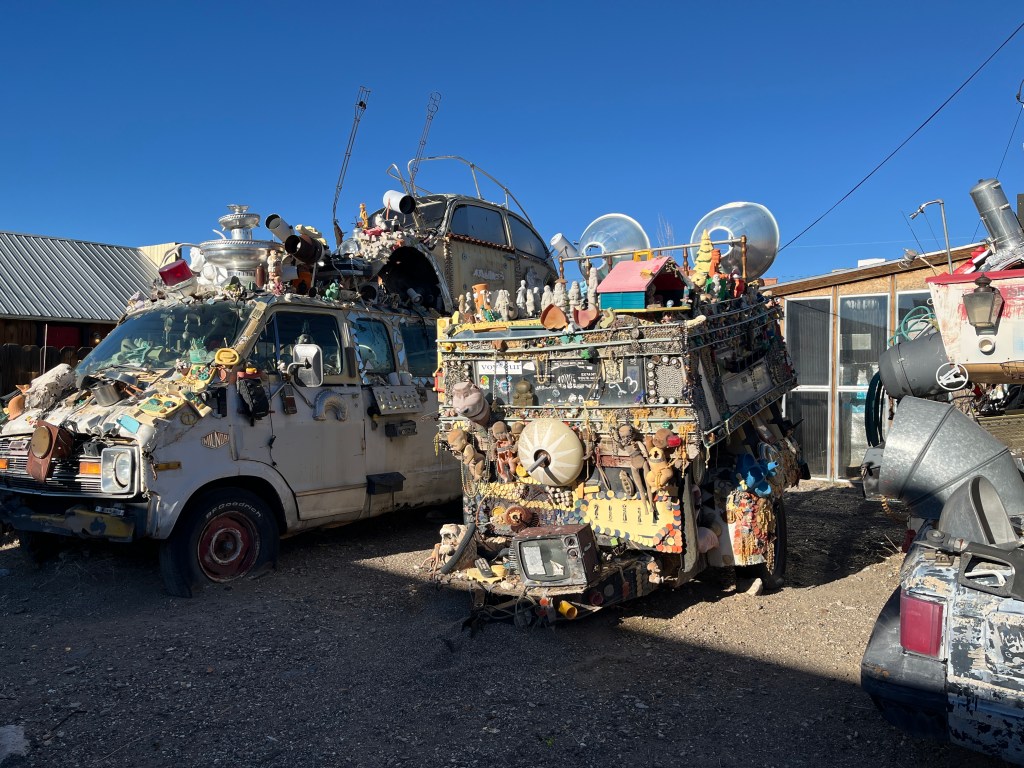
Before the famous “art car” parades that occur at Burning Man each year began, “Rocket Bob” was creating art cars and they can be found on display right on the main street (https://travelnevada.com/arts-culture/rocket-bobs-art-cars/):

I couldn’t resist copying out part of the information on the sign in front of these beauties:

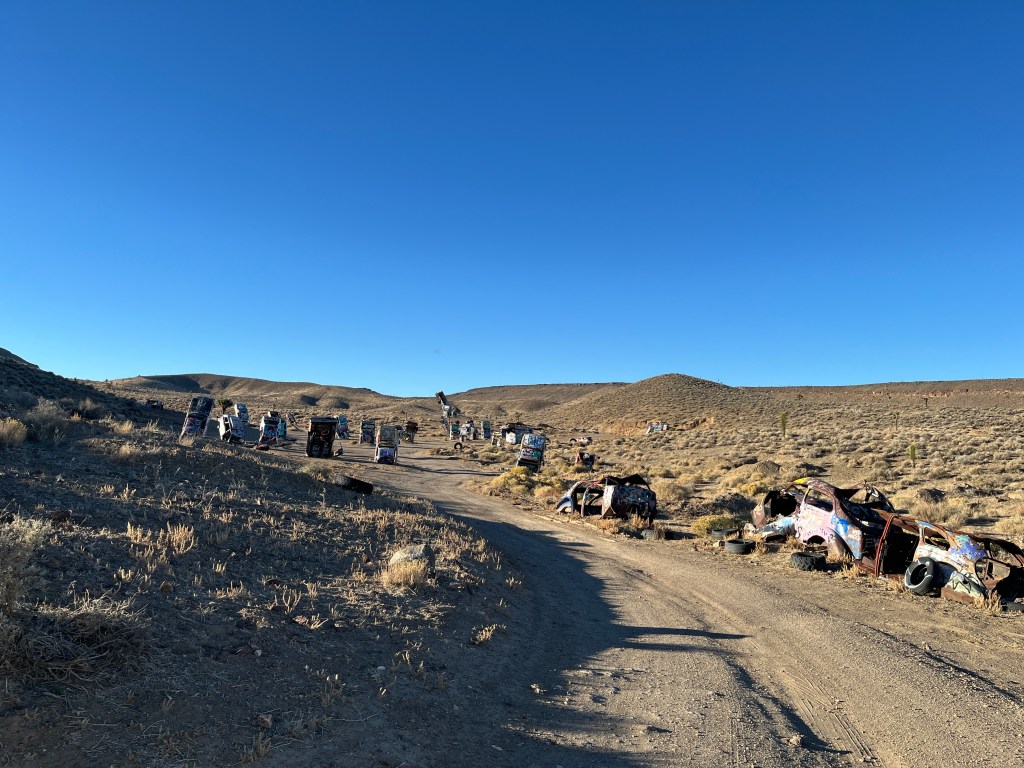
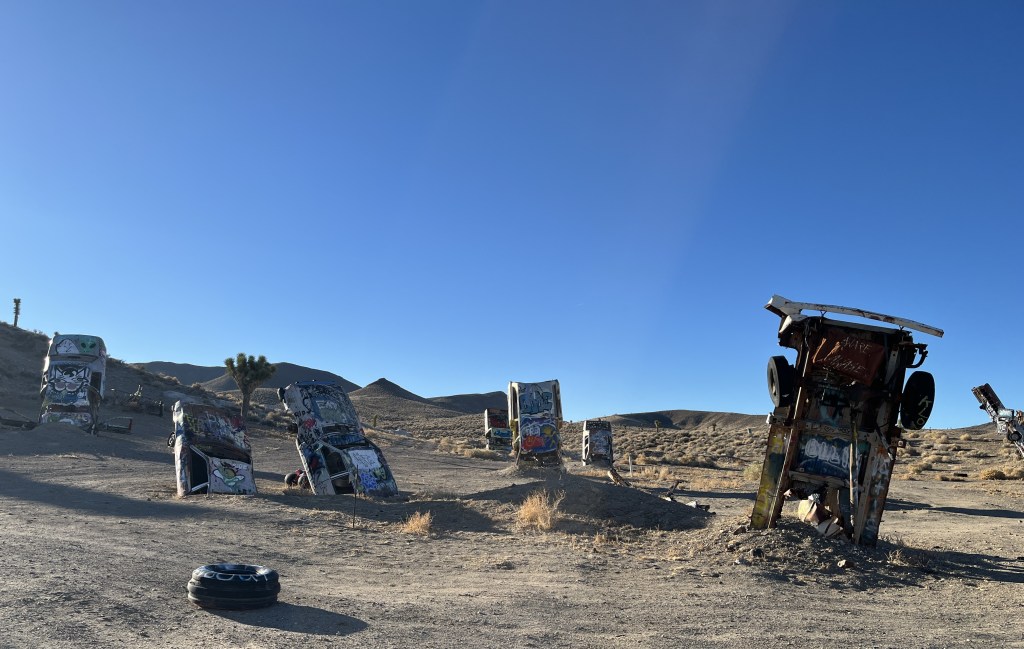
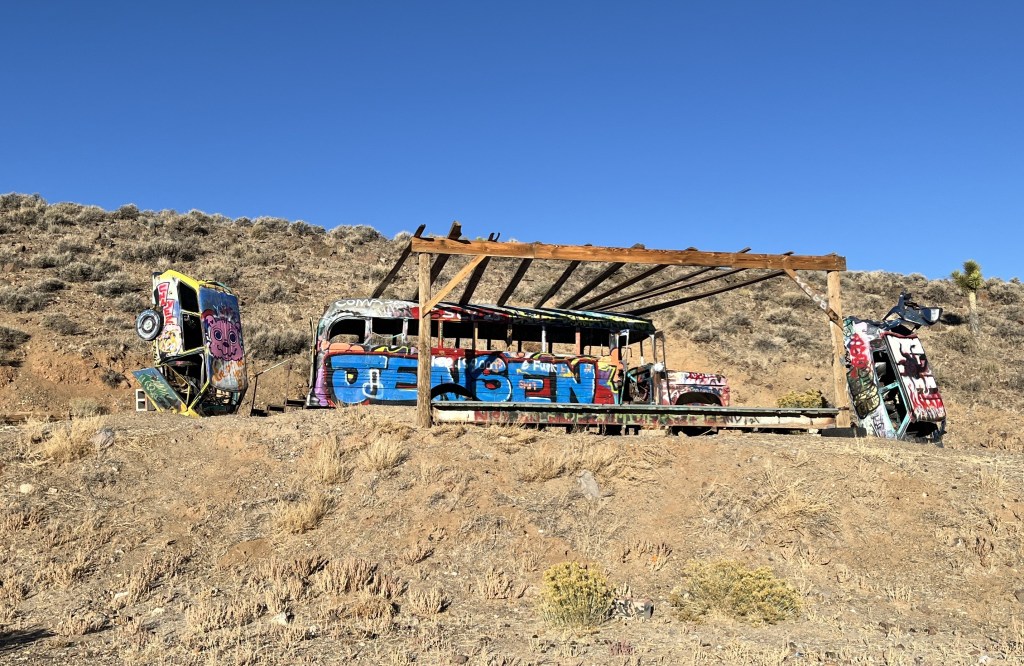
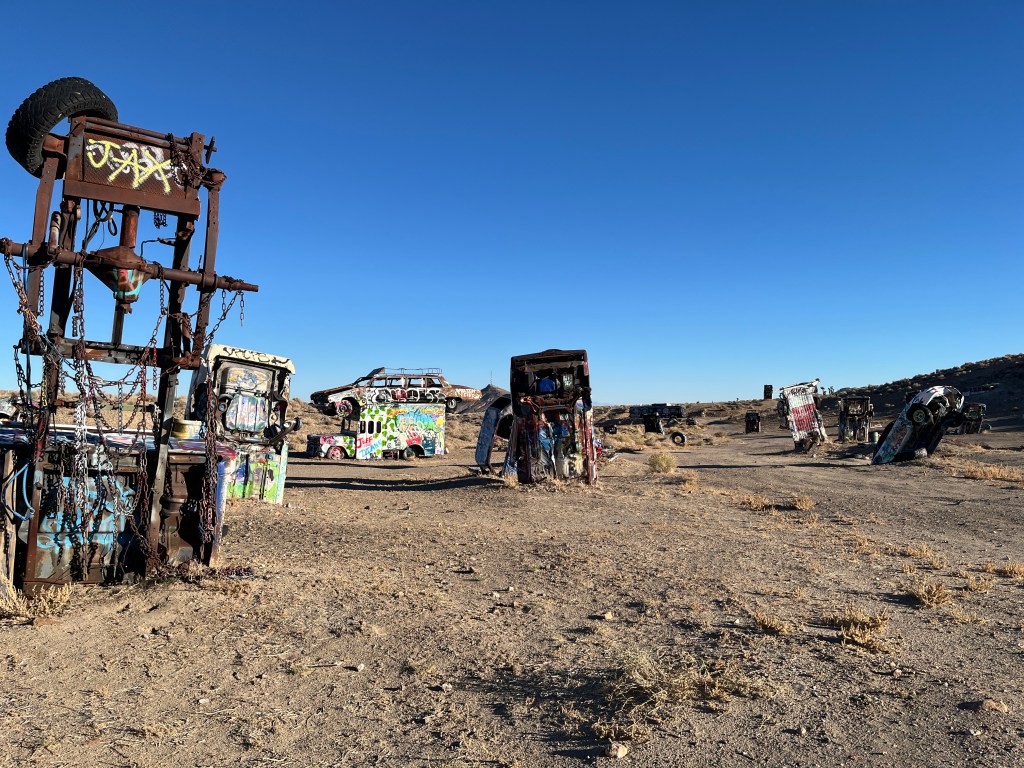
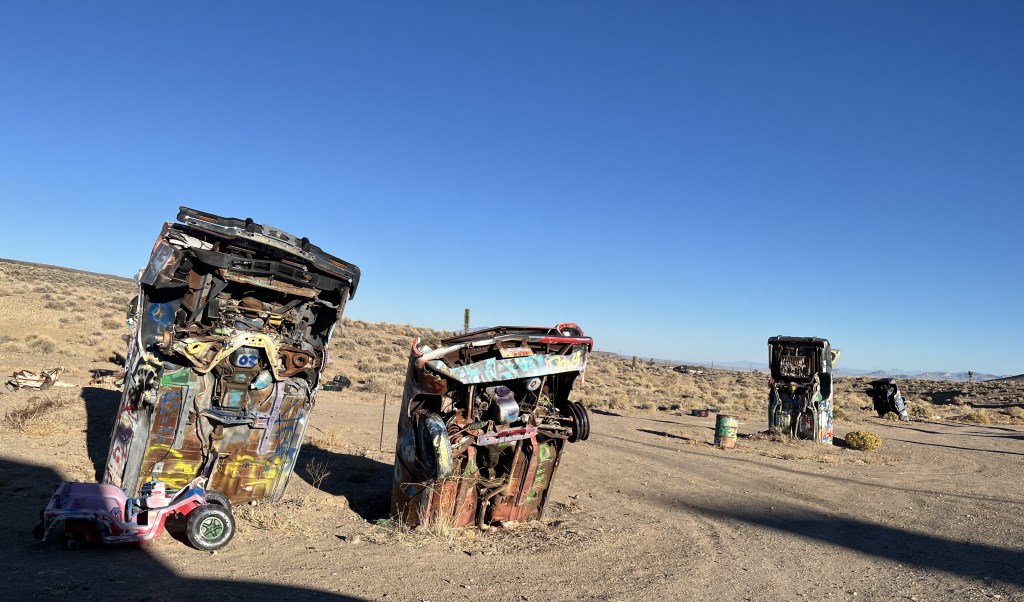
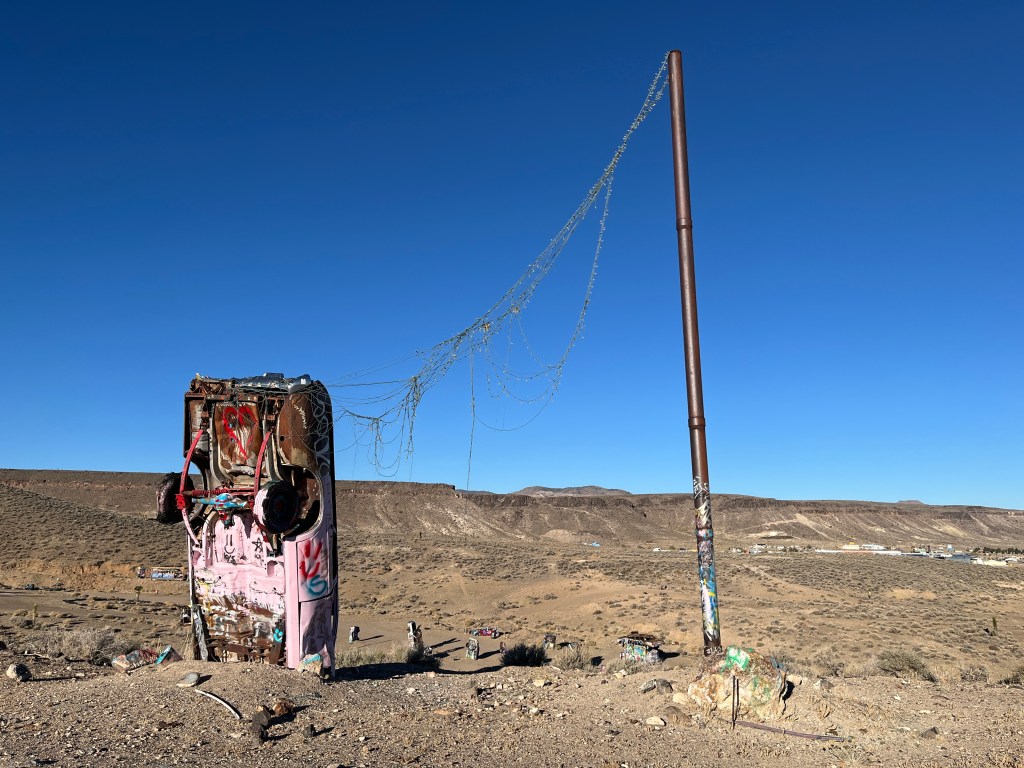
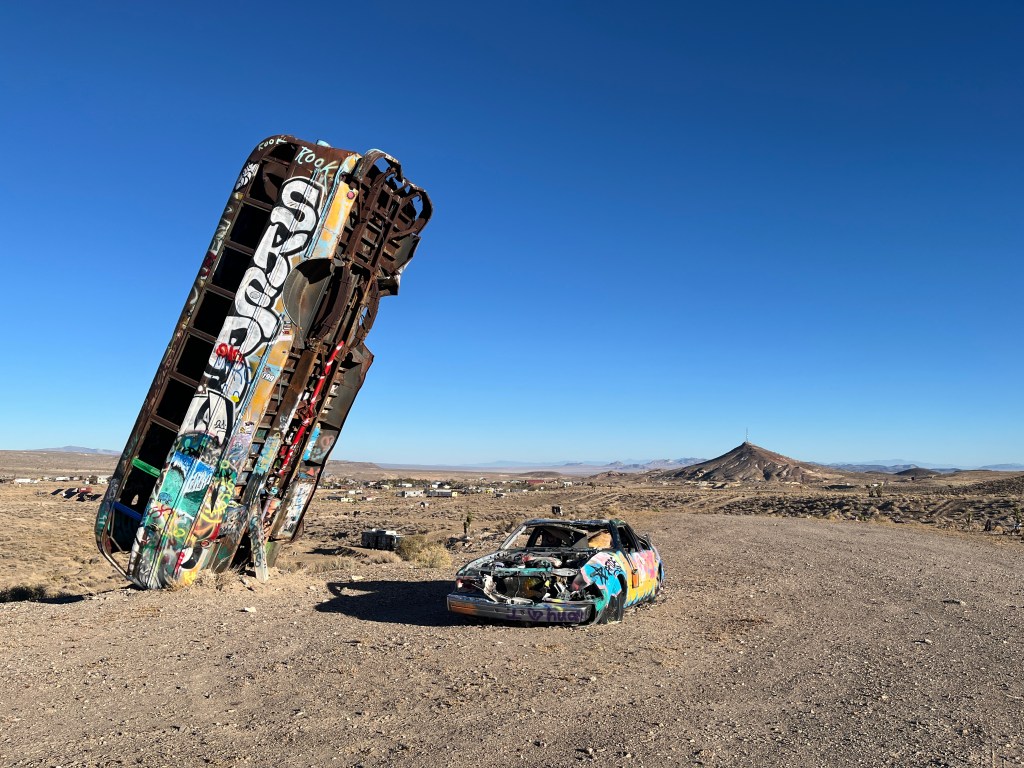
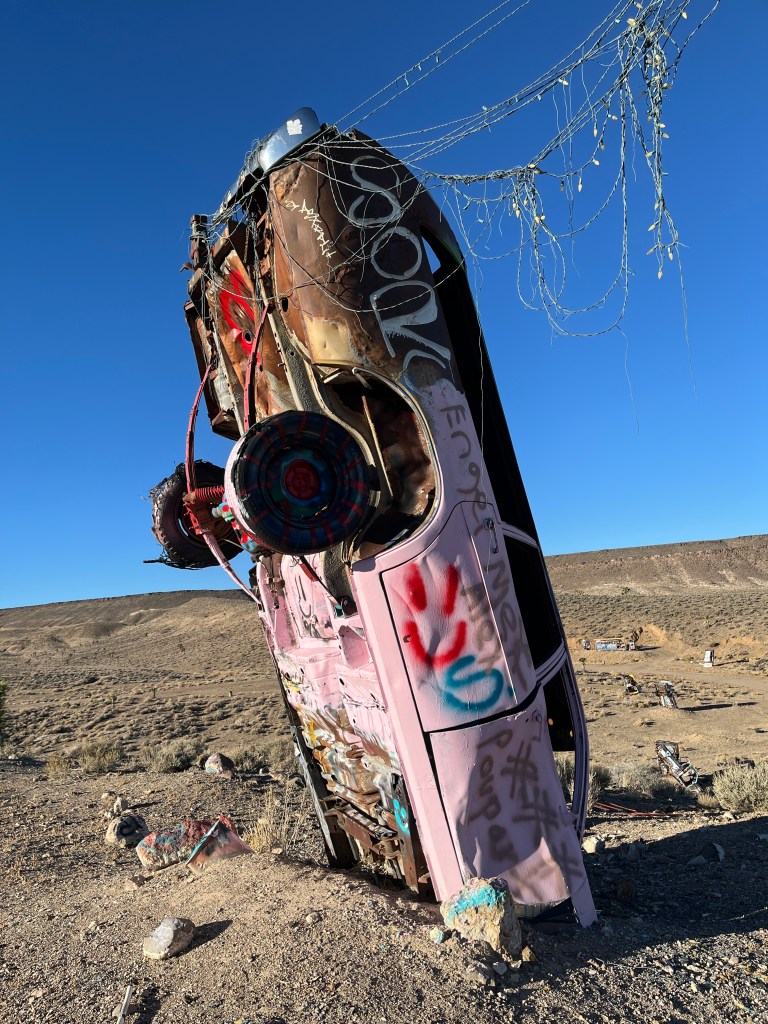
These are not the most famous cars to be found in Goldfield, however. That distinction must go to the vehicles to be found in the “International Car Forest of the Last Church”.

The “International Car Forest” part of the name was a spoof on “National Forest”. “The Last Church” portion was as a representation of the Last Church being inside each of us.

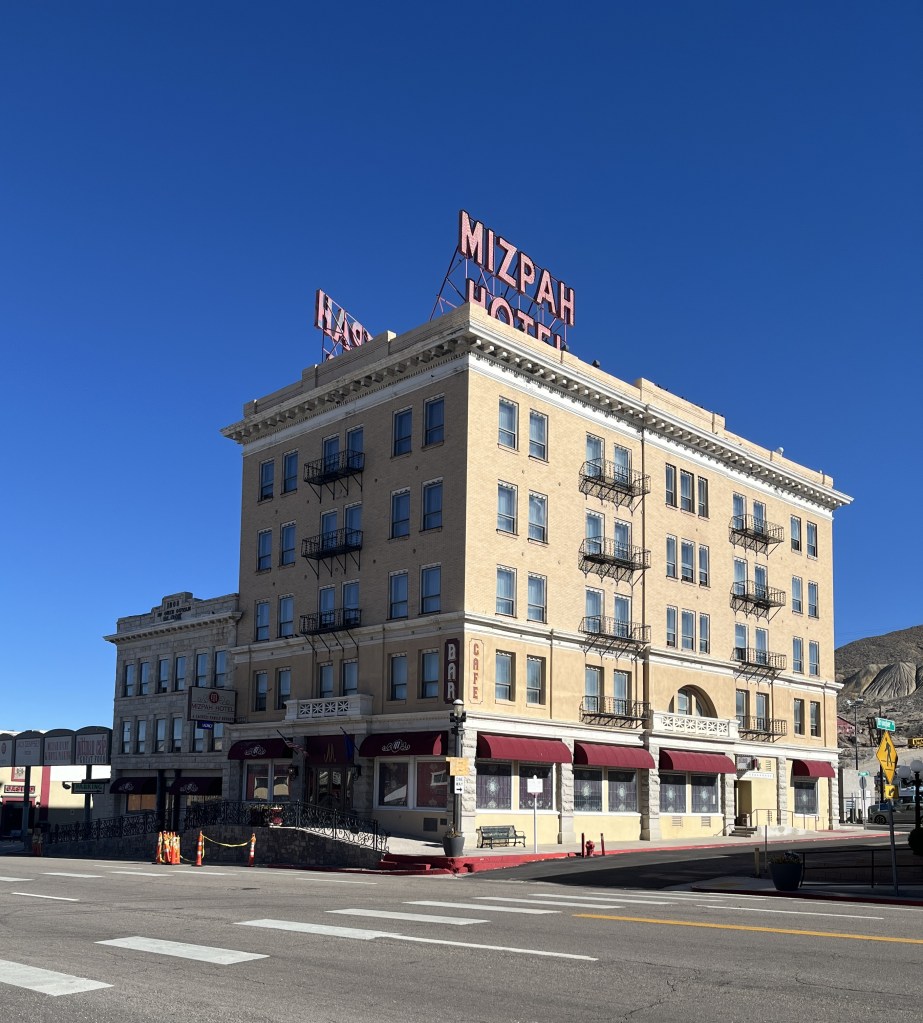
I did make it to Tonopah by lunch and in the afternoon checked into the historic Mizvah Hotel.

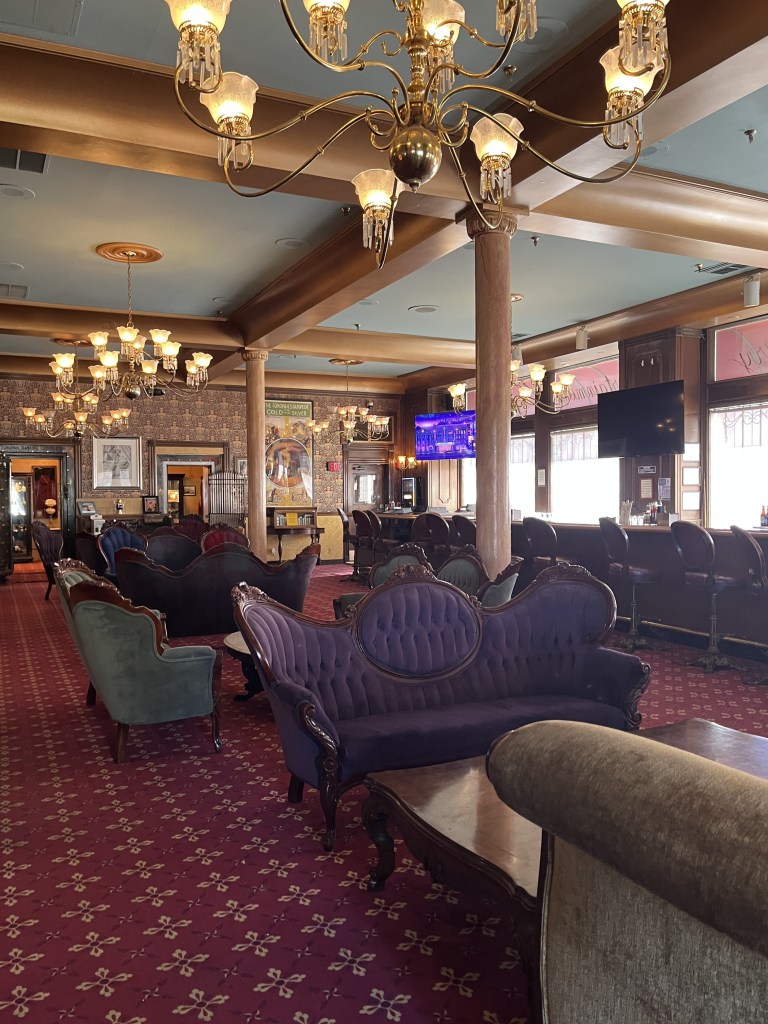
It’s reputed to be haunted, but I wasn’t visited by any spirits. The lobby was delightful, though.

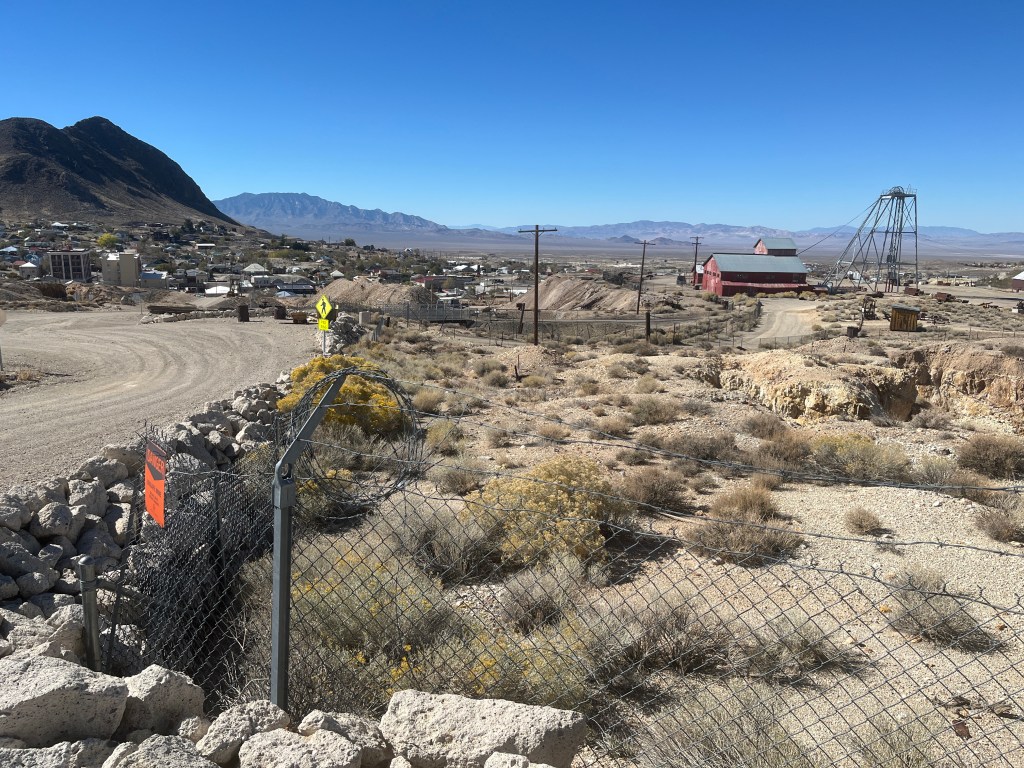
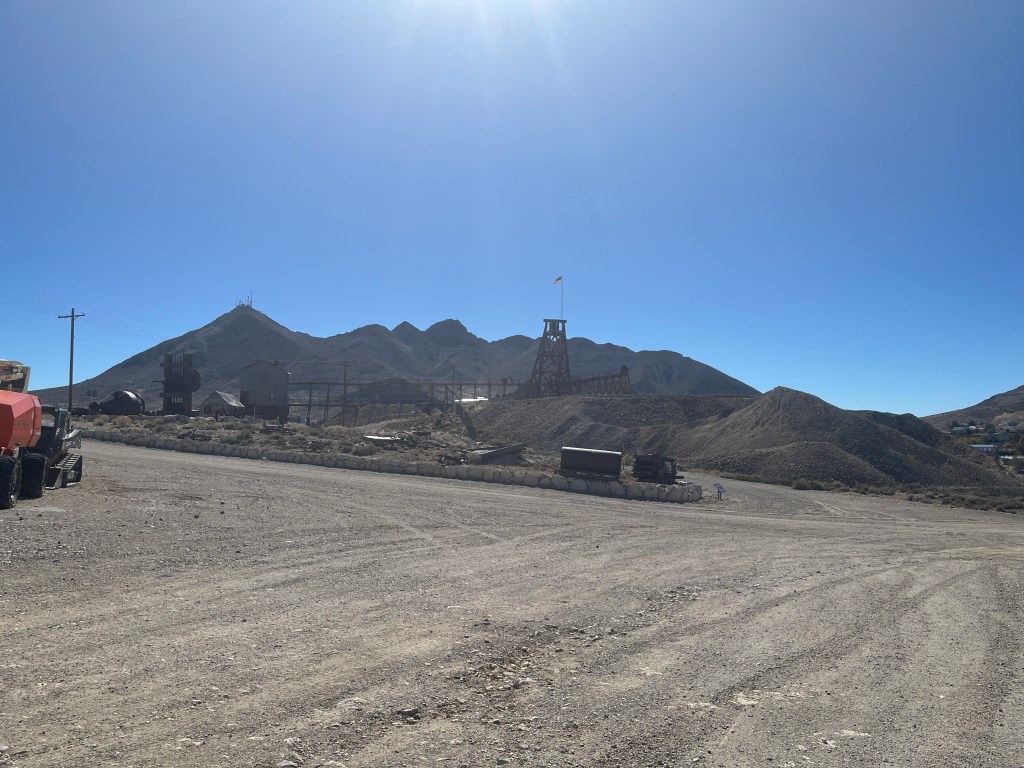
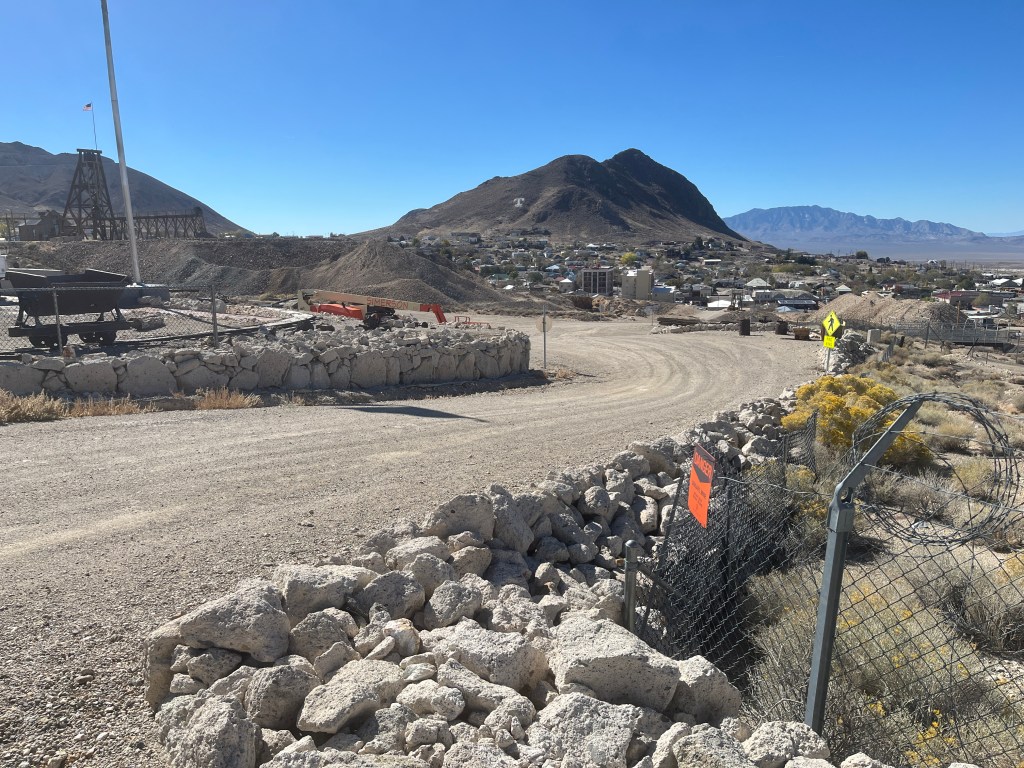
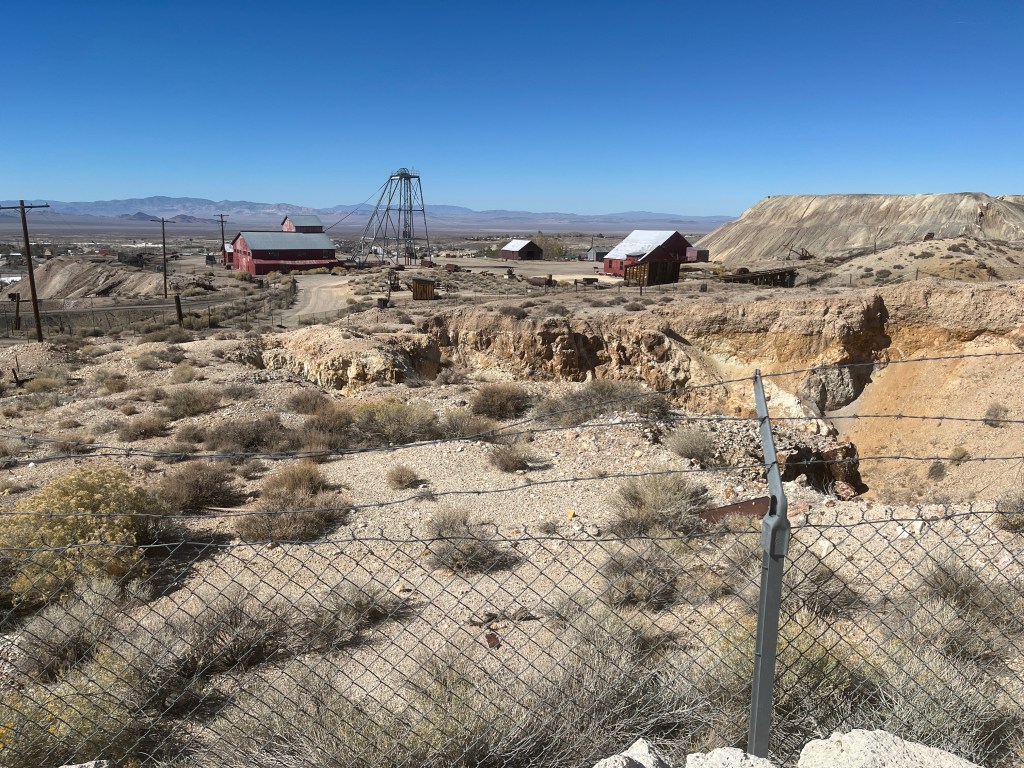
My only other activity for the day was to visit the historic Tonopah Mining Park: nice exhibits and views of some of the biggest mines around town (all of which shut down long ago).

Day four is the drive up to Ely, NV.

Nevada Road Trip: Excursions from Beatty (Day 2)

I started the morning with a pancake from Mel’s Diner. The only other customers were five locals in their jeans and hats spending the morning solving the problems of the world.

Rhyolite is a ghost town just a few miles from Beatty (https://en.wikipedia.org/wiki/Rhyolite,_Nevada). The town began its life in 1905, and, by 1907, Rhyolite had electric lights, water mains, telephones, newspapers, a hospital, a school, an opera house, three railroads, and a stock exchange. Its peak population ranged between 3,500 and 5,000 in 1907–08.

The town died almost as quickly as it had arisen. By 1910 the boom was over, and businesses began to close. In 1916, the power company turned off the electricity and even removed the poles. There is very little left of the town as most of the buildings were moved elsewhere or the materials were repurposed.

As I was taking pictures of one of the buildings, I heard this buzzing noise: not like a snake, more like a hive of angry hornets. Just as I was beginning to worry, I realized that of the two other people who were there, one of them was flying a drone. I walked down to meet him and found that he and his wife were from Australia, on a four-week visit to the West Coast. They were on their way to Yosemite. I thought Rhyolite was a rather esoteric choice of stops, but apparently they were fascinated by ghost towns.

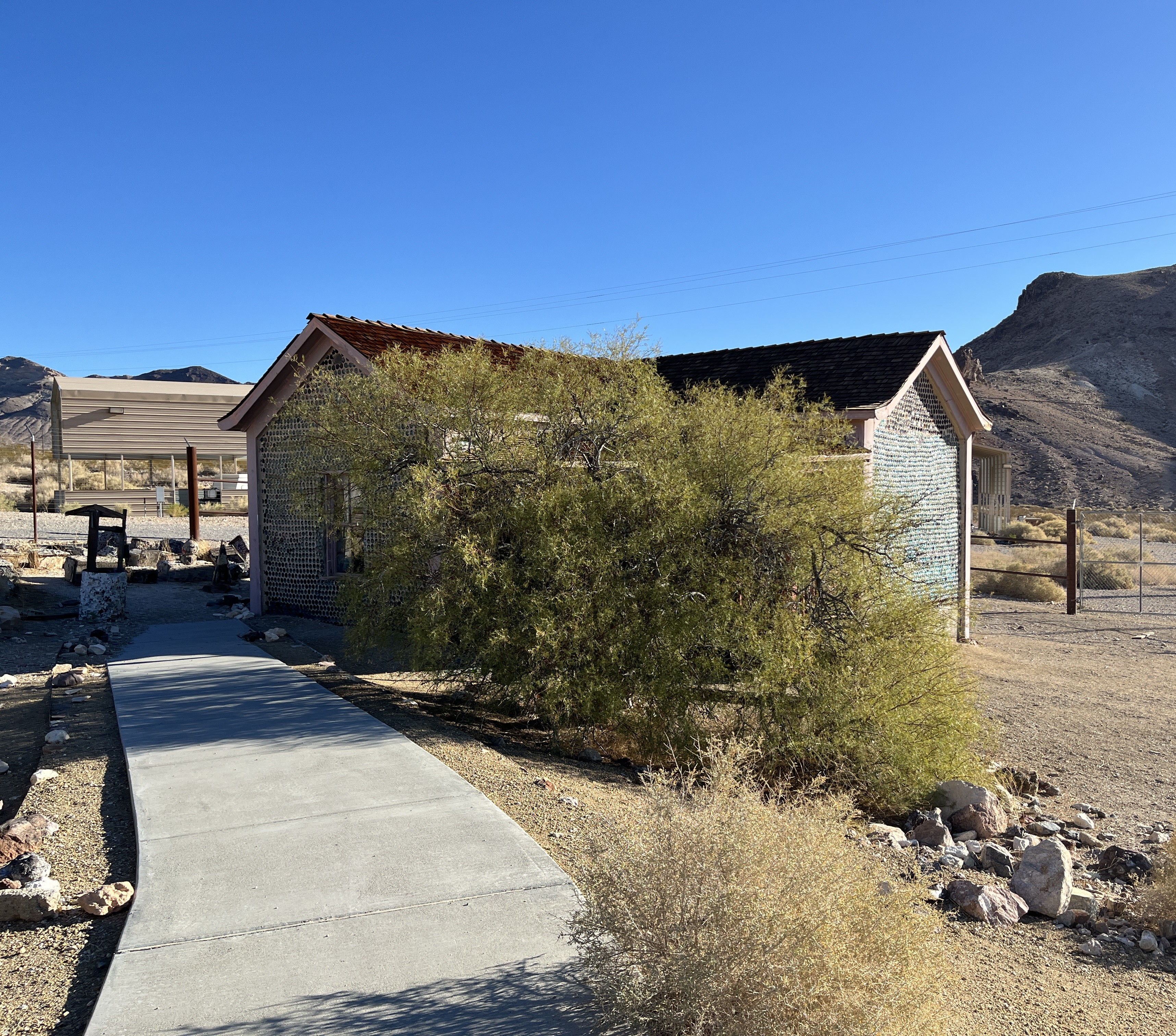
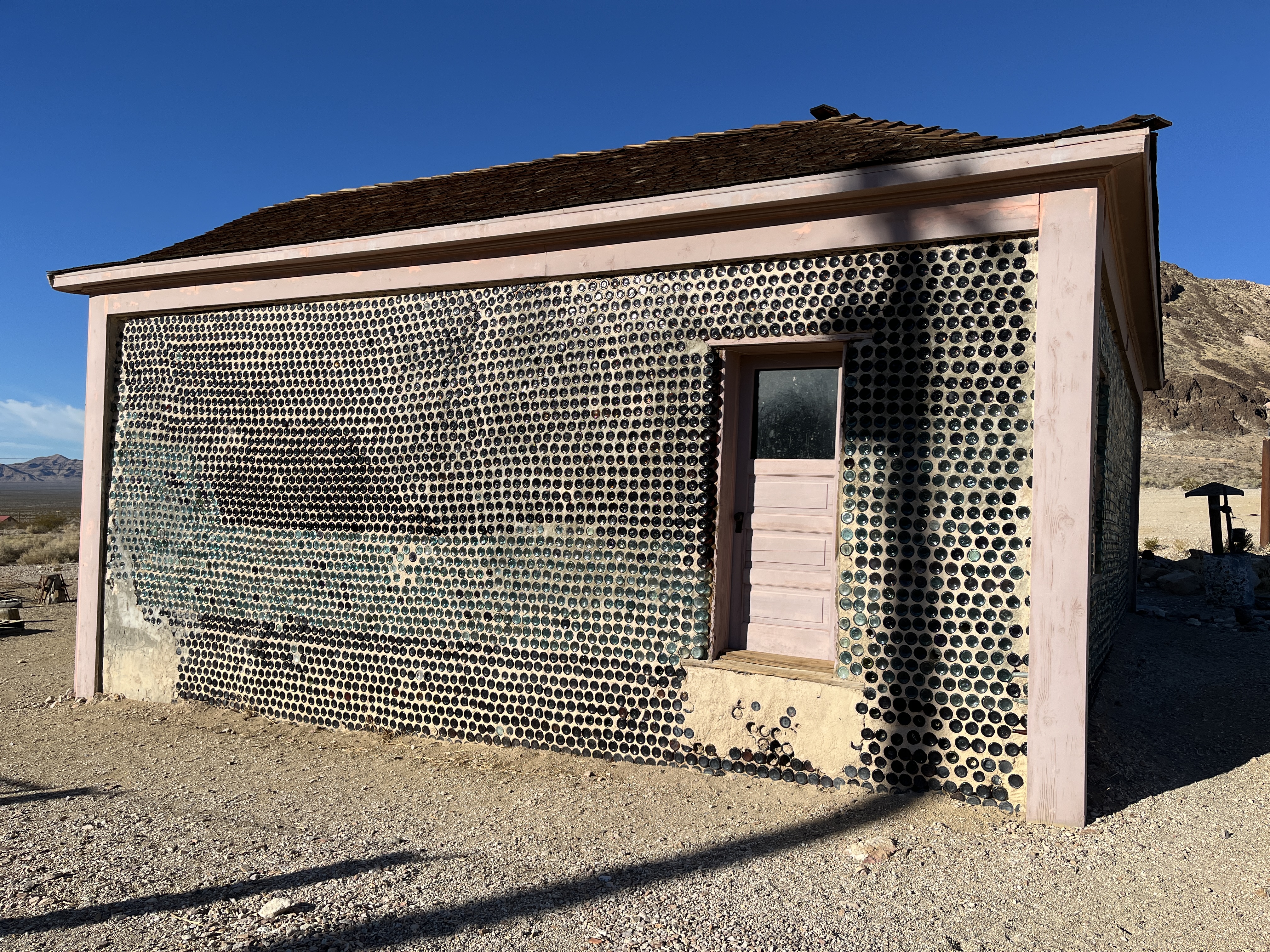
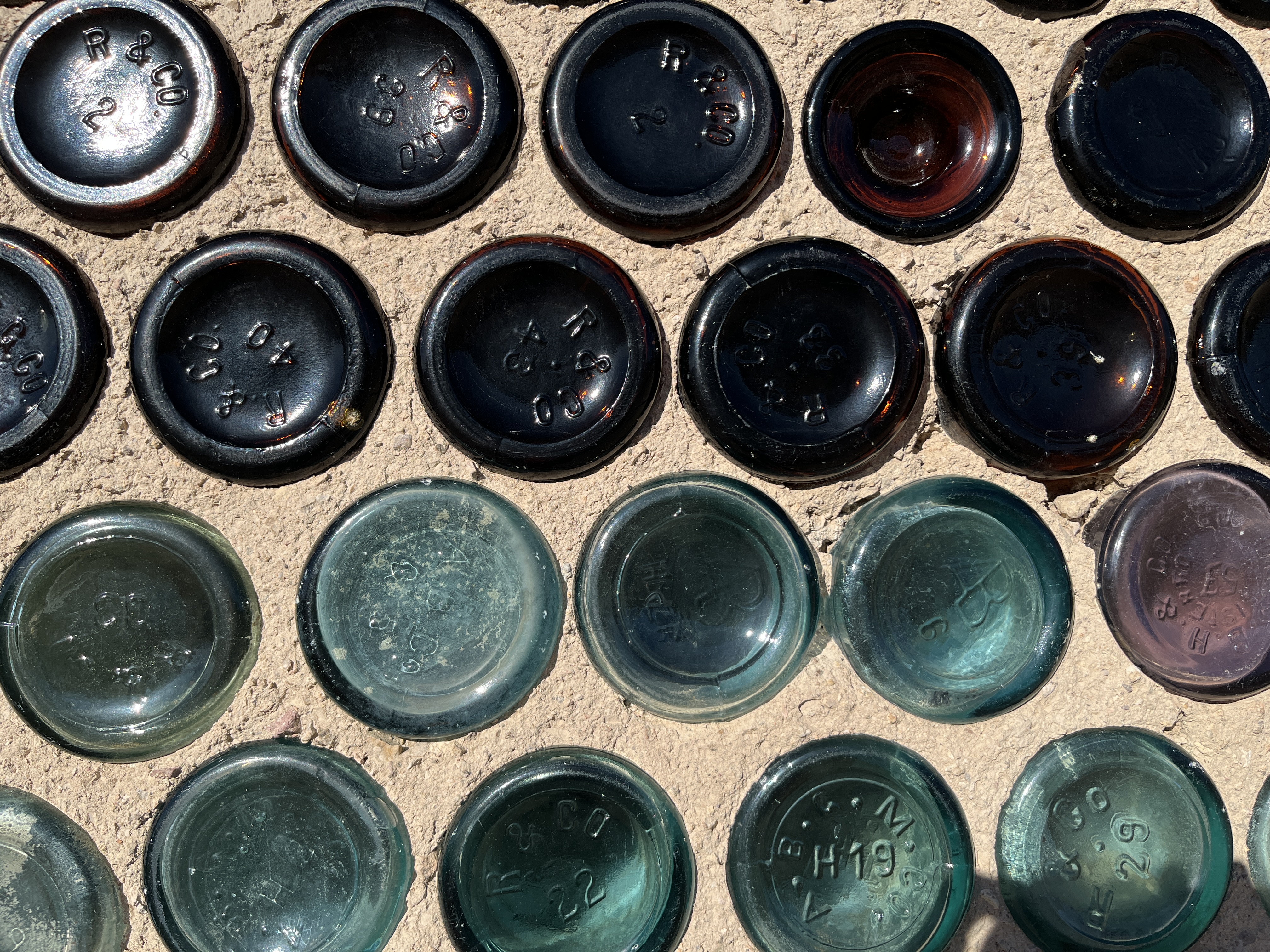
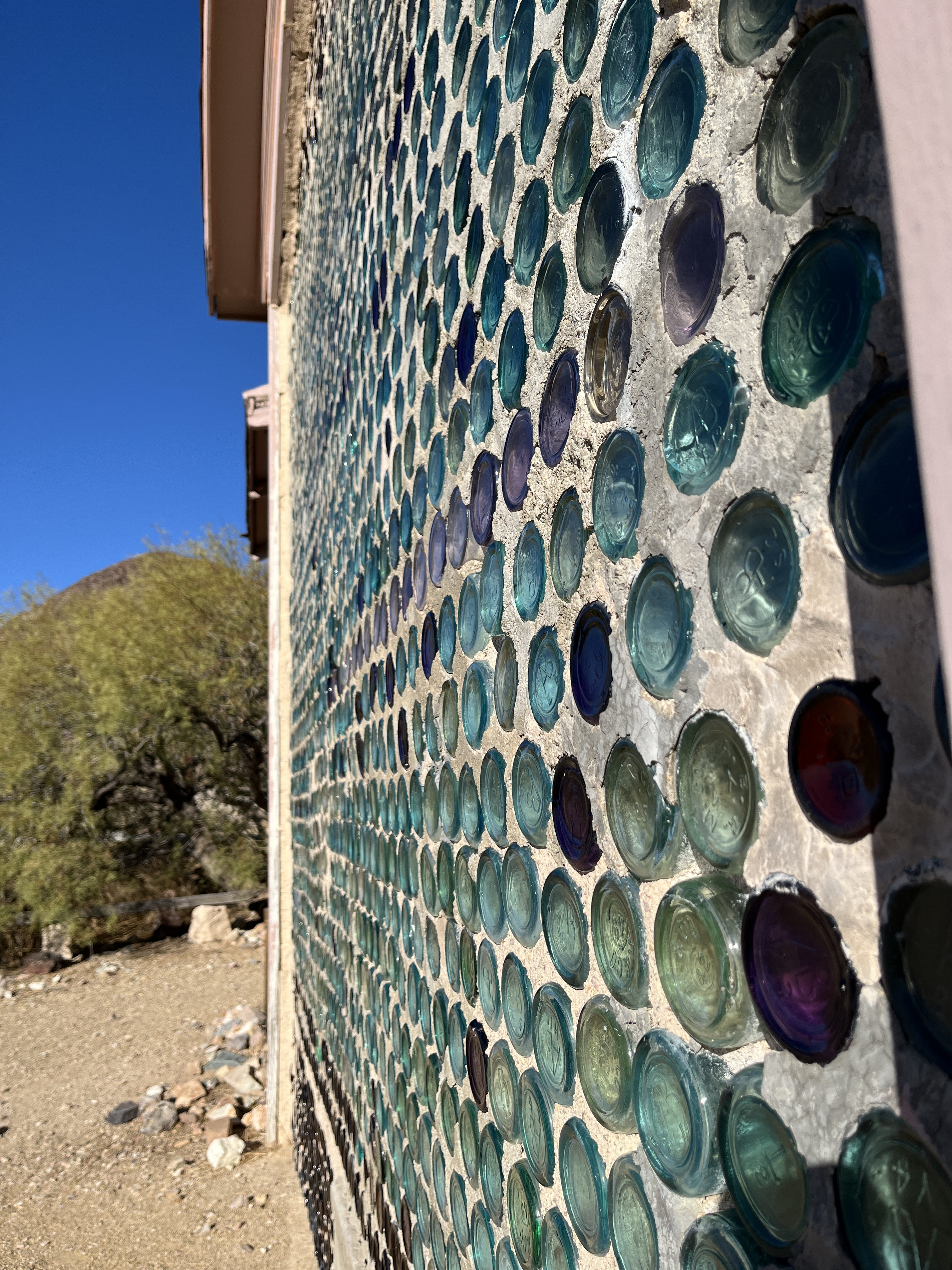
One building in town that is still fairly well preserved is Tom Kelly’s Bottle House:

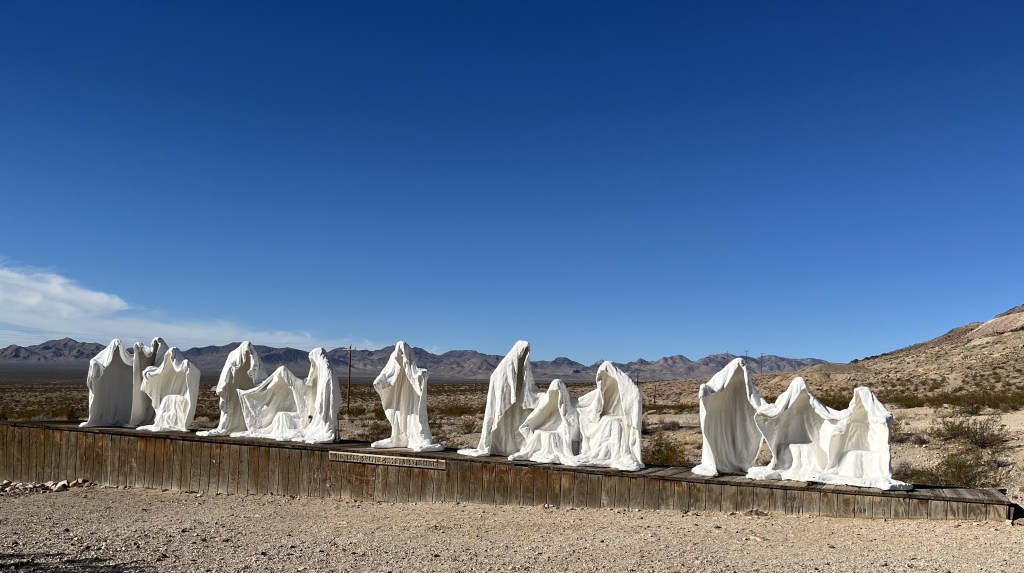
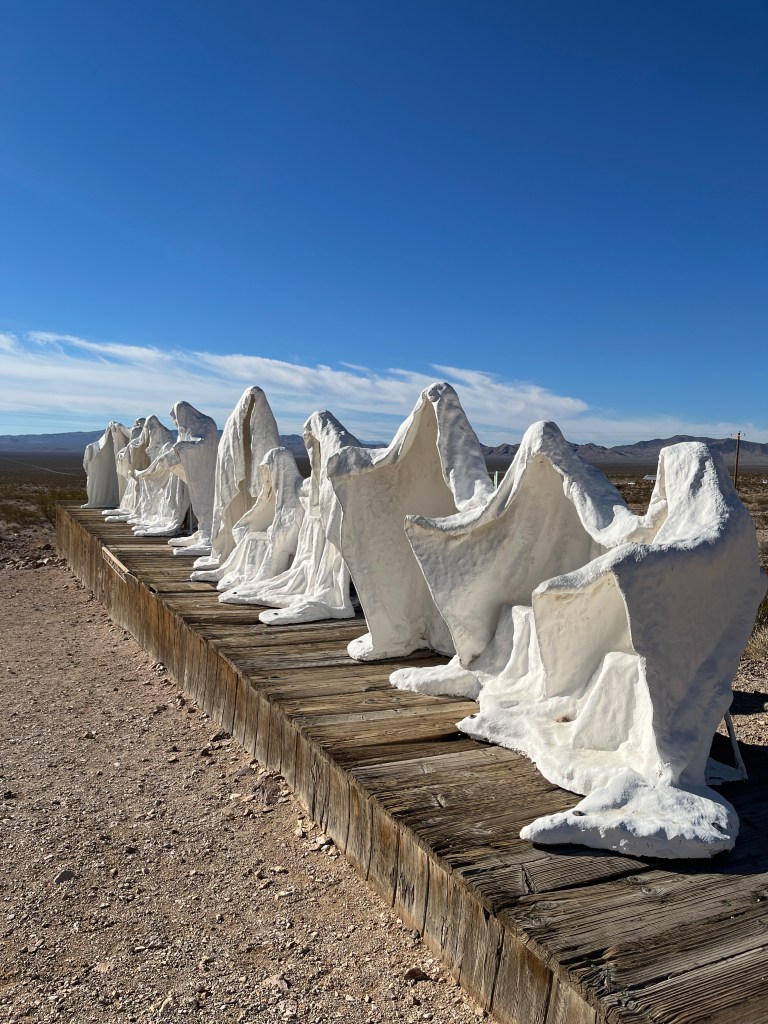
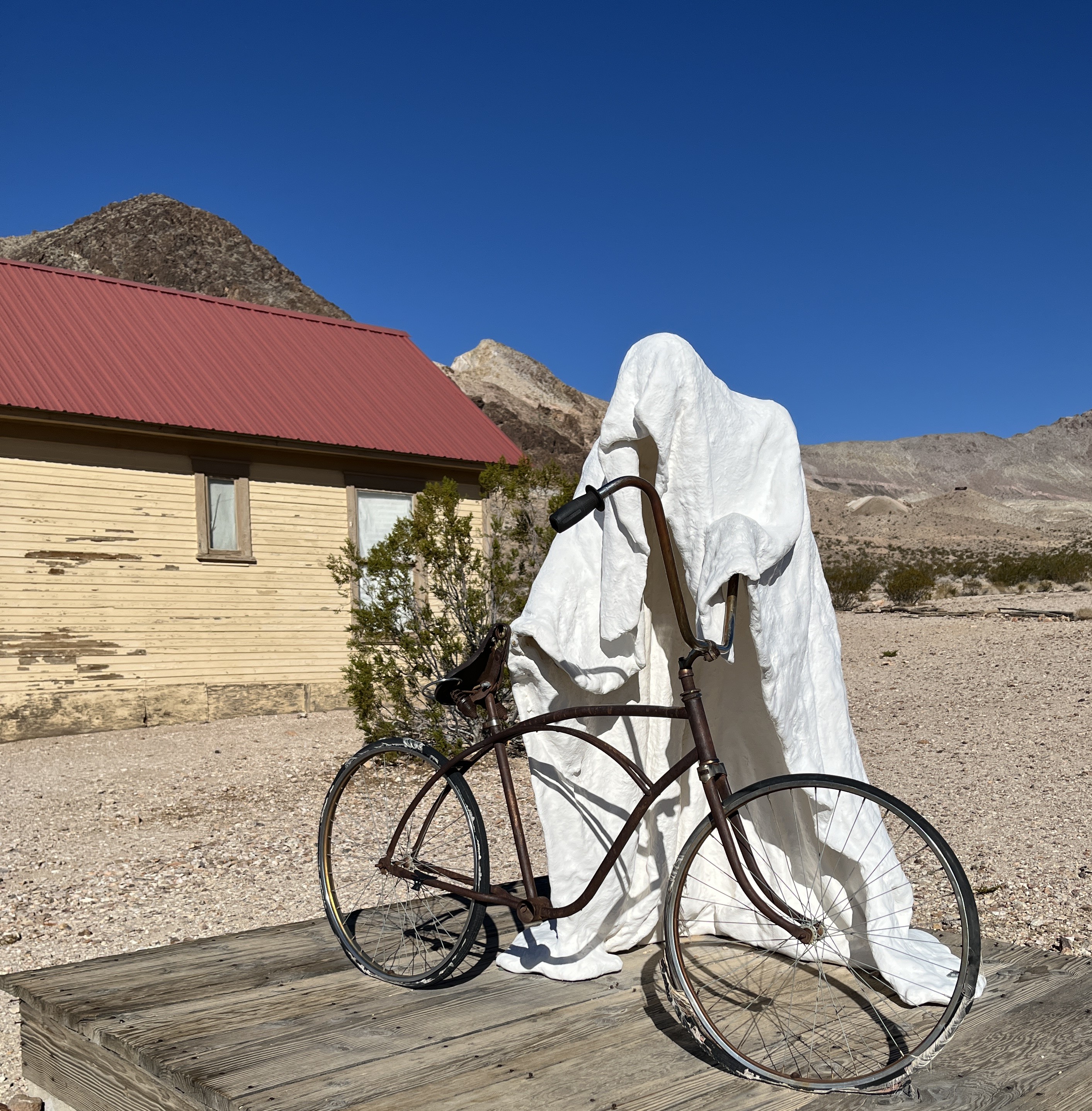
Right next door to Rhyolite is the Goldwell Open Air Museum. This outdoor sculpture park “was created in 1984 by a group of well-known Belgian artists (led by the late Albert Szukalski) who were drawn to the remote upper portion of the vast Mojave Desert to pursue artistic vision free from convention. Each piece was designed within the context of the landscape and should be interpreted as such.” (https://travelnevada.com/museums/goldwell-open-air-museum/) Since then, more sculptures have been added.

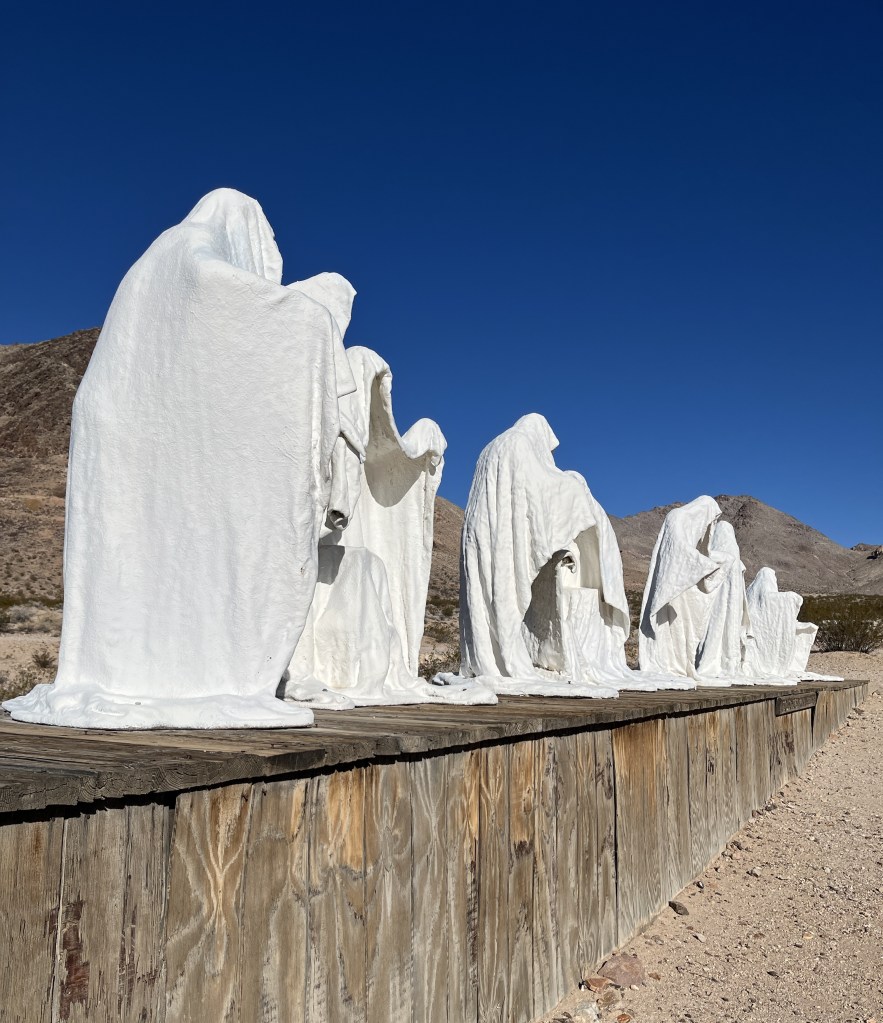
The first sculpture was a ghostly life-size version of Leonardo Da Vinci’s “Last Supper:

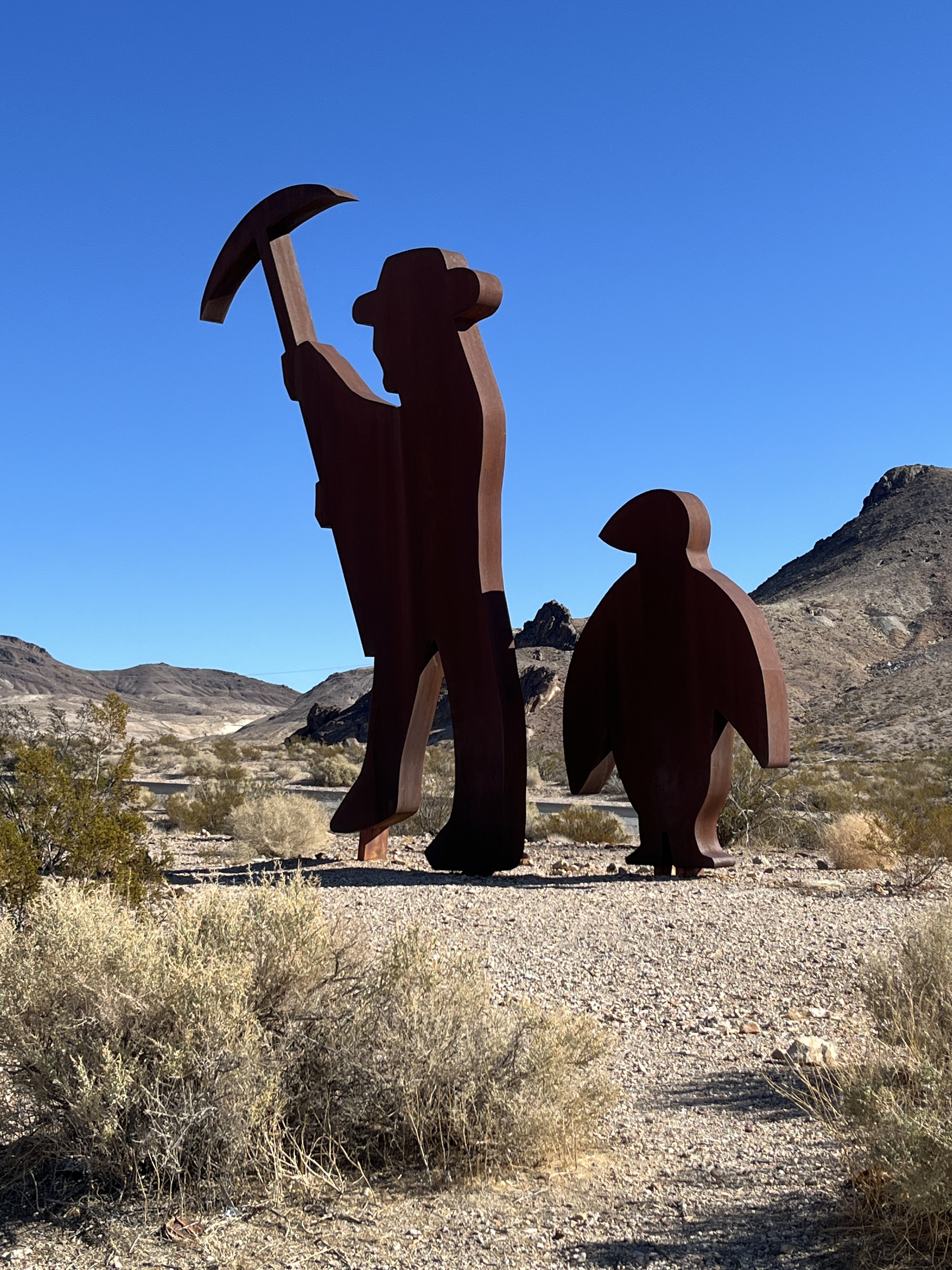
Later sculptures included a 25-foot woman constructed from pink cinder blocks and a 24-foot steel prospector and his penguin companion:

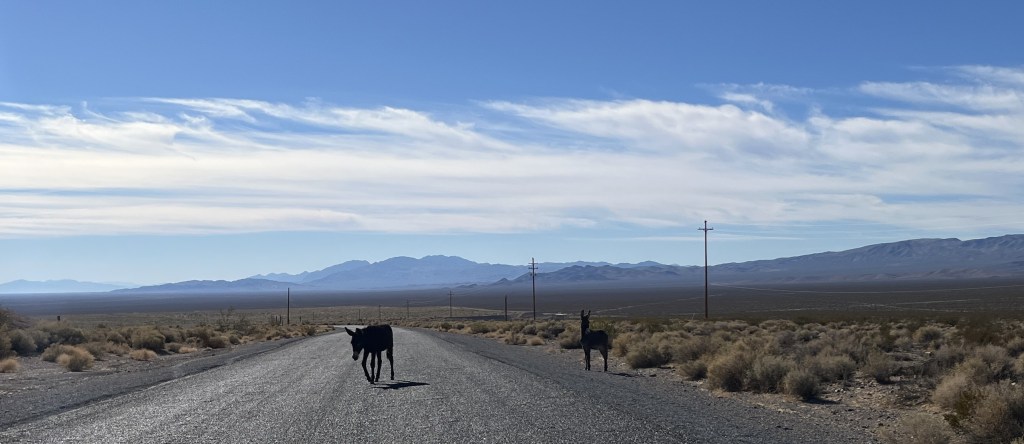
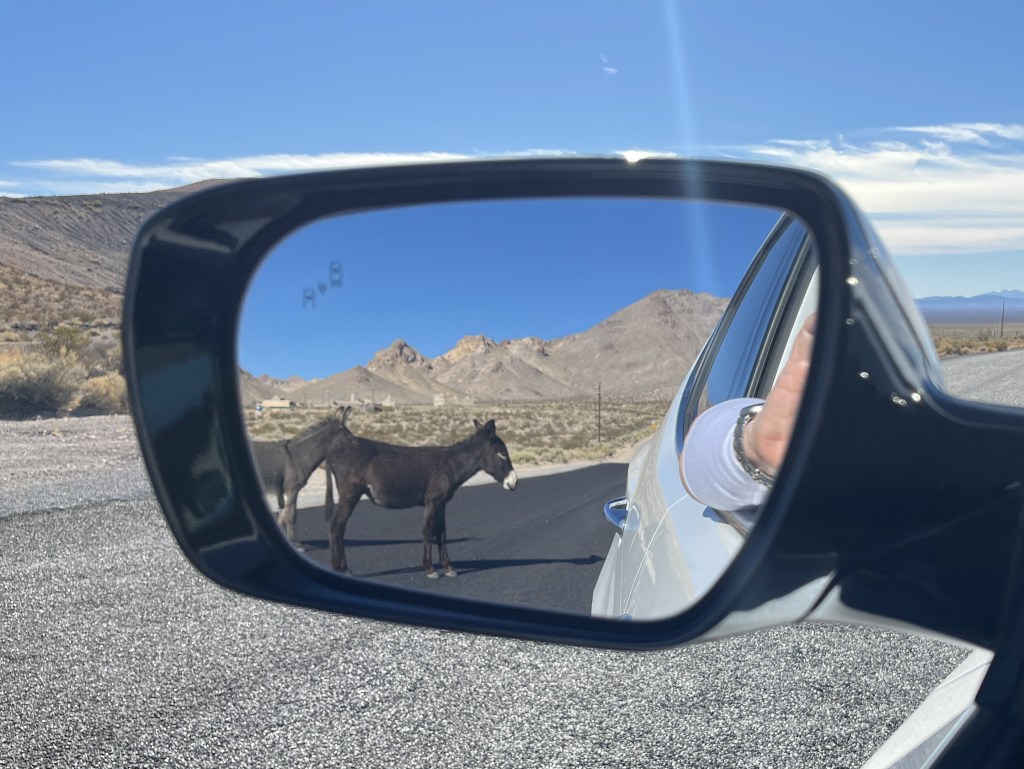
Beatty is famous for the number of wild burros that are in the area and that wander through town. I didn’t see any while in town (although they left plenty of evidence of their presence), but a few did show up as I was leaving Rhyolite:

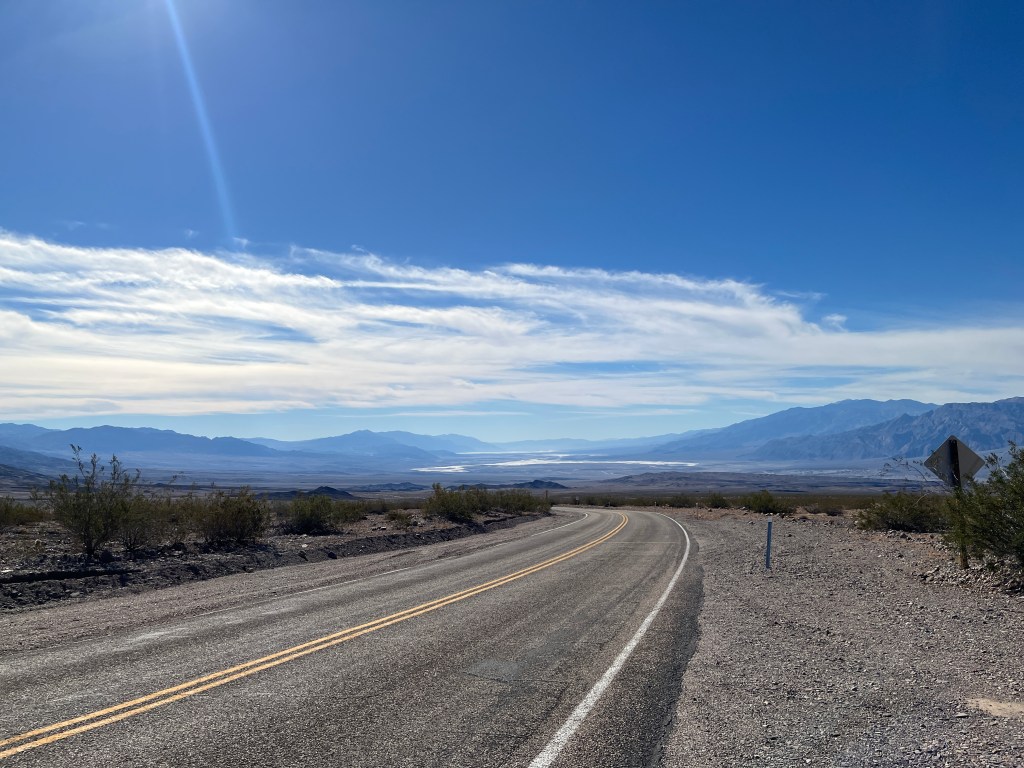
Next was a quick trip down to Death Valley National Park:

From there it was back to the Atomic Inn for a late afternoon of relaxing, reading, and watching football.

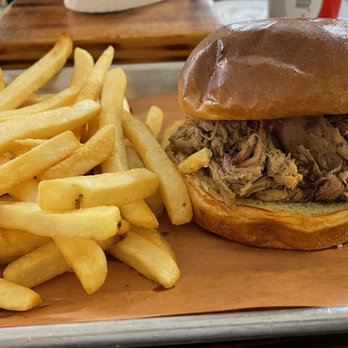
Dinner that night was at Smokin’ J’s Barbeque: an excellent “senior” serving of a pulled pork sandwich and fries:

Day 3 will be the 100 miles or so from Beatty to Tonopah with a stop in Goldfield.

Nevada Road Trip: From Home to Beatty (Day 1)

I hadn’t been on a road trip in years and wanted to take one to celebrate the one-year anniversary of my little stroke. Decided to visit a number of small Nevada towns and avoid any national restaurant or hotel chains.

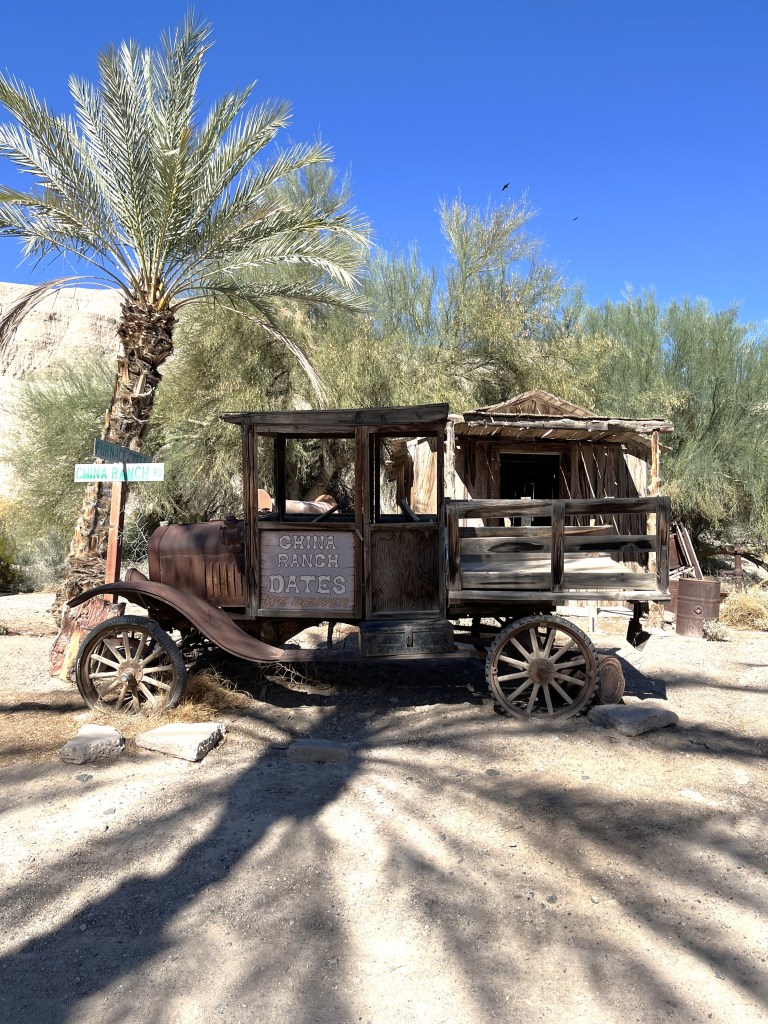
I left home on the morning of the 18th of October. My first stop was actually just over the state border in California: China Ranch Date Farm (https://www.chinaranch.com/).

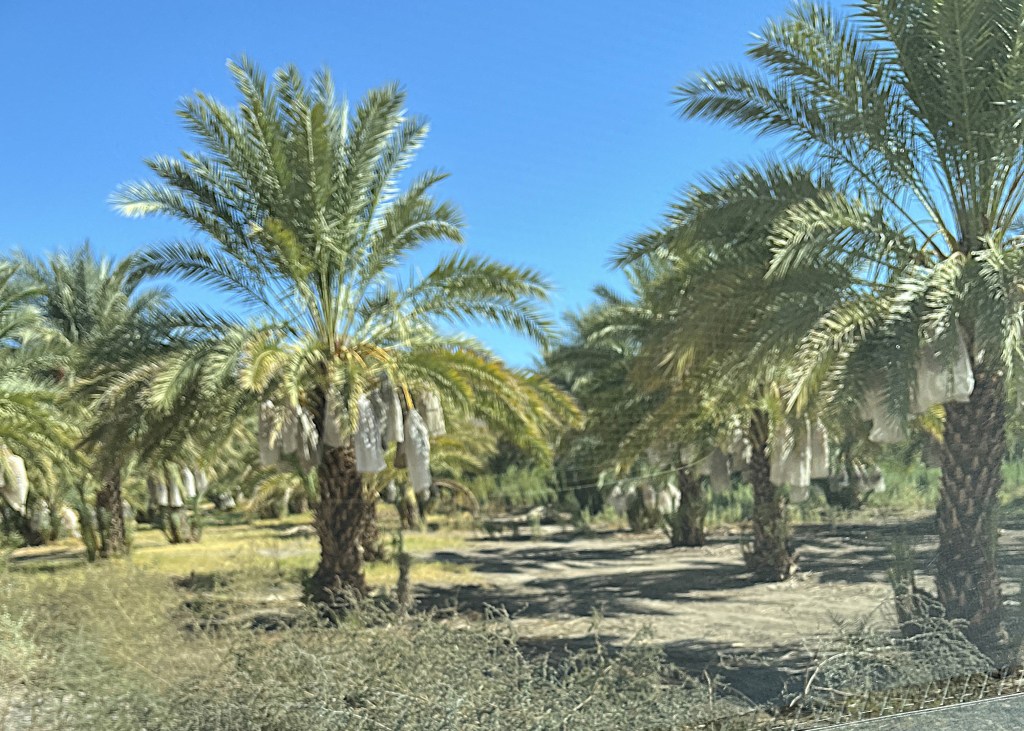
This place is less than 100 miles from Vegas and south of Death Valley. You have to want to go there just for its own sake, though, because it’s not really on the way to or from anywhere. It is not going to visited by hordes of tourists

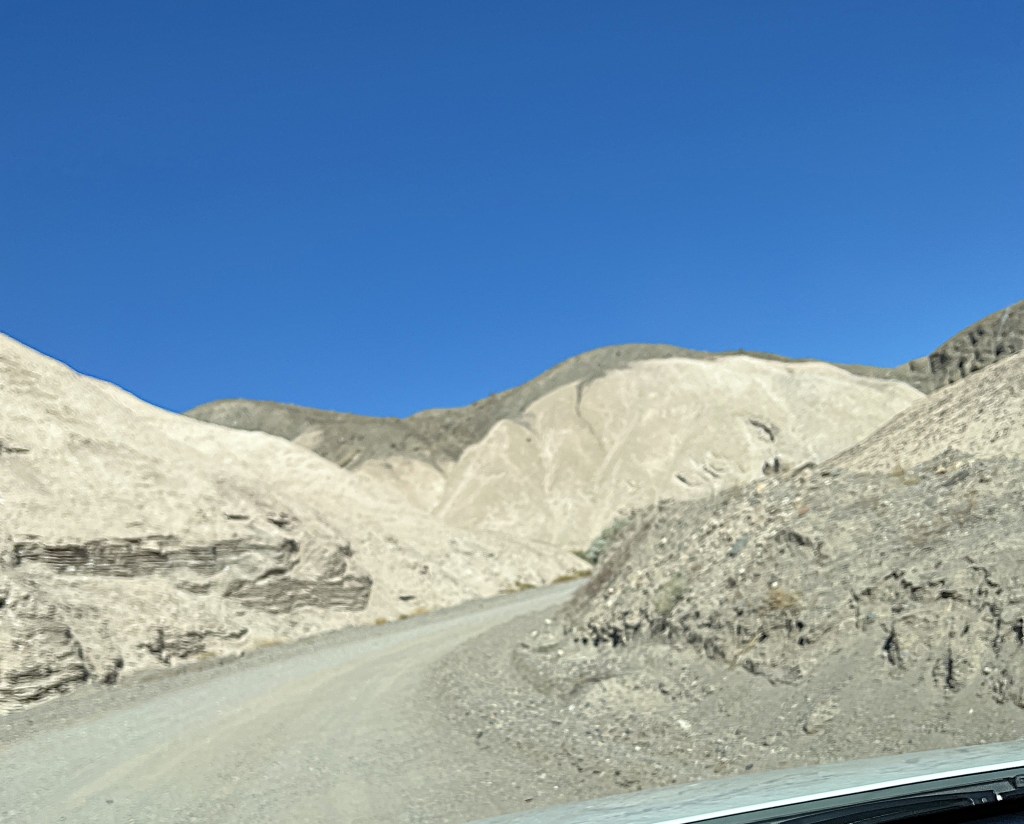
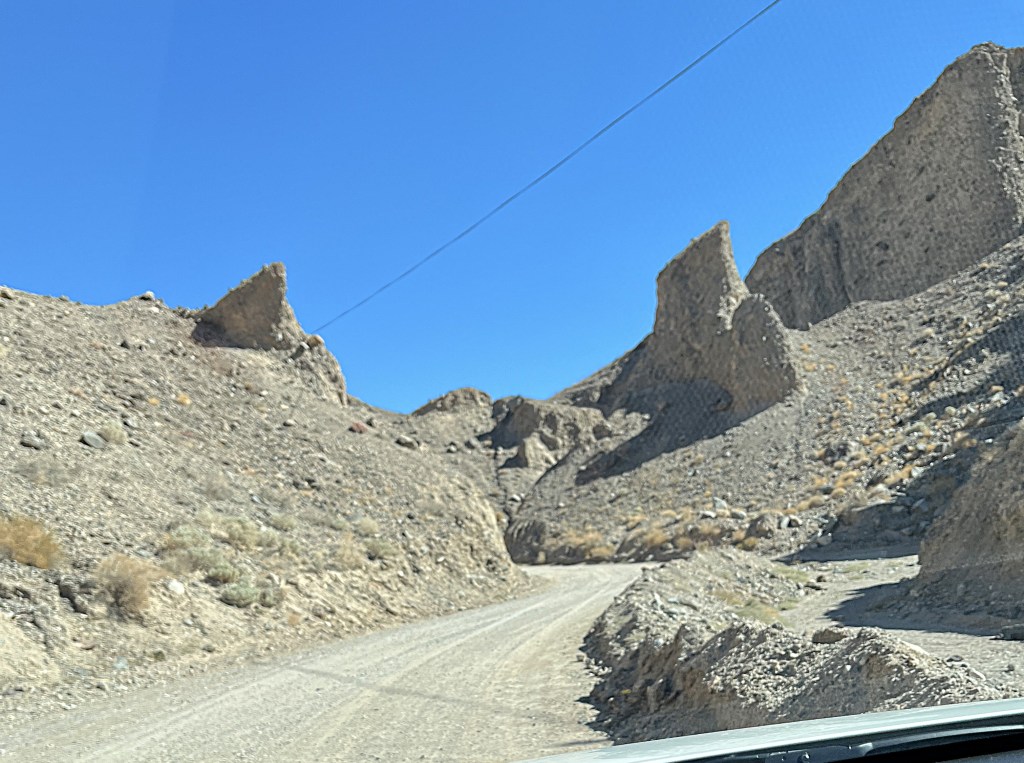
I didn’t snap any pictures of the road on my way in, but here’s a few I took on my way out:

You would not want to be on this road in one of the areas infrequent rainstorms.

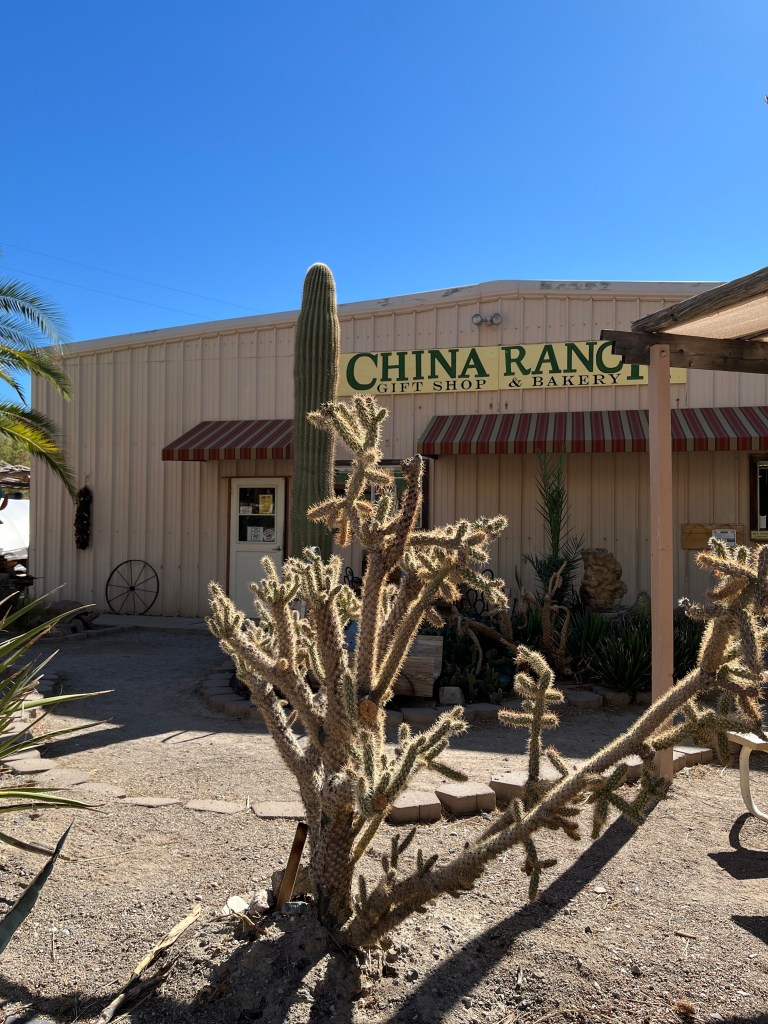
Here’s the gift shop:

They had a dozen or so different types of dates, date baked goods, souvenirs, rocks, and, of course, date shakes. One bathroom, a picnic table or two, and some hiking trails. It made for an interesting stop for an hour or so.

From there, I drove into Pahrump, which is pretty much an exurb of Las Vegas. Although it has around 45,000 residents now, it didn’t even have telephone service until the 1960s.

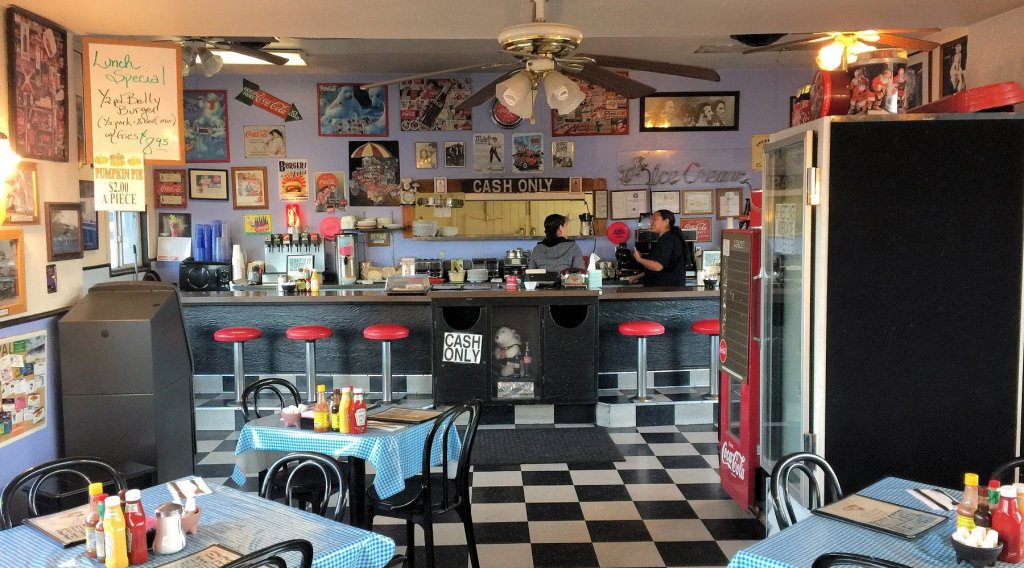
The main road through town has all the usual businesses and chains, but I was looking for somewhere local for lunch and settled on Mom’s Diner, which you can check out here https://www.facebook.com/people/Moms-Diner/100048743390385/# if you have Facebook (which I don’t).

The place was full of vintage items on the walls and had a great vibe. It was quite busy when I arrived for lunch on Saturday, but I only had to wait a few minutes for a table. They didn’t have any small tables and I felt a bit guilty taking up a table for four, but that soon sorted itself out: The family at the table next to me had 6 people and were having trouble fitting everyone in. I suggested we share my table, so rather than lunching by myself, I spent my time chatting with the grandfather about Pahrump and his history there. Made for an unexpected but interesting time. And the food was good, too!

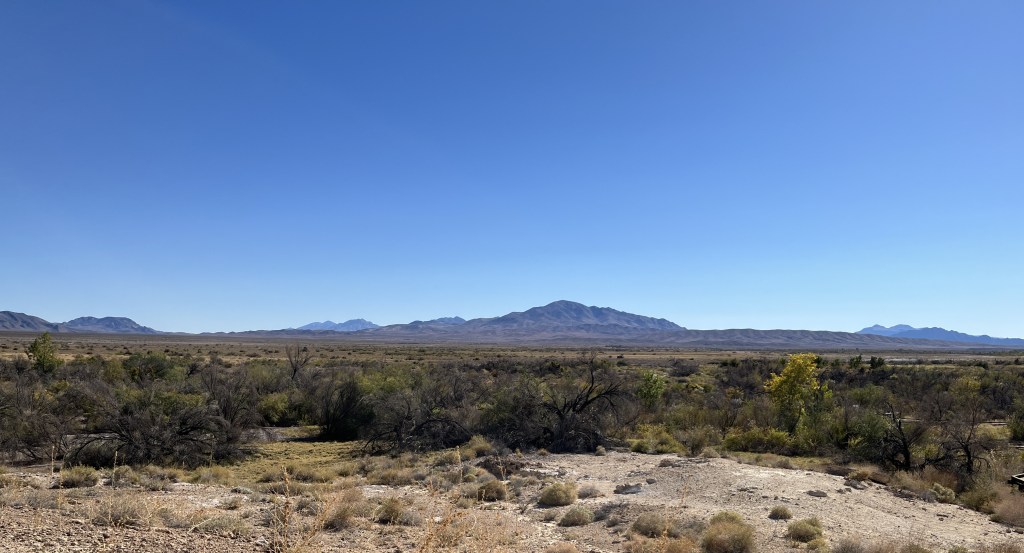
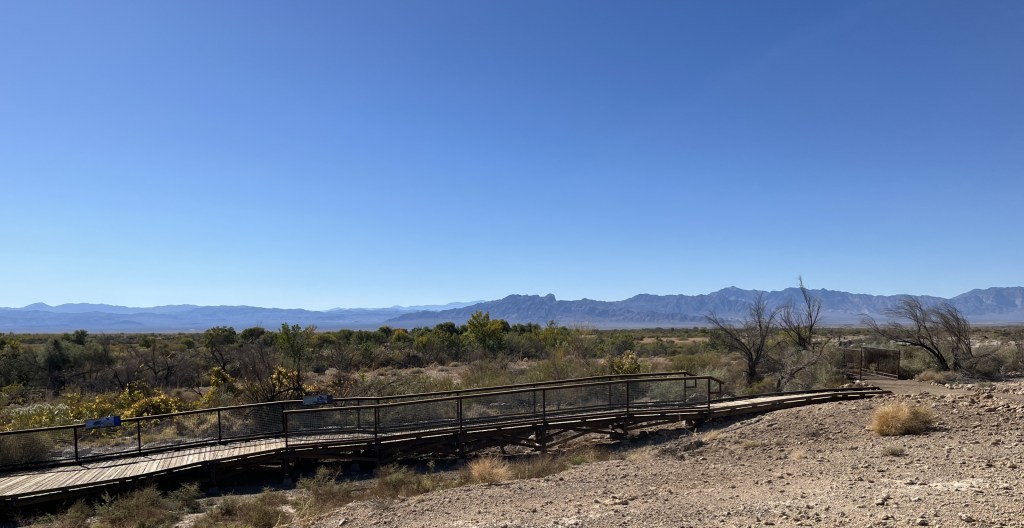
Next stop was Ash Meadows National Wildlife Refuge (https://www.fws.gov/refuge/ash-meadows). Thanks to our dysfunctional government, the visitor center was closed, but the trails (and bathrooms) were still open. Ash Meadows is the largest remining oasis in the Mojave Desert, but it’s hard to realize that because there is not a lot of open water. Here are typical landscapes:

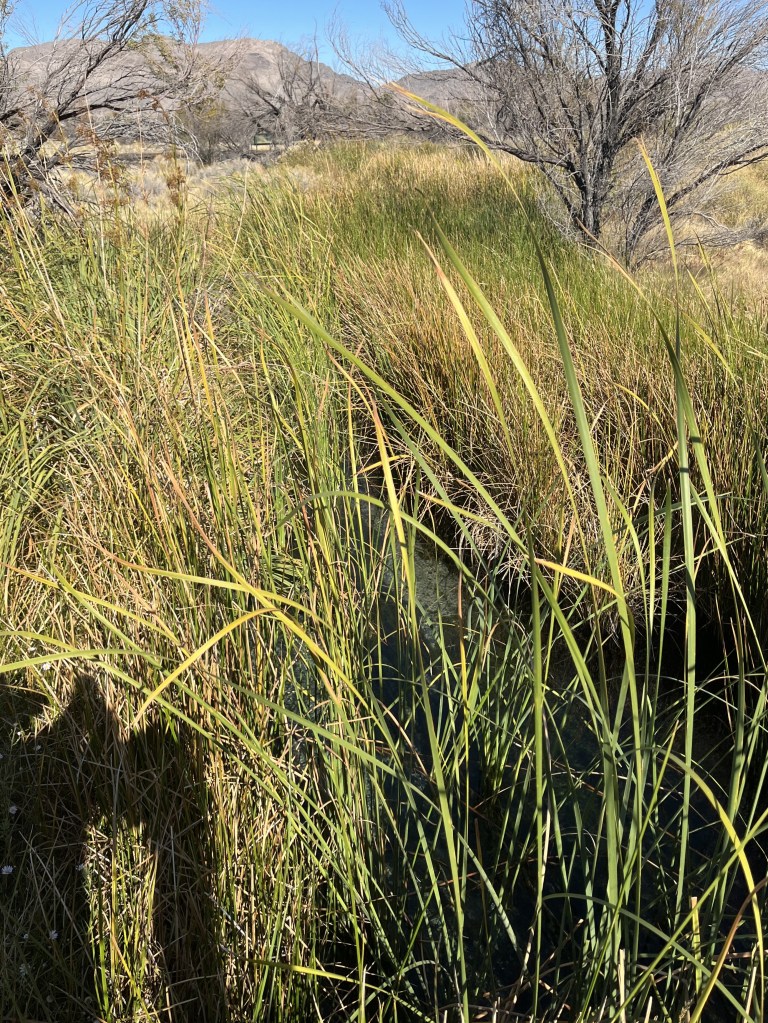
The water is almost completely grown over by bushes like this:

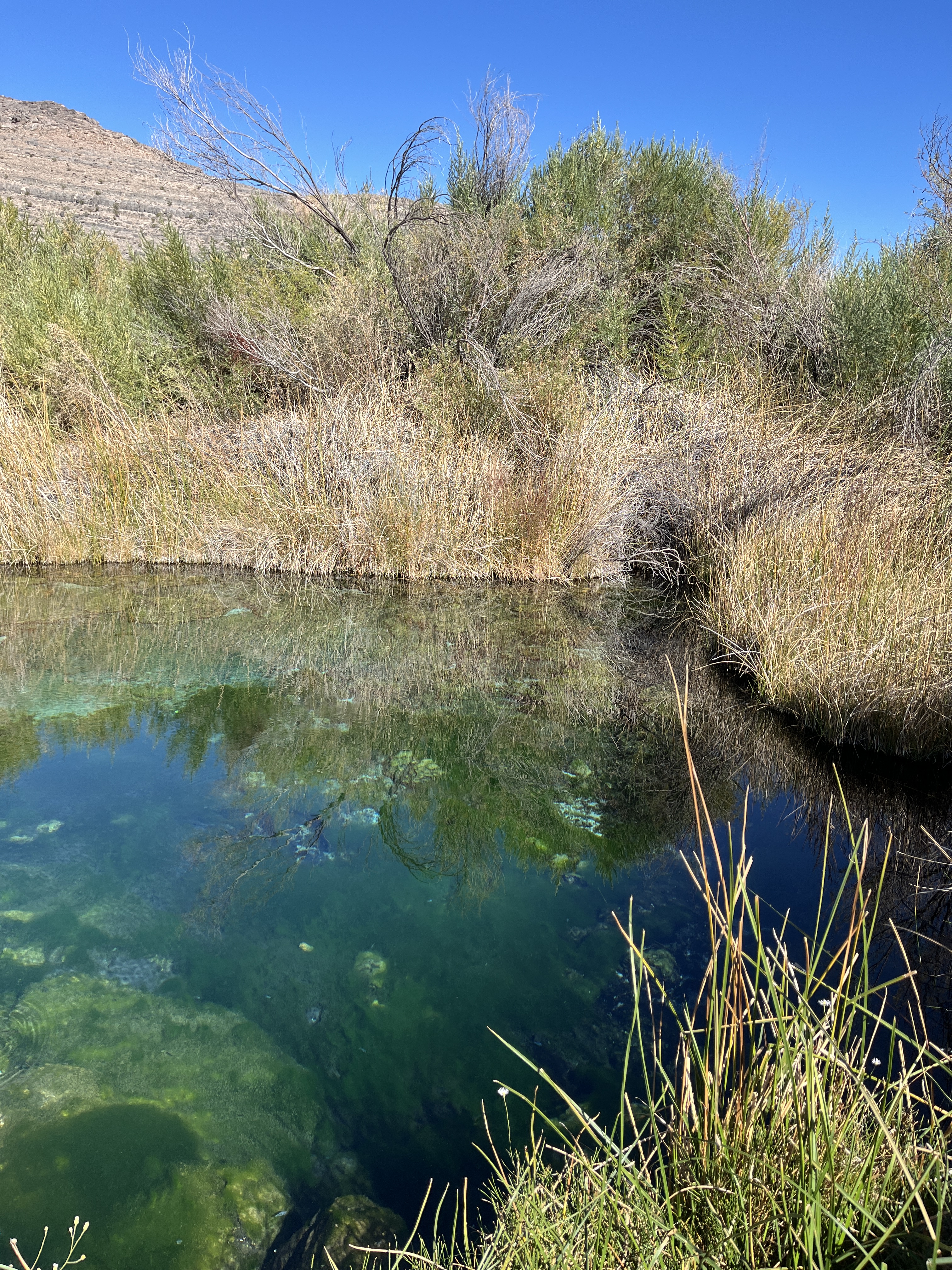
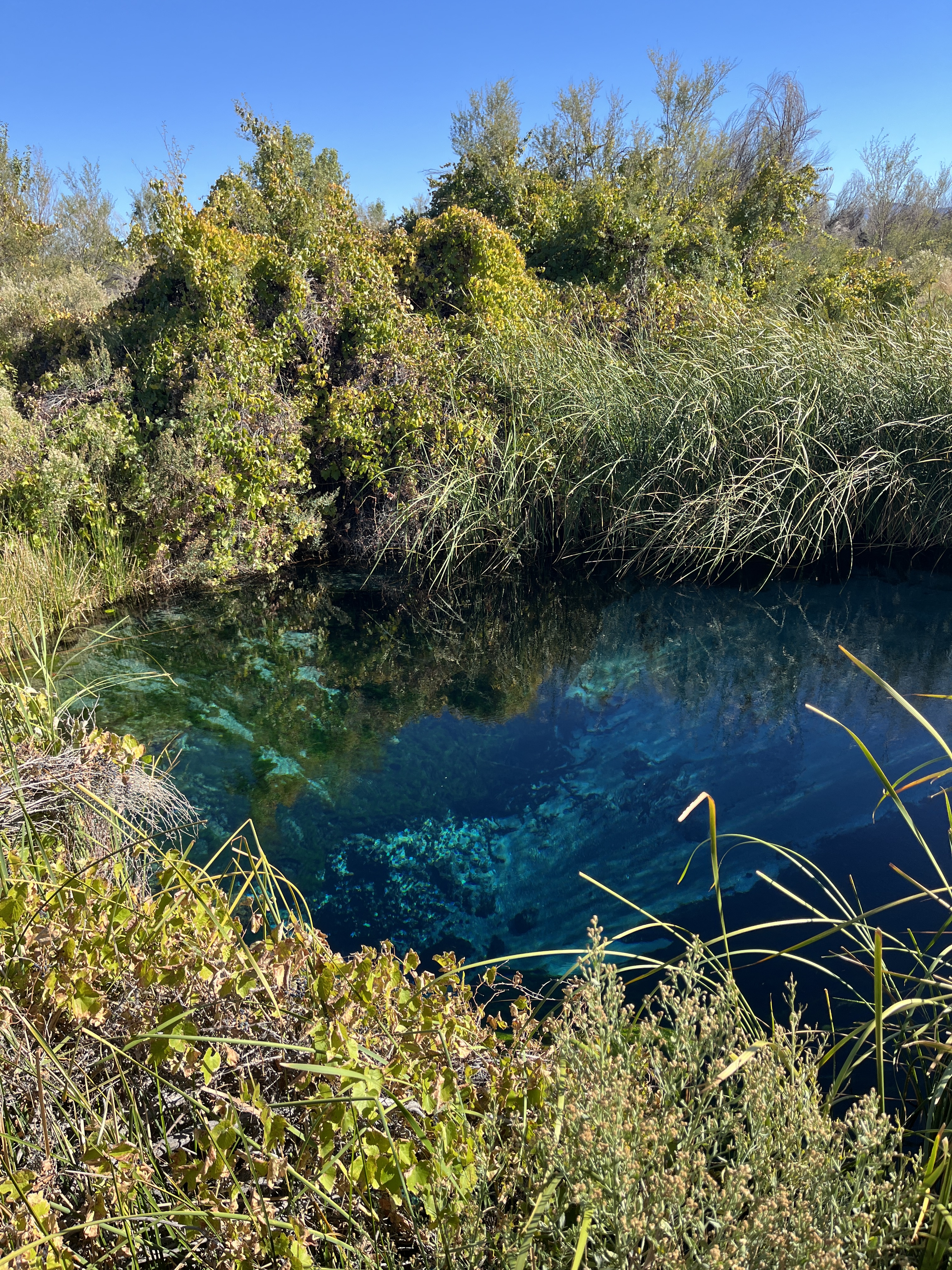
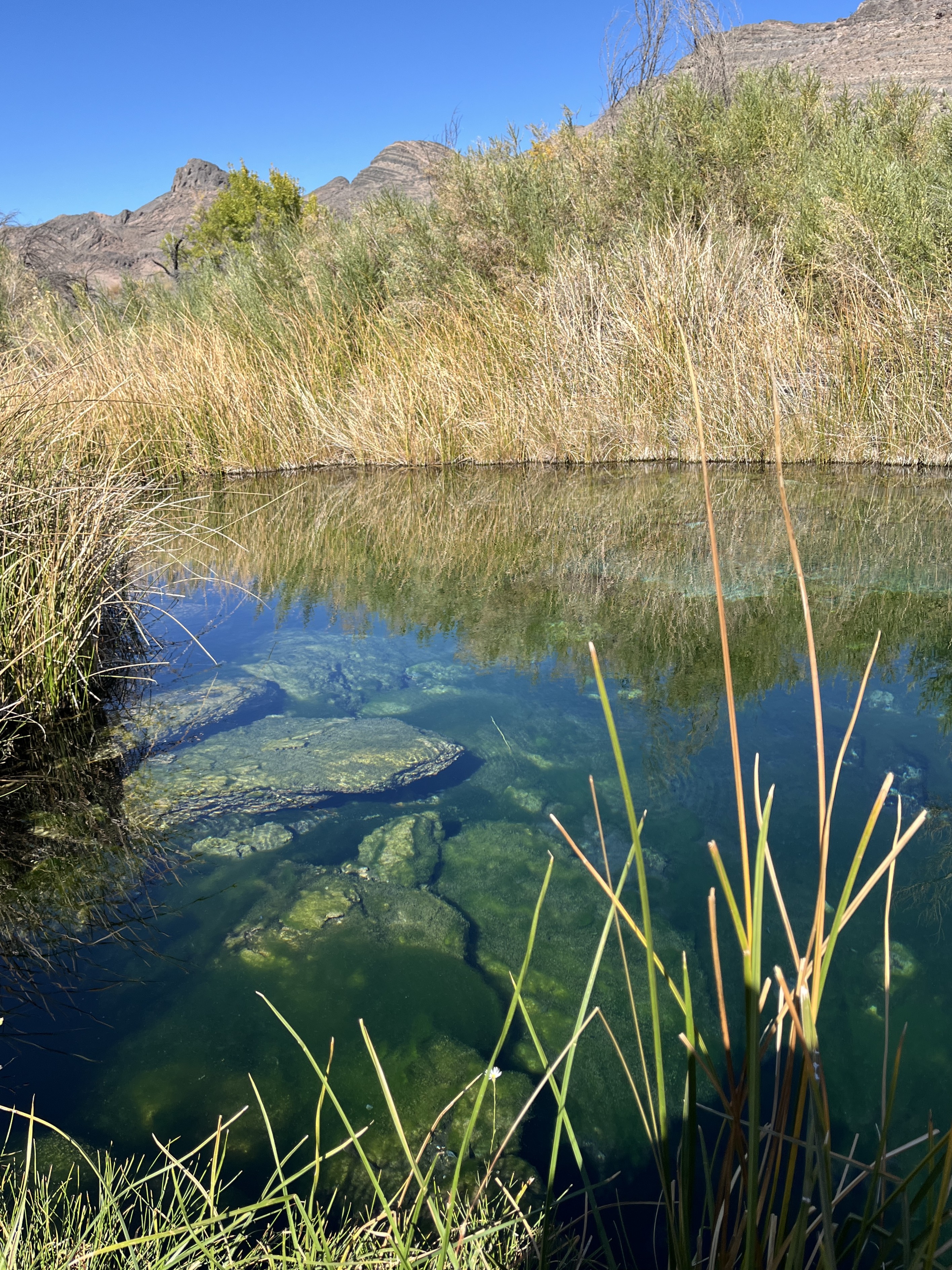
When you do glimpse the water, though, it’s stunning:

After a fairly warm afternoon of hiking the boardwalks, I headed for Beatty, NV, “Gateway to Death Valley” and home to 1,000 inhabitants (not counting the burros). After my big lunch, I just picked up a few snacks and a bottle of Diet Coke for the evening. I haven’t been drinking sodas much at all lately, but the day’s walking just seemed to call for it.

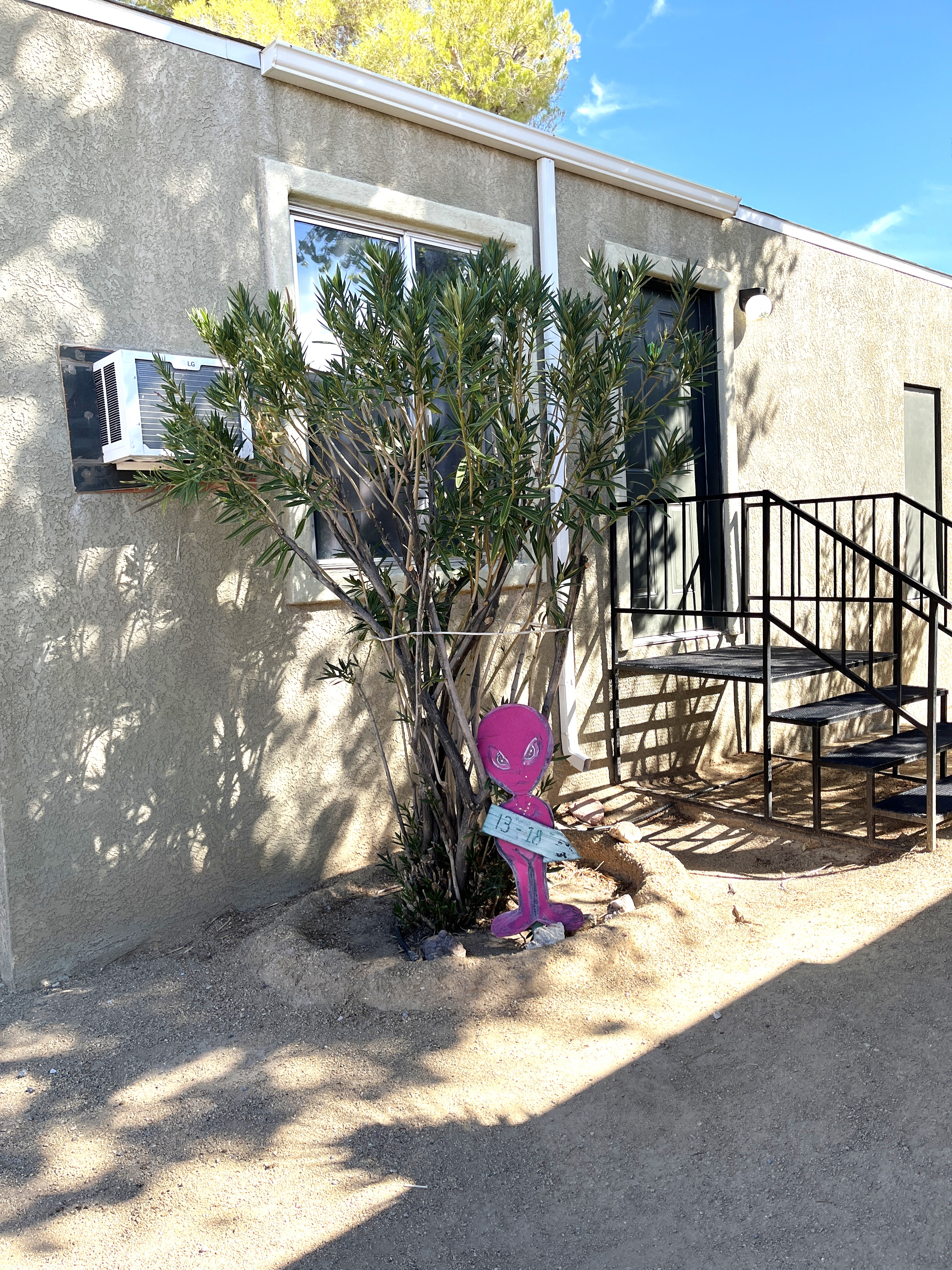
My room for the next two nights was in the Atomic Inn. I’ll let their website (https://atomicinnbeatty.com/about.cfm) speak for them:

Here’s the Inn and the steps up to my room:

Day two will be a ghost town, outdoor art installations, and Death Valley.

Brooklyn, Part 3

I stayed at a very nice hotel in Brooklyn: the Hoxton, Williamsburg. The bed was so comfortable that I asked them to tell me who the mattress manufacturer was.

As with many hotels, though (especially, I find, European ones), the only covering on top of the bed was a 4-inch-thick duvet. For the life of me, I do not understand the appeal of a big, thick duvet as the only cover. Whatever part of my body the duvet is on spends the night over-heated and sweaty, while the part I leave uncovered is cold. I spent the first night trying to find some sweet spot that would even out the hot and cold but was not very successful. In fact, halfway through the night, I took a big bath towel and used that as a sheet for the upper part of my body. Much better!

If you’re going to give me a duvet, at least give me a single top sheet to go with it. I did ask for a sheet the next morning and slept beautifully the next two nights with the duvet over my feet and the sheet over the rest of me.

That was an easy fix, the next problem not so much so. The bed had 6 or more pillows on it, all of them were filled with down (or some equivalent). I have never understood the appeal of down pillows if a nice foam one is available. I asked for a foam one when I requested the sheet, but, alas, they simply provided me with yet another down one.

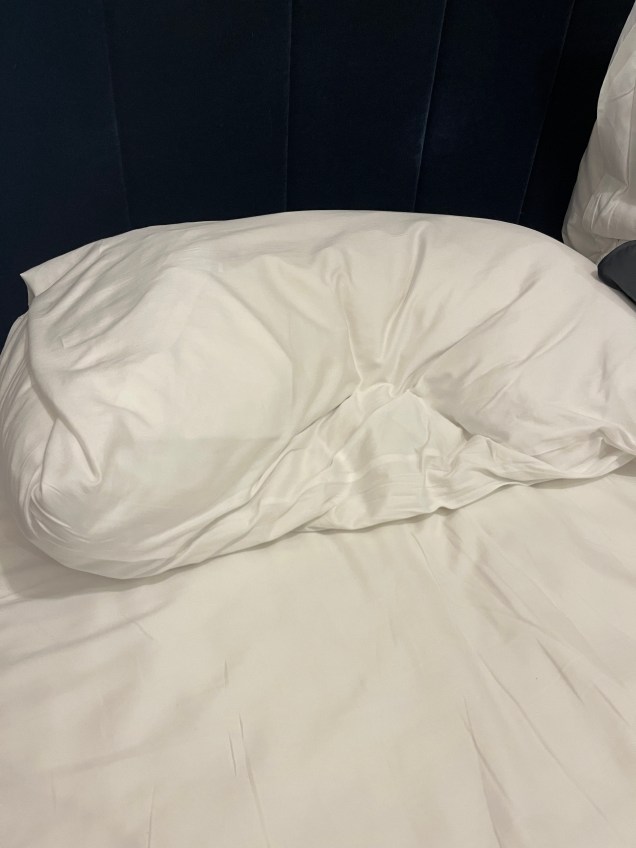
Here is what I don’t like about down pillows: you fluff them up before going to bed, then you fluff them up every time you get up during the night, and yet, this is what you get in the morning:

My head is resting on about 1-inch of material, meantime, as I am a side-sleeper, I am almost suffocated by all the down that is no longer under my head.

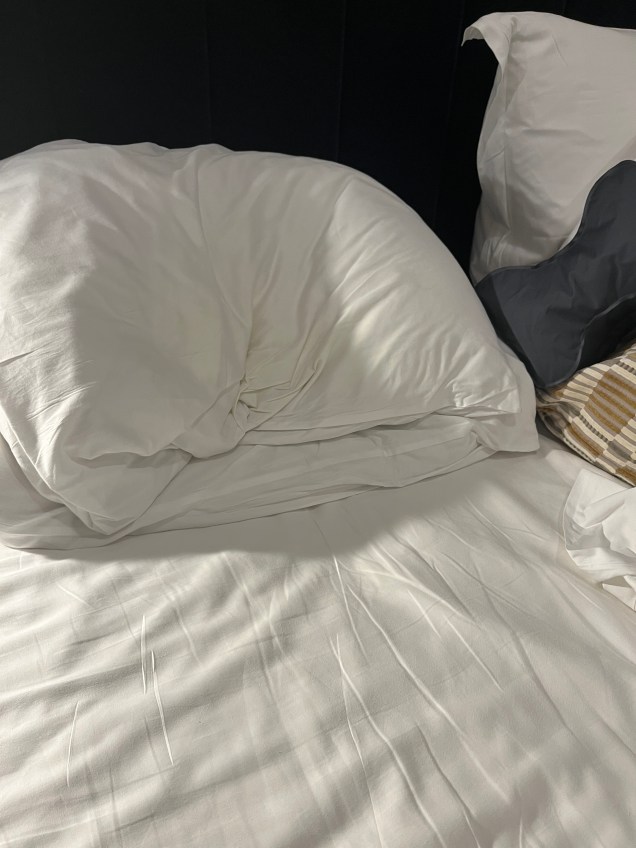
Using two pillows doesn’t change things very much:

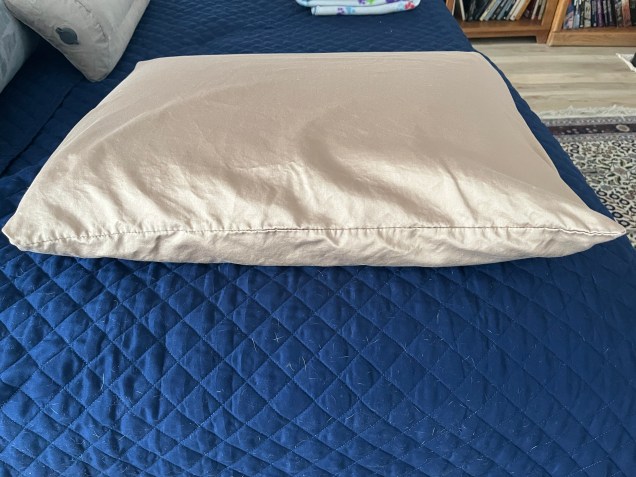
Here is what my Isontonic pillow looks like before I go to bed:

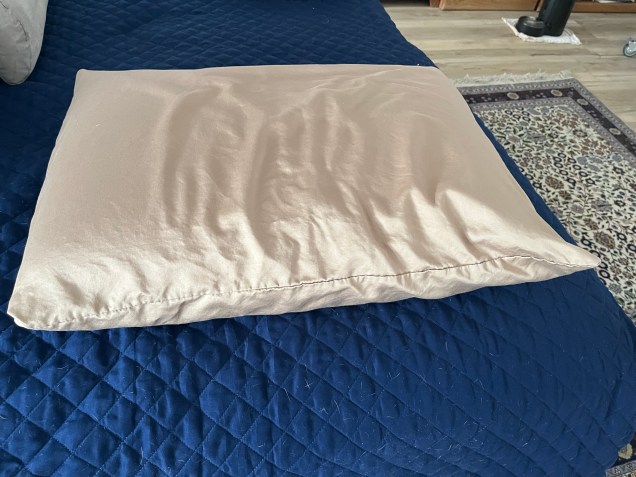
And here is what it looks like in the morning:

Give me a good-quality foam pillow any night!